
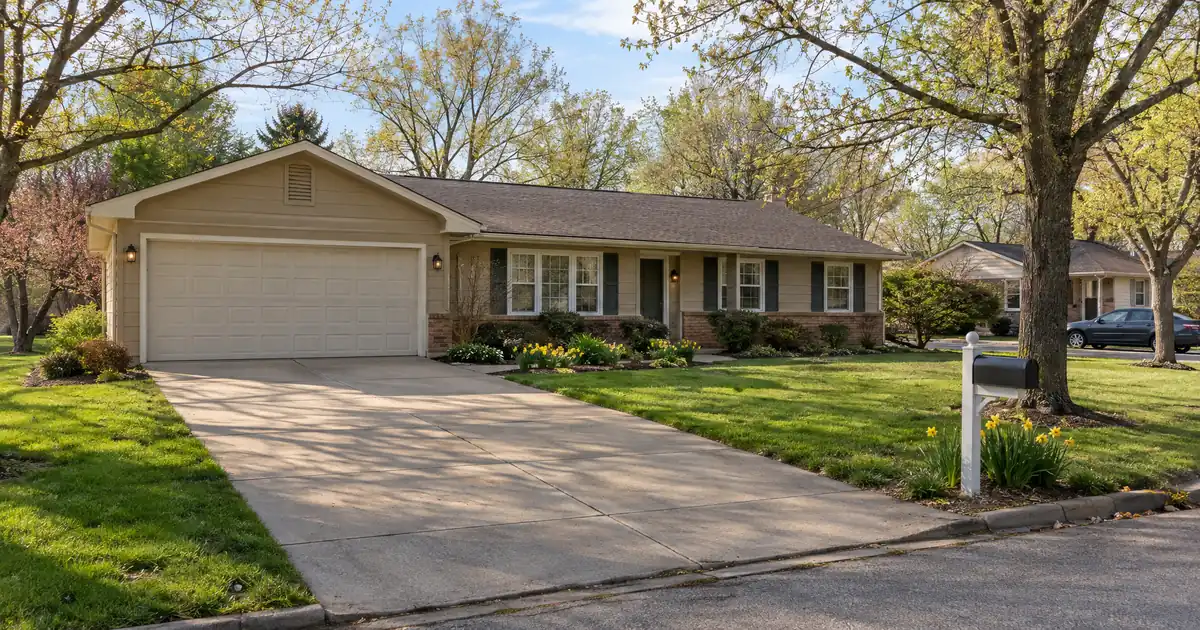
The Quick Read: Yes, but only in a specific sense: select lenders in Lendmire’s wholesale network qualify self-employed borrowers on twelve months of bank statements instead of traditional personal-income documentation, and an investor buying a rental can often qualify on the property’s rent instead, though every file is still fully underwritten, subject to lender guidelines. Skipping returns never means skipping proof. The proof just comes from a different place.
- Bank statements replace returns. Qualifying income comes from your average deposits, reduced by a lender-specific expense factor.
- Rent can replace your income. On a non-owner-occupied rental, a rent-based investor loan looks at what the property earns against its payment.
- Leverage differs by occupancy. A primary residence purchase can reach up to 90% LTV on select programs, while investment-property cash-out tops out around 75% LTV.
- Credit still counts. Every path reviews your credit, reserves, and the property.
- Owner-occupied homes cannot use the rent-based loan. It is for investment properties only. Final terms depend on the lender’s guidelines, the property type, and the borrower’s complete credit picture.
Key Terms Defined
You will see these terms throughout. Each one is defined here once.
Non-QM loan: A mortgage that falls outside the standard “qualified mortgage” box, usually because it verifies income with something other than traditional personal-income documentation and pay stubs.
Bank statement loan: A non-QM loan that is reviewed against average monthly deposits over a set number of months.
Expense factor: The share of your business deposits a lender treats as operating costs, so only the remainder counts as your income.
DSCR (debt service coverage ratio): Gross monthly rent divided by the full monthly housing obligation. A ratio of 1.00 means rent equals that obligation.
PITIA: Principal, interest, taxes, insurance, and association dues. It is the full monthly cost of owning the property.
LTV (loan-to-value): The loan amount as a percentage of the property’s value or price.
Asset depletion: A way to qualify using liquid savings and investments, spread across the loan term, rather than monthly income.
Reserves: Liquid cash left after closing, usually counted in months of the housing payment.
What your deposits qualify you for.
Alt-doc programs read 12 months of business or personal bank deposits instead of tax returns. Enter your average monthly deposits and see the income a lender would credit you.
The expense factor is set by the lender from your business type and profit-and-loss statement; it is not a number you choose. This widget quotes no rate and no payment.
Program parameters shown update from Lendmire’s centralized guideline source.
Estimate
Illustrative estimate only — not a quote, Loan Estimate, approval, or commitment to lend. Deposit average, expense factor, and housing ratio are editable assumptions; the expense factor a lender applies is set from your business type and documentation. No interest rate or monthly payment is quoted here. Purchase capacity is a simplified illustration and does not account for taxes, insurance, HOA dues, or other debts. Alt-doc income documentation is available on consumer mortgages in the states where Lendmire is licensed for consumer lending; actual terms vary by lender, borrower, and property.
Why Do Tax Returns Hurt Self-Employed Borrowers?
A conventional lender reads your net income off your return. Self-employed people legally shrink that number every year. Depreciation, write-offs, and reinvestment into the business all lower the income your return shows, even when real money moved through your accounts.
So a contractor or business owner can have strong cash flow and a weak-looking return. The conventional lender sees the return. A bank statement lender looks at the deposits instead.
Many investors hit the same wall for the same reason. A portfolio full of depreciation can make personal income look thin on paper while the properties cash flow well. That is why the two alternatives below exist.
Path One: Bank Statement Loans
Bank statement loans are the closest thing to a self-employed mortgage that skips returns. Across Lendmire’s wholesale network, these programs typically ask for 12 months of business or personal bank statements. The lender totals your deposits, averages them by month, and applies an expense factor.
Here is the logic with a hypothetical, labeled for illustration only. Say your average monthly deposits index at 100. If a lender’s factor treats 40 of every 100 as business expense, qualifying income is 60. Factors vary by lender and by business type, and some lenders use a lower figure when an accountant prepares an expense ratio. No single formula applies everywhere.
Some programs use 1099 forms or a CPA-prepared profit-and-loss statement instead of statements. The idea is the same: a different document proves the income.
Typical program parameters, subject to lender guidelines and individual underwriting:
- Primary residence purchase or rate-term refinance: up to 90% LTV on select programs. Stronger files earn the top of that range.
- Primary residence cash-out: up to 80% LTV with a fixed expense ratio, or 75% with an accountant-prepared ratio.
- Second home cash-out: up to 75% LTV, depending on loan size and credit.
- Asset depletion on a primary residence: up to about 80% LTV.
- Loan sizes: roughly $125,000 to $3,500,000, with reserves commonly around six months of the housing payment.
Investment-property cash-out on bank statements tops out around 75% LTV. Investment purchase leverage on bank statements varies by lender, so treat any single number you see online as a starting question, not an answer.
Gathering the statements takes real effort. Business and personal accounts that are mixed together, or large unexplained deposits, slow the review. Clean separation between personal and business money is the single best preparation.
Path Two: A Rent-Based Loan for Investors
If you are buying or refinancing a rental you will not live in, the DSCR loan is usually simpler than a bank statement loan. It qualifies primarily on property-level rental income covering the payment, subject to lender guidelines. The lender is not documenting your personal income at all. The property’s income is the story.
The math is direct. Take gross monthly rent and divide it by PITIA. A ratio at or above 1.00 means the rent covers the full payment. Many programs want coverage near or above 1.00. Select lenders in the network also offer programs below 1.00 coverage, but LTV and terms adjust.
Rent comes from the lease or from the appraiser’s market rent schedule. Appraisers use Form 1007 for a single unit and Form 1025 for two to four units. Many programs use the lower of the in-place lease and the market figure. A vacant unit relies on the appraiser’s number alone. Short-term rental income is handled differently by program, and not every lender accepts it. Short-term rental rules can vary by city, county, HOA, and property type, so investors should confirm local rules before relying on projected rental income.
Typical documents are a purchase contract or the property address, a credit authorization, a lease, an appraisal, title, and insurance. If the loan closes in an LLC, add entity documents, subject to lender program eligibility.
DSCR loans are designed for non-owner-occupied investment properties. Because they are business-purpose investor loans, they are reviewed differently from a standard owner-occupied mortgage. The Federal Register notice on ability-to-repay standards treats investment-purpose loans as business-purpose credit.
For the full program picture, Lendmire’s complete DSCR loans guide walks through requirements and structure.
Which Path Fits Which Borrower?
Pick the method that matches what you are buying and how you earn.
| Method | How it qualifies you | Best for |
|---|---|---|
| Bank statements | Averaged deposits, less expense factor | Owner-operators buying a home |
| 1099 or P&L | Contractor forms or CPA statement | Contractors, consultants |
| Asset depletion | Liquid assets spread over loan term | Asset-rich, low-income borrowers |
| DSCR | Property rent against full payment | Investors buying rentals |
Run the choice as a short test. Are you buying a home you will live in? Bank statements, 1099, P&L, or asset depletion are your options, because the rent-based loan does not apply. Are you buying a rental you will not occupy? Start with the rent-based loan, since your deposits and write-offs stop mattering. Use bank statements on an investment property only when the rent does not cover the payment but your business income is strong.
Two edge cases come up often. Owners of several businesses can combine accounts, but each stream needs clear statements. New businesses with fewer than twelve months of history are the hardest fit for bank statement programs, and asset depletion sometimes works better there.
Where Occupancy Draws the Line
Occupancy decides which rulebook applies, and it matters more than the type of property.
An owner-occupied file, whether a primary residence or second home, is a consumer mortgage. TRID, the consumer loan disclosure framework, applies. The lender must make a reasonable, good-faith determination that you can repay. That is why bank statements still demand real documentation.
A bank statement loan on a non-owner-occupied rental, including a short-term rental, is business-purpose and exempt from TRID. Regulation Z exempts business, commercial, agricultural, and organizational credit, which also covers a loan to an LLC that is not a natural person.
Do not assume every rental purchase is exempt. Compliance Alliance explains that the test looks at the loan’s purpose, not just the property. Owner-occupied rentals are treated differently from non-owner-occupied ones, and unit count matters. If you plan to live in one unit of a duplex, you are in consumer territory, and a rent-only loan will not fit. Lenders usually collect a business-purpose certification, and the purpose can be examined later.
FHA and agency programs sometimes skip business income documentation, but only when personal returns show rising income and the file meets other conditions. They still require personal returns. Lendmire’s piece FHA Cash-Out Tiers for Self-Employed Tax Returns That Understate Income covers that lane.
What Are the Tradeoffs Versus a Conventional Loan?
Conventional loans win when your returns show strong income. Pricing and prepayment terms on alternative-documentation loans are usually less favorable than conventional terms. You are paying for flexibility.
Weigh it honestly:
- Choose conventional when your returns support the loan you need, you plan to hold long term, and the price difference matters more than speed of paperwork.
- Choose alternative documentation when your returns understate your real cash flow, you are scaling a portfolio, or a conventional loan would cap how much you can borrow.
Scaling is the real argument for the rent-based loan. Conventional programs limit how many financed properties you can carry. Rent-based guidance commonly describes no such cap, though each lender sets its own overlays. Lendmire’s explainer How Many Years of Tax Returns Does a Self-Employed Mortgage Need? helps if you are weighing the conventional route.
Remember that the ratio qualifying the loan is not your profit. It uses gross rent and PITIA, and it ignores vacancy, repairs, management, and capital expenses. Run your own cash-flow math before you buy. Skipping returns for a loan does not change your filing obligations, and tax treatment varies, so consult a qualified professional.
Common Mistakes
Believing a loan without returns is a loan without proof. Alternative documentation is not undocumented lending. The old loans that took your word for income are gone. Today’s programs verify through deposits, assets, or property rent.
Treating bank statement loans as the easy option. They swap traditional personal-income documentation for a different document set. Twelve months of statements with every large deposit explained can be more work than handing over a return.
Using the rent-based loan on a home you will live in. It is for investment properties only. An owner-occupied purchase needs a bank statement, 1099, P&L, or asset-based program.
Assuming credit does not matter. Credit is the one personal factor that still counts on every path. Scores and tiers affect your maximum LTV and the program’s terms.
Confusing qualifying coverage with real profit. A strong ratio tells the lender the rent covers the payment. It says nothing about what is left after repairs and vacancy.
Falling for upfront-fee pitches. Anyone promising a loan with no personal income documentation and asking for money before a real application is a red flag. Legitimate programs document something: deposits, assets, or the property’s income.
What Should You Do Next?
Sort your situation first. Decide whether the property is a home you will occupy or a rental you will not. Then gather twelve months of statements for any account that carries your business income, and keep personal and business deposits separate.
If you are self-employed and want to see how the numbers work, Lendmire can help you compare bank statement loan options based on your deposits, the property, credit profile, leverage, and your goals. Lendmire’s consumer mortgage licensing covers 16 states, so owner-occupied files depend on where the property sits. Programs are subject to lender guidelines, and none of this is a commitment to lend.
Frequently Asked Questions
Can a self-employed borrower get a mortgage without any traditional income documentation?
Yes, on select programs. Bank statement loans use 12 months of deposits in place of returns, and rent-based investor loans look at the property’s income instead of yours. Both still involve full underwriting, credit review, and reserves, subject to lender guidelines.
Is a bank statement loan available for an investment property?
Yes, though leverage varies by lender. Investment-property cash-out on bank statement documentation tops out around 75% LTV. On a rental, a rent-based loan is usually simpler because it does not use your deposits at all.
Do I need a perfect credit score?
No, but credit still matters on every path. Stronger scores generally earn higher leverage and better terms, and weaker files may see lower maximum LTV. Exact tiers depend on the lender, loan size, and property.
Can I use a rent-based loan to buy my own home?
No. It is built for non-owner-occupied investment properties. A home you live in is a consumer mortgage, so you would use a bank statement, 1099, P&L, or asset-depletion program.
Can I use an LLC on these loans?
Often, on the investor side. A rental loan can close in an LLC, subject to lender program eligibility, and an LLC borrower falls outside the consumer rules. Owner-occupied bank statement loans are generally made to individuals.
About Lendmire
Lendmire (NMLS# 2371349) is a mortgage brokerage serving self-employed and high-net-worth borrowers in 16 states. Bank statement, P&L-only, 1099-only and asset-based mortgages are arranged through wholesale lending channels; Lendmire brokers the financing and the lender underwrites each application. Scotsman Guide named Lendmire a Top Mortgage Workplace in both 2025 and 2026.
Get Started
Ready to find the right loan for you?
In about 30 seconds you can review financing options available for your home or investment property. No commitment required.
Informational only. Not a Loan Estimate, approval, or commitment to lend. Program availability and eligibility are subject to lender guidelines, credit approval, property review, and underwriting.
References
1. Federal Register: Ability-to-Repay and Qualified Mortgage Standards
2. CFPB Regulation Z §1026.3, exemptions
3. Compliance Alliance: Regulation Z and Investment Properties
This article is part of Lendmire’s bank statement loan program — full qualification details, guidelines, and scenarios live on the program page.
Related reading: FHA vs Bank Statement Loan for a Buyer Whose Returns Show a Loss · How to Open a HELOC on Assets Alone When Self-Employed · First-Lien Rental HELOC Documentation for a Self-Employed Investor
Brandon Miller
Founder & CEO, Mortgage Loan Originator, Lendmire LLC
- Mortgage Loan Originator · NMLS# 1129696 · Verify on NMLS Consumer Access
- North Carolina Real Estate Broker · License# 343312 · Verify on NCREC
- North Carolina Insurance Producer · License# 19053198 · Property, Casualty, Life, Health · Verify on NAIC SBS
- Lendmire LLC · Firm NMLS# 2371349 · Verify firm licensure
Legal disclosures. Lendmire (NMLS# 2371349) is a state-licensed mortgage brokerage that arranges financing through wholesale lender relationships. Lendmire is not a direct lender, depository institution, or registered financial advisor. The discussion above is general informational content about real estate financing — it is not financial, legal, or tax advice, and readers should consult licensed professionals for guidance on their individual circumstances. Loan inquiries are subject to lender underwriting; this article does not represent a commitment to lend. Loan terms, rates, and qualification standards vary by borrower, property, and state, and are subject to change at any time. Equal Housing Opportunity. NMLS Consumer Access: nmlsconsumeraccess.org.