
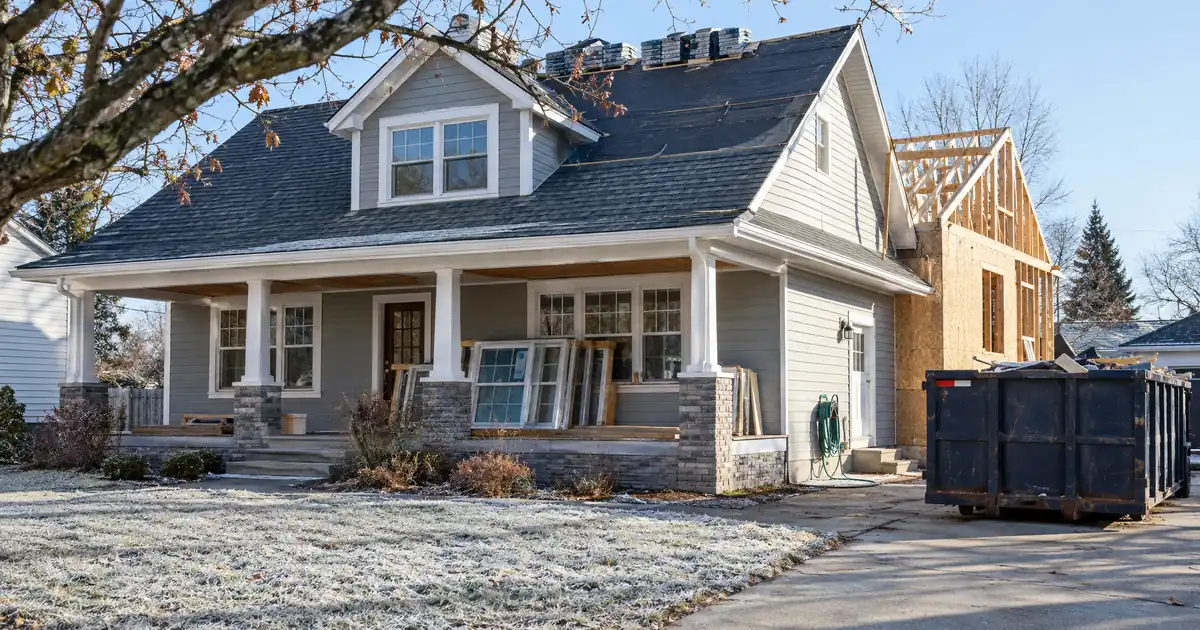
The Quick Read: Usually, yes: a fix and flip loan is a business-purpose loan that is reviewed on the property, the rehab plan, and your exit strategy rather than on pay stubs, W-2s, or traditional personal-income documentation, although lenders still review your credit, proof of funds, reserves, and track record before they approve anything.
- Underwriting centers on the property, the after-repair value (ARV), the rehab budget, and how you plan to get repaid.
- Fix-and-flip leverage typically runs 85% to 93% of project cost, always capped at 75% of ARV. Terms vary by lender, property, and experience.
- Credit still counts. A 620 score is the typical minimum, with extra conditions below 660.
- Terms run 6 to 18 months, interest-only, with no prepayment penalty.
- Many investors refinance into long-term rental financing once the property is stabilized.
What Does “No Income Documentation” Actually Mean?
It means the lender does not ask you to prove personal income. You will not hand over pay stubs, W-2s, or two years of traditional personal-income documentation. Qualification runs on the property’s value and the strength of the plan, not on your paycheck.
What this loan actually costs to carry.
Hard money is sized against the project and priced by time. Enter the deal and see how much the program will lend, the cash required at closing, the carry while you hold it, and what is left at the exit.
Leverage tiers on the current program: 85% with fewer than 2, 90% with 2 or more, 93% with 5 or more completed projects — every tier capped at 75% of after-repair value. Loan amounts up to $5,000,000, larger by exception; terms of 6 to 18 months, interest-only, no prepayment penalty. The rehab portion funds in draws against completed work, not at closing.
Program parameters shown update from Lendmire’s centralized guideline source. Rate, points, and months are editable assumptions, not quoted terms.
Cost cap sets the loan · positive spread
Illustrative estimate only — not a quote, Loan Estimate, approval, or commitment to lend. Rate, points, and months are editable assumptions. Hard money is business-purpose financing for real estate investors, not a consumer mortgage. Leverage on the current program tops out at 93% of project cost for investors with a documented track record, capped at 75% of after-repair value, with rehab funding up to 100% of the documented budget released in draws; actual terms vary by lender, borrower experience, property, and exit. Lendmire is a mortgage broker, not a lender.
It does not mean no underwriting. Think of it as swapping one set of documents for another. The lender trades your income file for a deal file and a liquidity file.
Here is what that swap looks like on a typical file. Programs vary, and some lenders ask for more.
| Usually waived | Still required |
|---|---|
| Pay stubs and W-2s | Purchase contract |
| Traditional personal-income documentation | Scope of work and rehab budget |
| Employment history | Proof of funds and reserves |
| Debt-to-income review | Credit review |
| Personal income calculation | Entity and ID documents |
| Property insurance |
Across the wholesale network Lendmire works with, the lenders that skip income review are not skipping caution. They move the risk analysis onto the collateral. That is why the property, the budget, and the exit get so much attention.
What Do Lenders Look at Instead?
They look at five things: the property, the rehab plan, the exit, your credit, and your cash.
The property and ARV. The lender wants two values. The as-is value is what the house is worth today. The ARV is what it should be worth after the work. A lender sizing the loan uses both, and the lower result wins.
The rehab budget. A realistic scope of work matters more than a hopeful one. Lenders notice when line items look thin or when the budget ignores obvious problems. A padded ARV paired with a skinny budget is the classic red flag.
The exit plan. Short-term loans are repaid by a sale or a refinance. The lender needs to believe one of those will work. Comparable sales support the sale route. A rental analysis supports the refinance route.
Your credit. The lender pulls it. A 620 score is the typical minimum, with additional conditions below 660. Better credit usually means smoother pricing and terms, and the tiers vary by lender.
Your liquidity. Lenders want to see cash for the down payment, closing costs, and a cushion for carrying costs. Reserves are the part many first-timers underestimate. A file with strong income on paper but no cash behind it is the one that stalls.
How Much Can You Borrow Without Income Review?
Leverage is tied to experience, not income. On most fix-and-flip files, the loan is sized against project cost, meaning purchase price plus the rehab budget, and then capped against ARV. These are typical network figures. They vary by lender, property, and experience.
| Experience | Fix-and-flip leverage | ARV cap |
|---|---|---|
| 5+ completed projects | Up to 93% of project cost | 75% of ARV |
| 2+ completed projects | Up to 90% of project cost | 75% of ARV |
| Fewer than 2 | Up to 85% of project cost | 75% of ARV |
Two more figures help. Bridge purchases with no rehab typically go up to 80% of purchase price. Cash-out and rate-and-term refinances typically go up to 65% of value. Loan amounts run up to $5,000,000, with larger loans handled by exception.
There is no true 100% purchase program. When you see 100% financing advertised, the real structure is usually that up to 100% of the rehab budget is released in draws as work is completed. That is a rehab-budget figure, not a purchase loan-to-value. The top leverage tier is reserved for experienced investors.
A Worked Example
Say you have completed two projects and you are buying a house to renovate. You qualify for the 90% of project cost tier. Now the ARV cap does its work.
Case one: your total project cost is 80% of the ARV. Ninety percent of that cost equals 72% of ARV. That is under the 75% cap, so the cost-based figure stands.
Case two: your total project cost is 85% of the ARV. Ninety percent of that equals 76.5% of ARV. That is over the cap, so the loan is trimmed to 75% of ARV, and you cover the difference in cash.
A first-time flipper at the 85% tier sees the same logic. With cost at 88% of ARV, 85% of cost equals about 74.8% of ARV, just under the cap. The tight margin in that deal is the bigger story. A lender looking at a project that thin will want to see a rock-solid budget and strong reserves.
Here is the lesson. The ARV cap is the number that quietly limits most deals, and income never enters the math. Cash at closing grows when the margin between cost and ARV shrinks, because the cap holds the loan to a smaller share of the project’s cost. Lenders see that pattern constantly.
Why Lenders Can Skip Your Income
Fix and flip loans are designed for non-owner-occupied investment properties. Because they are business-purpose investor loans, they are reviewed differently from a standard owner-occupied mortgage.
That distinction has a legal basis. The CFPB’s Regulation Z §1026.3 exempts business, commercial, agricultural, and organizational credit. It also says the creditor decides in each case whether the transaction is primarily for an exempt purpose. The federal ability-to-repay rulemaking likewise notes the rule does not apply to credit extended primarily for business purposes.
The practical result is simple. No federal rule forces the lender to collect your income documents on a business-purpose flip loan. Whether to ask is the lender’s own credit decision, and most asset-based lenders choose to underwrite the deal.
One edge case deserves a flag. If part of the money serves a personal purpose, the analysis can change. A law firm’s business-purpose guide uses a cash-out refinance on a rental to pay personal taxes as its example. Keep the loan purpose clean and the paperwork consistent.
Who Does This Loan Fit?
It fits investors whose income is hard to document but whose deals are strong. That includes:
- Self-employed investors whose traditional income documentation shows heavy write-offs.
- Investors with variable income, such as commission earners or seasonal business owners.
- Experienced flippers who want the highest leverage tier based on completed projects.
- First-time investors, who typically qualify at the lower leverage tier and bring more cash.
It does not fit a few situations. Owner-occupied homes are outside this product. So are commercial, industrial, land, and hospitality properties. Collateral is non-owner-occupied residential, 1-4 units, with ground-up construction going to 10 units.
Honestly, the first-timer question is a toss-up. Experience mostly changes your leverage and cash needs rather than your eligibility. But a thin-cash first flip on a tight-margin deal is the file most likely to stall. Starting with a smaller, cleaner project often works better than reaching for a big one.
How the Application Works, Step by Step
Think of it as building a deal file. Here is the order that tends to work.
1. Confirm business purpose. The property is non-owner-occupied, and the loan is for investment. Many lenders want you to hold title in an LLC, subject to lender program eligibility.
2. Assemble the deal package. Gather the purchase contract, scope of work, line-item budget, and comparable sales supporting your ARV.
3. Show your cash. Prepare statements proving funds for the down payment, closing costs, and reserves.
4. Authorize the credit review. Expect a credit pull. Resolve any obvious issues ahead of time.
5. Document your track record. List completed projects with addresses and results. This moves you between leverage tiers.
6. Get insurance lined up. The property needs coverage before funding.
7. Plan the draws. Rehab money is released as work is completed. You usually front costs, then request reimbursement.
Before you submit, run a quick self-audit. Does your budget cover permits, contingency, and carrying costs? Does your ARV rest on genuine comparable sales? Do you have cash left after closing? Three yeses make a stronger file.
Why Files Still Get Declined
Skipping an income review does not mean approval is automatic, since every file remains subject to underwriting. Files commonly fail for these reasons:
- Thin liquidity. The down payment is there, but reserves are not.
- A weak scope. The budget leaves out major systems or ignores permits.
- An optimistic ARV. Comparable sales do not support the number.
- A shaky exit. There is no clear sale or refinance path.
- Credit below the floor. A score under 620 is typically outside the program.
- Entity problems. The LLC is not properly formed or the documents do not match.
- Ineligible collateral. Owner-occupied homes and non-residential property are not offered.
In practice, the borrower with a clean budget and a modest ARV usually does better than the one with a flashy ARV and sloppy paperwork. Lenders trust a conservative plan.
What It Costs You (In Trade-Offs)
Skipping income review shifts risk to the asset, and that shows up in the terms. Expect pricing, leverage limits, and reserve requirements to reflect the lender’s focus on the collateral. Loan pricing lives in the calculator and in a lender’s quote, not here. Leverage, reserves, and pricing vary by lender and program; the final terms follow the full file review.
Other trade-offs are structural. Terms run 6 to 18 months, interest-only. There is no prepayment penalty. Nothing on the current program runs longer than 18 months, so a project that drags past its term needs a refinance, not an extension. If you want longer runway, the answer is a different product.
Budget for drawn funds, too. Rehab dollars arrive after work is done, so you need cash flow to bridge each stage. Tax treatment can depend on how the funds are used and how the property is held; investors should keep clear records and speak with a qualified tax professional before relying on any deduction.
What Happens After the Flip?
You have two basic exits. You sell, or you refinance.
If you sell, the sale proceeds repay the loan. That works best when your ARV rests on solid comparables.
If you keep the property as a rental, many investors refinance out of the short-term loan into long-term financing once the property is stabilized. Lendmire arranges that path through DSCR loans. A DSCR loan is reviewed primarily on property-level rental income covering the payment, subject to lender guidelines, so you do not have to document personal income again. Lendmire’s complete DSCR loans guide walks through how the ratio works.
Don’t Confuse It With These
The label no income documentation floats around in other products. They are not the same thing.
| Product | Underwritten on | Fit |
|---|---|---|
| Fix and flip loan | Property, rehab plan, exit | Buy, rehab, sell or refinance |
| Owner-occupied mortgage | Borrower’s ability to repay | Not this product |
| DSCR rental loan | Rent versus the payment | Long-term rentals |
| Credit-free loan offers | Varies | Treat claims with caution |
Be wary of any lender advertising 100% financing without explaining that the figure applies to rehab draws. Ask what is capped, what fees are charged up front, and how draws are released. A lender who answers clearly is usually one worth talking to.
Key Terms Defined
ARV (after-repair value): The estimated market value of the property once renovations are finished.
Project cost: The purchase price plus the rehab budget. Fix-and-flip leverage is sized against it.
Draws: Rehab funds released in stages as completed work is verified.
Reserves: Cash you keep on hand after closing to cover carrying costs and surprises.
Business-purpose loan: A loan made for an investment property you do not live in.
DSCR loan: A long-term rental loan that is reviewed on whether the property’s rent covers its payment.
Frequently Asked Questions
Do I need conventional personal-income paperwork for a fix and flip loan?
Usually not. Asset-based flip programs underwrite the property and the plan, so standard personal-income documentation is typically not part of the file. Some lenders and programs ask for more, and requirements vary by lender, property, and experience.
Can a first-time flipper get approved?
Often, yes, at a lower leverage tier. On the network’s typical structure, borrowers with fewer than two completed projects see up to 85% of project cost, still capped at 75% of ARV. First-timers usually bring more cash. Approval is subject to lender guidelines and review of the credit, deal, and reserves.
Do I need an LLC?
Many lenders prefer or require one, subject to lender program eligibility. The loan is for a non-owner-occupied investment, so the entity paperwork needs to match the business-purpose structure. Ask early so documents are ready.
Will the lender pull my credit?
Yes. Credit is reviewed. A loan that skips credit review altogether is not how these programs work.
Can I get a self-employed or irregular-income flip financed?
Yes, that is a common use. Because the file centers on the deal, heavy write-offs or uneven income matter far less. What does matter is your credit, your cash, and a realistic budget and exit.
Next Step
If you are buying, rehabbing, or refinancing an investment property on a short timeline and want to see how the numbers work, Lendmire can help you compare hard money options based on the project, the exit plan, leverage, and your goals. Lendmire is a mortgage broker that arranges financing through select lenders in its wholesale network, across 41 markets, including Washington, D.C. Nothing here is a commitment to lend.
The flip that gets financed easiest is rarely the biggest one. It is the one where the budget is honest, the comps are real, and the exit is obvious before the first dumpster arrives.
About Lendmire
Lendmire (NMLS# 2371349), a non-QM mortgage broker serving investors in 41 markets including Washington, D.C., helps structure DSCR scenarios commonly evaluated around a property’s rental income rather than personal income paperwork, subject to lender guidelines. A Scotsman Guide Top Mortgage Workplace in 2025 and 2026, Lendmire places loans through wholesale investor lenders and is not a direct lender.
Many investors treat hard money as the acquisition tool and plan the exit up front – see the hard money loan overview.
Get Started
Ready to find the right loan for you?
In about 30 seconds you can review financing options available for your investment property. No commitment required.
Informational only. Not a Loan Estimate, approval, or commitment to lend. Program availability and eligibility are subject to lender guidelines, credit approval, property review, and underwriting.
References
1. CFPB, Regulation Z §1026.3, Exempt transactions
2. Federal Register, Ability-to-Repay and Qualified Mortgage Standards final rule
3. Doss Law, Business Purpose Exemption guide
This article is part of Lendmire’s hard money loan program — full qualification details, guidelines, and scenarios live on the program page.
Related reading: Can You Get a HELOC With Minimal Documentation? · How to Structure a Trust With a Trustee Guarantor for a DSCR Loan · Short-Term Rental DSCR Loan Documentation for a Retiree With No W-2
Brandon Miller
Founder & CEO, Mortgage Loan Originator, Lendmire LLC
- Mortgage Loan Originator · NMLS# 1129696 · Verify on NMLS Consumer Access
- North Carolina Real Estate Broker · License# 343312 · Verify on NCREC
- North Carolina Insurance Producer · License# 19053198 · Property, Casualty, Life, Health · Verify on NAIC SBS
- Lendmire LLC · Firm NMLS# 2371349 · Verify firm licensure
Legal disclosures. Lendmire (NMLS# 2371349) is a state-licensed mortgage brokerage that arranges financing through wholesale lender relationships. Lendmire is not a direct lender, depository institution, or registered financial advisor. The discussion above is general informational content about real estate financing — it is not financial, legal, or tax advice, and readers should consult licensed professionals for guidance on their individual circumstances. Loan inquiries are subject to lender underwriting; this article does not represent a commitment to lend. Loan terms, rates, and qualification standards vary by borrower, property, and state, and are subject to change at any time. Equal Housing Opportunity. NMLS Consumer Access: nmlsconsumeraccess.org.