
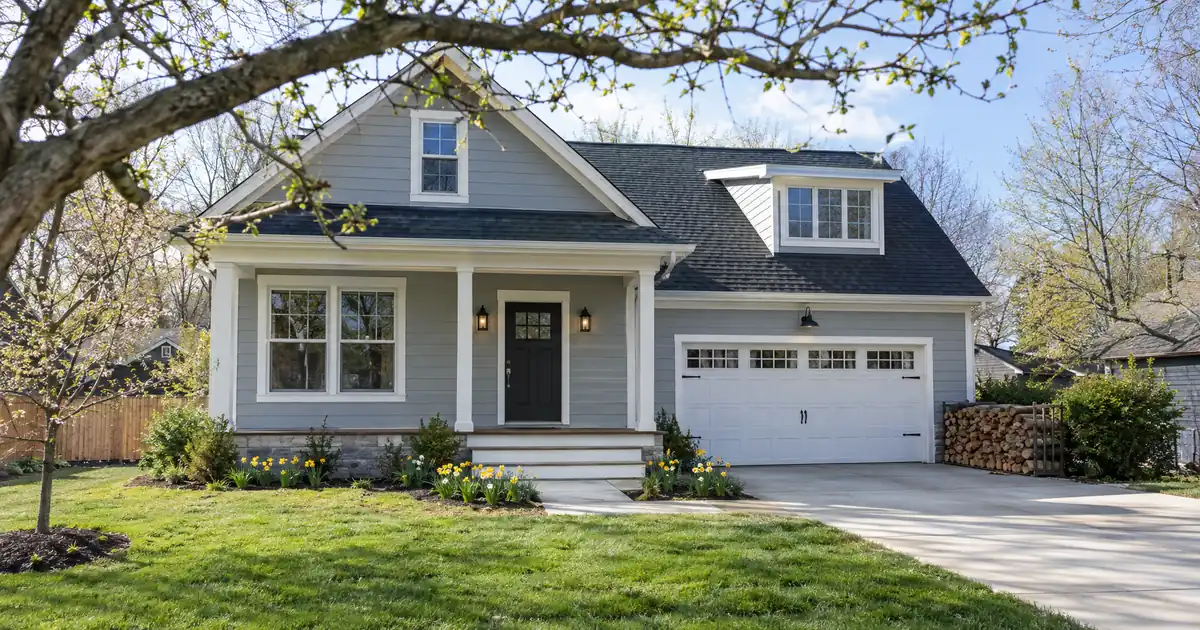
The Quick Read: No. Hard money flip loans are built for non-owner-occupied residential property, mostly one-to-four-unit homes, townhomes, condos, and planned-unit developments. Manufactured homes, land, commercial buildings, and thin-comp rural properties either need a different product or are not offered at all.
- Collateral and exit decide the answer. Credit alone does not.
- In Lendmire’s network, flip collateral is non-owner-occupied residential, 1-4 units (ground-up construction goes to 10 units).
- Condos work only when the project is reviewable and the buyer pool can get a mortgage later.
- Vacant land, commercial, industrial, hospitality, and owner-occupied properties are not on the program sheet.
- If the flip might become a rental, check rental-loan eligibility before you buy.
The rest of this article shows where each property type lands and what a lender checks before saying yes. It also covers what to confirm before you spend a dollar on due diligence.
What this loan actually costs to carry.
Hard money is sized against the project and priced by time. Enter the deal and see how much the program will lend, the cash required at closing, the carry while you hold it, and what is left at the exit.
Leverage tiers on the current program: 85% with fewer than 2, 90% with 2 or more, 93% with 5 or more completed projects — every tier capped at 75% of after-repair value. Loan amounts up to $5,000,000, larger by exception; terms of 6 to 18 months, interest-only, no prepayment penalty. The rehab portion funds in draws against completed work, not at closing.
Program parameters shown update from Lendmire’s centralized guideline source. Rate, points, and months are editable assumptions, not quoted terms.
Cost cap sets the loan · positive spread
Illustrative estimate only — not a quote, Loan Estimate, approval, or commitment to lend. Rate, points, and months are editable assumptions. Hard money is business-purpose financing for real estate investors, not a consumer mortgage. Leverage on the current program tops out at 93% of project cost for investors with a documented track record, capped at 75% of after-repair value, with rehab funding up to 100% of the documented budget released in draws; actual terms vary by lender, borrower experience, property, and exit. Lendmire is a mortgage broker, not a lender.
Why Does Property Type Matter So Much With Hard Money?
Hard money underwriting is asset-based. The lender looks at the property, the rehab plan, and how you get out. Your personal income matters far less than in a bank mortgage. That is exactly why the property carries so much weight.
The lender asks three questions about the asset:
1. Can it be valued? There must be recent sales of similar properties to support both the as-is value and the after-repair value (ARV, the expected value once the work is done).
2. Can it be resold or refinanced? The loan is short, so the lender needs a realistic buyer or a realistic refinance.
3. Is it the kind of collateral the program was built for? Each lender writes a menu of eligible property types. Items off the menu are out, no matter how good the deal looks.
Across the lenders we place files with, the menus look similar at the core and differ at the edges. Single-family homes are on every one. Condos and townhomes are on almost all. Small multifamily is on most, though unit caps differ. Anything beyond that, such as mixed-use, land, or special-use, is where menus split.
Which Property Types Can You Actually Flip?
Single-family homes, townhomes, condos, and small multifamily (2-4 units) are the core of hard money flipping. Beyond four units, or beyond residential use, you leave the standard flip program. The table shows how each type typically fares.
| Property type | Typically fundable? | Main complication | Exit note |
|---|---|---|---|
| Single-family | Yes | Condition and comps | Widest buyer pool |
| Townhome | Yes | HOA rules | Strong buyer pool |
| Condo | Usually | Project eligibility | Buyer financing matters |
| 2-4 unit | Yes | Unit-level rent and comps | Sell or hold |
| 5+ unit | Not on the standard flip sheet | Commercial treatment | Different product |
| Mixed-use / commercial | Not offered here | Use and zoning | Commercial lender |
| Vacant land | Not offered here | No improved collateral | Niche lenders |
| Manufactured home | Rare | Chattel and thin comps | Often cash buyers |
Lender menus vary. Treat the table as the typical pattern, not a promise for any single file.
Single-family, townhomes, and 2-4 units
This is the home turf. A single-family flip has the deepest comp data and the widest set of buyers. Townhomes behave the same way, with an HOA wrinkle.
Small multifamily is fundable too, and it adds a choice at the exit. A fourplex can be sold to a buyer, or kept and refinanced into long-term rental financing. Rehab scope is bigger, though. You are repairing several kitchens and baths, and the ARV must reflect unit-level income and comps, not just a house number.
Condos
Condos are usually eligible, but the project matters as much as the unit. A building with heavy investor ownership, pending litigation, or weak association finances can be hard to resell. Buyers who need a mortgage may be locked out when the project is not reviewable. That shrinks your exit pool.
Condos also tend to carry lower entry prices and smaller scopes, which is why many newer investors start there. Ask the lender about project eligibility before you go under contract. Ask the association for its financials and rules on rentals and renovations.
Manufactured homes
This is the clearest “rare or no” case. Homes sitting in a park on leased land are generally treated as personal property rather than real estate. Real Estate Skills notes that banks won’t lend on in-park homes. It also notes that hard money lenders for mobile homes exist but are rare.
The exit problem is just as real. Buyers who need bank financing are scarce, so these flips often end in a cash sale or seller financing. If you hope to keep the property as a rental, there is another wall. DSCR loans are not offered on manufactured homes, whether single-wide or double-wide. Log homes and barndominiums are not offered either.
Land, commercial, and mixed-use
Lendmire’s hard money program is for 1-4 unit non-owner-occupied residential property. Ground-up construction goes up to 10 units. Commercial, industrial, hospitality, vacant land, and lots are not on that sheet.
Lenders do write commercial bridge loans for these assets. They are a different product, with different documentation and often longer terms. If your target is a storefront with apartments upstairs, you need a lender built for that collateral.
What Can Block a Property From Being Financed?
Even on an eligible property type, five things commonly sink a deal: weak comps, a rural location, a poorly supported ARV, a thin scope of work, and an exit nobody believes. A lender can decline a perfectly normal house for any of them.
Thin comps and rural locations. If recent sales of similar homes are scarce, the lender cannot support the value. Eligibility depends on whether valid comps exist and whether the exit is clear. Many investors find that lenders that will fund a suburban house pass on the same house in a remote town.
An unsupported ARV. The loan is sized against the after-repair value and the rehab budget. An optimistic ARV with weak comps is a common reason files stall. Lendmire’s piece How to Support Your ARV on a First Flip With Hard Money covers how to build that case.
A scope of work that doesn’t hold up. Lenders review the budget line by line. Rehab money is released in draws as completed work is inspected. A vague scope slows the draws and raises questions about the whole plan.
Title, permit, and condition problems. Unpermitted additions, open violations, and structural issues can take a property out of consideration. They also scare off the next buyer.
No believable exit. A flip exits by sale or by refinance. If the likely buyer cannot get financing, or the property cannot qualify for long-term debt, the lender sees risk it cannot price.
How Much Can You Borrow Once the Property Qualifies?
For a fix-and-flip, leverage is measured against project cost and capped against ARV. It varies by lender, property, and experience, and it steps up with the number of completed projects you can document.
Here is how it typically runs across our network:
- Fix-and-flip: up to 93% of project cost at five or more completed projects, up to 90% at two or more, and 85% with fewer than two. Every tier is capped at 75% of ARV.
- Rehab funds: up to 100% of the rehab budget, released in draws against completed work. That figure applies to the rehab budget only, never to the purchase.
- Bridge purchase without rehab: up to 80% of the purchase price.
- Cash-out or rate-and-term refinance: up to 65% of value.
- Ground-up construction: up to 90% of cost and 75% of completed value at three or more completed projects.
There is no true 100% purchase program. The top tier is reserved for experienced investors, and first-time investors qualify at the lower leverage tiers.
The ARV cap often decides the real number. Say a project’s total cost equals 80% of ARV. At the 90% cost tier, the loan lands at 72% of ARV, under the cap. Now say the project cost equals 85% of ARV. The same 90% of cost would be 76.5% of ARV, so the 75% cap pulls the loan down and you cover the gap. Buying at a deep discount to ARV is what makes the high tiers usable. These are modeled percentages, not quotes.
Other typical parameters: loans up to $5,000,000, with larger amounts by exception. Terms generally run 6 to 18 months, interest-only, with no prepayment penalty. Credit starts around a 620 score, with added conditions below 660. Underwriting stays centered on the property, the plan, and the exit. Everything here is subject to lender guidelines, and none of it is a commitment to lend.
Can You Use Hard Money on a Flip You Plan to Live In?
Generally no. Hard money flip loans are business-purpose loans on investment property. A home you will occupy is a consumer purchase, and it does not fit this product.
Because these are business-purpose investor loans, they are reviewed differently from a standard owner-occupied mortgage. Federal examiner guidance, such as the OCC Comptroller’s Handbook on TILA, treats credit extended primarily for business or commercial purposes as exempt from Regulation Z. That is why lenders ask for a business-purpose declaration and often prefer an LLC borrower, subject to lender program eligibility.
The practical point: if you plan to move in, talk to a lender about a different product. Do not try to fit a primary residence into a flip loan.
Does the Property Type Change Who Can Buy the Flip?
Yes, and this is the part newer investors miss. Your buyer is often using a regular mortgage. The type of property determines whether that mortgage is available.
A single-family house in a normal neighborhood sells to nearly any financed buyer. A condo in a project with financing problems may sell only to cash buyers. An in-park manufactured home may not sell to a bank-financed buyer at all.
Federal rules for higher-priced consumer mortgages also shape buyer-side appraisals. As defined in 12 CFR 1026.35, those loans are consumer loans secured by the consumer’s principal dwelling. They can touch the person buying your flip. They do not describe your own business-purpose loan, so ask a qualified professional how any rule applies to a specific resale.
Run your exit before you run your purchase. If you cannot name the likely buyer and how that buyer pays, the property type is a risk, not a bargain.
What Happens If the Flip Becomes a Rental?
Many flips end as rentals when the market softens or the numbers favor holding. A hard money note is short and interest-only, so it is not a place to sit. The loan has to be replaced.
Many investors refinance out of hard money into long-term DSCR financing once the property is renovated and stabilized, and Lendmire brokers that path. A DSCR loan is reviewed primarily on property-level rental income covering the payment, subject to lender guidelines. Lendmire’s piece How to Time a Two-Step DSCR Cash-Out After a Hard Money Flip covers when that handoff makes sense. The complete DSCR loans guide explains the long-term side.
The catch: eligibility on the hard money side does not guarantee eligibility on the rental side. A property a hard money lender will fund may still sit outside DSCR programs. Manufactured homes are the clearest example. Check both menus before you buy.
Pre-Purchase Checklist: What to Ask a Lender About Your Property
Run this list before you pay for an appraisal or inspection. A five-minute call can save the deal fee.
1. Property type and unit count. Is it on the program menu, including 2-4 units and condos?
2. Occupancy. Is it non-owner-occupied and held for investment?
3. Location. Does the lender fund this market, and is it urban or rural enough to cause comp problems?
4. Condo project status. Is the project reviewable for the eventual buyer?
5. Comps. Can you assemble recent sales that support both as-is value and ARV?
6. Scope and budget. Is the work itemized, permitted where required, and tied to a draw schedule?
7. Leverage tier. How many completed projects can you document? That sets your loan-to-cost tier.
8. Exit. Sale or refinance, and which property qualifies for the refinance you want?
9. Borrower entity. Does the lender want an LLC, and what documents does that require?
Tax treatment varies by how you hold and use the property, so consult a qualified professional before relying on any deduction.
Key Terms Defined
After-repair value (ARV): the property’s estimated market value after the renovation is done.
Loan-to-cost: the loan amount as a percentage of what the project costs, meaning purchase plus rehab.
Draw: a release of rehab funds after the lender confirms a stage of work is complete.
Non-owner-occupied: a property you do not live in, held as an investment.
Business-purpose loan: a loan made for investment or commercial use, not for personal or household use.
Chattel: personal property, such as a home on leased land, that is not treated as real estate for lending.
Warrantable condo: a condo project that meets standard financing rules, so buyers can use a mortgage.
Frequently Asked Questions
Can I flip a condo with a hard money loan?
Usually yes. Condos are on most lenders’ menus. The risk is the project: if it fails financing standards, your buyer pool shrinks to cash buyers. Check association financials, investor concentration, and rental rules first. Eligibility varies by lender and file.
Can I flip a duplex, triplex, or fourplex?
Yes. Lendmire’s network funds non-owner-occupied residential from one to four units on the flip program. Ground-up construction goes to 10 units. Five or more units on a standard flip generally moves into commercial territory, which is a different loan.
Can I flip a mixed-use building or vacant land?
Not through Lendmire’s hard money program. Commercial, mixed-use, industrial, hospitality, and land are not on the sheet. Those assets need a commercial bridge or niche lender, with different terms and documents.
Can a first-time flipper get a hard money loan?
Often yes, at the lower leverage tiers. Under two completed projects, loan-to-cost tops out at 85% and always sits under the 75% ARV cap. A credit score around 620 is the typical floor, with extra conditions below 660. Terms vary by lender, property, and experience.
Does the house have to be distressed?
No. The program is built for purchases with a renovation plan, and the work is what the draws fund. A property that needs little work can still qualify as a bridge purchase, with leverage up to 80% of the purchase price. It must still be eligible collateral with a clear exit. Every figure here varies by lender and program — guidelines, property type, leverage, and credit profile all apply.
Where to Go From Here
If you are buying, rehabbing, or refinancing an investment property on a short timeline and want to see how the numbers work, Lendmire can help you compare hard money options based on the project, the exit plan, leverage, and your goals. Lendmire is a broker arranging financing through select lenders in its wholesale network, across 41 markets including Washington, D.C. You can request a quote or call 828-256-2183. Programs change, and every file is underwritten individually.
The investors who flip well pick the exit first and let the property type follow from it.
About Lendmire
A non-QM mortgage broker (NMLS# 2371349), Lendmire arranges DSCR financing for real estate investors in 41 markets — 40 states plus Washington, D.C. Because deals are underwritten primarily on property cash flow rather than personal income documentation, the structure suits self-employed buyers and entity-owned portfolios. Lendmire places loans through wholesale investor lenders; it is not a direct lender. Scotsman Guide named Lendmire a Top Mortgage Workplace in both 2025 and 2026.
Get Started
Ready to find the right loan for you?
In about 30 seconds you can review financing options available for your investment property. No commitment required.
Informational only. Not a Loan Estimate, approval, or commitment to lend. Program availability and eligibility are subject to lender guidelines, credit approval, property review, and underwriting.
References
1. Real Estate Skills — Flipping Manufactured Homes
2. OCC Comptroller’s Handbook — Truth in Lending Act
This article is part of Lendmire’s hard money loan program — full qualification details, guidelines, and scenarios live on the program page.
Related reading: Hard Money Loan Requirements to Buy Out a Land Contract · Hard Money Rehab Draw Inspections for a Full-Gut Rehab · Can You Use One Super Jumbo DSCR Loan for 20 or More Rentals?
Brandon Miller
Founder & CEO, Mortgage Loan Originator, Lendmire LLC
- Mortgage Loan Originator · NMLS# 1129696 · Verify on NMLS Consumer Access
- North Carolina Real Estate Broker · License# 343312 · Verify on NCREC
- North Carolina Insurance Producer · License# 19053198 · Property, Casualty, Life, Health · Verify on NAIC SBS
- Lendmire LLC · Firm NMLS# 2371349 · Verify firm licensure
Disclosure information. Lendmire is a state-licensed mortgage brokerage under NMLS# 2371349. Lendmire is not a depository institution, direct lender, or financial advisor — all loans referenced are placed through wholesale lender partners and are subject to each lender's underwriting standards. This article is provided for general informational purposes and is not a commitment to lend, nor does it constitute financial, legal, or tax advice. Loan programs, terms, rates, and qualification standards change without notice and depend on borrower profile, property type, and the state in which the subject property is located. Equal Housing Opportunity provider. NMLS Consumer Access: nmlsconsumeraccess.org.