
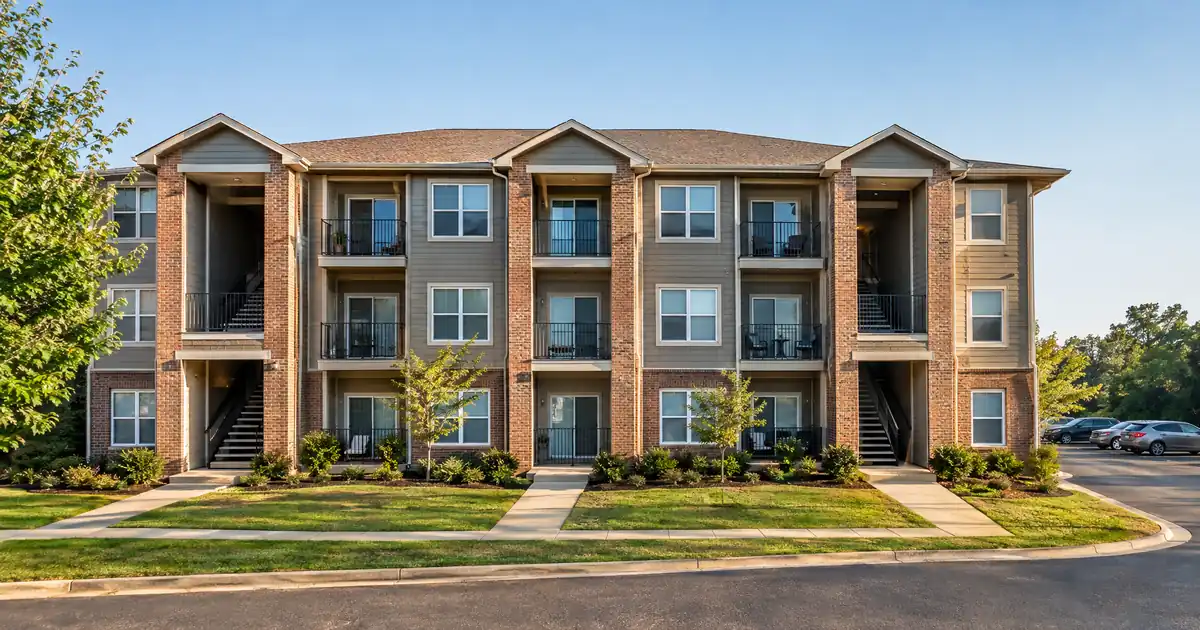
The Quick Read: Yes, hard money lenders routinely finance flips of two-to-four-unit buildings, as long as the property is non-owner-occupied residential, the loan is for business purposes, and you can show a rehab budget, a resale value supported by comps, and a clear exit. Duplexes, triplexes and fourplexes sit in the same residential box as single-family homes. The deal is judged on the property, the plan and your track record, so the questions change a little with more units, and the answers change with them.
- Leverage is sized on project cost, tiered by documented completed projects: 93% of project cost at 5+ projects, 90% at 2+, 85% below 2. Every tier is capped at 75% of after-repair value, and each varies by lender, property, and experience.
- Up to 100% of the rehab budget funds in draws against completed work.
- Terms run 6-18 months, interest-only, with no prepayment penalty.
- A 620 credit score is the typical minimum, with added conditions below 660.
- Five or more units, mixed-use and commercial buildings go to different programs.
Key Terms Defined
Hard money loan: a short-term, interest-only loan secured by the property. It is underwritten on the asset, the plan and the exit more than on your personal income.
After-repair value (ARV): what the building should be worth once the work is finished, based on comparable sales.
Loan-to-cost: the loan as a share of what the project costs, meaning purchase price plus rehab budget.
Draw: a release of rehab money after you finish a stage of work and it is inspected.
Non-owner-occupied: you do not live in the property. It is held as an investment.
DSCR (debt service coverage ratio): monthly rent divided by the full monthly housing payment (principal, interest, taxes, insurance, and any HOA dues). It is the test for the long-term rental loan you may use to exit.
Seasoning: the waiting period a lender wants between buying or finishing a property and refinancing it.
What this loan actually costs to carry.
Hard money is sized against the project and priced by time. Enter the deal and see how much the program will lend, the cash required at closing, the carry while you hold it, and what is left at the exit.
Leverage tiers on the current program: 85% with fewer than 2, 90% with 2 or more, 93% with 5 or more completed projects — every tier capped at 75% of after-repair value. Loan amounts up to $5,000,000, larger by exception; terms of 6 to 18 months, interest-only, no prepayment penalty. The rehab portion funds in draws against completed work, not at closing.
Program parameters shown update from Lendmire’s centralized guideline source. Rate, points, and months are editable assumptions, not quoted terms.
Cost cap sets the loan · positive spread
Illustrative estimate only — not a quote, Loan Estimate, approval, or commitment to lend. Rate, points, and months are editable assumptions. Hard money is business-purpose financing for real estate investors, not a consumer mortgage. Leverage on the current program tops out at 93% of project cost for investors with a documented track record, capped at 75% of after-repair value, with rehab funding up to 100% of the documented budget released in draws; actual terms vary by lender, borrower experience, property, and exit. Lendmire is a mortgage broker, not a lender.
Why Do 2-4 Units Count as Residential?
A building with up to four units is lent against like a house, and a building with five or more is lent against like a commercial asset. That line decides which loan programs you can use and how the lender values the property.
The appraisal world draws the same line. The Fannie Mae Selling Guide names the Small Residential Income Property Appraisal Report, Form 1025, for two- to four-unit properties. Hard money and DSCR loans are not agency products, so this is only a form-name reference. It still matters because that form carries rent comparables and an income analysis, which is exactly what small multifamily needs.
Lenders in the network where Lendmire places files treat 1-4 units as eligible collateral on a standard flip. If your building is legally a fourplex with an illegal fifth unit in the basement, the lender sees four units, and the extra kitchen can create problems. Confirm the legal unit count before you make an offer.
How Does a Hard Money Flip Loan Work on a Small Multifamily?
The mechanics match a single-family flip. The lender sizes the loan on the lower of two tests: a share of project cost, and a share of ARV. You then buy, renovate, and exit by selling or refinancing.
Here is how the pieces fit across most programs:
1. Sizing. Leverage runs on loan-to-cost, tiered by documented completed projects: 93% of project cost at 5+ completed projects, 90% at 2+, and 85% below 2. Every tier is capped at 75% of ARV. A bridge purchase with no rehab goes up to 80% of purchase price. All of this varies by lender, property, and experience, and none of it is a commitment to lend.
2. Valuation. Depending on the lender, the ARV comes from a full appraisal, a broker price opinion, or an in-house valuation. On a 2-4 unit, expect rent comps to matter.
3. Rehab money. Up to 100% of the rehab budget funds in draws against completed work. That is a rehab-budget figure, never a purchase loan-to-value.
4. Term. 6-18 months, interest-only, no prepayment penalty. Nothing on the current program runs multiple years.
5. Exit. You sell, or you refinance into long-term rental financing.
Notice the order of events. You pay for early work from your own cash, then get reimbursed after inspection. The cash you bring is more than the gap between the loan and the price. It also covers lender fees, reserves, and the first stretch of rehab before a draw releases.
Single-Family Flip vs. 2-4 Unit Flip vs. 5+ Units
| Factor | Single-family flip | 2-4 unit flip | 5+ units |
|---|---|---|---|
| Loan bucket | Residential | Residential | Commercial |
| Value driver | Sales comps | Sales comps plus rent comps | Income and cap rate |
| Rehab scope | One set of systems | Several units, often separate systems | Large, phased |
| Resale buyer | Owner-occupant or investor | Owner-occupant or investor | Investor |
| Exit if resale stalls | Rent it | Rent it, with more income streams | Commercial refinance |
The middle column is where the extra homework lives. Everything else follows the single-family playbook with more moving parts.
What Do Lenders Check Before They Say Yes?
Four things decide the file: the property, the rehab plan, the borrower, and the exit. The deal can be strong on three and still stall on the fourth.
The property. The lender wants a non-owner-occupied residential building of four units or fewer, usually distressed or undervalued, with a legal unit count. A condo or planned-unit 2-4 property needs additional project paperwork, and some lenders skip condos altogether.
The rehab plan. A line-item budget and a scope that matches the ARV. A gut renovation of all four units asks more of a lender than a cosmetic refresh. Experienced borrowers get more room on heavy scopes.
The borrower. Your count of completed projects sets your leverage tier. First-time investors qualify at the lower tiers, and the top tier is reserved for experienced investors. A 620 score is the typical minimum, with added conditions below 660. Underwriting stays asset-based, so the building and the plan carry the file, but credit and liquidity still count. If you hold title through an entity, that works depending on program guidelines.
The exit. The lender wants to see how the loan gets repaid. A resale plan backed by comps counts, and a refinance plan backed by rent counts. Two supported exits beat one.
Valuation: Where Small Multifamily Flips Go Wrong
The most common failure is an ARV that sits too high. The lender’s number is the one that matters, and it can come in below yours.
Run a quick test. Say your plan assumes a certain ARV, and the lender’s valuation lands 10% lower. The 75% ARV cap now bites on a lower base, and the loan shrinks, even though your purchase price and rehab budget did not change. You fund the gap from your own cash.
Small multifamily adds a second valuation question. Buyers of a fourplex may price it off rent, while buyers of a duplex may price it off what a family would pay to live in it. Pull sales comps for the same unit count, in the same condition, from the same area. A renovated duplex does not comp well against a renovated single-family home next door.
What About Tenants, Occupancy and Rehab Across Units?
Tenants in place change the plan, not the eligibility. A lender still looks at the building, but you have to decide how to turn units without losing the rent that carries you.
You have three common paths:
- Vacant at purchase. Easiest to renovate. The building produces no income during the work, so the interest-only carry comes from your reserves.
- Partly occupied. You renovate one or two units at a time. The budget gets more complex, and draws follow completed stages, so staging the work matters.
- Fully occupied. Rent may help carry the loan, but lease terms limit how fast you can renovate. If your plan is to sell, you also need to plan around leases that transfer to a buyer.
Multi-unit rehabs add line items that single-family flips do not have. Separate meters, separate heating and cooling systems, shared roofs and stairwells, and fire-separation work can all show up in the budget. Build contingency into the scope. A rehab that runs over eats your cash first and your exit second.
Selling the Building: Who Buys a Flipped 2-4 Unit?
Your buyer is either an owner-occupant who lives in one unit and rents the others, or an investor who prices the building off its rent. Your renovation should suit whichever one you expect.
An owner-occupant buyer may use financing designed for small multifamily homes, and cares about the unit they will live in. An investor buyer cares about the rent roll and the cost to hold it. A building with strong rent comps and clean systems works for both. Because buyer financing and resale timing can shape who can actually close on your building, check with a local agent and a lender before you set your exit price.
Flip margins are a useful reality check. ATTOM’s flip report found a typical gross profit of $60,526 and a typical gross margin of 21.5%. The typical flip took 161 days from purchase to resale. The data covers single-family homes and condos, not 2-4 unit buildings, and the profit is gross, before rehab overruns, financing and carry. Treat it as a flipping benchmark, never as multifamily data. Tax treatment varies; consult a qualified professional.
The Exit: Sell, Refinance, or Extend
The two clean exits are a sale or a refinance into long-term rental financing. A small multifamily is a natural flip-or-hold asset because it has several rent streams, so the second exit is real.
Many investors refinance out of hard money into long-term DSCR financing once the property is stabilized, and Lendmire brokers that path. Read the complete DSCR loans guide for the mechanics. A few points matter for planning:
- The building has to be habitable and leased. A DSCR loan is underwritten on a rentable property, not a gut project.
- A cash-out refinance tops out around 75% LTV across most of the network, with about 6 months of seasoning as the common expectation.
- 1.00 coverage is where many select programs start. A separate select-lender path takes coverage below 1.00, with leverage and terms adjusted.
- Clearing 1.00 does not mean positive cash flow. DSCR compares rent to the monthly housing payment only, and repairs, vacancy, management, utilities and capex sit outside the number. Exact terms depend on the lender’s guidelines, property type, leverage, and a full review of the borrower’s file.
Map the refinance on the day you buy, not on the day the loan matures. A 6-18 month interest-only term leaves little room for a rehab that runs long and a lease-up that runs longer.
If resale pricing softens, the rental exit gives you a way to hold. If rents fall short of the payment, the sale exit remains. Underwrite both before you close on the purchase.
Can You Live in One of the Units?
Not on a standard hard money flip. Programs in this space are written for non-owner-occupied investment property, and owner-occupied is not offered.
DSCR loans are designed for non-owner-occupied investment properties. Because they are business-purpose investor loans, they are reviewed differently from a standard owner-occupied mortgage. A law firm’s overview of business-purpose lending makes the same point: the loan’s purpose, not the paperwork around it, controls how it is classified. Setting up an LLC does not turn a home you plan to live in into an investment.
If you want to house-hack a duplex or fourplex, you are in a different product with different rules. Come back to the flip loan when you are buying purely to renovate and exit.
A Worked Example: Where the Two Caps Collide
This is a hypothetical, described in terms of ARV so you can see the logic without dollar figures. The modeled assumptions are illustrative, not market data. Both scenarios assume the 90% of project cost tier.
| Scenario | Project cost vs. ARV | Loan at 90% of cost | Loan sized to |
|---|---|---|---|
| A: modest rehab | About 70% of ARV | About 63% of ARV | Cost test |
| B: heavy rehab | Much closer to ARV | Would pass the 75% cap, so held to 75% of ARV | ARV cap |
In scenario A, the cost test is the limit. The loan lands near 63% of ARV, below the 75% cap, and you cover the remaining cost plus fees and reserves. In scenario B, project cost climbs high enough that 90% of it would run past 75% of ARV, so the cap wins and your cash share goes up even though your tier did not change. Same lender, same tier, different outcome. This is why a lower project cost relative to ARV matters more than a higher leverage tier.
The takeaway is practical. Before you bid, divide purchase plus rehab by your conservative ARV. If the result runs high enough that your tier would push the loan past the 75% ARV cap, plan on more cash. Lenders vary, and every file is underwritten individually.
How to Prepare: A Short Checklist
1. Confirm the legal unit count and non-owner-occupied intent.
2. Pull sales and rent comps for the same unit count.
3. Build a line-item rehab budget with a contingency.
4. Document your completed projects, since they set your leverage tier.
5. Line up reserves for fees, early draws and carry.
6. Choose the exit, and sketch the backup.
7. Share the package with a broker who can compare lender guidelines across the network.
Who Should Skip This?
Skip it if the deal only works at the top leverage tier, if your ARV needs a miracle comp, or if the exit depends on a single buyer type. Skip it if you cannot carry the building through an overrun, or if you intend to live there. A partner with experience, or a smaller first project, can be the better route. Deals that need more than four units or mixed-use space belong in a commercial conversation.
Frequently Asked Questions
Can I flip a duplex, triplex or fourplex with a hard money loan?
Yes, if the building is non-owner-occupied residential with four units or fewer. Leverage, rehab funding and terms follow the same structure as a single-family flip, and everything varies by lender, property, and experience.
Is a 2-4 unit flip harder to finance than a single-family flip?
The loan structure is the same, but the file carries more detail. The lender looks at the legal unit count, rent comps, tenants in place and the rehab scope across units. Strong documentation helps. The experience tier you fall in matters more than the unit count.
Can I refinance out of the hard money loan into a rental loan?
Often, yes, if the building is rentable and leased. Many investors move into long-term DSCR financing once the property is stabilized. Plan for a seasoning period and a coverage test, and keep in mind that terms depend on the lender and the property.
What if my building has five or more units?
It moves into commercial lending, which has different programs and documentation. The residential hard money program covers 1-4 units.
Do I need a minimum credit score?
A 620 score is the typical minimum, with additional conditions below 660. Underwriting is asset-based, so the property, plan and exit still decide most of the outcome. First-time investors qualify at the lower leverage tiers.
Next Step
If you are buying, rehabbing or refinancing an investment property on a short timeline and want to see how the numbers work, Lendmire can help you compare hard money options based on the project, the exit plan, leverage, and your goals. Lendmire is a broker arranging financing through select lenders in its wholesale network across 41 markets, including Washington, D.C. Call 828-256-2183 to talk it through.
Small multifamily rewards the flipper who underwrites two exits before closing on one.
About Lendmire
As a non-QM mortgage broker (NMLS# 2371349), Lendmire facilitates DSCR investor loans across 41 markets, including Washington, D.C. DSCR eligibility is generally reviewed around property-level rental income instead of personal income documentation, subject to lender guidelines, serving LLC-structured portfolios and self-employed borrowers who don’t fit conventional boxes. A two-time Scotsman Guide Top Mortgage Workplace (2025, 2026).
Get Started
Ready to find the right loan for you?
In about 30 seconds you can review financing options available for your investment property. No commitment required.
Informational only. Not a Loan Estimate, approval, or commitment to lend. Program availability and eligibility are subject to lender guidelines, credit approval, property review, and underwriting.
References
2. ATTOM: Home Flipping Profits Continue Gradual Two-Year Decline
3. Geraci LLP: Consumer Laws That Apply to Business-Purpose Loans
This article is part of Lendmire’s hard money loan program — full qualification details, guidelines, and scenarios live on the program page.
Related reading: How to Meet Hard Money Requirements on Your First Fix-and-Flip · How a Hard Money Lender Sizes a Flip Without Income Documents · How a Hard Money Lender Counts Days to Close a Fix and Flip Loan
Brandon Miller
Founder & CEO, Mortgage Loan Originator, Lendmire LLC
- Mortgage Loan Originator · NMLS# 1129696 · Verify on NMLS Consumer Access
- North Carolina Real Estate Broker · License# 343312 · Verify on NCREC
- North Carolina Insurance Producer · License# 19053198 · Property, Casualty, Life, Health · Verify on NAIC SBS
- Lendmire LLC · Firm NMLS# 2371349 · Verify firm licensure
Disclosures. The information presented in this article is general market commentary, not financial, legal, or tax advice. Lendmire is a mortgage brokerage (NMLS# 2371349) — not a direct lender or depository institution — and loan placement is subject to lender underwriting. Nothing in this content represents a commitment to lend. Loan terms, pricing, and program availability vary based on borrower qualifications, property characteristics, and state of subject property, and are subject to change at any time. Lendmire complies with Equal Housing Opportunity requirements. Consumer access: nmlsconsumeraccess.org.