
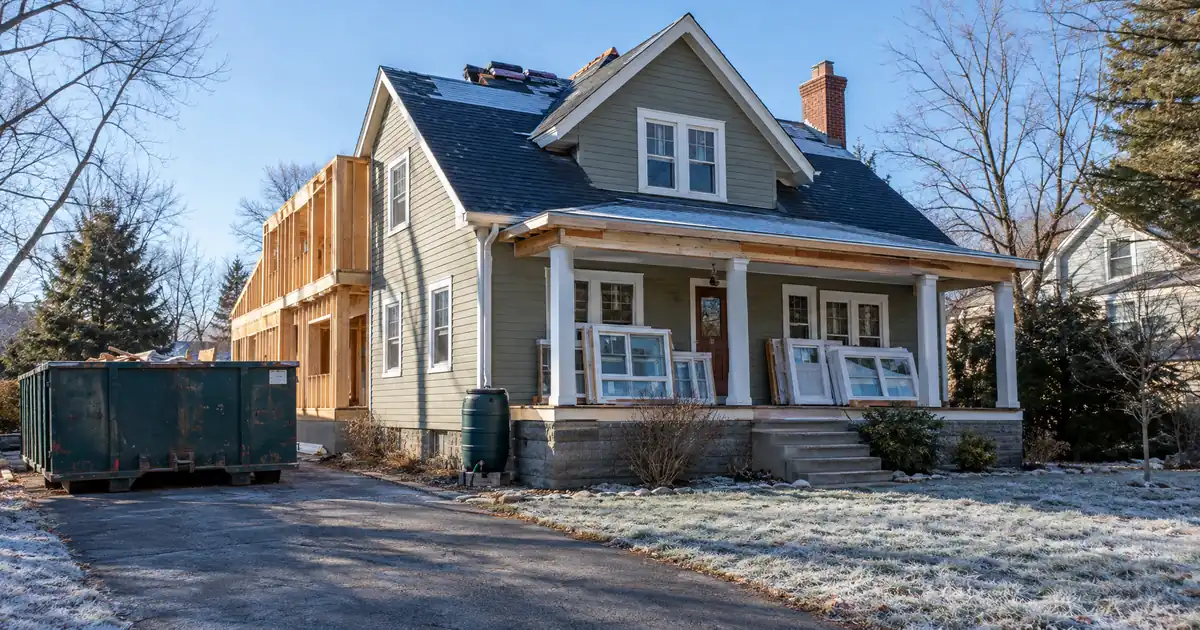
The Quick Read: Yes, in almost every case: hard money lenders size the loan against the project’s cost or value, so the borrower funds the gap, and even the top experienced-investor tier in Lendmire’s wholesale network leaves roughly 7% of project cost on the borrower. There is no true 100% purchase program. What looks like zero down is usually a structure, not a product. How much you bring depends on your track record, the deal, and which limit binds first.
- Fix-and-flip loans run 85% of project cost with fewer than 2 completed projects, 90% at 2+ completed projects, and 93% at 5+ completed projects. Every tier is capped at 75% of after-repair value (ARV).
- A bridge purchase with no rehab typically reaches up to 80% of purchase price, which means about 20% down.
- Rehab money can fund up to 100% of the rehab budget in draws, but that is a rehab figure, not a purchase LTV.
- Cash-out and rate/term refinances top out around 65% of value, so equity stands in for the down payment.
- All of this varies by lender, property, and experience, and none of it is a commitment to lend.
What “Down Payment” Means on a Hard Money Loan
A hard money down payment is the gap between what the project costs and what the lender will advance. Hard money is short-term, collateral-based private financing, so the lender looks at the property, the plan, and the exit before it looks at anything else. The borrower’s cash is the cushion that protects the lender if the plan slips.
What this loan actually costs to carry.
Hard money is sized against the project and priced by time. Enter the deal and see how much the program will lend, the cash required at closing, the carry while you hold it, and what is left at the exit.
Leverage tiers on the current program: 85% with fewer than 2, 90% with 2 or more, 93% with 5 or more completed projects — every tier capped at 75% of after-repair value. Loan amounts up to $5,000,000, larger by exception; terms of 6 to 18 months, interest-only, no prepayment penalty. The rehab portion funds in draws against completed work, not at closing.
Program parameters shown update from Lendmire’s centralized guideline source. Rate, points, and months are editable assumptions, not quoted terms.
Cost cap sets the loan · positive spread
Illustrative estimate only — not a quote, Loan Estimate, approval, or commitment to lend. Rate, points, and months are editable assumptions. Hard money is business-purpose financing for real estate investors, not a consumer mortgage. Leverage on the current program tops out at 93% of project cost for investors with a documented track record, capped at 75% of after-repair value, with rehab funding up to 100% of the documented budget released in draws; actual terms vary by lender, borrower experience, property, and exit. Lendmire is a mortgage broker, not a lender.
Hard money loans are business-purpose loans on non-owner-occupied investment property. Across the wholesale network Lendmire works with, that means residential 1-4 unit properties, plus ground-up construction up to 10 units. Terms run 6 to 18 months, interest-only, with no prepayment penalty. Loan amounts go up to $5,000,000, and larger by exception.
One thing trips up first-timers. The lender does not ask what percentage you want to put down. It asks what percentage of cost it will fund, and what is left is your down payment.
How the Leverage Tiers Set Your Cash
Network programs size hard money loans on loan-to-cost, tiered by how many projects you have completed. Your cash requirement is simply 100% minus the tier, before fees and closing costs.
| Experience | Loan as % of project cost | Your share of cost |
|---|---|---|
| Fewer than 2 completed projects | 85% | About 15% |
| 2+ completed projects | 90% | About 10% |
| 5+ completed projects | 93% | About 7% |
| Bridge purchase, no rehab | Up to 80% of price | About 20% |
Every fix-and-flip tier is also capped at 75% of ARV. The top tier is reserved for experienced investors, and each file is underwritten individually.
Which Cap Binds First
The ARV cap is where the cash number moves. It only starts to bind when total project cost is high relative to the finished value, meaning the deal has a thin margin.
The higher the tier, the sooner the cap takes over. A 93% loan-to-cost borrower hits the 75% ARV ceiling at a lower cost-to-ARV ratio than an 85% borrower does. So experienced investors with the biggest tier can still end up with a smaller loan than the tier suggests if the discount is slim.
Run it on a first-time flipper at the 85% tier. If total project cost sits well below ARV, the loan is 85% of cost, which lands under the 75% ARV cap. The borrower funds about 15% of cost. Now say a thin deal leaves little room between cost and ARV. The ARV cap controls, the loan falls below 85% of cost, and the borrower’s share rises above 15%. Same investor, same tier, more cash, because the deal itself had less margin.
That is why a hard money lender cares about discount to value. A deal bought well below ARV gets the full tier. A deal bought near ARV does not, no matter how strong the borrower is.
Why the Down Payment Is Not Your Total Cash Needed
The down payment is only one line in the cash you need to bring. The strongest files show the borrower has funded the whole stack, not just the headline percentage.
A realistic cash-to-close checklist looks like this:
1. Your share of purchase cost. The gap between price and the loan advance.
2. Lender fees and closing costs. Title, insurance, and processing sit on top of the down payment.
3. Rehab float. Rehab funds draw against completed work, so you front the work and get reimbursed. A lender can fund up to 100% of the rehab budget, but not before the work is done.
4. Interest carry and reserves. Terms are interest-only, so the monthly carry continues while the project runs. Lenders want to see that you can cover it.
5. Contingency. Overruns come out of your pocket, not the lender’s.
Files stall when an investor documents the down payment and nothing else. Proof of funds should cover the whole stack.
Can You Buy With No Money Down?
Not through a standard program. The network does not offer a true 100% purchase loan, and a lender that advertises one is almost always describing a structure with a catch. The common ones:
- 100% of the rehab budget. This is the one that causes the confusion. Funding up to 100% of rehab in draws is real, but it applies to the renovation only. The purchase still carries your share.
- Cross-collateral. You pledge a second property you own, with equity behind it, to cover the gap. This swaps cash for exposure. If the deal fails, two properties are at risk instead of one.
- Seller paper or gap capital. A seller carry-back or a partner’s money covers part of the price. Lenders review this closely, and it varies by lender whether it is allowed behind the first loan.
- A deep discount. If you buy far below ARV, the lender sizing against cost may fund most of the price. Your equity is the discount you negotiated, and the lender still wants to see real skin in the deal.
An investor chasing zero down should ask what the structure puts at risk. Usually the answer is a second property, a partner’s capital, or a tighter exit. Those are legitimate tools, but they are not free money.
Where the Down Payment Can Come From
Most investors use savings, a partner, or equity from another property. The lender’s question is less about the source and more about proof, so the funds need a clean paper trail.
- Your own funds. Bank statements showing the cash in place ahead of the purchase.
- A partner. A documented agreement on who owns what, since the lender wants to know who is on the title or the borrowing entity.
- Equity in other property. Refinanced or pledged equity, documented with the loan terms.
- Borrowed money. Lenders tend to scrutinize a down payment funded entirely by a new loan. They want the borrower to have capital in the deal, and the rule varies by lender, so confirm it before you build the plan around it.
An LLC and a personal guarantee are common requirements, subject to lender guidelines. Entity documents, the purchase contract, the scope of work, contractor bids, proof of funds, title, and insurance form the core file. A clear scope and a believable timeline do more for the leverage conversation than any speech about experience.
What Moves the Number Up or Down
Four things shift how much cash a lender wants.
Experience. The tier table is the clearest example. First-time investors qualify at the lower leverage tiers, so they bring more cash. A documented track record of completed projects moves you up.
Credit. The network’s minimum score is 620, with additional conditions below 660. Hard money underwriting is asset-based, so the score does not replace the deal, but a stronger profile gives the lender more room to work. For a closer look at the trade-off, Lendmire’s piece A Higher Credit Tier vs a Larger Down Payment on a Hard Money Loan walks through when each one pays off.
The deal. Discount to ARV, a clear scope, and a realistic budget all help. A thin margin triggers the ARV cap described above.
The exit. The lender wants a believable path to repayment, whether that is a sale or a refinance. A weak exit raises the cash the lender asks you to hold in the deal.
A larger down payment lowers the loan-to-value ratio, which is how lenders gauge risk and size the loan. It also gives you room if the appraisal comes in light. It does not erase the cost-based tiers or the ARV cap, though, so extra cash only helps up to the point the lender’s own limits allow.
Purchase Versus Refinance
On a refinance, equity plays the role the down payment plays on a purchase. Cash-out and rate/term refinances on hard money top out at about 65% of value, which is lower than the purchase tiers. The lender is lending on an asset you already hold, so there is no purchase discount to lean on, and the leverage ceiling is more conservative.
A bridge purchase with no rehab is the closest thing to a conventional-style purchase. Up to 80% of purchase price means about 20% down. Every figure here varies by lender and program: guidelines, property type, leverage, and credit profile all apply.
Is Hard Money the Right Tool for a No-Cash Buyer?
Usually not. Hard money is short-term bridge financing with an exit requirement. It is built for investors who can fund their share, move through a project, and then sell or refinance. A buyer with little cash and a thin plan is the file that gets stuck.
The most common exit is a refinance into long-term rental financing once the property is stabilized. Lendmire brokers that path through its DSCR network, and the complete DSCR loans guide explains how rental coverage drives that refinance. Plan the exit before you commit, because the cash you put into a hard money deal stays in the property until you sell or refinance. Factor that into your cash-on-cash math. Tax treatment varies; consult a qualified professional.
Common Mistakes on the Down Payment
- Reading 100% of rehab as 100% of the project. The purchase share is still yours.
- Budgeting only the down payment. Fees, carry, and the rehab float come on top.
- Ignoring the ARV cap. A thin deal can raise your required cash even at the top tier.
- Assuming experience is automatic. The tiers depend on documented completed projects.
- Planning the cash source late. A down payment that cannot be documented is not a down payment to a lender.
Key Terms Defined
Loan-to-cost (LTC): The loan amount as a percentage of purchase price plus rehab cost.
After-repair value (ARV): The projected value of the property after the planned work is finished.
Loan-to-value (LTV): The loan amount as a percentage of the property’s value, with the remainder covered by borrower equity.
Rehab draws: Funds released against completed work, usually after an inspection.
Cross-collateral: Pledging a second property as extra security for the loan.
Frequently Asked Questions
Do I always need a down payment on a hard money loan?
Almost always. The network’s highest fix-and-flip tier is 93% of project cost, so even experienced investors bring about 7%. Lenders may stretch for an unusually strong deal, but that is a case-by-case exception, not a program.
Does the rehab money count toward my down payment?
No. Rehab funds can cover up to 100% of the rehab budget, but they release in draws against completed work. That is a reimbursement structure, so you front the work. Your purchase share still comes from your own cash.
Is the down payment based on purchase price or ARV?
Both limits apply. The loan is sized on project cost by tier, then capped at 75% of ARV. Whichever produces the smaller loan sets your cash. On thin deals the ARV cap usually binds.
Does credit change how much I put down?
Credit matters, but experience moves the leverage tier more. The network’s minimum score is 620, with additional conditions below 660, and underwriting stays centered on the property, the plan, and the exit. Varies by lender, property, and experience.
Can I use a hard money loan if I have very little cash?
Rarely a good fit. You still need your share of cost, fees, a rehab float, and interest carry. If cash is the limiting factor, a smaller project or a partner is usually a better route than chasing a no-down structure.
If you are buying, rehabbing or refinancing an investment property on a short timeline and want to see how the numbers work, Lendmire can help you compare hard money options based on the project, the exit plan, leverage, and your goals. Lendmire is a broker arranging financing through select lenders in its wholesale network, covering 41 markets, including Washington, D.C.
About Lendmire
Lendmire (NMLS# 2371349) is a mortgage brokerage focused on DSCR investor financing, helping arrange programs through wholesale and investor-lending channels in 41 markets, including Washington, D.C. DSCR loans are evaluated by the lender on property cash flow rather than personal income, subject to lender guidelines, supporting LLC closings and accommodating investors with four or more financed properties. Scotsman Guide Top Mortgage Workplace in both 2025 and 2026.
Get Started
Ready to find the right loan for you?
In about 30 seconds you can review financing options available for your investment property. No commitment required.
Informational only. Not a Loan Estimate, approval, or commitment to lend. Program availability and eligibility are subject to lender guidelines, credit approval, property review, and underwriting.
References
1. Corporate Finance Institute: Hard Money Loan
This article is part of Lendmire’s hard money loan program — full qualification details, guidelines, and scenarios live on the program page.
Related reading: How to Get Rehab Draws Released on a Hard Money Loan · Hard Money Down Payment vs HELOC Draw for an Investor Purchase · How Much Down Payment a Hard Money Lender Requires on a Flip
Brandon Miller
Founder & CEO, Mortgage Loan Originator, Lendmire LLC
- Mortgage Loan Originator · NMLS# 1129696 · Verify on NMLS Consumer Access
- North Carolina Real Estate Broker · License# 343312 · Verify on NCREC
- North Carolina Insurance Producer · License# 19053198 · Property, Casualty, Life, Health · Verify on NAIC SBS
- Lendmire LLC · Firm NMLS# 2371349 · Verify firm licensure
Disclosure information. Lendmire is a state-licensed mortgage brokerage under NMLS# 2371349. Lendmire is not a depository institution, direct lender, or financial advisor — all loans referenced are placed through wholesale lender partners and are subject to each lender's underwriting standards. This article is provided for general informational purposes and is not a commitment to lend, nor does it constitute financial, legal, or tax advice. Loan programs, terms, rates, and qualification standards change without notice and depend on borrower profile, property type, and the state in which the subject property is located. Equal Housing Opportunity provider. NMLS Consumer Access: nmlsconsumeraccess.org.