
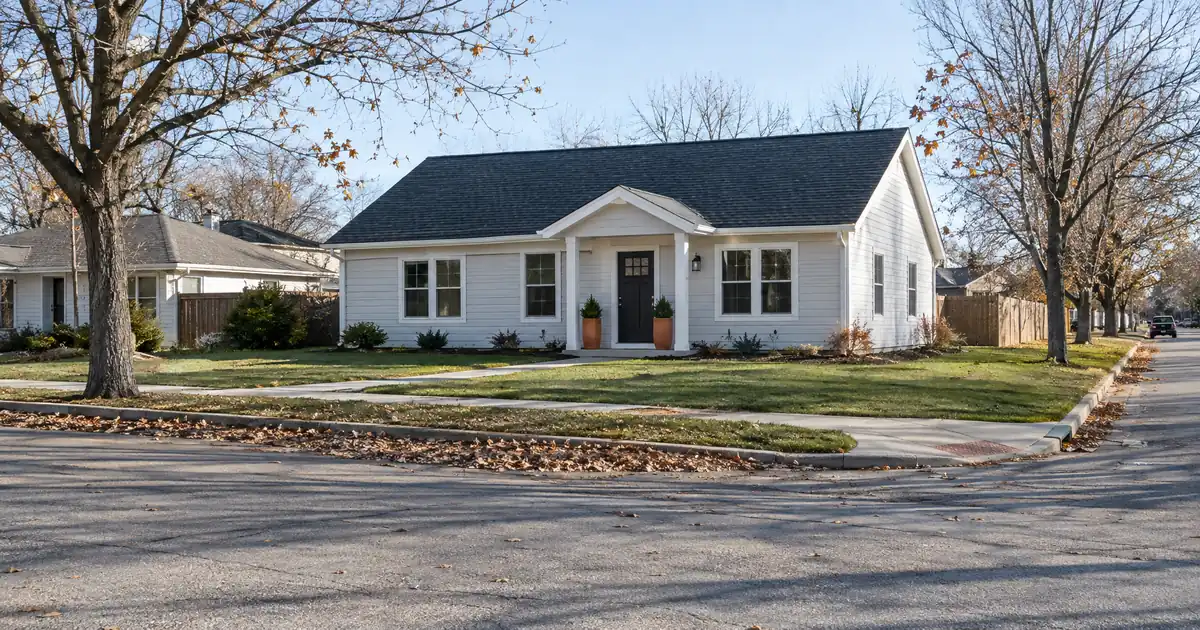
The Quick Read: Yes, you can keep the property, as long as the full balance gets repaid from some source on or before the maturity date, and for a rental that source is usually a DSCR refinance. DSCR stands for debt service coverage ratio, which compares the property’s rent to its monthly payment. A sale is one exit among several, and nobody is owed an extension, so the plan has to be built before the note comes due.
- The main no-sale exits are a refinance into long-term financing, an extension from your current lender, a payoff from other cash, or a combination.
- A DSCR refinance qualifies primarily on property-level rental income covering the payment, subject to lender guidelines.
- The new lender’s appraisal sets the loan size, not your after-repair estimate.
- A payoff-only refinance returns no cash. A cash-out refinance does.
- Ask for any extension before the date passes, not after.
What Happens When the Note Comes Due?
Hard money loans are short, interest-only notes, so the whole principal is due at maturity. On the hard money program Lendmire brokers, terms typically run 6 to 18 months, interest-only, with no prepayment penalty, though everything varies by lender, property, and experience. That structure is why people call these balloon loans.
DSCR Cash-Out Calculator
Run the cash-out numbers in your market
Rate source: Freddie Mac 30-yr average via FRED® — Federal Reserve Bank of St. Louis · effective Oct 15, 2026
Prefilled with starting assumptions — enter your property’s value, balance, taxes, and insurance for a more accurate picture.
Program parameters update from Lendmire’s centralized guideline source. Taxes and insurance are editable estimates.
As of Oct 15, 2026 · General Freddie Mac market benchmark, not a Lendmire loan offer. Property value, balance, taxes, and insurance are editable estimates. Maximum loan-to-value varies by lender, program, property type, and seasoning. Not a Loan Estimate, approval, or commitment to lend. Program availability and eligibility are subject to lender guidelines, credit approval, property review, and underwriting.
Here is the part many borrowers miss. You can pay on time every month and still default at maturity, because maturity is its own deadline. Missing it is not a late fee. It means the entire balance is overdue.
Read your note first. Look for four things: the maturity date, any extension option and its price, any minimum-interest or exit fee, and the default terms. An extension written into the note is a right you can exercise. Anything else is the lender’s choice.
Your Real Exits
The honest answer is that you have four routes, and they can be combined. A refinance replaces the hard money loan with long-term financing. An extension buys time. Other cash pays the balance down or off. A sale, which you are trying to avoid, stays on the list as a backstop.
| Exit | Best fit | What must be true | Main risk |
|---|---|---|---|
| DSCR refinance | Leased, stable rental | Value, rent coverage, credit, reserves | Appraisal comes in short |
| Extension | Project nearly done | Lender agrees, usually for a fee | Costs stack up; not a cure |
| Other cash | Cash-rich borrower | Liquidity beyond reserves | Drains your safety net |
| Partial paydown plus extension | Gap between payoff and new loan | Cash plus lender cooperation | Two moving parts |
Think of the extension as a bridge to an exit, not an exit. Cole Schotz notes that negotiating a restructuring or extension with the existing lender is the first option borrowers should consider. The same firm adds that lenders rarely welcome the request, since you agreed to repay at maturity. Expect a fee, and expect the lender to favor borrowers with a clean payment history.
How the DSCR Exit Works
For a buy-and-hold investor, the usual way out is a DSCR loan. It is a long-term investor loan, with a 30-year fixed structure as the spine of most programs, that qualifies primarily on property-level rental income covering the payment, subject to lender guidelines. At closing, title pays the hard money lender from the new loan proceeds, and the old lien is released. Lendmire’s hard money exit refinance page covers that path in detail.
Each of these gates has to clear on its own:
1. Value. The new lender orders its own appraisal. Your after-repair estimate does not set the loan. Divide your payoff plus exit costs by the leverage cap to find the value you need.
2. Rent coverage. Market rent is compared to the full monthly obligation: principal, interest, taxes, insurance, and any HOA dues. On the DSCR loans in the network, 1.00 is where select programs start, and stronger ratios open better pricing and leverage. A separate select-lender path takes coverage below 1.00, with leverage and terms adjusted.
3. Credit and reserves. A DSCR loan has a 620 score floor in parts of the network, most programs want around 660, and 700 or better opens the strongest leverage tiers. Reserves commonly run about 6 months of PITIA (principal, interest, taxes, insurance, and HOA dues), stepping up to about 9 months above $1,500,000.
4. Loan size and property type. A DSCR loan on standard programs runs up to $3,000,000. Manufactured homes, log homes, and barndominiums are not offered.
Clearing 1.00 is not the same as positive cash flow. The DSCR calculation looks at rent against the payment only. Repairs, vacancy, management, utilities, and capital expenses sit outside it, so budget for them separately.
Payoff-Only or Cash-Out? The Choice Changes Everything
A payoff-only refinance covers the old balance and closing costs, and no money comes back to you. A cash-out refinance returns cash. The difference matters at maturity because the two carry different leverage limits and different waiting periods.
On an investment property, a DSCR rate-and-term refinance can reach up to 85% LTV (loan-to-value, the loan as a percentage of appraised value), subject to credit tier and lender guidelines. A DSCR cash-out refinance on a standard rental tops out at 75% LTV. Short-term rental collateral is lower, with cash-out around 70%. Terms depend on the lender’s guidelines, the property type, the leverage, and a full review of the credit profile.
Cash-out also brings seasoning. Seasoning is the waiting period a lender wants between you acquiring the property and refinancing it. On a DSCR cash-out, expect about 6 months of ownership, measured from title recording. Seasoning is lender policy, not law, so it varies, and a recorded hard money lien is what the new lender sees when it checks. If your balloon date lands before the waiting period ends, a payoff-only refinance is often the cleaner route, with cash-out coming later.
The hard money loan also has its own ceiling. Refinances on that program run up to 65% of value, so a balance sitting near the DSCR cash-out cap may leave little or nothing to pull out. Lendmire’s piece How to Pay Off Hard Money at Cost, Then Cash Out With DSCR walks through that two-step sequence.
Hard money programs vary, but the DSCR figures above come from the guidelines of select lenders in the wholesale network, and every file is underwritten individually. Nothing here is a commitment to lend.
Two Hypothetical Scenarios
Run the numbers on a stabilized rental first. Say a leased duplex has a hard money balance that, with exit costs added, equals roughly 70% of the appraised value. A DSCR cash-out ceiling of 75% on a standard rental leaves a thin slice of room. With rent covering the payment at about 1.2x, the file clears the coverage test, and the borrower walks away with a small amount of cash or none. A rate-and-term refinance is the simpler fit here.
Now consider a stalled flip. The renovation is nearly finished, the unit is vacant, and the maturity date is close. No tenant means no lease to document, and the appraisal may not reflect the finished condition. This investor most likely needs an extension to finish and lease the unit, then a DSCR refinance once rent can be documented. Another option is paying part of the balance from other cash to shrink the gap. Both are modeled assumptions, not predictions, and every file is reviewed on its own merits.
Paying With Other Funds
Paying down or paying off with your own cash is the least complicated exit. It also carries a trade-off many investors underestimate: cash used for the payoff is cash no longer sitting in reserves. Since reserves are part of the DSCR lender review, draining them can hurt the very refinance you plan to use afterward.
A partial paydown can still be smart. Reducing the balance lowers the loan you need from the new lender, which helps if the appraisal is tight. A larger down payment on a refinance lowers the monthly payment and can lift the coverage ratio, but it never erases leverage caps, credit floors, reserve rules, or property eligibility. The strongest files clear both tests: enough equity and enough rental coverage.
Extensions: What to Ask For
Ask before the maturity date. A request made afterward becomes a default conversation instead of a business one. Get any extension in writing, and confirm three things: the fee, how it is paid (with the next payment or added to the payoff), and whether the interest terms change.
Run the extension request in parallel with your refinance application. The goal is to avoid a missed date, not to replace the refinance. Extension costs, overlapping interest, and any default charges add up with every month you wait, and those terms live in your note.
A refinance can also bring its own costs. Add the new loan’s closing costs and any prepayment penalty, then spread them across the time you realistically plan to hold the property. That simple arithmetic tells you whether keeping the asset beats selling it.
Working Backward From the Maturity Date
Plan in stages rather than by a single deadline.
- Well before maturity: read the note, pull the lease and rent roll, and confirm entity documents if the property is held in an LLC, subject to program terms.
- Several months out: talk to a broker about the refinance path, check seasoning against your recorded ownership date, and gauge the likely appraisal.
- Closer in: submit the application, line up reserves, and ask the current lender about an extension as a backup.
- At the end: request a payoff statement through title and confirm what it includes: accrued interest, any extension fee, and any exit fee or minimum interest.
When Things Go Wrong
If the appraisal comes in short, you have three moves: bring cash to closing, request a smaller loan, or extend while you wait for a stronger valuation. If your credit or the property’s condition is the obstacle, use the extension time to fix it.
When a lender refuses to extend, it can start a default process under the note and state law. First-hand law-firm commentary from Fortra Law explains that once a loan has matured, a default is cured by a sale, a refinance, a modification or extension, or rarely a cash payoff. It also separates two tools that people confuse. A forbearance is a short-term agreement to delay enforcement and does not change the loan terms. A modification does change them.
The rules at this point come from your note and state law, and not from consumer-mortgage protections. A balloon payment is, by the CFPB’s definition, a large one-time payment at the end of a loan term. That page describes consumer mortgages, so treat it as a definition, not a safety net. DSCR loans are designed for non-owner-occupied investment properties. Because they are business-purpose investor loans, they are reviewed differently from a standard owner-occupied mortgage.
Tax treatment varies; consult a qualified professional before relying on any deduction.
Should You Even Keep It?
Not every property deserves a refinance. If the rent barely clears the coverage test, the equity is thin, and the refinance costs would eat the gain, selling may leave you better off. Keeping the asset makes the most sense when rent coverage is healthy, the appraisal supports the payoff with room to spare, and you plan to hold long enough to recover your costs.
Key Terms Defined
Balloon payment: a large one-time payment due at the end of a loan, usually the full remaining principal.
Maturity default: failing to repay the balance when the note comes due, even if every monthly payment was on time.
Seasoning: the waiting period a lender wants between your ownership start and a refinance, measured from title recording.
Payoff statement: the lender’s official figure for the amount needed to retire the loan on a given date, including interest and any fees.
Payoff-only refinance: a new loan that covers the old balance and closing costs with no cash back to the borrower.
Forbearance: a short-term agreement to delay enforcement without changing the loan terms.
Frequently Asked Questions
Can I pay off a hard money loan without selling the property?
Yes. The most common route for a rental is a DSCR refinance, which pays the hard money lender at closing through title. Other cash, an extension, or a mix of both can also work. The new lender’s appraisal, rent coverage, credit, and reserves must all clear, subject to lender guidelines.
How early should I start the refinance?
Start well before the maturity date, ideally with enough time to cover seasoning and an appraisal. If a cash-out refinance is the goal, remember the DSCR program generally expects about 6 months of ownership from title recording. A payoff-only refinance may face a shorter wait, but that is lender policy and varies.
Will the lender extend, and what does it cost?
Only if your note grants an extension option or the lender agrees to one. Extensions are discretionary and usually carry a fee, often paid with the next payment or added to the payoff. Borrowers with on-time payment histories fare best. The exact price sits in your note or in negotiation.
What if the appraisal comes in low?
You can bring cash to closing, take a smaller loan, or extend while you wait. A DSCR loan sizes to the new appraisal and the program’s LTV cap, not your estimate of value. Pairing a partial paydown with a short extension is a common fix.
Can rental income pay off the loan?
Rental income can cover the payment on a new DSCR loan, but it will not retire a balloon balance on its own. Rent supports the refinance that pays the balloon. It does not replace the need for a source to repay the principal at maturity.
If You Are Facing a Maturity Date
If you are buying or refinancing a rental property and want to see how the numbers work, Lendmire can help you compare DSCR loan options based on the property income, credit profile, leverage, and investor goals. As a broker arranging financing through select lenders in a wholesale network spanning 41 markets, including Washington, D.C., Lendmire can map your exit before the date arrives. For the broader picture, read the complete DSCR loans guide.
The best hard money exit is the one you chose before you signed the note, because a maturity date rewards the borrower who already knows where the payoff is coming from.
About Lendmire
Lendmire (NMLS# 2371349) is a mortgage brokerage focused on DSCR investor financing, helping arrange programs through wholesale and investor-lending channels in 41 markets, including Washington, D.C. DSCR loans are evaluated by the lender on property cash flow rather than personal income, subject to lender guidelines, supporting LLC closings and accommodating investors with four or more financed properties. Scotsman Guide Top Mortgage Workplace in both 2025 and 2026.
Get Started
Ready to find the right loan for you?
In about 30 seconds you can review financing options available for your investment property. No commitment required.
Informational only. Not a Loan Estimate, approval, or commitment to lend. Program availability and eligibility are subject to lender guidelines, credit approval, property review, and underwriting.
References
1. Cole Schotz – Maturity Default
2. Fortra Law – Commercial borrower defaults
3. CFPB – What is a balloon payment?
This article is part of Lendmire’s hard money loan program — full qualification details, guidelines, and scenarios live on the program page.
Related reading: Can You Use a Hard Money Loan to Buy Out Siblings or a Partner? · Hard Money Loan Requirements to Buy Out a Land Contract · Super Jumbo DSCR Loan After Divorce or With a Spouse Off the Loan
Brandon Miller
Founder & CEO, Mortgage Loan Originator, Lendmire LLC
- Mortgage Loan Originator · NMLS# 1129696 · Verify on NMLS Consumer Access
- North Carolina Real Estate Broker · License# 343312 · Verify on NCREC
- North Carolina Insurance Producer · License# 19053198 · Property, Casualty, Life, Health · Verify on NAIC SBS
- Lendmire LLC · Firm NMLS# 2371349 · Verify firm licensure
Important disclosures. Lendmire (NMLS# 2371349) is a licensed mortgage brokerage. Lendmire is not a direct lender, depository institution, or financial advisor. All loan inquiries are subject to lender underwriting; this article does not constitute a commitment to lend. Rates, terms, and program guidelines are subject to change without notice and vary by borrower profile, property type, and state. Information in this article is general in nature and is not financial, legal, or tax advice. Equal Housing Opportunity. NMLS Consumer Access: nmlsconsumeraccess.org.