
The Quick Read: Yes, usually, when the two loans sit on different properties and each deal stands on its own, because a hard money lender sets the limit and not a law, and it weighs the strength of each project, your cash reserves, your track record, and how many other loans you already carry. Two loans stacked on one property are a different and much rarer request. Whether any lender says yes depends on the project, your experience, and its own rules.
- Two loans on two properties is routine. Two on the same property is rare.
- No law caps how many business-purpose hard money loans you can hold. Each lender sets its own appetite.
- Lenders underwrite each deal first, then look at your total exposure.
- Every loan needs its own exit, and two exits that land at once are the real danger.
- Leverage and terms vary by lender, property, and experience, and nothing here is a commitment to lend.
Two Properties or Two Loans on One Property?
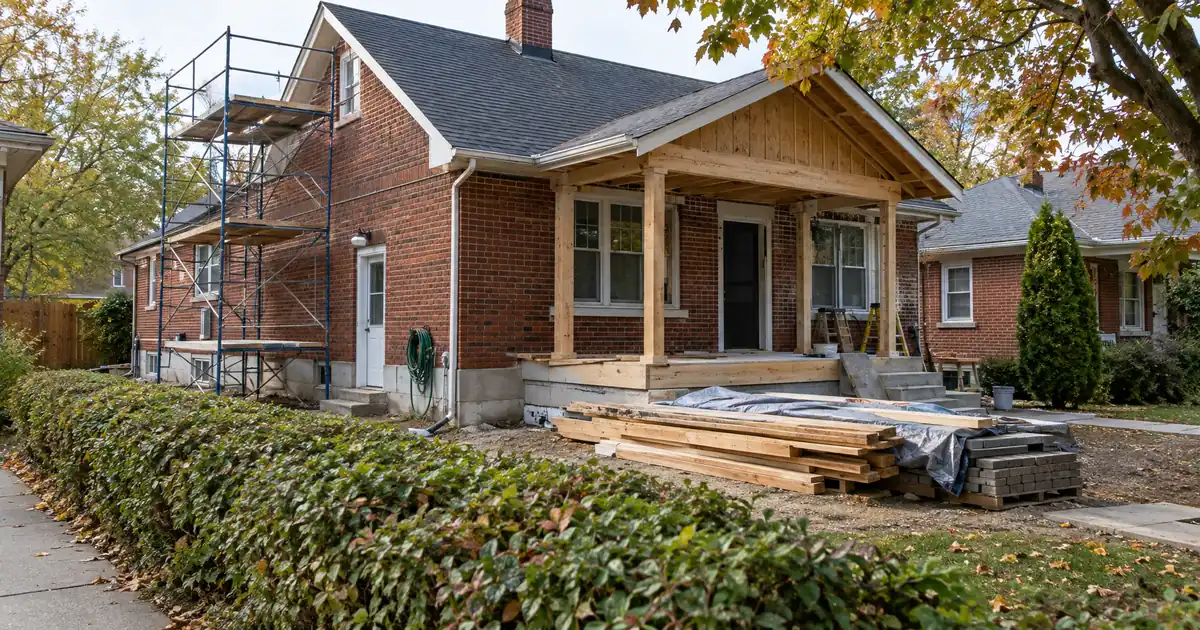
Most investors who ask this question mean two properties. That is the normal case. A flipper with a rehab underway buys a second house and takes a second short-term loan. Each loan is secured by its own property. Neither lender cares much that the other exists, as long as you can carry both.
What this loan actually costs to carry.
Hard money is sized against the project and priced by time. Enter the deal and see how much the program will lend, the cash required at closing, the carry while you hold it, and what is left at the exit.
Leverage tiers on the current program: 85% with fewer than 2, 90% with 2 or more, 93% with 5 or more completed projects — every tier capped at 75% of after-repair value. Loan amounts up to $5,000,000, larger by exception; terms of 6 to 18 months, interest-only, no prepayment penalty. The rehab portion funds in draws against completed work, not at closing.
Program parameters shown update from Lendmire’s centralized guideline source. Rate, points, and months are editable assumptions, not quoted terms.
Cost cap sets the loan · positive spread
Illustrative estimate only — not a quote, Loan Estimate, approval, or commitment to lend. Rate, points, and months are editable assumptions. Hard money is business-purpose financing for real estate investors, not a consumer mortgage. Leverage on the current program tops out at 93% of project cost for investors with a documented track record, capped at 75% of after-repair value, with rehab funding up to 100% of the documented budget released in draws; actual terms vary by lender, borrower experience, property, and exit. Lendmire is a mortgage broker, not a lender.
Two loans on the same property is a separate question. That means a first-position loan and a second-position loan against one asset. Few hard money lenders will take a second position, because they get paid after the first lender if the deal goes bad. Some first-position lenders also write a ban on other liens into their loan documents.
| Scenario | Typical feasibility | What decides it | Main risk |
|---|---|---|---|
| Two loans, two properties | Common | Liquidity, experience, exits | Overlapping maturities |
| Two loans, one property | Rare | First lender’s lien covenants | Second lender sits behind the first |
| One loan, two partners | Common | Entity setup, guarantees | Cash still due at closing |
| One property backing another deal | Possible | Cross-collateral terms | Deals become linked |
Is There a Limit on How Many You Can Hold?
No federal or state cap on loan count applies to business-purpose hard money. This is private lending against an investment property, so it does not follow the rules that shape owner-occupied mortgages. The limit comes from three places: the lender’s policy, the strength of your file, and your own capacity to run the projects.
Lender policy comes first. Some lenders cap the number of open loans. Others cap total dollars outstanding with them. Others scale the cap to experience, so a newer investor gets a smaller allowance than someone with a long record of finished projects.
Your file comes second. A lender that sees strong liquidity and a clean history of completed deals will tolerate more exposure than one looking at a thin balance sheet.
Capacity comes third, and it is the one investors underrate. A contractor who fails on one job can drag down the other. Many investors find the real ceiling is how many projects their team can run well, not how many loans a lender will write.
What Lenders Actually Look At
Hard money is asset-based, which means the property and the plan carry most of the weight. It does not mean your finances go unchecked. A lender reviews each loan on its own merits first, then looks at everything else you owe.
For each deal, expect the lender to check:
- Deal strength. Do the comparable sales support both the purchase price and the after-repair value (ARV)?
- The rehab plan. A detailed scope of work, contractor quotes, and a draw budget show the numbers are real.
- Your cash in the deal. Leverage is limited by project cost and by ARV, so you bring the gap.
- Experience. Completed projects change the leverage tier you qualify for.
- Credit and guarantees. A credit check and a personal guarantee are normal, and a 620 score is the floor, with added conditions below 660.
Experience matters more than most people expect, and the numbers show why. Across the leverage structure we place, fix-and-flip loans fund up to 93% of project cost at five or more completed projects, up to 90% at two or more, and 85% with fewer than two. Every tier is capped at 75% of ARV. Leverage varies by lender, property, and experience.
Here is the catch for stacking loans. A project that is still underway is not a completed project. Running two deals at once does not move you up a tier. Finishing the first one does.
Then the lender looks at your total exposure. Liquidity, how reliably you execute, your track record, and the other loans you carry all feed that view. The lender sees a thinner cushion when you are stretched, and a thin cushion can turn one late contractor into two troubled loans.
A pattern we see across wholesale lenders: the second loan rarely fails on the second property’s numbers. It stalls on liquidity. The investor has funded the first project’s carry and has less left for the second project’s cash to close.
Same Lender or Different Lenders?
Using one lender for both loans is usually easier to manage, because that lender already knows your file and your pace. It also means one lender holds all your exposure. That lender may cap you at a level that feels low if you are growing.
Using two lenders spreads the exposure. It also means each lender needs a full picture. Your schedule of real estate owned and your liabilities list every loan you carry, and the second lender will see the first. Leaving a loan off that list is the fastest way to lose a deal. Lenders compare documents, and a hidden loan raises doubts about everything else in the file.
Two other things can come up between lenders:
- Lien covenants. If the first loan’s documents bar any additional lien on that property, a second lender cannot take a position behind it without a conflict.
- Cross-collateralization. One property can back a loan on another property. That can replace a cash down payment, but it ties the two deals together. A problem in one now touches the other.
Partners add one more wrinkle. Two partners who each want a loan on the same deal are usually better off with one loan. The borrower can be an LLC with both partners as guarantors, subject to lender program eligibility. Alternatively, both partners can sign as co-borrowers. Either way, the borrowers still need cash to close.
Can a Second Lien Go on the Same Property?
Legally, often yes. Practically, it depends on your loan documents. The federal statute on due-on-sale clauses, 12 U.S.C. § 1701j-3, lets a lender enforce a clause that calls the loan due when the property transfers. It also lists exceptions. FedLaws lists creating a subordinate lien, without transferring occupancy rights, among nine protected transfers.
Do not read that as permission. LegalClarity notes the exceptions apply only to residential property with fewer than five units. A Vanderbilt Law Review article on second liens explains that Congress acted in the home mortgage context. An investor should not assume that protection reaches a non-owner-occupied rental. The article is older, so use it for the concept, not for current lender behavior.
Business-purpose hard money notes also tend to carry their own covenants against further liens. Your loan documents control, so have a real estate attorney read them before you add a second lien.
One related trap: deeding a property that already has a loan into an LLC is not on the exception list. It can technically trigger the clause. This matters most when partners restructure a deal midstream.
A Worked Example: Two Overlapping Projects
Run the numbers on a hypothetical investor with two completed projects, so the 90% of project cost tier applies, still capped at 75% of ARV. These are modeled assumptions, not market data, and they use timing and percentages instead of dollars.
Project A closes in month one. The rehab is planned for six months, with a sale targeted at month eight. Project B closes in month four, on similar terms. On paper the two overlap for about four months and then separate.
Now layer the cash needs:
- At closing. You bring roughly 10% of project cost on each deal, plus fees, so the cash need doubles when B closes.
- During rehab. The rehab budget funds in draws against completed work, up to 100% of the budget. That means you pay contractors first and get reimbursed after the work is done. You float both jobs between draws.
- Carry. Both loans are interest-only, so interest accrues on two balances at once, and you pay it from reserves until a sale or refinance.
Then add a delay. Say Project A slips by four months because of a permit problem. Its carry keeps running. Its sale proceeds, which you counted on to fund Project B’s later draws, arrive late. Project B hasn’t changed, but your liquidity has. That chain, one exit funding the next project, is how two healthy deals become one stressed portfolio.
These loans run six to eighteen months, interest-only, with no prepayment penalty on the current program, though terms vary by lender, property, and experience. A longer term gives more room, but it does not cure a plan that depends on one sale arriving on time.
Benefits and Risks
| Item | Benefit | Risk |
|---|---|---|
| Cash use | Puts equity to work on two deals | Cash is split thin |
| Timeline | Projects run in parallel | Maturities can collide |
| Growth | Builds completed-project count | One failure strains both |
| Exit | Two potential profits | Two exits must work |
| Workload | Uses your team fully | Contractor overload |
The upside is real. Parallel projects let you move on opportunities without waiting for a sale. The downside is just as real. An extended project on high-cost short-term debt can erase the profit. A project meant to take four months that takes eight can consume much of the margin in interest alone.
How to Decide: Add the Second Loan or Wait?
Add the second loan when you can answer yes to these:
1. Can you cover both carries for the full term, plus a delay, without needing either sale?
2. Does each project have its own exit that works independently of the other?
3. Can your contractors handle both jobs without sharing crews?
4. Will every lender see the full list of your loans?
If you hesitate on any of them, sequence instead. Finish and exit the first project, then start the second. You lose a little speed but keep your liquidity, and the completed project may lift your leverage tier.
Other routes are worth weighing:
- Partner capital. A partner funds part of the cash need and shares the upside.
- A larger single facility. One lender may fund a bigger or combined deal under one set of terms.
- A portfolio structure. A portfolio loan covers several rentals in one loan, which suits holding more than flipping.
- Separate entities. One LLC per project, subject to program terms, keeps the deals apart. Cross-guarantees can reconnect them, so read what you are signing.
Keep records on every project carefully.
How to Prepare Before You Apply
Walk into each lender with a full file. A typical set includes recent bank statements, a credit report, the sales contract, an appraisal or broker price opinion showing as-is and ARV values, and a scope of work with a draw budget. A track record, shown through past settlement statements, speeds up the lender’s review of your experience.
Disclose every existing loan up front. Then plan each exit before you close, not after. For rentals, many investors refinance out of hard money into long-term DSCR financing once the property is stabilized, and Lendmire brokers that path. A DSCR loan qualifies primarily on property-level rental income covering the payment, subject to lender guidelines. The ratio compares rent to principal, interest, taxes, insurance, and any HOA dues. Clearing the ratio is not the same as positive cash flow, because repairs, vacancy, and management sit outside it.
The catch with two properties is that each one needs its own takeout. Two rentals still in rehab or lease-up at once can strain your refinance plan. Lendmire’s complete DSCR loans guide explains how that long-term financing works. If a flip turns into a hold, Lendmire’s piece How to Refinance Hard Money and Take Cash Out at the Same Time covers the exit.
Key Terms Defined
Hard money loan: a short-term, interest-only loan secured by the property, underwritten mainly on the asset and the plan.
Loan-to-cost: the loan amount as a share of total project cost, which is purchase plus rehab.
After-repair value (ARV): what the property is expected to be worth once the work is finished.
Draw: a rehab payment released after a stage of work is complete.
Junior lien: a loan secured by a property that is paid after the first loan if the borrower defaults.
Cross-collateralization: using one property as security for a loan on another.
Personal guarantee: your promise to repay if the borrowing entity cannot.
Frequently Asked Questions
Can I have two hard money loans with the same lender?
Often yes. Many lenders prefer repeat borrowers who have performed well. The lender usually caps total exposure by loan count, by dollars outstanding, or by your experience tier. Ask for that cap before you plan a second project.
Does a second loan hurt my personal credit?
It depends on the lender. Expect a credit check at application, and expect a personal guarantee. How the loan is reported varies. The bigger effect is on your liabilities, which every later lender will review.
Can I put two hard money loans on one property?
Rarely. Few lenders take a second position, and some first lenders ban other liens in their documents. If you need more money on a project, borrowing against a different property or bringing in partner capital is more realistic.
Do first-time investors qualify?
Yes, at the lower leverage tiers. Fewer than two completed projects puts you at 85% of project cost, capped at 75% of ARV. The minimum score is 620, with added conditions below 660. Terms vary by lender, property, and experience, and nothing is a commitment to lend.
What happens if my first loan is late to exit?
The interest keeps running, and your liquidity for the second project shrinks. Talk to the lender early about an extension or a refinance. A delayed exit is the main reason to hold a reserve cushion across both projects.
Next Step
If you are buying, rehabbing, or refinancing an investment property on a short timeline and want to see how the numbers work, Lendmire can help you compare hard money options based on the project, the exit plan, leverage, and your goals. As a broker, Lendmire arranges these loans through select lenders in its network across 41 markets, including Washington, D.C.
A second loan is a good bet only when the first project can fail without taking the second one down.
About Lendmire
Lendmire (NMLS# 2371349) is a mortgage brokerage focused on DSCR investor financing, helping arrange programs through wholesale and investor-lending channels in 41 markets, including Washington, D.C. DSCR loans are evaluated by the lender on property cash flow rather than personal income, subject to lender guidelines, supporting LLC closings and accommodating investors with four or more financed properties. Scotsman Guide Top Mortgage Workplace in both 2025 and 2026.
Get Started
Ready to find the right loan for you?
In about 30 seconds you can review financing options available for your investment property. No commitment required.
Informational only. Not a Loan Estimate, approval, or commitment to lend. Program availability and eligibility are subject to lender guidelines, credit approval, property review, and underwriting.
References
1. 12 U.S.C. § 1701j-3 (Garn-St Germain), Cornell Legal Information Institute
2. FedLaws: Garn-St Germain Act Due-on-Sale Triggers and Exceptions
3. LegalClarity: Is the Garn-St Germain Act Still in Effect?
4. Vanderbilt Law Review: Second Liens and the Leverage Option
This article is part of Lendmire’s hard money loan program — full qualification details, guidelines, and scenarios live on the program page.
Related reading: Seasoning Rules for a Two-Step DSCR Cash-Out After Hard Money · How to Time a Lease Renewal Before a DSCR Refinance · Can a DSCR Refinance Close Before Hard Money Maturity on a Long Rehab?
Brandon Miller
Founder & CEO, Mortgage Loan Originator, Lendmire LLC
- Mortgage Loan Originator · NMLS# 1129696 · Verify on NMLS Consumer Access
- North Carolina Real Estate Broker · License# 343312 · Verify on NCREC
- North Carolina Insurance Producer · License# 19053198 · Property, Casualty, Life, Health · Verify on NAIC SBS
- Lendmire LLC · Firm NMLS# 2371349 · Verify firm licensure
Important disclosures. Lendmire (NMLS# 2371349) is a licensed mortgage brokerage. Lendmire is not a direct lender, depository institution, or financial advisor. All loan inquiries are subject to lender underwriting; this article does not constitute a commitment to lend. Rates, terms, and program guidelines are subject to change without notice and vary by borrower profile, property type, and state. Information in this article is general in nature and is not financial, legal, or tax advice. Equal Housing Opportunity. NMLS Consumer Access: nmlsconsumeraccess.org.