
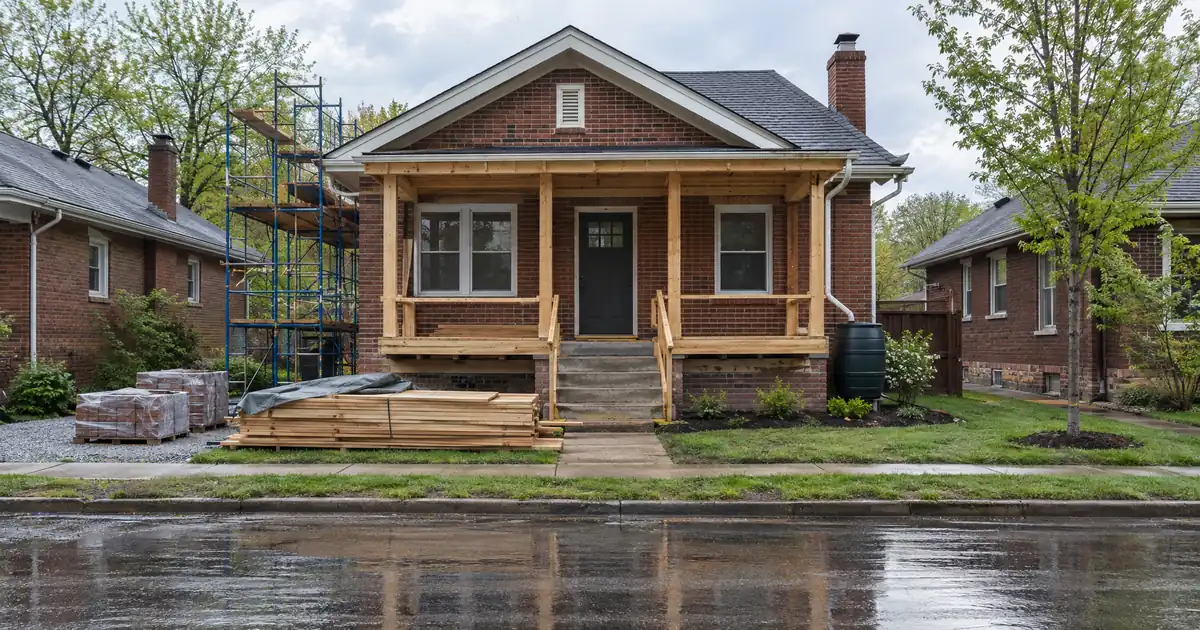
The Quick Read: Rarely, and never without cash from the borrower. Across the wholesale network Lendmire places files with, there is no true 100% purchase program, and even the top cost-based leverage tier funds up to 93% of project cost, capped at 75% of after-repair value. Full-price coverage only works when the deal is bought far below its finished value. Programs vary by lender, property, and experience, and nothing here is a commitment to lend.
- A bridge purchase with no rehab goes up to 80% of purchase price.
- Fix-and-flip leverage runs 85%, 90%, or 93% of project cost, depending on completed projects, and every tier is capped at 75% of after-repair value.
- Up to 100% of the rehab budget is funded in draws. That is a rehab figure, never a purchase loan-to-value.
- Fees, title, insurance, interest, and reserves are separate from the loan, so cash to close is almost never zero.
What Does “Full Purchase Price” Actually Mean to a Lender?
When an investor asks about full financing, a lender hears three different questions. Does the loan cover the whole purchase price? Does it also cover the rehab? And is the total measured against what the property is worth today, what it costs, or what it will be worth after repairs?
What this loan actually costs to carry.
Hard money is sized against the project and priced by time. Enter the deal and see how much the program will lend, the cash required at closing, the carry while you hold it, and what is left at the exit.
Leverage tiers on the current program: 85% with fewer than 2, 90% with 2 or more, 93% with 5 or more completed projects — every tier capped at 75% of after-repair value. Loan amounts up to $5,000,000, larger by exception; terms of 6 to 18 months, interest-only, no prepayment penalty. The rehab portion funds in draws against completed work, not at closing.
Program parameters shown update from Lendmire’s centralized guideline source. Rate, points, and months are editable assumptions, not quoted terms.
Cost cap sets the loan · positive spread
Illustrative estimate only — not a quote, Loan Estimate, approval, or commitment to lend. Rate, points, and months are editable assumptions. Hard money is business-purpose financing for real estate investors, not a consumer mortgage. Leverage on the current program tops out at 93% of project cost for investors with a documented track record, capped at 75% of after-repair value, with rehab funding up to 100% of the documented budget released in draws; actual terms vary by lender, borrower experience, property, and exit. Lendmire is a mortgage broker, not a lender.
Those answers are not the same. A loan can be 100% of one number and 60% of another. Marketing lines about full financing usually describe cost, not value. Nav, a business-finance education site, explains that some lenders in the wider market use the phrase to mean loan-to-cost, bounded by an after-repair-value cap. It does not mean 100% of current value. In the network, loan-to-cost tops out at 93%.
One more distinction before the mechanics. Everything here is about investment purchases. Homeowner bridge loans are a different product. An investor hard money bridge is sized on the deal being bought, not on a home you already live in.
Key Terms Defined
Hard money loan: a short-term, interest-only business-purpose loan secured by the property, underwritten mostly on the asset, the plan, and the exit.
Bridge loan (investor version): a hard money loan that carries you from purchase to a sale or refinance.
Loan-to-cost (LTC): the loan as a percentage of total project cost, meaning purchase price plus rehab budget.
Loan-to-value (LTV): the loan as a percentage of what the property is worth, either today or after repairs.
After-repair value (ARV): the estimated value once renovation is finished, based on renovated comparable sales.
Draw: a release of rehab money after the lender confirms a phase of work is done.
Cross-collateralization: pledging a second property as extra security so the lender will go higher on the first.
Seasoning: the time a lender wants you to own a property before it will refinance at a new value.
What Lendmire’s Network Actually Funds
Start with the program ceilings, because they answer the question. They reflect what most lenders in the wholesale network do. They vary by lender, property, and experience.
| Transaction | Typical maximum |
|---|---|
| Bridge purchase, no rehab | Up to 80% of purchase price |
| Fix-and-flip, under 2 completed projects | Up to 85% of project cost |
| Fix-and-flip, 2+ completed projects | Up to 90% of project cost |
| Fix-and-flip, 5+ completed projects | Up to 93% of project cost |
| Refinance of an owned property | Up to 65% of value |
Every fix-and-flip tier is also capped at 75% of after-repair value. The top tier is reserved for experienced investors. First-time investors can qualify at the lower tiers, with a 620 minimum score and added conditions below 660.
Notice what is missing from that table: a row at 100%. The 100% figure that does appear in hard money marketing is the rehab budget. Up to 100% of that budget is funded in draws against completed work. A rehab-budget figure is never a purchase LTV, and mixing the two is how investors end up surprised at the closing table.
When Can a Deal Reach Full Coverage?
Full coverage works when two limits are both satisfied: the cost cap and the ARV cap. The loan is sized to the lesser of the two. The ARV cap usually binds first.
Nav gives a clean worked example from the wider market. A $150,000 purchase plus a $50,000 rehab, against a $300,000 ARV, totals $200,000. That sits under 70% of ARV, which is $210,000, so a hypothetical lender that covered the full project cost could fund all of it. Nav also notes that with little room under the ARV cap, qualifying for that kind of financing is very difficult. That example describes lenders elsewhere. In the network, loan-to-cost is tiered rather than unlimited: 85% of project cost for borrowers with under 2 completed projects, 90% at 2 or more, and 93% at 5 or more, alongside a 75% ARV cap.
Run the numbers on two modeled deals, using percentages of ARV as assumptions rather than market data.
- Deep discount. The purchase price is 55% of ARV and the rehab budget is 15% of ARV. Total cost is 70% of ARV, well inside the 75% cap. The cost tier now decides the loan. At the 90% tier the investor still brings about 10% of project cost.
- Thin discount. The purchase price is 70% of ARV and the rehab budget is 15%. Total cost is 85% of ARV, which is 10 points over the cap. The loan stops at 75% of ARV, and the investor covers the difference, plus fees.
So the discount drives everything. The deeper the buy, the more of the price a lender can fund. A property bought near market value leaves almost no room under the ARV cap.
Which Factors Help and Which Hurt?
Lenders weigh the whole file, not one ratio. Based on how files tend to move through the network, these are the levers.
| Factor | Helps | Hurts |
|---|---|---|
| Deal spread | Buy deep below ARV | Buy near market value |
| Experience | Completed projects on record | First-time investor |
| Credit | 660+ with clean history | Near the 620 floor |
| Scope | Line-item rehab budget | Vague or inflated budget |
| Exit | Clear sale or refinance plan | No documented exit |
A few lenders will go higher when you pledge additional property that is not already heavily leveraged. That is cross-collateralization, and it is the most realistic path to near-full funding on a single purchase. It also puts a second asset at risk, which is the real cost. Higher leverage in the wider market tends to arrive with tighter terms, a shorter term, or a lower ARV cap. Treat any offer that looks too generous as a signal to read the structure carefully.
Hard money and DSCR loans are designed for non-owner-occupied investment properties. Because they are business-purpose investor loans, they are reviewed differently from a standard owner-occupied mortgage.
Gross Loan Versus the Cash You Actually Bring
Even when a loan covers a large share of the price, you do not walk in with an empty wallet. The loan amount and the cash to close are separate numbers.
| Item | Usually funded by the loan? |
|---|---|
| Purchase price | Partly, per leverage tier |
| Rehab budget | Held back, released in draws |
| Lender and third-party fees | Generally paid in cash |
| Title and insurance | Generally paid in cash |
| Prepaid interest and reserves | Generally paid in cash |
| Early rehab phases | Often fronted, then reimbursed |
The draw gap catches many first-timers. The rehab portion is held back and released against completed, inspected work, not handed over at closing. Many investors front each phase and get reimbursed afterward, so ask the lender how and when each draw is released.
The practical lesson: the question is cash to close, not down payment. Plan liquidity for fees, a few interest-only payments, and the early rehab phases. Lenders commonly ask for proof of liquidity as part of the file. Those dollar amounts vary too widely by deal to quote responsibly.
Decoding “100% Financing” Claims
Here is how the marketing language usually translates.
| What the ad says | What it likely means | What you still bring |
|---|---|---|
| 100% financing | Purchase plus rehab, under an ARV cap | Fees, reserves, any gap over the cap |
| 100% of rehab | Rehab budget funded in draws | Early phases and the purchase equity |
| No money down | Cost-based tier plus a deep discount | Closing cash, often extra collateral |
| Up to 90% of project cost | A loan-to-cost tier, not a loan-to-value figure | The rest, plus costs |
In the network, the highest cost-based tier is 93% of project cost, so a pitch that implies more than that is relying on extra collateral, a very deep discount, or a rehab-only figure.
Two questions flush out the truth. First, ask which number the percentage is measured against: price, cost, current value, or ARV. Second, ask what the total loan is capped at. A lender who answers both plainly is probably describing a real structure.
Does the Exit Survive Full Leverage?
The exit is where heavy leverage gets tested. A bridge is repaid by a sale or a refinance, and a loan that covered the whole price leaves nothing to spare.
Use the network’s own numbers. Take a bridge purchase at 80% of the purchase price, which is a share of what you paid, not of appraised value. When that bridge is refinanced into a DSCR cash-out loan at roughly 75% LTV, the appraised value would need to be higher than the purchase price for the new loan to pay the bridge off. The refinance is sized against appraised value, while the bridge was sized against what you paid, so the two are not measured on the same base. That is before closing costs. Lendmire’s auction buyer walkthrough shows this exit math in detail. The common expectation for a refinance is about 6 months of seasoning. These specifics are subject to lender guidelines and a full review of property, leverage, and credit.
Now push it. A hypothetical loan covering 100% of the price would need value around 133% of the price to refinance out at 75% LTV. That is a very large jump on a property you just bought. Or take the low-appraisal case. If the property appraises right at the purchase price, the 75% refinance pays off only part of an 80% bridge. The investor writes a check for the shortfall at payoff. Terms depend on the lender’s guidelines, the property type, the leverage, and a full review of the credit profile.
Sales carry the same risk. If you sell for less than you owe, you cover the difference. Heavy leverage leaves no equity cushion, so a soft sale price comes straight out of your pocket.
Many investors refinance out of hard money into long-term DSCR financing once the property is stabilized, and Lendmire brokers that path. DSCR financing qualifies primarily on property-level rental income covering the payment, subject to lender guidelines. Even there, a purchase typically runs 75% to 80% LTV, with select high-leverage programs reaching 85% for roughly 700+ scores. Lendmire’s guide to refinancing hard money at the new value versus the purchase price covers which number the new lender uses. The complete DSCR loans guide explains how coverage, leverage, and reserves fit together.
What About Government Rehab Loans and Other Ways to Close the Gap?
Government-backed renovation loans do not solve this for investors. The FHA 203(k) program requires the property to be used as a principal residence, which rules out investor purchases. Fannie Mae’s HomeStyle renovation eligibility rules have their own borrower and loan requirements. They cap renovation lending against a cost-or-value test, so they don’t deliver full-price coverage either.
The more realistic gap-closers for an investor look like this:
- Buy deeper. A bigger discount is the only fix that improves every ratio at once.
- Add cross-collateral. A second, lightly leveraged property can raise what a lender will fund.
- Bring a partner. A partner supplies the equity piece while you manage the project.
- Use seller financing. Some sellers will carry part of the price. Check that your lender permits it, because stacking debt can violate the first loan’s terms.
- Stack a second-position loan. This is rare at full combined leverage, because a second lender gains little from sitting behind a loan that already covers the whole value.
Ground-up construction is a separate structure with its own tiers, up to 90% of cost and 75% of completed value at 3+ completed projects. Note that this is not a purchase program either.
What Does Borrowing Close to the Full Price Risk?
Thin equity magnifies every surprise. A rehab that runs over budget, an appraisal under your projection, or a slow sale each lands on you with no cushion to absorb it. Hard money terms run 6 to 18 months, interest-only, with no prepayment penalty. Interest keeps accruing while you wait. Tax treatment varies; consult a qualified professional.
A pattern shows up on many bridge files. The investors who struggle rarely misjudged the purchase. They misjudged the exit, usually by leaning on the high end of an ARV estimate. A lender’s own broker price opinion or appraisal often lands lower, and when ARV drops, the maximum loan drops with it.
Coverage matters in the same way later. DSCR compares rent to PITIA only (principal, interest, taxes, insurance, and any association dues). Clearing 1.00 is where select programs start, but it is not the same as positive cash flow. Repairs, vacancy, management, utilities, and capital expenses sit outside the calculation. A sub-1.00 path is available through select lenders in the network, with leverage and terms adjusted.
Self-Check Before You Apply
1. Write down the purchase price, the line-item rehab budget, and a defensible ARV from renovated comparables. 2. Add purchase and rehab to get total project cost. Divide by ARV. If it exceeds 75%, you will need cash for the gap. 3. Count your completed projects to place yourself in the 85%, 90%, or 93% cost tier. 4. Confirm your score. The floor is 620, with more conditions below 660. 5. List cash needs beyond the down payment: fees, title, insurance, interest, reserves, and early rehab phases. 6. Test the exit. Will appraised value reach roughly 107% of purchase price for an 80% bridge to refinance out? 7. Decide your fallback if the appraisal comes in low: extra collateral, a partner, or a smaller loan.
Frequently Asked Questions
Can a hard money bridge loan cover closing costs too?
Usually not. Lender fees, title, insurance, prepaid interest, and reserves are generally paid in cash, even when leverage is high. Some costs can be built into a loan structure on certain files, but plan on bringing them yourself.
Is hard money “full financing” the same as 100% LTV?
No. Where the phrase appears in marketing, it describes loan-to-cost, meaning purchase plus rehab, and it is bounded by an ARV cap. Across the network, loan-to-cost tops out at 93% and the cap is 75% of after-repair value, so total debt never reaches full current value. The exact numbers vary by lender and program and follow a full review of property, leverage, and credit.
Can a first-time investor get near-full funding?
Rarely. First-time investors can qualify at the lower leverage tier, up to 85% of project cost with fewer than two completed projects. The top 93% tier is reserved for experienced investors. Eligibility varies by lender, property, and experience.
What happens if the appraisal comes in below my ARV estimate?
The maximum loan falls with it, because the ARV cap usually binds first. You cover the difference in cash or restructure the deal. The same low value also shrinks what a refinance lender will advance at payoff.
Does a bridge loan with no rehab work differently?
Yes. With no rehab there is no ARV-based cost tier, so the loan is sized on purchase price or value, up to 80% of purchase price. A bridge refinance of a property you already own goes up to 65% of value.
The Next Step
If you are buying, rehabbing, or refinancing an investment property on a short timeline and want to see how the numbers work, Lendmire can help you compare hard money options based on the project, the exit plan, leverage, and your goals. The brokerage arranges financing through select lenders in its wholesale network across 41 markets, including Washington, D.C.
About Lendmire
Lendmire is a non-QM mortgage brokerage (NMLS# 2371349) arranging DSCR investor loans in 41 markets, including Washington, D.C., through wholesale and investor-lending channels. DSCR loans are evaluated by the lender on rental income rather than personal income, subject to lender guidelines — a fit for LLC-owned portfolios, self-employed investors, and operators scaling beyond conventional loan caps. Recognized as a Scotsman Guide Top Mortgage Workplace in 2025 and 2026.
Get Started
Ready to find the right loan for you?
In about two minutes you can review financing options available for your investment property. No commitment required.
Informational only. Not a Loan Estimate, approval, or commitment to lend. Program availability and eligibility are subject to lender guidelines, credit approval, property review, and underwriting.
References
1. Nav: Hard Money Loans with 100% Financing
2. Fannie Mae Selling Guide: HomeStyle Renovation Mortgages Loan and Borrower Eligibility
This article is part of Lendmire’s hard money loan program — full qualification details, guidelines, and scenarios live on the program page.
Related reading: Is a 1.25 DSCR Strong Enough to Qualify for a Loan? · Should an Owner With Substantial Equity Use a Hard Money Bridge Loan? · HELOC vs Bridge Financing for Buying Before Selling
Brandon Miller
Founder & CEO, Mortgage Loan Originator, Lendmire LLC
- Mortgage Loan Originator · NMLS# 1129696 · Verify on NMLS Consumer Access
- North Carolina Real Estate Broker · License# 343312 · Verify on NCREC
- North Carolina Insurance Producer · License# 19053198 · Property, Casualty, Life, Health · Verify on NAIC SBS
- Lendmire LLC · Firm NMLS# 2371349 · Verify firm licensure
Required disclosures. Lendmire (NMLS# 2371349) operates as a licensed mortgage broker, not a direct lender or depository. The discussion in this article is general in nature and should not be relied upon as financial, legal, or tax advice — every investment scenario is unique and should be reviewed by a qualified professional. Any loan inquiry is subject to lender underwriting, and this article is not a commitment to lend or a guarantee of approval. Mortgage rates, loan terms, and program guidelines vary by borrower, property, and state, and may change without notice. Equal Housing Opportunity. Verify licensure at NMLS Consumer Access.