
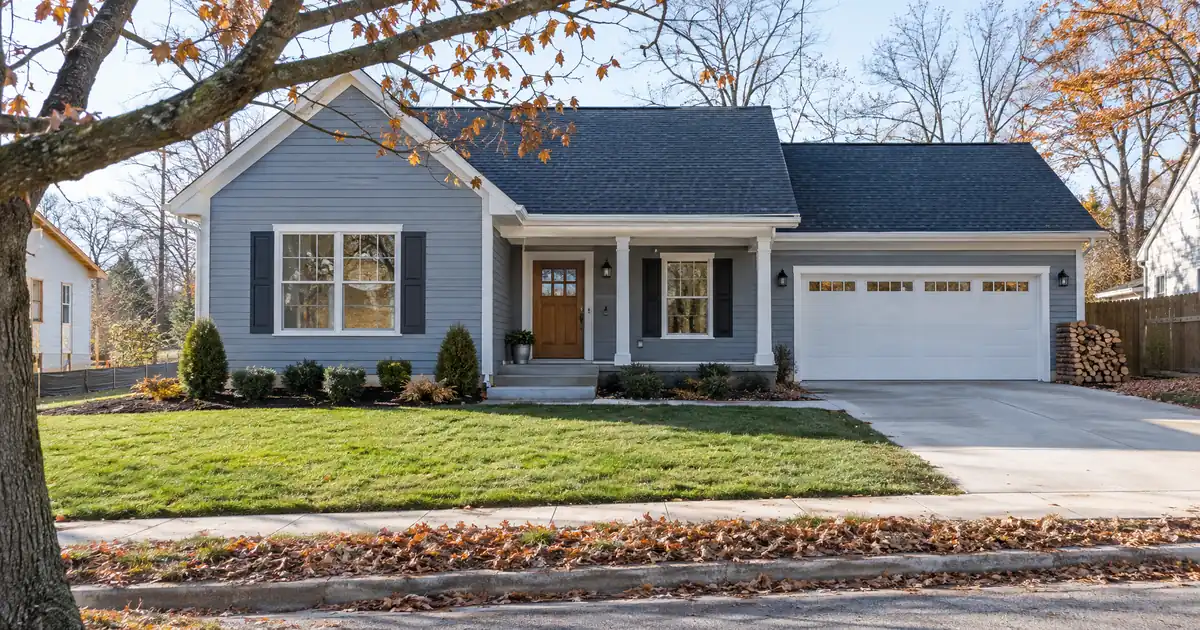
The Quick Read: Treat the after-repair value (ARV) you or your lender wrote down as a hypothesis. Test it against closed, renovated sales on the same street, cap your finish level at what those buyers have paid for, and confirm the deal still clears the exit when the appraisal lands below your number.
- Use closed sales of already-renovated homes only. Active listings are asking prices, not evidence.
- Anchor to the middle of the adjusted comp range. The top sale marks the ceiling, not your starting point.
- Match your finish level to the comps. Spend that the street has never rewarded raises your payoff without raising value.
- Back-solve the exit before you buy. The refinance lender sizes the new loan off its own appraisal, not your ARV.
- If the deal only works at best-case inputs, it is too fragile.
Why the ARV Needs Testing Before You Spend
ARV is a planning number, not an underwriting number. Real Estate Skills defines it as what a house sells for after renovation, set by what comparable renovated homes nearby sold for. It is not what you paid plus what you spend.
What this loan actually costs to carry.
Hard money is sized against the project and priced by time. Enter the deal and see how much the program will lend, the cash required at closing, the carry while you hold it, and what is left at the exit.
Leverage tiers on the current program: 85% with fewer than 2, 90% with 2 or more, 93% with 5 or more completed projects — every tier capped at 75% of after-repair value. Loan amounts up to $5,000,000, larger by exception; terms of 6 to 18 months, interest-only, no prepayment penalty. The rehab portion funds in draws against completed work, not at closing.
Program parameters shown update from Lendmire’s centralized guideline source. Rate, points, and months are editable assumptions, not quoted terms.
Cost cap sets the loan · positive spread
Illustrative estimate only — not a quote, Loan Estimate, approval, or commitment to lend. Rate, points, and months are editable assumptions. Hard money is business-purpose financing for real estate investors, not a consumer mortgage. Leverage on the current program tops out at 93% of project cost for investors with a documented track record, capped at 75% of after-repair value, with rehab funding up to 100% of the documented budget released in draws; actual terms vary by lender, borrower experience, property, and exit. Lendmire is a mortgage broker, not a lender.
The same page names the costliest ARV mistakes: pricing in appreciation, leaning on superior comps, and over-improving past the neighborhood’s price ceiling. All three come from one root error. Optimism overrides what the comps show.
Here is why that matters on a hard money file. The bridge lender sizes your loan against its own read of the finished value. Across the wholesale network where Lendmire places these loans, fix-and-flip leverage typically runs up to 93% of project cost at 5 or more completed projects, 90% at 2 or more, and 85% below that. Every tier is capped at 75% of after-repair value. These figures vary by lender, property, and experience.
So ARV does two jobs at once. It caps what the bridge lender will fund. It also decides whether your exit lender will pay you off later. If the number is soft, both jobs suffer.
Buyers and appraisers pay for finished quality, not construction cost. A refinance appraiser also has no reason to be generous. That appraiser works from closed sales and adjusts them conservatively.
Key Terms Defined
ARV (after-repair value): the price a property should sell for once the renovation is finished, based on comparable renovated sales.
As-is value: what the property is worth in its current condition, before any work.
Neighborhood ceiling: the highest price buyers have actually paid for a comparable-size home in the immediate area, regardless of finishes.
Over-improving: spending on finishes or square footage beyond what comparable sales on the street have rewarded.
Comp (comparable sale): a recently closed sale of a similar property nearby, used to estimate value.
Loan-to-cost: the loan as a percentage of total project cost, which is how hard money leverage is usually quoted.
Break-even appraisal: the lowest appraised value at which the exit loan still pays off the bridge loan and exit costs without you bringing cash.
DSCR (debt service coverage ratio): monthly rent divided by the full monthly housing payment (principal, interest, taxes, insurance, and any HOA dues).
Step 1: Build the Street’s Comp Set
Start with two to five closed sales of homes already in the renovated condition you plan to deliver. That is the range Real Estate Skills recommends in its ARV guide. Fewer than that leaves you guessing. More than that usually means you are reaching for weaker matches.
Every filter below is a common rule of thumb, not a standard. Use them as a starting grid.
| Filter | Common rule of thumb | Why it matters |
|---|---|---|
| Distance | Within about a mile, tighter in dense areas | Values can shift block to block |
| Recency | Sold in roughly the last 3 to 6 months | Older sales miss the current market |
| Size | Within about 10% to 20% of square footage | Price per foot breaks down at extremes |
| Type | Same property type and unit count | Duplexes do not price like houses |
| Status | Closed sales only | Listings are asking prices |
Active listings deserve one use: a reality check. If similar renovated homes are sitting unsold, your ARV may still be too high. A listing that has not sold is a data point against you.
Match renovation level, not just address. A comp with a new kitchen and quartz counters is not comparable to a builder-grade house. If your plan is a mid-range finish, pull comps that look like mid-range finish.
Step 2: Adjust the Comps, Then Find the Ceiling
Adjust each comp the way an appraiser would. Add or subtract value for bedrooms, bathrooms, garage, lot, and condition. Do not average price per square foot across mismatched homes.
Once you have adjusted values, look at the whole range. Prefer the median to the top sale. Appraisers work from the middle of the range, and picking the highest comp is the quickest way to build a number nobody else will confirm.
Then find the ceiling with four checks.
1. Sort the closed renovated sales by price and note the highest one for a comparable-size home.
2. Ask whether that top sale is an outlier. Look for a larger lot, extra square footage, or a unique feature.
3. Compare your projected price per square foot to every closed sale nearby. If yours would be the highest on the street, you are asking the market to set a record.
4. Check days on market for the renovated sales. Homes that sat before selling suggest the price was already at the edge.
Every block has a maximum buyers will pay regardless of finishes. If your finished product lands above that line, you are over-improving for the street. Treat the ceiling as a cap on your ARV, and treat the median as your working number.
Step 3: Map Your Scope to the Comps
Most over-improving does not feel like over-improving while you do it. Each upgrade looks small. The total quietly turns a mid-range house into a luxury house on a mid-range street.
Build a simple grid before you sign the scope. List each major finish element, what the renovated comps actually show, and what you plan to install.
| Element | What closed comps show | Your plan | Action |
|---|---|---|---|
| Kitchen | Mid-grade counters, standard cabinets | Custom cabinets, premium stone | Downgrade |
| Flooring | Luxury vinyl plank throughout | Luxury vinyl plank | Keep |
| Baths | Updated vanity, new tile | Full gut, freestanding tub | Downgrade |
| Exterior | Fresh paint, new front door | Paint, door, new garage door | Keep |
| Square footage | Same footprint as peers | Addition | Skip |
Public cost-versus-value data points the same direction. Zonda’s annual Cost vs. Value report compares 28 projects across 119 markets. It finds that exterior projects consistently return more at resale than larger discretionary interior remodels, with 8 of the top 10 being exterior replacements. A market source’s roundup of home improvements shows a similar pattern for kitchens, with minor remodels returning far more per dollar than major ones.
Treat that data as direction, not a rental-valuation tool. It was built around owner-occupant resale, and the dollar figures are national averages. The takeaway is simple. The market rewards the right finish level, and it recoups a shrinking share of each dollar spent above it.
Three signs you are over-improving, each with a test:
- Your projected price per square foot exceeds every closed sale within your search radius.
- Your finish list is a tier above the renovated comps you are using to justify the price.
- The deal only clears your margin if the highest comp is the right comp.
Step 4: Back-Solve the Exit
The exit lender never sees your ARV. It sees its own appraisal. So work backward from what that loan must do.
The formula is short. Break-even appraisal equals your bridge payoff plus exit costs, divided by the cash-out LTV cap. In plain terms, it is the lowest appraisal at which the new loan still pays everyone off.
Most programs Lendmire places cap a cash-out refinance of a standard rental at around 75% LTV, and around 70% on short-term-rental collateral. Many files also expect about 6 months of seasoning, which is the waiting period between buying and refinancing. Check that against the 6-to-18-month interest-only term on the bridge loan so you are not forced to refinance before the property qualifies. Hard money refinances themselves typically top out at 65% of value, which is why most investors plan a rental-loan exit instead.
Here is the math with modeled assumptions, not market data. Call your claimed ARV 100. Say your all-in cost, meaning bridge payoff plus exit costs, is 72. Against a 75% cap, the break-even appraisal is 72 ÷ 0.75, or 96. You have 4 points of appraisal cushion.
| Appraisal vs. claimed ARV | New loan at 75% cap | Result against all-in of 72 |
|---|---|---|
| 100 | 75.0 | 3.0 units cash back |
| 96 | 72.0 | Break-even |
| 95 | 71.3 | About 0.7 units cash in |
| 91 | 68.3 | About 3.7 units cash in |
The loan shrinks by the cap times the miss, while the bridge payoff stays fixed. A thin deal can flip from cash-out to cash-in on a modest miss. That is how an investor ends up leaving personal funds in the property.
Over-spending hurts twice. It raises the payoff you must clear and adds carrying cost, yet it does not necessarily raise appraised value. For more on this exit math, see Lendmire’s piece How to Pressure-Test an ARV Before a BRRRR Hard Money Rehab Buy.
Step 5: Stress the Other Inputs and Check the Rent
Run the same grid with a conservative ARV, a rehab budget that runs about 20% over, and 6 to 9 months of holding cost. A deal that survives all three has real margin. A deal that only works when everything goes right does not.
Rent is the second exposure. On a rental exit, the appraisal carries a market-rent opinion as well as a value. For a one-unit property, Fannie Mae’s appraisal forms page lists Form 1007, the single-family comparable rent schedule. DSCR loans are not agency products, so this is only the common exhibit name. McKissock’s appraiser education notes that Form 1025 covers duplexes through fourplexes and weighs both rental income and the fair market value of comps.
Over-improving can lift value without lifting rent in proportion. Rent comes from rental comps, not from your rehab spend. A luxury finish may not move the market-rent opinion at all. On a DSCR exit, a lender generally credits the lower of the signed lease and the appraiser’s market rent.
Remember what coverage measures. DSCR compares rent to the full monthly payment only. Clearing 1.00 is not positive cash flow, because repairs, vacancy, management, utilities, and capex sit outside the calculation. Where the exit is a DSCR loan, Lendmire’s guide How to Stress-Test DSCR Before Refinancing a BRRRR Out of Hard Money covers that side. Many investors do refinance out of hard money into long-term DSCR financing once the property is stabilized, and Lendmire brokers that path.
Where the General Rule Breaks
The steps above work for a standard house on a street with active renovated sales. Several situations bend them.
Rising or falling markets. In a declining market, an ARV built on past sales can overstate future value. Do not price in appreciation to make a thin deal work.
Conversions and unstabilized properties. A triplex conversion or a unit with no tenant in place adds value uncertainty, because the appraiser has fewer clean comps. Document the rehab as it happens, with dated photos, permits, and receipts. The lender can then see what changed.
Multi-unit properties. Two-to-four-unit buildings value off both comps and income. Your ARV should reflect what comparable multi-unit buildings sold for, and your rent assumptions should reflect rental comps.
Short-term rentals. Form 1007 values the real property and excludes personal property and business income. McKissock notes that appraisers cannot simply multiply nightly income by 30 to produce a monthly rent. Short-term rental rules can vary by city, county, HOA, and property type, so investors should confirm local rules before relying on projected rental income.
No comps exist. If you cannot find comparable renovated sales, do not guess. The absence of comps may mean the area is too risky for a rehab-and-exit plan.
Higher finish tiers. A neighborhood that already has a few premium sales may support a higher spec. Make sure the premium sales share your size, lot, and condition, not just your zip code.
Worked Example: One Street, One Cut-Back Scope
Picture a flip on a street of similar three-bedroom homes. These inputs are modeled assumptions, not market data. The investor’s claimed ARV is 100.
After adjustments, the closed renovated comps show a top sale at 94 and a median at 91. The ceiling is 94. The claimed ARV sits above anything that has closed.
The plan has an all-in cost of 72 against that claimed ARV. The exit lender caps cash-out at 75% on a standard rental, so break-even appraisal is 96. Both the top sale and the median sit below that. The deal needs cash at exit. Leverage, reserves, and pricing vary by lender and program; the final terms follow the full file review.
The scope grid shows why. The plan calls for custom cabinets and a full bath gut, while the renovated comps show mid-grade finishes. That spend does not match the street.
The investor cuts the spec to mid-grade, which drops all-in cost to about 68. Break-even appraisal is now about 91, which equals the median. That clears, but with almost no cushion. Add a modest rehab overrun and the cushion disappears.
So the call is: renegotiate the purchase price, or walk. A deal that only clears at the median with no buffer fails the best-case test. This is the point of the exercise. It happens before you spend, not after the appraisal lands.
When the Test Fails
A failed test is information. Four exits exist, and the right one depends on which input is weak.
| Weak input | Typical response | Tradeoff |
|---|---|---|
| Purchase price too high | Renegotiate or pass | Seller may not move |
| Scope above the street | Downscope finishes | Lower spec may sell slower |
| Exit leverage too thin | Plan a larger equity contribution | Less cash for the next deal |
| Comps too weak | Walk away | Time spent on analysis |
If the numbers only fail by a sliver, the cleaner fix is usually the purchase price, not the finish list. Cutting scope to chase a bigger margin can leave you with a house that looks cheaper than the comps.
If you do receive a low appraisal on the exit, a reconsideration request has the best chance when it uses recent closed in-neighborhood sales with supportable condition adjustments. Better properties from outside the area do not help. Spending is worth documenting too. Tax treatment varies; consult a qualified professional.
Package Your ARV So It Holds Up
Put the evidence on one page. List each comp with address, sale date, adjusted value, and a one-line note on condition. Add the ceiling and your price per square foot. Then add your scope grid. When your number is documented, a lender or appraiser can follow your logic, even if they land lower.
Ask your lender two questions before you commit. How will it verify the ARV: a broker price opinion, internal comp review, or a formal appraisal? And what comp set does it plan to use? The answers show where your number is most likely to diverge from theirs. Common reasons include comps that are too far, too old, or too dissimilar, active listings treated as evidence, and a scope that does not support the projected value.
Frequently Asked Questions
What if my ARV comes in lower than I expected?
Lower ARV shrinks both the bridge loan, which is capped at 75% of after-repair value, and the exit loan. Check your break-even appraisal first. If the cushion is gone, your options are bringing cash, renegotiating, cutting scope, or changing the exit. Run this before closing on the purchase.
Can the highest comp be my ARV?
Rarely. The highest closed sale shows the ceiling, and appraisers work from the middle of the range. Use the top sale to cap your price, then build your working number from the adjusted median. If the deal only works at the top sale, treat it as fragile.
How many comps do I need?
Most investors use two to five closed, renovated sales. Quality matters more than count. Three close matches in the same condition beat ten loose ones. If you cannot find that many, the area may not support a renovation-and-exit plan.
Does a bigger rehab always increase the appraised value?
No. Value follows what comparable renovated homes sold for, so a spend above the street’s finish level may support a higher appraised value only if closed sales back it up. Cost-versus-value data shows upscale projects recouping a smaller share of cost than midrange ones. Rent may not rise either.
If the lender will fund the full rehab budget, should I spend more?
Not automatically. Hard money programs may fund up to 100% of the rehab budget in draws against completed work, subject to lender guidelines and experience. That is financing, not a signal about value. The exit appraisal is what matters, and extra spend that the street has not rewarded raises your payoff without raising the appraised value.
Next Steps
If you are buying, rehabbing or refinancing an investment property on a short timeline and want to see how the numbers work, Lendmire can help you compare hard money options based on the project, the exit plan, leverage, and your goals. As a broker, Lendmire arranges financing through select lenders in its wholesale network across 41 markets, including Washington, D.C. Programs change, every file is underwritten individually, and nothing here is a commitment to lend. For the long-term side of the exit, the complete DSCR loans guide walks through how rental financing works.
The street always has the last word on price, so let its closed sales set your scope before the contractor does.
For current guidelines and terms, see Lendmire’s DSCR loan programs page.
About Lendmire
Lendmire (NMLS# 2371349), a non-QM mortgage broker serving investors in 41 markets including Washington, D.C., helps structure DSCR scenarios commonly evaluated around a property’s rental income rather than personal income paperwork, subject to lender guidelines. A Scotsman Guide Top Mortgage Workplace in 2025 and 2026, Lendmire places loans through wholesale investor lenders and is not a direct lender.
Get Started
Ready to find the right loan for you?
In about 30 seconds you can review financing options available for your investment property. No commitment required.
Informational only. Not a Loan Estimate, approval, or commitment to lend. Program availability and eligibility are subject to lender guidelines, credit approval, property review, and underwriting.
References
1. Real Estate Skills – ARV Calculator
2. zondahome.com: Cost vs Value Report
3. Fannie Mae’s appraisal forms page
4. McKissock – Form 1007 and Short-Term Rental Appraisals
This article is part of Lendmire’s hard money loan program — full qualification details, guidelines, and scenarios live on the program page.
Related reading: Can a 1099 Contractor Get a Hard Money Loan to Flip a House? · Can an Investor Get a Hard Money Loan Without Verifying Income? · Should You Use Hard Money for a Rental Then Refinance to DSCR?
Brandon Miller
Founder & CEO, Mortgage Loan Originator, Lendmire LLC
- Mortgage Loan Originator · NMLS# 1129696 · Verify on NMLS Consumer Access
- North Carolina Real Estate Broker · License# 343312 · Verify on NCREC
- North Carolina Insurance Producer · License# 19053198 · Property, Casualty, Life, Health · Verify on NAIC SBS
- Lendmire LLC · Firm NMLS# 2371349 · Verify firm licensure
Legal disclosures. Lendmire (NMLS# 2371349) is a state-licensed mortgage brokerage that arranges financing through wholesale lender relationships. Lendmire is not a direct lender, depository institution, or registered financial advisor. The discussion above is general informational content about real estate financing — it is not financial, legal, or tax advice, and readers should consult licensed professionals for guidance on their individual circumstances. Loan inquiries are subject to lender underwriting; this article does not represent a commitment to lend. Loan terms, rates, and qualification standards vary by borrower, property, and state, and are subject to change at any time. Equal Housing Opportunity. NMLS Consumer Access: nmlsconsumeraccess.org.