
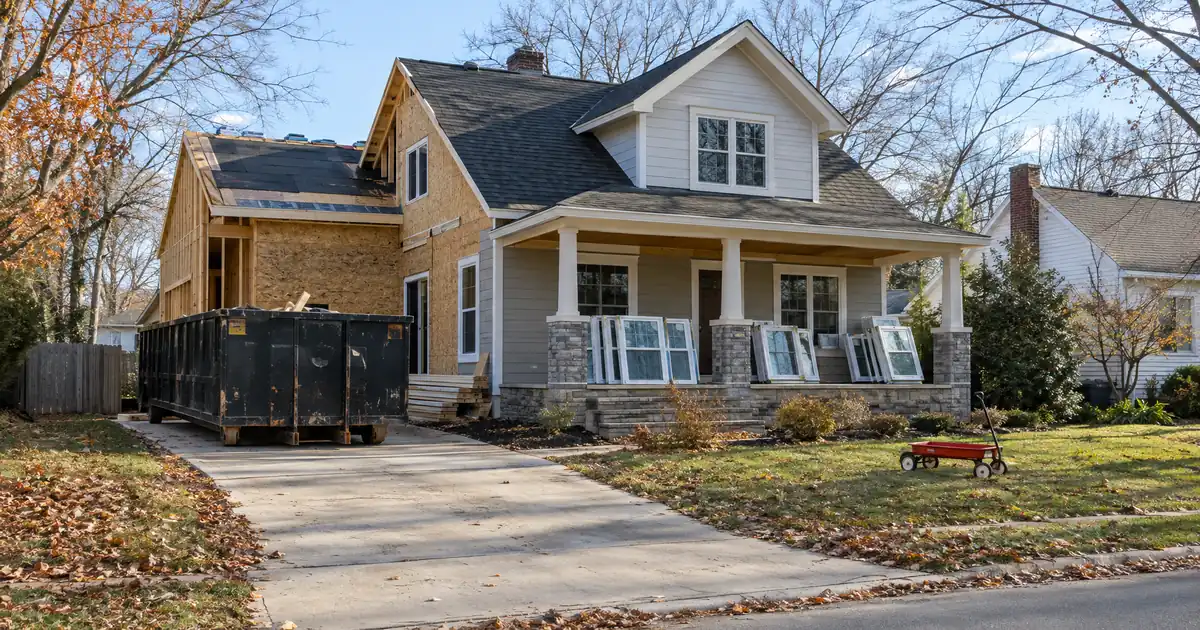
The Quick Read: Funding a fix and flip purchase comes down to proving four things on paper: what the property is worth now, what you are paying, what the repairs will cost, and what it will be worth finished, plus showing that your entity and your cash can carry the deal through closing and the rehab.
- Lenders size the loan to the deal, so the budget, the purchase contract, and the value support carry the most weight.
- Your entity paperwork must match across every document, down to the exact legal name.
- Bank statements prove cash to close and reserves. Hard money is asset-based, but it is not paperless.
- The rehab money is usually held back and released in draws after work is done, so you often fund early repairs first.
- Requirements vary by lender, property, and experience, and nothing here is a commitment to lend.
What Does “Documentation to Fund” Actually Mean?
It means three different piles of paper that people tend to lump together. Submission documents are what you send to get terms. Underwriting conditions are the items the lender still needs before it will approve the file for closing. Closing documents are the legal instruments you sign when the loan is made.
What this loan actually costs to carry.
Hard money is sized against the project and priced by time. Enter the deal and see how much the program will lend, the cash required at closing, the carry while you hold it, and what is left at the exit.
Leverage tiers on the current program: 85% with fewer than 2, 90% with 2 or more, 93% with 5 or more completed projects — every tier capped at 75% of after-repair value. Loan amounts up to $5,000,000, larger by exception; terms of 6 to 18 months, interest-only, no prepayment penalty. The rehab portion funds in draws against completed work, not at closing.
Program parameters shown update from Lendmire’s centralized guideline source. Rate, points, and months are editable assumptions, not quoted terms.
Cost cap sets the loan · positive spread
Illustrative estimate only — not a quote, Loan Estimate, approval, or commitment to lend. Rate, points, and months are editable assumptions. Hard money is business-purpose financing for real estate investors, not a consumer mortgage. Leverage on the current program tops out at 93% of project cost for investors with a documented track record, capped at 75% of after-repair value, with rehab funding up to 100% of the documented budget released in draws; actual terms vary by lender, borrower experience, property, and exit. Lendmire is a mortgage broker, not a lender.
A conventional mortgage file leans on your traditional personal-income documentation, and debt ratios. A flip loan file leans on the property. The lender looks at the as-is value, the purchase price, the repair budget, and the after-repair value, often shortened to ARV. ARV is the estimated value once the work is finished.
Think of the paperwork as proof for those numbers. It also proves you can close and finish the project. That is why a hard money file asks for a scope of work and comparable sales, and rarely asks for pay stubs.
Across the wholesale network Lendmire works with, the checklist differs from lender to lender. The shape of it does not. Every file needs identity, money, entity, and project documents, and every file needs title, insurance, and a valuation.
The Funding Sequence at a Glance
The order matters more than the exact label each lender uses. The sequence below shows who owns each step.
| Stage | What happens | Owner |
|---|---|---|
| Deal packet | Request, contract, budget, comps | You |
| Valuation | As-is value and ARV established | Lender orders |
| Borrower and entity review | ID, entity papers, bank statements | You |
| Title and insurance | Search, policy, endorsements | Title agent, insurer |
| Conditions | Open items cleared one by one | Shared |
| Closing | Instruments signed, wire verified | You, closing agent |
| Draws | Rehab money released after inspection | Lender |
Some stages run in parallel. Title and insurance, for example, can move while you finish your own documents. A slow insurance quote can hold up an otherwise clean file.
The Borrower Package: What You Send and Why They Ask
The borrower package is the part you control. Group it into identity, money, and experience.
| Document | Why the lender asks | Common mistake |
|---|---|---|
| Government ID | Confirms who signs and guarantees | Expired or name mismatch |
| Application and credit authorization | Starts the credit review | Missing signature |
| Bank statements | Proves cash to close and reserves | Pages left out |
| Experience record | Sets the leverage tier | No proof of past projects |
| Purchase contract | Fixes price and terms | Missing addenda |
Credit still matters, even though underwriting is asset-based. Programs we place files with generally look for a 620 minimum score, with added conditions below 660. First-time investors can qualify at the lower leverage tiers, varying by lender, property, and experience.
Your bank statements deserve a second look before you send them. Every page of every account should be included, with your name, the account number, and the balances visible. A statement with half the pages gets sent back.
Experience is documented, not claimed. A list of completed projects with addresses and sale or refinance records does more than a paragraph about your background. Because leverage tiers hinge on completed projects, this is the document that can change your loan size most.
Entity Documents: Where Names Break
Most flip loans are made to an LLC or corporation, subject to lender program eligibility. The lender wants proof the entity exists, that you control it, and that it can borrow.
A typical entity set includes:
- The formation filing from the state.
- The operating agreement, which shows who owns the entity and who can sign.
- The tax ID letter.
- A good standing certificate, and foreign registration if the entity was formed in a different state than the property.
The operating agreement is the document that trips people up. If it does not authorize the entity to borrow and to grant a lien on real estate, the lender or title agent will ask for an amendment. Fix it before you go under contract, not after.
Then check names. The entity name on the purchase contract, the application, the insurance policy, the bank account, and the title commitment should all read the same. An extra comma or a missing “LLC” can generate a new condition. Small mismatches cause the most avoidable delays on flip files.
The Project Package: Contract, Budget, Comps
The project package proves the deal makes sense. Here is how lenders read it.
The purchase contract. It shows the price, the closing terms, and the deposit. Send the full contract with every addendum.
The scope of work and budget. This is the document that shapes a rehab loan more than any other. Most lenders supply an itemized template, broken out by area and trade. The reason is simple. Rehab funds are held back and released as work is completed, so the inspector needs a line to measure each draw against.
A lump-sum line such as Interior gives an inspector nothing to measure. A line for kitchen cabinets, countertops, and plumbing fixtures does. A simple budget may pass with a lender who knows you well or on a small project. Lenders with formal draw processes and larger loans want detail.
A budget also has to look believable. A lender that sees a gut renovation priced like a cosmetic refresh may pause the file. Get contractor bids before you submit, and use them.
Comparable sales. Comps support the ARV. The lender usually orders its own valuation, and the value it reaches is the one that counts. Your comps help you pick a deal that survives that review.
Contractor paperwork. Many lenders want to see that the contractor is licensed and insured, and some ask for recent project history. Gather it early. Contractors are not always quick to send insurance certificates.
Third-Party Items: Title, Insurance, Valuation
Three outside parties produce paper you cannot create yourself.
Title. The title agent searches the property’s record, issues a commitment, and flags liens or ownership issues. Your job is to respond to what they flag. Vesting is a frequent snag: the buyer on the contract must be the entity that will hold title.
Insurance. A property under renovation is not a normal rental. Many lenders want coverage that fits a project in progress, with the lender named on the policy. A standard landlord policy may not meet that. Ask your agent for the lender’s requirements before you buy a policy.
Valuation. The lender orders a broker price opinion or appraisal to establish the as-is value or the ARV. You may pay for it, but you do not choose the appraiser or the number.
Underwriting Conditions: Who Owns What
After the lender reviews the file, it issues a list of conditions. A condition is an open item that must be cleared before closing. Some belong to you, such as a missing statement or a signed budget. Others belong to the title agent, the insurer, or the lender.
Treat the list as a to-do list with names on it. Clear your own items the same day they appear. Then follow up on the others, because a title or insurance item can sit unless someone asks.
When a condition comes back rejected, read the reason before you resend anything. Rejections usually point to a specific gap, such as an illegible page or a name mismatch. Resending the same document does not fix that.
What You Sign at Closing
The closing documents are legal instruments, not proof. In plain terms:
- The note is your promise to repay.
- The security instrument, called a mortgage or deed of trust depending on the state, gives the lender a lien on the property.
- The loan agreement sets the terms, including the rehab holdback and how draws work.
- A personal guaranty makes you personally responsible if the entity is the borrower.
- A profit-participation agreement appears with some lenders and not others.
Because flip loans are business-purpose loans, the closing package differs from a consumer mortgage. Federal rules exempt credit extended primarily for a business purpose and credit extended to anyone other than a natural person, as the CFPB’s Regulation Z text explains. A loan to an individual is tested on its purpose, and an LLC guarantor does not change that, as an ABA Banking Journal compliance Q&A notes. Your lender decides how to classify each file.
From Signing to Wire, Then the Draws
Before funds move, expect two final checks. First, wire instructions get verified, ideally by phone using a number you already trust. Second, the closing agent reviews the final cost sheet with you, including your cash to close.
Cash to close covers the part of the purchase the loan does not fund, plus closing costs and any required deposits. Reserves are separate. The lender checks that you hold enough cash to start the rehab, because a flip stalls when the investor runs out of money after closing.
Then the draw process starts. The rehab budget is held back and paid out in stages, after work is completed and inspected. The lender pays against verified work, so you often pay a contractor first and get reimbursed after the inspection.
For each draw, expect to send a request, photos or invoices, and sometimes lien waivers. If you find a repair that was not in the original scope, document it and ask for a budget revision before the work starts. Repairs outside the approved scope may not be credited, and the next draw can come up short.
What Leverage Does the Paper Support?
Documentation also decides which tier you land in. On the programs we see, flip leverage is measured against project cost, which is the purchase price plus the rehab budget. These are typical ranges, and they vary by lender, property, and experience:
- 93% of project cost at 5 or more completed projects.
- 90% of project cost at 2 or more completed projects.
- 85% of project cost with fewer than 2 completed projects.
- Every tier is capped at 75% of ARV.
- Up to 100% of the rehab budget is funded in draws against completed work. That is a rehab-budget figure, not a purchase loan-to-value.
The top tier is reserved for experienced investors, and it is only as strong as your documented track record. Bridge purchases without a rehab can reach up to 80% of the purchase price. Loans run up to $5,000,000, with larger by exception, on 1-4 unit non-owner-occupied residential property. Terms run 6 to 18 months, interest-only, with no prepayment penalty.
A Worked Example (Modeled, Not a Real File)
Picture an investor with two completed projects buying a duplex through a new LLC. The inputs below are modeled assumptions.
Stage 1, the deal packet. The investor submits the contract, an itemized budget with contractor bids, and comps. The budget is broken out by trade.
Stage 2, valuation. The lender orders its own valuation. The ARV it reaches sets the 75% cap, and the loan stays within it.
Stage 3, entity and borrower review. The underwriter spots that the operating agreement lists the LLC as Smith Holdings, while the contract names Smith Holdings LLC. The investor gets a corrected contract addendum.
Stage 4, bank statements. One statement arrives with two pages missing. The investor resends the full set.
Stage 5, insurance. The first policy is a standard landlord policy. The lender asks for coverage that fits a renovation, and the agent reissues it.
Stage 6, conditions and closing. With every condition cleared, the investor signs the instruments. The loan sits at the 90% of project cost tier because two completed projects are documented, subject to the 75% ARV cap.
Stage 7, draws. The investor pays the contractor for the first phase, submits photos and invoices, and receives the draw after inspection.
None of the delays above came from the property. Every one came from paperwork. That pattern is common.
Where the General Rule Breaks
Purchase-only versus rehab files. A purchase with no rehab has no scope of work, no draw schedule, and no inspection. The file is lighter, though the lender still wants entity papers, title, insurance, and proof of funds.
Individual versus entity borrowers. Borrowing personally rather than through an LLC changes the paperwork and sometimes the lender’s classification of the loan. The Compliance Alliance explains that the question turns on the loan’s purpose, not just the collateral. Talk to the lender about this before you form an entity or skip one.
First-time versus experienced investors. A first-time investor can qualify at the lower leverage tiers, but the lender will probably look harder at the budget and the contractor.
Lender variation. Some lenders want a down payment and size to ARV. Some collect monthly payments and others defer them. A simple budget may pass with one lender and fail with another. Ask for the lender’s list before you pay for anything.
Why Files Stall
| Defect | What it looks like | Fix |
|---|---|---|
| Name mismatch | LLC name differs across papers | Align every document |
| Truncated statements | Missing pages or accounts | Send full sets |
| Lump-sum budget | One line for the whole interior | Itemize by trade |
| Wrong insurance | Landlord policy on a gut rehab | Get renovation coverage |
| Weak operating agreement | No authority to borrow | Amend before closing |
| Late contractor papers | No license or insurance proof | Request at the start |
Before You Go Under Contract: A Preparation Checklist
- Form the LLC and confirm the operating agreement authorizes borrowing.
- Pull your last full set of bank statements.
- Write down your completed projects, with addresses and outcomes.
- Collect bids from at least one contractor, itemized by trade.
- Ask an insurance agent what a project-in-progress policy needs.
What the Decision Looks Like in Practice
Hard money is short-term money, so the exit is part of the file. Many investors refinance out of hard money into long-term DSCR financing once the property is stabilized, and Lendmire arranges that path. DSCR is the debt service coverage ratio, which compares rent to the monthly payment on principal, interest, taxes, insurance, and any HOA dues. Clearing it says nothing about repairs, vacancy, or management costs. Lendmire’s complete DSCR loans guide explains how that works.
Keep your file tidy. The entity papers, the budget, the paid invoices, and the proof of completed work all carry forward into that refinance.
Key Terms Defined
ARV (after-repair value): The estimated value of the property once the renovation is finished.
Scope of work: The itemized description of every repair, broken out by area and trade.
Holdback: The part of the loan reserved for repairs and released only as work is done.
Draw: A payment released from the holdback after an inspection confirms completed work.
Condition: An open item the lender needs before it will approve the file for closing.
Loan-to-cost: The loan amount compared with the purchase price plus the rehab budget.
Reserves: Cash you hold after closing to cover the project and the loan obligations.
PITIA: Principal, interest, taxes, insurance, and association dues, the full monthly obligation on a property.
Frequently Asked Questions
What documents are typically required to fund a hard money purchase?
Expect identity documents, bank statements, the purchase contract, entity papers, a scope of work and budget, and comps. The lender adds a valuation, and the title agent and insurer supply their own papers. Exact lists vary by lender, property, and experience.
Do I need income documents or traditional personal-income documentation?
Hard money is underwritten to the property, the plan, and the exit, so a personal income file is not the focus. Lenders still review your finances for cash to close and reserves, and your credit still matters. Programs we see generally start at a 620 score.
Does the lender wire the whole rehab budget at closing?
No. The rehab budget is held back and released in draws after work is completed and inspected. You often pay early costs yourself and get reimbursed after the inspection, so plan your cash around that.
What if my budget is a single lump sum?
It may pass with some lenders on a small project, but it will not work with a lender that has a formal draw process. Itemize the budget by trade. That gives the inspector a line to measure each draw against.
Can I borrow through an LLC?
Most flip loans are made to an entity, subject to lender program eligibility. The lender will want the formation filing, the operating agreement, a tax ID letter, and a good standing certificate. All names must match.
If You’re Ready to Run the Numbers
If you are buying, rehabbing or refinancing an investment property on a short timeline and want to see how the numbers work, Lendmire can help you compare hard money options based on the project, the exit plan, leverage, and your goals. Lendmire is a broker that arranges financing through select lenders in its wholesale network across 41 markets, including Washington, D.C. Whichever lender you choose, getting your entity, budget, and bank statements in order before you sign a contract is the most useful preparation a flip investor can make.
About Lendmire
Lendmire (NMLS# 2371349) is a mortgage brokerage built around DSCR investor lending, with programs available in 41 markets, including Washington, D.C. DSCR lenders commonly evaluate rental-income coverage instead of personal income paperwork — a practical fit for LLC-owned and multi-property investors. Terms vary by lender, property, leverage, and program. Scotsman Guide named Lendmire a Top Mortgage Workplace in both 2025 and 2026.
Hard money often opens the deal, and a refinance typically closes the chapter – see the hard money loan overview.
Get Started
Ready to find the right loan for you?
In about 30 seconds you can review financing options available for your investment property. No commitment required.
Informational only. Not a Loan Estimate, approval, or commitment to lend. Program availability and eligibility are subject to lender guidelines, credit approval, property review, and underwriting.
References
1. CFPB Regulation Z, Section 1026.3
2. ABA Banking Journal compliance Q&A
3. Compliance Alliance: Reg Z and Investment Properties
This article is part of Lendmire’s hard money loan program — full qualification details, guidelines, and scenarios live on the program page.
Related reading: Can You Buy a Flip in an LLC With a Hard Money Loan? · Can You Get a Hard Money Loan Without Owning a Business? · Can You Have More Than One Fix and Flip Hard Money Loan at Once?
Brandon Miller
Founder & CEO, Mortgage Loan Originator, Lendmire LLC
- Mortgage Loan Originator · NMLS# 1129696 · Verify on NMLS Consumer Access
- North Carolina Real Estate Broker · License# 343312 · Verify on NCREC
- North Carolina Insurance Producer · License# 19053198 · Property, Casualty, Life, Health · Verify on NAIC SBS
- Lendmire LLC · Firm NMLS# 2371349 · Verify firm licensure
Important disclosures. Lendmire (NMLS# 2371349) is a licensed mortgage brokerage. Lendmire is not a direct lender, depository institution, or financial advisor. All loan inquiries are subject to lender underwriting; this article does not constitute a commitment to lend. Rates, terms, and program guidelines are subject to change without notice and vary by borrower profile, property type, and state. Information in this article is general in nature and is not financial, legal, or tax advice. Equal Housing Opportunity. NMLS Consumer Access: nmlsconsumeraccess.org.