
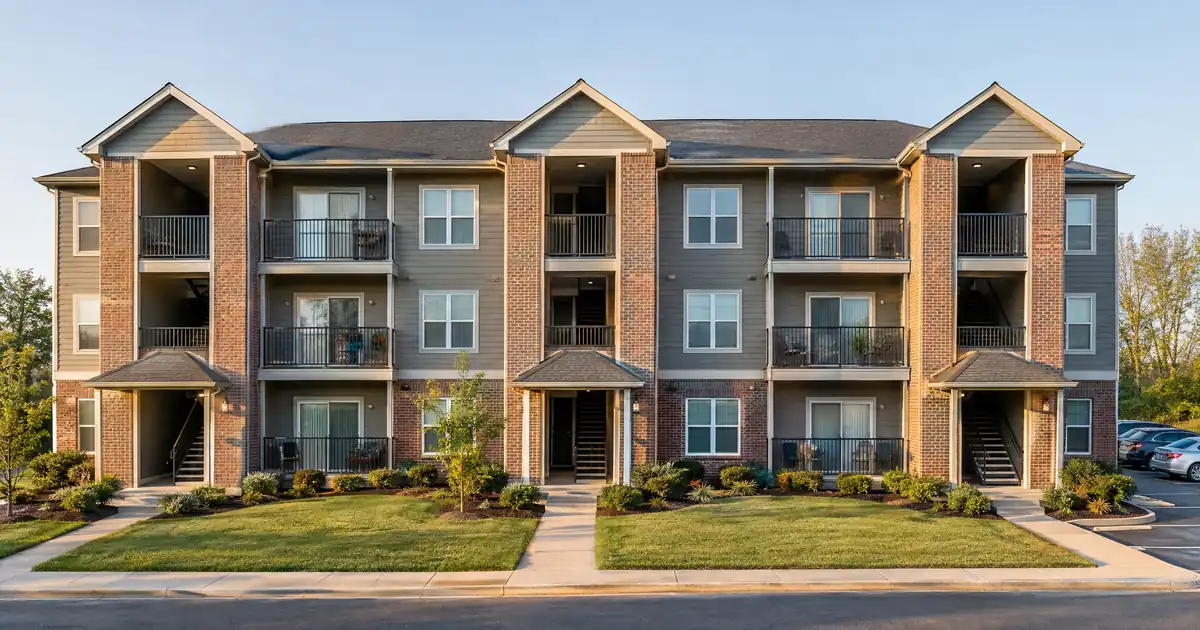
The Quick Read: Hard money underwriting looks at the property, the plan, and the exit, not at your paycheck. That does not mean a paperless file. On a two-to-four unit building, expect a property package, a borrower package, entity papers, and, for a rehab, a scope of work and budget.
- Property: the purchase contract (or payoff statement on a refinance), rent roll and leases, insurance, title, and an appraisal.
- Borrower: a personal financial statement, a schedule of properties you own, and proof of experience.
- Entity: formation documents, an operating agreement, and a personal guarantee from you.
- Rehab: a scope of work and a line-item budget. They are two different documents, and both feed the draw schedule.
- Fit: these programs cover non-owner-occupied one-to-four unit residential property. Terms vary by lender, property, and experience.
What a Hard Money File Really Contains
Hard money is asset-based. The lender cares most about how it gets repaid, so the file is built to prove three things: the property is worth what you say, the plan is believable, and the exit works.
What this loan actually costs to carry.
Hard money is sized against the project and priced by time. Enter the deal and see how much the program will lend, the cash required at closing, the carry while you hold it, and what is left at the exit.
Leverage tiers on the current program: 85% with fewer than 2, 90% with 2 or more, 93% with 5 or more completed projects — every tier capped at 75% of after-repair value. Loan amounts up to $5,000,000, larger by exception; terms of 6 to 18 months, interest-only, no prepayment penalty. The rehab portion funds in draws against completed work, not at closing.
Program parameters shown update from Lendmire’s centralized guideline source. Rate, points, and months are editable assumptions, not quoted terms.
Cost cap sets the loan · positive spread
Illustrative estimate only — not a quote, Loan Estimate, approval, or commitment to lend. Rate, points, and months are editable assumptions. Hard money is business-purpose financing for real estate investors, not a consumer mortgage. Leverage on the current program tops out at 93% of project cost for investors with a documented track record, capped at 75% of after-repair value, with rehab funding up to 100% of the documented budget released in draws; actual terms vary by lender, borrower experience, property, and exit. Lendmire is a mortgage broker, not a lender.
Across the wholesale network Lendmire works with, underwriting centers on property value, after-repair value when a rehab is funded, the credibility of the budget, your experience and liquidity, and a clear way out. Personal income and debt-to-income ratios sit well behind those items. Hard money lenders can still ask for bank statements, and each lender has its own overlays.
So “hard money means no documentation” is a myth. The paper simply points at the deal instead of at you. Think of it as moving the weight from your W-2 to your scope of work.
Typical program shape, so the documents make sense. Up to $5,000,000 on loan size, with larger by exception. Terms run 6-18 months, interest-only, with no prepayment penalty. A 620 credit score is the minimum, with additional conditions below 660. All of it varies by lender, property, and experience, and nothing here is a commitment to lend.
Key Terms Defined
Rent roll: a unit-by-unit list showing who lives where, what each tenant pays, and when each lease ends.
Scope of work: the contractor’s description of what will be done, in phases, with phase costs and estimated dates.
Line-item budget: the itemized cost sheet for the rehab. It is separate from the scope of work.
Draw schedule: the plan that ties rehab milestones to payments. The lender releases funds as completed work is inspected.
Schedule of real estate owned: a list of the properties you own, with values, balances, and rents.
Operating agreement: the document that says who owns an LLC and who may sign for it.
Personal guarantee: your personal promise to repay the loan, even when an LLC is the borrower.
Assignment of rents: a pledge that lets the lender collect the property’s rent if the loan defaults.
Estoppel: a tenant’s signed statement confirming rent, deposit, and lease terms.
Exit strategy: the way the loan gets repaid, usually a sale or a refinance into long-term financing.
Why Two to Four Units Are Documented Differently From Five or More
A building of two to four units is treated like residential property. A building of five or more units moves to commercial underwriting, with heavier operating statements. That split changes how much paper you carry.
Investor-education guides draw the same line: Rental Real Estate’s multifamily loan overview separates two-to-four unit properties, which use residential-style products, from five-plus unit properties, which use commercial underwriting.
| Factor | 2-4 Units | 5+ Units |
|---|---|---|
| Valuation | Residential-style appraisal | Commercial appraisal |
| Income proof | Rent roll, leases, rent schedule | Multi-year operating statements |
| Tenant papers | Leases, sometimes estoppels | Leases plus tenant-level files |
| Emphasis | Value, plan, exit | Stabilized property income |
Here is the practical result. On a duplex or fourplex, a clean rent roll and the leases usually stand in for the long operating history a larger building needs. Lighter, yes. Optional, no.
The Core Document Checklist
Every file differs, but this set covers most two-to-four unit requests. Lenders may add or drop items.
| Document | What it proves | Who supplies it |
|---|---|---|
| Purchase contract or payoff statement | The deal and the starting debt | You or the agent |
| Rent roll and leases | Current tenants and rents | You or seller |
| Appraisal | Value now, and after repairs | Lender orders it |
| Financial statement and real estate schedule | Liquidity and experience | You |
| Entity documents | The borrower exists and can sign | You or your attorney |
| Scope of work and budget | The rehab is real and priced | You and contractor |
Insurance and title belong on the list too. The lender needs hazard coverage on the building and a clean title before it records a lien.
Why each item is there
- Contract or payoff: it sets the purchase price or the debt being replaced.
- Rent roll and leases: they show the property’s income, which supports value and the exit.
- Appraisal: it caps how much the lender will advance.
- Financial statement: it shows you can cover shortfalls and carry costs.
- Entity papers: they show the entity is real and that the person signing has authority.
- Scope and budget: they let the lender hold back rehab funds and release them against finished work.
How Underwriting Treats the File, Step by Step
Think in stages, not piles. Each stage answers a different lender question.
1. Application. You submit the deal summary, the contract or payoff, and basic borrower and entity information. The lender asks: is this a deal we understand?
2. Underwriting. The lender reviews the rent roll, leases, budget, and your financial statement. It orders the appraisal. The question here is whether the value and the plan hold together.
3. Pre-closing. Title, insurance, and entity authority get cleared. Any missing paper surfaces here.
4. Closing and funding. Loan documents are signed. On a rehab, a portion of the budget is held back and paid out against completed work.
5. Draws. The lender inspects each stage, then pays. Some lenders issue an initial draw up front. Others reimburse only after work is done.
One practitioner habit saves a lot of grief. Submit the budget at the level of detail you will actually spend at. Repairs added after the scope was submitted may not get credit at inspection.
Closing and Legal Documents in Plain English
These are the papers you sign, not the ones you gather. Have an attorney review them.
- The note is your promise to repay, with the loan’s terms.
- The deed of trust or mortgage pledges the property as collateral. Which one is used depends on the state.
- The guaranty is the personal guarantee. Many hard money lenders lend only to entities. Even so, expect to guarantee personally. An LLC does not make the loan non-recourse.
- The assignment of rents gives the lender a claim on the rent if the loan defaults.
- Environmental indemnity is a promise to cover contamination costs. It appears in some packages.
- Title commitment and policy show clean ownership and protect the lender’s lien.
- Entity resolutions confirm that the LLC authorized the loan and named who signs.
A seasoned borrower reads these before closing day. Not after.
Where the Business-Purpose Rule Shapes the File
DSCR loans are designed for non-owner-occupied investment properties. Because they are business-purpose investor loans, they are reviewed differently from a standard owner-occupied mortgage. Hard money works the same way.
The federal rule behind this treats credit for acquiring or improving non-owner-occupied rental property as business purpose, whatever the number of units. It also says a property does not count as non-owner-occupied if the owner expects to live in it for more than 14 days in the coming year.
Here is what that means for you. These hard money programs cover non-owner-occupied residential property only. Owner-occupied buildings are not offered. If you plan to live in one unit of a fourplex, this is the wrong product. Business-purpose status also means fewer consumer disclosures, so you carry more of the risk and must read your own documents.
Special Situations
Vacant or partly vacant units. No leases exist for empty units. Provide a rent schedule or market-rent support for those units and the rehab plan to fill them. The appraisal does much of the work.
No written leases. Month-to-month tenants without paperwork slow a file. Get simple written leases or a tenant statement before you apply.
Buy-and-rehab. Add the scope of work, the line-item budget, and a draw plan. Larger loans and formal draw processes need more detail. A simple budget may pass with a lender that knows you.
Refinance versus purchase. A refinance swaps the contract for a payoff statement and current mortgage statement. Cash-out and rate-and-term refinances run up to 65% of value on a non-owner-occupied one-to-four unit property in these programs, varying by lender, property, and experience.
Holding title in an LLC. Subject to lender program eligibility, an LLC borrower needs formation documents, an operating agreement, and a tax ID. Buying in an LLC but taking the loan personally still leaves you guaranteeing the debt. Some investors later deed the property out of the LLC when they refinance. Whether a long-term lender allows LLC vesting varies by lender.
Multiple owners. LLCs, tenants-in-common, and joint ventures each need papers showing who owns what and who signs. Expect more entity documents, not fewer.
Small loans. Many lenders set minimum loan sizes or price small balances differently. Smaller balances vary by lender. Ask before you build a thin deal around a small loan.
Worked Example: A Fourplex With Two Vacant Units
Picture a hypothetical investor buying a fourplex and renovating two vacant units. The investor has two completed projects and holds the property in an LLC.
- Leverage: at 2+ completed projects, the program runs at 90% of project cost on a non-owner-occupied purchase with rehab, capped at 75% of after-repair value. Up to 100% of the rehab budget funds in draws against completed work. (That last number is a rehab-budget figure, not a purchase LTV.) A purchase with no rehab runs up to 80% of purchase price. Fewer than two completed projects means an 85% of project cost tier.
- Property file: the contract, a rent roll showing two occupied units and two vacant, leases for the occupied pair, insurance, title, and an appraisal that reports as-is and after-repair value.
- Borrower file: a financial statement, a real estate schedule, and a short experience summary showing the prior projects.
- Entity file: the LLC’s formation documents, operating agreement, and a guarantee from the investor.
- Rehab file: a contractor scope of work in phases, a line-item budget, and a draw schedule.
Here is what each piece did. The appraisal set the ceiling. The scope and budget justified the held-back funds. The experience summary decided which leverage tier applied. The rent roll and leases showed what the stabilized building would look like for the exit.
The top tier is reserved for experienced investors, and all figures vary by lender, property, and experience.
Why Files Stall, and How to Prevent It
Most delays are self-inflicted. A few repeat offenders:
- Scope and budget merged into one sheet. Lenders want both. Send them separately.
- Entity papers that do not match. The LLC name on the contract must match the name on the application and the title.
- Missing authority. If the operating agreement does not say who can sign, expect a request for resolutions.
- Stale rent roll. Update it before submitting, and make it match the leases.
- Vague budgets. Round numbers invite questions and short draws.
- Surprises on title or insurance. Order both early.
Fix these before submitting. A lender who has to chase paper starts to doubt the borrower, even when the deal is good.
Planning the Exit Paperwork Early
The hard money loan is temporary. Terms run 6-18 months, so the exit is part of the file from day one.
Many investors refinance out of hard money into long-term DSCR financing once the property is stabilized, and Lendmire brokers that path. The hard money note, draw history, invoices, and updated leases become the paper trail for the next lender. Keep them organized. For a deeper look at that handoff, see Lendmire’s piece How Under-Rented Units Exit Hard Money Into a DSCR Pool.
A DSCR loan compares rent to the full monthly obligation (principal, interest, taxes, insurance, and any HOA dues). Clearing it does not mean positive cash flow, because repairs, vacancy, management, and utilities sit outside the calculation. In the wholesale network, 1.00 is where many select programs start. A separate select-lender path takes coverage below 1.00 with leverage and terms adjusted. The complete DSCR loans guide walks through that math.
Keep clear records of how funds were used and how the property is held.
Appraisal Form Note
On a two-to-four unit building, the traditional appraisal often uses the small residential income property report. Fannie Mae’s Selling Guide lists Form 1025 as the form for appraisals of two- to four-unit properties. That is a form name, not a hard money rule. Lenders may order the same form, but each sets its own appraisal requirements.
Pre-Submission Checklist
Copy this list and check it off before you send anything.
- Purchase contract, or payoff and current mortgage statements.
- Rent roll, matched to signed leases.
- Written plan for any vacant units.
- Insurance quote or binder, and a title order opened.
- Personal financial statement and real estate schedule.
- Experience summary with completed projects listed.
- LLC formation documents, operating agreement, and tax ID.
- Scope of work (phases, costs, dates) and a separate line-item budget.
- Draw schedule tied to milestones.
- Written exit plan: sale or refinance, and the documents the next lender will want.
Frequently Asked Questions
Do I need traditional personal-income documentation for a hard money loan on a duplex or fourplex?
Usually the core of the file is the property, the plan, and the exit, not your traditional personal-income documentation. Some lenders still ask for bank statements or other proof of liquidity. Each lender has its own overlays, so confirm what yours wants before you apply.
Do I need leases on a two-to-four unit property?
For occupied units, yes: lenders want the rent roll and the leases behind it. They show the income the property carries today. For vacant units, a rent schedule and a plan to lease them usually take the place of leases.
Does an LLC change the documents?
It adds entity papers: formation documents, an operating agreement, and a tax ID. Subject to lender program eligibility, many hard money lenders lend only to entities. You will still sign a personal guarantee, so the LLC does not make the loan non-recourse.
What if a unit is vacant?
Vacancy is common on rehab deals. Show market rent support and the plan to fill the unit. The appraisal reports value as-is and after repairs, and the exit plan explains how stabilization happens.
What happens if I miss a document?
The lender typically adds it as a condition, and the file waits until it arrives. Missing authority papers or an outdated rent roll are the common culprits. Send a complete package up front and keep names consistent across every document.
Next Step
If you are buying, rehabbing or refinancing an investment property and want to see how the numbers work, Lendmire can help you compare hard money options based on the project, the exit plan, leverage, and your goals. The brokerage arranges hard money financing through select lenders in its wholesale network across 41 markets, including Washington, D.C. Call 828-256-2183 to talk through your file.
A fourplex with a clean rent roll and a written exit plan reads very differently to a lender than a fourplex with a vague budget and mismatched entity names, and that gap is mostly paperwork you control.
About Lendmire
Lendmire is a non-QM mortgage brokerage (NMLS# 2371349) arranging DSCR investor loans in 41 markets, including Washington, D.C., through wholesale and investor-lending channels. DSCR loans are evaluated by the lender on rental income rather than personal income, subject to lender guidelines — a fit for LLC-owned portfolios, self-employed investors, and operators scaling beyond conventional loan caps. Recognized as a Scotsman Guide Top Mortgage Workplace in 2025 and 2026.
Get Started
Ready to find the right loan for you?
In about 30 seconds you can review financing options available for your investment property. No commitment required.
Informational only. Not a Loan Estimate, approval, or commitment to lend. Program availability and eligibility are subject to lender guidelines, credit approval, property review, and underwriting.
References
1. Rental Real Estate, Multifamily Loans
2. CFPB, Regulation Z § 1026.3 and commentary
3. Form 1025 as the form for appraisals of two- to four-unit properties
This article is part of Lendmire’s hard money loan program — full qualification details, guidelines, and scenarios live on the program page.
Related reading: Can You Buy a Flip in an LLC With a Hard Money Loan? · Can a First-Time House Flipper Get a Hard Money Loan? · Can You Get a Hard Money Loan Without Owning a Business?
Brandon Miller
Founder & CEO, Mortgage Loan Originator, Lendmire LLC
- Mortgage Loan Originator · NMLS# 1129696 · Verify on NMLS Consumer Access
- North Carolina Real Estate Broker · License# 343312 · Verify on NCREC
- North Carolina Insurance Producer · License# 19053198 · Property, Casualty, Life, Health · Verify on NAIC SBS
- Lendmire LLC · Firm NMLS# 2371349 · Verify firm licensure
Compliance and disclosures. Lendmire (NMLS# 2371349) is a licensed mortgage broker and is not a direct lender, depository institution, financial advisor, or tax professional. Content in this article is general market analysis and educational information — not financial, legal, or tax advice for any specific situation. Lendmire does not guarantee loan approval; every transaction is subject to underwriting by the funding lender. Mortgage pricing and loan program guidelines are subject to change at any time without notice and vary by borrower characteristics, property type, and state regulations. Lendmire complies with Equal Housing Opportunity. Licensure verification: NMLS Consumer Access.