
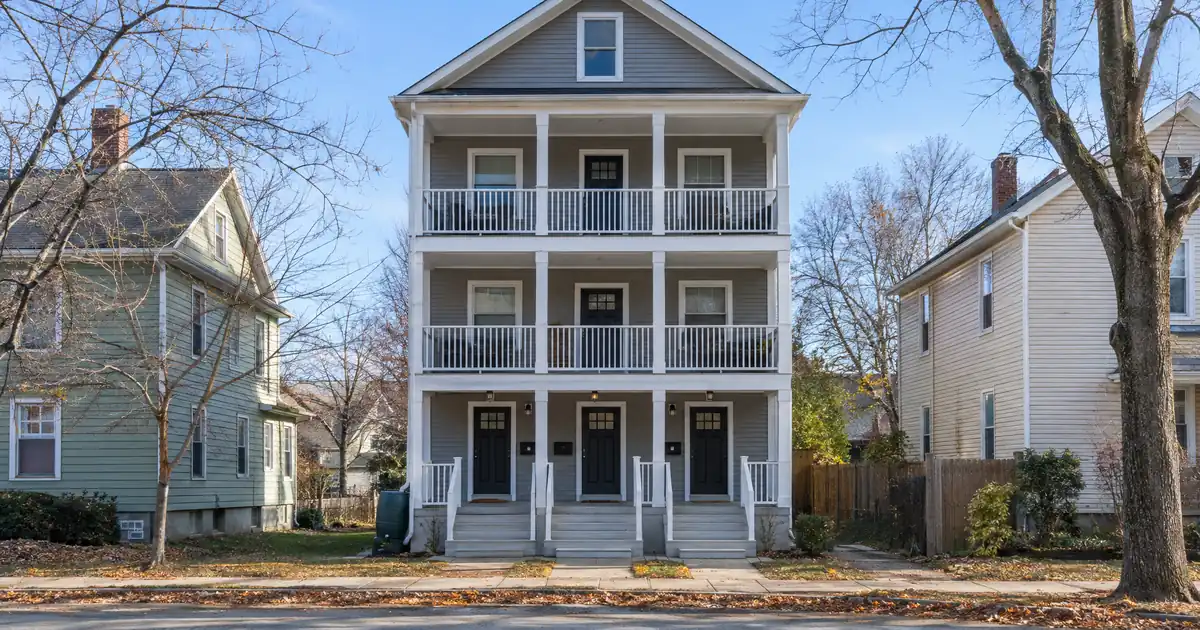
The Quick Read: A hard money bridge loan on a 2-4 unit property is a short-term, interest-only loan sized on the property and your exit plan, and it generally requires non-owner-occupied residential collateral, a credit score of at least 620, cash for the gap between loan and cost, and a credible repayment path. Every figure below varies by lender, property, and experience, and nothing here is a commitment to lend.
- Collateral: non-owner-occupied residential property with one to four units. Commercial, land, and owner-occupied properties are not offered.
- Credit: a 620 minimum score, with added conditions below 660. First-time investors qualify at the lower leverage tiers.
- Leverage: a bridge purchase without rehab goes up to 80% of purchase price. A refinance goes up to 65% of value. Rehab money is released in draws.
- Terms: 6 to 18 months, interest-only, with loan amounts up to $5,000,000 and larger by exception.
- Exit: the lender wants a documented plan to repay by sale or by refinance into long-term rental financing. The exact numbers vary by lender and program and follow a full review of property, leverage, and credit.
A duplex, triplex, or fourplex is a different animal from a single-family house. It has several rent streams, several possible vacancies, and an appraisal built around income. A bridge lender looks at all of that, and it also looks at how you plan to leave the loan.
What this loan actually costs to carry.
Hard money is sized against the project and priced by time. Enter the deal and see how much the program will lend, the cash required at closing, the carry while you hold it, and what is left at the exit.
Leverage tiers on the current program: 85% with fewer than 2, 90% with 2 or more, 93% with 5 or more completed projects — every tier capped at 75% of after-repair value. Loan amounts up to $5,000,000, larger by exception; terms of 6 to 18 months, interest-only, no prepayment penalty. The rehab portion funds in draws against completed work, not at closing.
Program parameters shown update from Lendmire’s centralized guideline source. Rate, points, and months are editable assumptions, not quoted terms.
Cost cap sets the loan · positive spread
Illustrative estimate only — not a quote, Loan Estimate, approval, or commitment to lend. Rate, points, and months are editable assumptions. Hard money is business-purpose financing for real estate investors, not a consumer mortgage. Leverage on the current program tops out at 93% of project cost for investors with a documented track record, capped at 75% of after-repair value, with rehab funding up to 100% of the documented budget released in draws; actual terms vary by lender, borrower experience, property, and exit. Lendmire is a mortgage broker, not a lender.
How Does a Hard Money Bridge Work on a 2-4 Unit?
The loan is sized on the building and the plan, not on your paycheck. A lender advances money against the property’s value, usually holds rehab funds in reserve, and expects repayment at maturity from a sale or a refinance. The short term is the point: the bridge buys time to buy, fix, lease, or stabilize.
Most programs the brokerage places files with run six to eighteen months and are interest-only. That means you pay only the interest during the term and owe the full balance at the end. There is no amortization schedule chipping away at principal. Because the maturity date is firm, the exit gets as much scrutiny as the property.
Underwriting is asset-based, meaning the property, the plan, and the exit carry the file. That does not mean credit and experience are ignored. Lenders still look at your score, your liquidity, and how many projects you have finished. Credit is not the main driver, but it still sets a floor.
Hard money describes where the money comes from, which is private or non-bank capital. “Bridge” describes what the loan does, which is carry you from one stage to the next. Many loans are both at once.
Requirements at a Glance
The table below shows what a lender checks and why it matters on a 2-4 unit. Treat the figures as typical ranges from select wholesale-network guidelines, not promises.
| Requirement | What the lender looks for | Why it matters on 2-4 units |
|---|---|---|
| Property | Non-owner-occupied, 1-4 units | Unit count changes the appraisal |
| Credit | 620 minimum, extra conditions under 660 | Lower scores usually mean lower leverage |
| Experience | Completed projects set the tier | More projects, higher leverage |
| Leverage | Up to 80% of price on a no-rehab purchase | You fund the gap with cash |
| Term | 6-18 months, interest-only | The exit must land before maturity |
| Exit | Sale or refinance, documented | Rent must support the refinance |
Property Requirements for a 2-4 Unit
The property must be residential, hold one to four units, and not be your home. That is the whole eligibility core. Everything else is condition, location, and value.
Unit count is where a 2-4 unit differs from a house. A single-family appraisal compares sales of similar homes. A 2-4 unit appraisal also weighs the income the building produces, and the appraiser typically uses an income-property form (Form 1025) rather than the single-family rent schedule (Form 1007). The lender reads that report for value and for the rent that supports your exit.
Condition matters, but a rough building is not disqualifying by itself. Bridge lenders exist for properties that need work. What they want is a scope of work and a budget that fit the value after repairs.
Some property types are simply not offered. Commercial buildings, land and lots, hospitality properties, and owner-occupied homes are off the sheet. Ground-up construction is available on separate terms, up to ten units, but that is a different loan from this one.
Title and legal status also matter. A building sold as a fourplex should be a legal fourplex. If one unit is unpermitted or was converted without approvals, the lender may value it as fewer units, or decline it. Confirm the legal unit count before you sign a contract.
Borrower Requirements
You need a credit score of at least 620, enough liquid cash to cover your share of the deal, and some track record. That is the practical shape of it. Programs weigh these differently, so a stronger piece can offset a weaker one.
Credit. Across the network, 620 is the minimum score. Below 660, expect added conditions. First-time investors can qualify, but at the lower leverage tiers.
Experience. Documented completed projects set your leverage tier on rehab deals. A first-time investor sits at the bottom tier. An investor with two or more completed projects steps up, and five or more reach the top tier. The top tier is reserved for experienced investors.
Liquidity. You pay the difference between the loan and the total cost, plus closing costs and carrying costs. Lenders want to see that cash in your accounts. Reserve expectations vary by lender and loan size, so ask for them upfront.
Entity. Many investors buy through an LLC, subject to lender program eligibility. Lenders may ask for formation documents and may ask for a personal guaranty from the owners. Hunton’s analysis of business-purpose lending rules notes that loans to non-natural persons, such as LLCs, are treated separately under federal lending law. It also cautions that a business-purpose label is not a blanket pass on compliance.
What Does Business Purpose Mean Here?
Hard money bridge loans are designed for non-owner-occupied investment properties. Because they are business-purpose investor loans, they are reviewed differently from a standard owner-occupied mortgage. Occupancy is the dividing line. A Lexology summary of the business-purpose test puts it simply: the owner should not plan to occupy the property for more than 14 days in the coming year.
In practice, you sign a statement that you will not live there. If you plan to live in one unit, you need a different product. That is the most common mismatch on 2-4 unit files.
How Underwriting Sizes the Loan, Step by Step
The lender runs the file in a set order, and each step can shrink the loan.
1. Purpose and occupancy. You confirm the loan is for investment and you will not live there.
2. Collateral review. The lender checks property type, unit count, condition, and location.
3. Valuation. The lender uses an as-is value. On a rehab deal, it also uses the after-repair value (ARV), meaning what the finished property should be worth.
4. Sizing. The lender applies a leverage test on value and a test on cost, and the lower result governs.
5. Funding. Purchase money funds at closing. Rehab money is typically held back and released in draws against completed work.
6. Exit review. The lender asks how and when the loan will be repaid.
Loan-to-value (LTV) compares the loan to what the property is worth. Loan-to-cost (LTC) compares the loan to what you are spending in total, meaning purchase plus rehab. They are different measures, and mixing them up leads to bad assumptions.
Here is a worked example with abstract numbers, not dollar figures. Set the all-in project cost (purchase plus rehab) at 100 and the ARV at 120.
- At the 85% tier, 85% of cost works out to 85, and 75% of ARV works out to 90. The lower number governs, so the loan sizes off the cost test.
- At the 90% tier, both tests land at 90, so the loan sits right at the cap.
- At the 93% tier, the cost test would reach 93, but the cap at 75% of ARV holds the loan at 90. The extra experience does not buy more money on this deal.
A higher tier helps only when the ARV cap is not already the limit. If your appraised value comes in light, the cap tightens and your cash requirement grows.
On a bridge purchase with no rehab, the ceiling is up to 80% of purchase price. On a refinance, it is up to 65% of value. The rehab budget itself can fund up to 100% in draws against completed work. That is a figure for the repair budget, never a purchase loan-to-value. There is no true 100% purchase program.
Vacant, Occupied, or Under Renovation?
How the building looks on closing day changes the underwriting. It does not usually change eligibility.
Tenant-occupied. In-place leases help your exit because they prove rent. A lender may ask for a rent roll and copies of the leases. Below-market rents show up in the appraisal and can hurt the refinance later.
Vacant. A vacant 2-4 unit is a classic bridge candidate, because long-term rental loans need rent to measure and a vacant unit has none. A bridge carries the building while you lease it. Your exit plan then has to show how those units get leased and seasoned before maturity.
Under renovation. This is where draws come in. The lender reviews your scope of work and budget, and it may inspect before releasing each draw. Ask whether any per-draw fees apply. Some lenders advance part of the rehab money at closing, but that is an exception and not the norm.
What Lenders Want in an Exit Plan
You need a written route from the bridge to repayment, and it needs to work on the building’s real numbers. There are two routes: sell, or refinance into long-term rental financing. Lenders treat the exit as a core underwriting question, not an afterthought.
For many investors who keep the building, the refinance is a DSCR loan. DSCR stands for debt service coverage ratio. It compares the monthly rent to the full monthly obligation of principal, interest, taxes, insurance, and any association dues, known together as PITIA. Lendmire brokers the move from a bridge into long-term DSCR financing once a property is leased and stabilized.
Here is how the permanent side typically looks across the network:
- Coverage: 1.00 is where many select programs start. A separate select-lender path takes coverage below 1.00 with leverage and terms adjusted. Stronger ratios open better pricing and leverage.
- Credit: around 660 is what most programs want, and 700 and above unlocks the strongest leverage tiers. A 620 floor exists in parts of the network.
- Leverage: purchases mostly land at 75% to 80% LTV, and a cash-out refinance tops out around 75% LTV on standard rentals. About six months of seasoning is the common expectation on a cash-out.
- Loan size: up to $3,000,000 on standard programs (smaller balances available through select lenders).
Run this test before you buy the building, not after the rehab. Put realistic post-renovation rents against the full PITIA, then check whether the coverage ratio and the leverage limits leave enough loan to pay off the bridge. If the permanent loan comes up short, you must bring cash to the payoff or sell.
Clearing 1.00 also does not mean the building produces positive cash flow. DSCR measures rent against PITIA only. Repairs, vacancy, management, utilities, and capital expenses sit outside the calculation, so budget for them separately.
For the step after the bridge, see Lendmire’s article How to Refinance Hard Money on a 2-4 Unit Rental. The complete DSCR loans guide covers the permanent side in full.
Where the General Rule Breaks
The rules above hold for most files. A few situations bend or break them.
Owner-occupied 2-4 units. If you plan to live in one unit, a standard investor bridge is not the right product. Most investor bridge programs exclude owner occupancy outright. House-hacking is a real strategy, but it runs on owner-occupant financing, and it works differently from anything here.
Borrowing entity. Entity rules differ from program to program. Some lenders require a personal guaranty even when an LLC holds title. Confirm that early, because changing the vesting after contract can reset the file.
Valuation method. Most files use a full appraisal. Some lenders will accept a broker price opinion or a comparative market analysis on smaller loans. Do not count on that, and ask upfront.
Extensions and maturity. Some bridges offer optional extensions. Extensions can carry fees, so the maturity date alone does not capture the real cost of running long.
Ineligible collateral. Commercial buildings, land, hospitality properties, and owner-occupied homes are not offered. Mixed-use buildings are a case-by-case question for the lender, so ask before you assume.
Two closings. A bridge followed by a permanent loan means two sets of closing costs. That cost belongs in your model.
What to Have Ready: Document Checklist
Lenders move more smoothly when the package is complete. Expect to assemble the following:
- Signed purchase contract, or the current deed and mortgage payoff for a refinance
- Entity documents, if an LLC or similar entity will hold title
- Government ID and proof of liquid funds
- Scope of work and rehab budget, if repairs are planned
- Schedule of current leases or a rent roll, if units are occupied
- Evidence of your completed projects, if you are claiming a higher leverage tier
- Property insurance quote
- A written exit plan, whether sale or refinance
Why 2-4 Unit Bridge Deals Stall or Get Declined
Most declines trace back to a short list of problems.
- Weak exit math. The rents do not support a refinance large enough to pay off the bridge.
- Appraisal shortfall. The appraised value or ARV comes in below your assumption, and the leverage caps tighten.
- Seasoning not met. The permanent loan wants months of ownership or lease history that the bridge term cannot provide.
- Maturity too tight. The bridge matures before lease-up finishes.
- Ineligible property or status. The collateral falls outside 1-4 unit residential, or a unit is not legal.
- Occupancy mismatch. The borrower intends to live in the building.
- Thin liquidity. The cash for the gap, the closing costs, and the carry is not documented.
Appraisers value a property off closed comparable sales. Your renovation spend does not set the number. An improvement may support a higher appraised value, depending on comps and underwriter review.
Bridge Loan or DSCR Loan: Which Fits?
Choose by the property’s state. A stabilized, leased building usually fits a DSCR loan. A building that needs work, lease-up, or a fast reset of its income picture usually needs the bridge first.
| Factor | Hard money bridge | DSCR loan |
|---|---|---|
| Purpose | Buy, rehab, or bridge to stabilization | Long-term rental hold |
| Term | 6-18 months, interest-only | 30-year fixed spine, other structures available |
| Sized on | Value, cost, and exit plan | Rent against full PITIA |
| Typical credit | 620 minimum | Around 660, 700+ for top tiers |
| Vacant units | Workable with a lease-up plan | Needs rent to measure |
The bridge is a staging area, not a holding strategy. If the building is already leased and stable, skipping the bridge avoids a second closing.
Key Terms Defined
Hard money loan: a loan from private or non-bank capital that is sized mostly on the property and the plan, not the borrower’s income.
Bridge loan: a short-term loan that carries an investor from one stage to the next, such as from purchase to renovation to refinance.
Loan-to-value (LTV): the loan amount divided by the property’s appraised value.
Loan-to-cost (LTC): the loan amount divided by total project cost, meaning purchase price plus rehab budget.
After-repair value (ARV): the estimated value of the property once renovations are finished.
Draw: a release of rehab funds after a portion of the work is completed.
Interest-only: a payment structure where you pay only interest during the term and owe the full principal at maturity.
DSCR: debt service coverage ratio, which compares monthly rent to the full monthly loan obligation.
Seasoning: the waiting period a lender wants between two events, such as buying a property and refinancing it.
Frequently Asked Questions
Can a duplex, triplex, or fourplex qualify for a hard money bridge loan?
Yes, when it is non-owner-occupied residential property with one to four units. Eligibility also depends on condition, legal unit status, and the lender’s review. Each file is reviewed individually, and nothing is guaranteed.
What credit score do I need?
The network minimum is 620, with added conditions below 660. Higher scores generally support better leverage. First-time investors can qualify at the lower leverage tiers, subject to lender guidelines.
Does hard money ignore my finances entirely?
No. Underwriting is asset-based, so the property, the plan, and the exit carry the file. Lenders still review credit, liquid funds, and your project history.
Can I use a bridge loan if I plan to live in one unit?
Generally not. Investor bridge programs are for non-owner-occupied properties. A plan to live in one unit points to owner-occupant financing instead.
Can the bridge be refinanced into a rental loan?
Often, yes. Many investors refinance out of a bridge into long-term DSCR financing once the property is leased and stabilized.
Next Step
If you are buying, rehabbing, or refinancing an investment property on a short timeline and want to see how the numbers work, Lendmire can help you compare hard money options based on the project, the exit plan, leverage, and your goals. Lendmire is a broker that arranges financing through select lenders in its wholesale network, across 41 markets, including Washington, D.C. Reach the team at 828-256-2183 or request a quote.
The strongest 2-4 unit bridge files are the ones where the refinance math was done before the purchase contract was signed.
About Lendmire
Lendmire (NMLS# 2371349), a non-QM mortgage broker serving investors in 41 markets including Washington, D.C., helps structure DSCR scenarios commonly evaluated around a property’s rental income rather than personal income paperwork, subject to lender guidelines. A Scotsman Guide Top Mortgage Workplace in 2025 and 2026, Lendmire places loans through wholesale investor lenders and is not a direct lender.
Get Started
Ready to find the right loan for you?
In about 30 seconds you can review financing options available for your investment property. No commitment required.
Informational only. Not a Loan Estimate, approval, or commitment to lend. Program availability and eligibility are subject to lender guidelines, credit approval, property review, and underwriting.
References
1. Hunton, Beware of “Business Purpose”: Regulatory Implications for Investment Mortgage Loans
2. Lexology, Beware of “Business Purpose”
This article is part of Lendmire’s hard money loan program — full qualification details, guidelines, and scenarios live on the program page.
Related reading: Can a First-Time House Flipper Get a Hard Money Loan? · Can a Self-Employed Borrower Qualify for a Hard Money Bridge Loan? · Can You Buy a Flip in an LLC With a Hard Money Loan?
Brandon Miller
Founder & CEO, Mortgage Loan Originator, Lendmire LLC
- Mortgage Loan Originator · NMLS# 1129696 · Verify on NMLS Consumer Access
- North Carolina Real Estate Broker · License# 343312 · Verify on NCREC
- North Carolina Insurance Producer · License# 19053198 · Property, Casualty, Life, Health · Verify on NAIC SBS
- Lendmire LLC · Firm NMLS# 2371349 · Verify firm licensure
Compliance and disclosures. Lendmire (NMLS# 2371349) is a licensed mortgage broker and is not a direct lender, depository institution, financial advisor, or tax professional. Content in this article is general market analysis and educational information — not financial, legal, or tax advice for any specific situation. Lendmire does not guarantee loan approval; every transaction is subject to underwriting by the funding lender. Mortgage pricing and loan program guidelines are subject to change at any time without notice and vary by borrower characteristics, property type, and state regulations. Lendmire complies with Equal Housing Opportunity. Licensure verification: NMLS Consumer Access.