
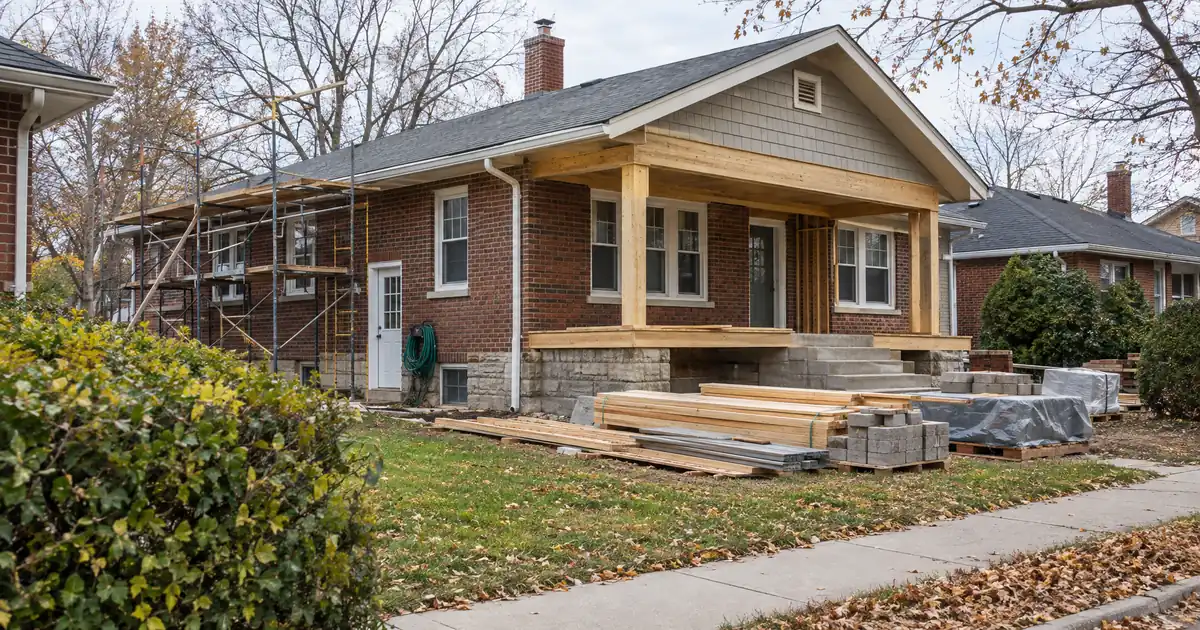
The Quick Read: A rehab holdback is the repair portion of a flip loan that the lender keeps in a controlled account at closing and releases in stages, after you pay for the work, an inspector confirms it is installed, and the paperwork checks out. The lender writes the exact rules into the loan agreement, so draw count, fees, and retainage differ from one lender to the next. Plan on funding each phase of repairs yourself first.
- The purchase portion funds at closing, but the rehab portion is committed and released only against completed work.
- Across the wholesale network Lendmire works with, up to 100% of the rehab budget funds in draws, which describes the repair budget and never the purchase price.
- Lenders look for a line-item budget, a realistic scope, and a clean paper trail of invoices, photos, and lien waivers.
- Your real cash need is the down payment plus the first phase of repairs plus carry costs, not the down payment alone.
- Advance draws, photo-only inspections, and scope changes are the places where the general rule bends, and each one is worth asking about before you sign.
What Is a Rehab Holdback?
A rehab holdback is a lender-controlled pot of money that pays for repairs. The loan splits in two at closing. The purchase portion funds right away. The rehab portion stays committed in the loan documents until you earn each release.
What this loan actually costs to carry.
Hard money is sized against the project and priced by time. Enter the deal and see how much the program will lend, the cash required at closing, the carry while you hold it, and what is left at the exit.
Leverage tiers on the current program: 85% with fewer than 2, 90% with 2 or more, 93% with 5 or more completed projects — every tier capped at 75% of after-repair value. Loan amounts up to $5,000,000, larger by exception; terms of 6 to 18 months, interest-only, no prepayment penalty. The rehab portion funds in draws against completed work, not at closing.
Program parameters shown update from Lendmire’s centralized guideline source. Rate, points, and months are editable assumptions, not quoted terms.
Cost cap sets the loan · positive spread
Illustrative estimate only — not a quote, Loan Estimate, approval, or commitment to lend. Rate, points, and months are editable assumptions. Hard money is business-purpose financing for real estate investors, not a consumer mortgage. Leverage on the current program tops out at 93% of project cost for investors with a documented track record, capped at 75% of after-repair value, with rehab funding up to 100% of the documented budget released in draws; actual terms vary by lender, borrower experience, property, and exit. Lendmire is a mortgage broker, not a lender.
It goes by other names, including rehab escrow, construction holdback, and repair escrow. They all describe the same mechanic. The lender wants proof that each dollar turned into finished work before the next dollar leaves.
The most common surprise for first-time flippers is that a fully funded rehab budget still requires cash up front. The money exists, but it reimburses you after the work is done. That gap is a key planning issue on a flip.
Key Terms Defined
Holdback: The portion of the loan reserved for repairs and released in stages rather than at closing.
Draw: A request for part of the holdback, made after a phase of work is finished.
Retainage: A slice of each draw the lender keeps back until final completion, as protection against unfinished work and liens.
Lien waiver: A signed document in which a contractor or supplier gives up the right to file a lien for the amount covered.
Scope of work: The line-item description of every repair, with a cost beside each item.
Change order: A written change to the approved scope or budget.
Gap capital: The cash you carry between paying for work and getting reimbursed.
After-repair value (ARV): The estimated value of the property once the repairs are finished.
What Lenders Require Before the Holdback Is Set Up
Lenders require a detailed budget, a scope that matches the property, and a borrower with enough cash to carry the project between draws. They underwrite the plan as much as the property. Hard money is asset-based, so the property, the plan, and your exit carry the file.
On most files, the pre-closing package covers a few things:
| Stage | What the lender wants | Why it matters |
|---|---|---|
| Before closing | Line-item scope and budget | Sets the draw milestones |
| Before closing | Purchase contract and value support | Tests as-is value and ARV |
| Before closing | Proof of cash for gap capital | Shows you can front phase one |
| During rehab | Invoices, photos, updated budget | Triggers each draw |
| At closeout | Final inspection and final lien waivers | Releases the remainder |
Lenders also test whether the budget is realistic. A scope that looks too thin for the property can stall a file before it starts. Contractor bids, license and insurance details, and permit plans often come up on heavier rehabs. Requirements vary by lender, property, and experience.
Your credit still matters, even in an asset-based loan. A 620 minimum score is typical in the network, with extra conditions below 660. First-time investors can qualify at the lower leverage tiers. Nothing here is a commitment to lend, and each file is reviewed individually.
How the Loan Splits at Closing
At closing, the purchase money funds and the rehab money becomes a binding commitment. How big each piece is depends on your experience. Fix-and-flip leverage is tiered by documented completed projects.
- 93% of project cost at 5 or more completed projects.
- 90% of project cost at 2 or more completed projects.
- 85% of project cost with fewer than 2 completed projects.
- Every tier is capped at 75% of after-repair value.
Those are typical figures from select programs in the wholesale network, and they vary by lender, property, and experience. The top tier is reserved for experienced investors. Loan amounts commonly run up to $5,000,000, with larger loans by exception. Terms run 6 to 18 months, interest-only, with no prepayment penalty on the programs in the network.
Here is the part that trips people up. Up to 100% of the rehab budget funds in draws against completed work. That figure belongs to the repair budget only. It is not a purchase loan-to-value. No program funds the full purchase price, so you still bring cash to closing.
Two caps work together. The cost-based tier limits what you borrow against what you spend. The after-repair-value cap limits what you borrow against what the finished house should be worth. The lower of the two controls.
The Draw Cycle, Step by Step
Every draw follows the same loop, even when the details change. Here is how it runs from the first dollar to the last.
1. Scope and budget approval. The lender reviews a line-item budget, and an appraiser or value opinion tests as-is value and ARV.
2. Closing. The purchase portion funds, and the holdback is committed in the loan documents.
3. You fund the first phase. Contractors usually want deposits or staged payments, and unless you qualify for advance draws, the first money is yours.
4. You submit a draw request. You list the completed line items and attach the supporting package.
5. The lender verifies the work. An inspector confirms it exists and is installed, in person or by photo or video review.
6. The lender checks the lien waivers. Clean waivers keep the release moving.
7. The lender releases funds, less any retainage. The money lands against the completed items.
8. You repeat until the final draw. The final inspection, final waivers, and cleared liens release the rest.
Lenders pay for completed and installed work. They do not pay for a promise. Materials sitting in the garage typically do not count.
What Goes in a Draw Package
A draw package proves that specific line items are finished. A typical one includes:
- Invoices or receipts for the completed work.
- An updated budget showing spent and remaining amounts.
- Dated photos of each completed item.
- Lien waivers from the contractors and suppliers paid.
The budget layout matters here. Lenders usually want a line item complete before paying it. Investors respond by splitting big items into smaller chunks, for example plumbing rough-in separately from fixtures. Smaller line items mean more frequent, smaller draws, and less cash tied up between releases.
What Inspections Check, and What They Don’t
An inspection confirms that the work exists, that it is installed, and that it matches the approved scope. It also tells the lender whether the remaining holdback can finish the job. Some lenders send an inspector in person, and others review photos or video.
An inspection is not a permit approval or a code sign-off. A lender can add permit or occupancy evidence on heavier rehabs, but that is a lender-specific condition. Treat it as a separate item on your checklist.
Partial credit also differs by lender. Some pay pro rata for a line item that is half done. Others pay nothing until the item is finished. Ask which one applies before you set your budget lines.
Lien Waivers: The Paperwork That Stalls Draws
Lien waivers are a document type that can hold up a release. Construction-payment education describes four waiver types: conditional or unconditional, each for either a progress payment or a final payment. Lenders and owners often ask for conditional waivers before releasing a draw, then unconditional waivers afterward as confirmation.
The difference is timing. A conditional waiver takes effect only when payment clears, while an unconditional waiver takes effect when it is signed. Sign an unconditional waiver before you are paid, and you can give up your protection early. That works the other way for your contractors, so the sequence matters.
Some states also prescribe their own waiver forms, as this overview of lien waivers and releases explains. Ask your title company or attorney which form applies where your property sits.
Retainage and the Final Draw
Retainage is the slice of each draw the lender keeps until the project is done. It protects against unfinished work and surprise liens. In private lending the percentage is contractual, so it can differ on every loan agreement.
The public template for the mechanic is the FHA 203(k) program, which is an owner-occupant renovation product and not a flip or DSCR loan. Its handbook allows partial release by percent complete on each line item and applies a 10% holdback to intermediate draws. Treat that as an illustration of how retainage works. A private flip lender is not bound by it.
The final draw releases whatever is left. Expect the lender to ask for a final inspection, final unconditional waivers, and evidence that liens are cleared. On heavy rehabs, some lenders also want closed permits or occupancy evidence at this stage.
How Much Cash Do You Need Between Draws?
You need your down payment, plus the cost of the first phase, plus enough buffer to carry costs and absorb reimbursement lag. The size of that gap depends on how the budget splits into phases and how the lender treats retainage.
Run the numbers on a modeled example. Say the rehab budget splits into four phases at 20%, 30%, 30%, and 20% of the total. Assume the lender holds back 10% of every draw, and assume you pay each phase before the draw funds. These are modeled assumptions, not network terms.
| Phase | Share of budget | Retained | Your peak out-of-pocket |
|---|---|---|---|
| 1 | 20% | 2% | 20% of budget |
| 2 | 30% | 3% | About 32% of budget |
| 3 | 30% | 3% | About 35% of budget |
| 4 | 20% | 2% | About 28% of budget |
Peak exposure lands near 35% of the rehab budget right before the third draw funds. After the last draw, you are still waiting on the retained 10% until the final release. Contractor deposits push those numbers higher.
Interest-only carry runs on top of this. Ask whether interest accrues only on funds drawn or on the full approved balance from day one. That single term can change your carry cost more than a point of leverage.
Where the General Rule Breaks
The pay-first, inspect, reimburse model is the standard flow, but several situations bend it.
Advance draws. Some lenders release money before work starts, but this is generally reserved for experienced investors. A claim of 100% rehab financing is technically accurate for the budget, yet it still leaves you fronting cash in most structures.
Photo-only or no-third-party inspections. Some lenders review photos instead of sending an inspector. Turnaround claims differ widely, so treat each as a lender-by-lender statement and ask for the lender’s written process.
Scope changes and hidden damage. Carry a contingency line item, and ask in writing whether unspent amounts can shift between lines.
Contingency treatment. The FHA template does not allow partial release of contingency items; each one must be complete. Private flip loans may differ, so confirm how your lender handles contingency.
Owner-performed work. The FHA template pays the owner the full line-item amount, less the holdback, even when materials cost less. Many private lenders reimburse only documented costs. If you plan to do the work yourself, price the budget on that basis.
Permits and final sign-off. Completed work does not equal an approved permit. Heavier rehabs often add that requirement.
State waiver forms. Some states mandate specific waiver language, so the paperwork can change with the property’s location.
Budget Overruns and Stalled Work
Overruns are your cost, unless the lender approves a reallocation. If actual costs exceed a line, you fund the difference. Some lenders allow moving unspent dollars between lines with a written change order. Get that approval before the contractor starts the extra work.
A shortfall decision path looks like this:
- Check whether another line has unspent budget.
- Submit a written change order for the move.
- If the holdback is truly short, decide whether to bring more cash or trim the scope.
Stalled work is a different problem. If progress stops, or an inspection fails, the lender holds the remaining funds, and the loan keeps accruing interest while the clock runs on the term. A failed inspection typically means fixing the item and requesting reinspection. Persistent stalls can raise default concerns under the loan agreement, so talk to the lender early instead of waiting.
Lining Up Contractors With the Draw Calendar
Your contractor’s payment terms must fit the lender’s draw schedule before you close. Contractors often want deposits and front-loaded payments. The lender reimburses behind the work. If the two calendars do not match, you cover the difference out of pocket.
A few practices help. Break the contract into milestones that mirror the budget’s line items. Tie each contractor payment to a completed, inspected item. Collect a conditional waiver with each payment and an unconditional one afterward. Slow draws delay contractors, extend the project, and add holding cost, so draw process matters as much as the terms on the first page of the quote.
Questions to Ask Any Lender
There is no national standard for draw terms, so compare lenders on the specifics.
| Question | Why it matters |
|---|---|
| Are draws advance or reimbursement? | Sets your gap capital |
| Does interest run on drawn funds only? | Drives carry cost |
| Is partial credit paid on unfinished items? | Shapes line-item layout |
| Who inspects, and what does it cost? | Affects cost and delays |
| Is there retainage per draw? | Sets cash held back |
| Can unspent funds move between lines? | Handles overruns |
| What does the final draw require? | Avoids closeout surprises |
Common Mistakes and Misconceptions
Several misreadings come up again and again.
- Thinking the rehab money lands at closing. It is committed, then released after work.
- Reading 100% rehab financing as free repairs. It means the budget is reimbursable, and you still front each phase.
- Expecting payment for materials on site. Lenders typically pay for installed work.
- Treating inspection as permit approval. It confirms the work exists, nothing more.
- Assuming every lender runs draws the same way. Cadence, fees, retainage, and advance availability all vary.
- Treating lien waivers as paperwork. Missing or mistimed waivers are a commonly cited reason draws stall.
- Starting without a contingency line. Hidden damage then becomes your cash problem.
Exit and Handoff
Draw records matter again at sale or refinance. Many investors refinance out of hard money into long-term DSCR financing once the property is stabilized, and Lendmire brokers that path. The drawn balance and the carry you have accumulated set the payoff that refinance has to clear. For how that long-term product works, see the complete DSCR loans guide.
Frequently Asked Questions
Is a rehab holdback an advance?
Usually not. The standard structure reimburses you after the work is done and verified. Some lenders offer advance draws, but typically only to experienced investors, and terms vary by lender.
Can I get paid for materials sitting on site?
Typically not. Lenders pay for work that is complete and installed. Ask your lender whether any exception exists for large deliveries, and plan to carry those costs yourself.
Does the lender pay me or my contractors?
It depends on the lender and the loan agreement. Many pay the borrower against documented, completed work, while some allow direct payment to contractors. Confirm which applies before you sign contractor agreements.
What happens if the repairs cost more than the budget?
You fund the difference unless the lender approves a change order or a reallocation between line items. A contingency line item gives you a cleaner path. Ask in writing how unspent funds can move.
Should I decline the holdback and use my own money?
Sometimes. On a small, fast-moving scope where you already have the cash, a holdback adds inspections and paperwork. On larger rehabs, it protects your liquidity and aligns the lender with your project. Leverage tiers, experience, and exit plan all shape the choice, and options vary by lender, property, and experience.
Next Steps
If you are buying, rehabbing, or refinancing an investment property on a short timeline and want to see how the numbers work, Lendmire can help you compare hard money options based on the project, the exit plan, leverage, and your goals. The brokerage arranges financing through select lenders in its wholesale network across 41 markets, including Washington, D.C. Nothing here is a commitment to lend, and every file is underwritten individually.
About Lendmire
Lendmire (NMLS# 2371349) is a mortgage brokerage built around DSCR investor lending, with programs available in 41 markets, including Washington, D.C. DSCR lenders commonly evaluate rental-income coverage instead of personal income paperwork — a practical fit for LLC-owned and multi-property investors. Terms vary by lender, property, leverage, and program. Scotsman Guide named Lendmire a Top Mortgage Workplace in both 2025 and 2026.
Hard money often opens the deal, and a refinance typically closes the chapter – see the hard money loan overview.
Get Started
Ready to find the right loan for you?
In about 30 seconds you can review financing options available for your investment property. No commitment required.
Informational only. Not a Loan Estimate, approval, or commitment to lend. Program availability and eligibility are subject to lender guidelines, credit approval, property review, and underwriting.
References
2. Corpay construction lien waiver explainer
3. AIA Contracts: lien waivers and releases guide
4. HUD Handbook 4240.4 REV-2, Chapter 5
This article is part of Lendmire’s hard money loan program — full qualification details, guidelines, and scenarios live on the program page.
Related reading: Can You Have More Than One Fix and Flip Hard Money Loan at Once? · Can Hard Money Cover a Fix and Flip Purchase? · Can You Buy a Flip in an LLC With a Hard Money Loan?
Brandon Miller
Founder & CEO, Mortgage Loan Originator, Lendmire LLC
- Mortgage Loan Originator · NMLS# 1129696 · Verify on NMLS Consumer Access
- North Carolina Real Estate Broker · License# 343312 · Verify on NCREC
- North Carolina Insurance Producer · License# 19053198 · Property, Casualty, Life, Health · Verify on NAIC SBS
- Lendmire LLC · Firm NMLS# 2371349 · Verify firm licensure
Legal disclosures. Lendmire (NMLS# 2371349) is a state-licensed mortgage brokerage that arranges financing through wholesale lender relationships. Lendmire is not a direct lender, depository institution, or registered financial advisor. The discussion above is general informational content about real estate financing — it is not financial, legal, or tax advice, and readers should consult licensed professionals for guidance on their individual circumstances. Loan inquiries are subject to lender underwriting; this article does not represent a commitment to lend. Loan terms, rates, and qualification standards vary by borrower, property, and state, and are subject to change at any time. Equal Housing Opportunity. NMLS Consumer Access: nmlsconsumeraccess.org.