
The Quick Read: Where you live is not an underwriting variable on a hard money loan. Lenders look at the property, the plan, your cash, and the entity that will own it. Distance adds a few extra asks around reserves, appraisal, and rehab oversight.
- Leverage is tiered by completed projects: 85% of project cost with fewer than 2, 90% with 2+, and 93% with 5+, all capped at 75% of after-repair value. Varies by lender, property, and experience.
- Minimum credit score is 620, with extra conditions below 660.
- Terms run 6-18 months, interest-only, with no prepayment penalty.
- Collateral is non-owner-occupied residential, 1-4 units.
- Many investors refinance into long-term DSCR financing once the property is stabilized.
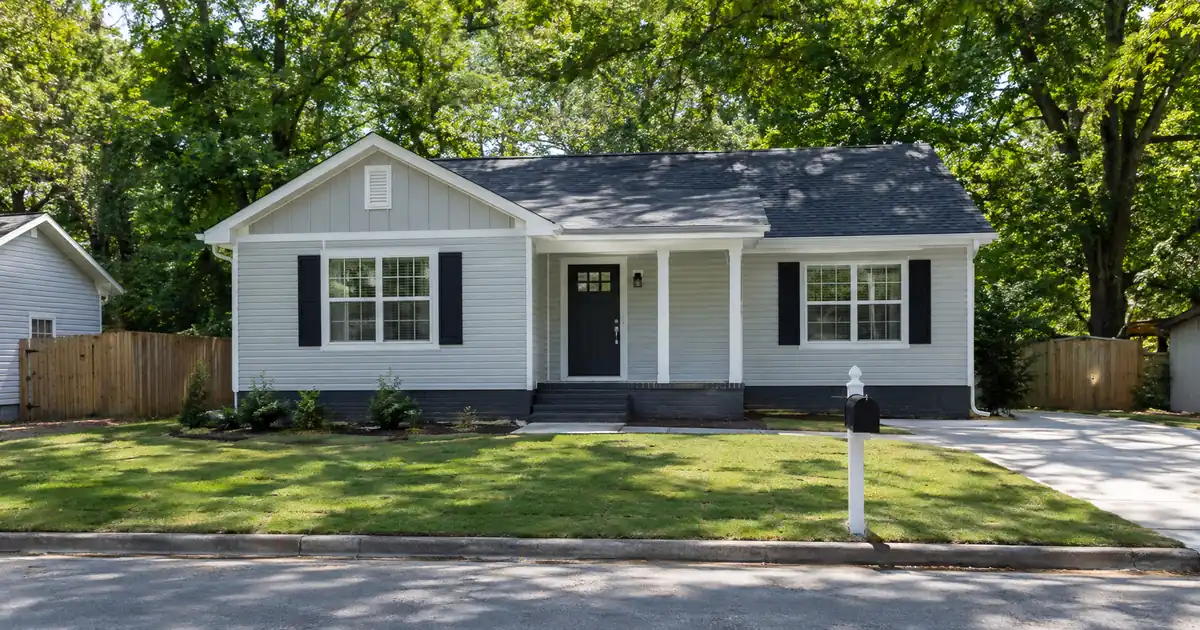
Here is the picture a first-time remote buyer usually has: a distressed duplex a thousand miles away, a bank that wants to see local ties, and a closing date that will not wait. Hard money exists for exactly that gap. It is short-term, asset-based money for buying and fixing a property. It is not a long-term hold loan.
What this loan actually costs to carry.
Hard money is sized against the project and priced by time. Enter the deal and see how much the program will lend, the cash required at closing, the carry while you hold it, and what is left at the exit.
Leverage tiers on the current program: 85% with fewer than 2, 90% with 2 or more, 93% with 5 or more completed projects — every tier capped at 75% of after-repair value. Loan amounts up to $5,000,000, larger by exception; terms of 6 to 18 months, interest-only, no prepayment penalty. The rehab portion funds in draws against completed work, not at closing.
Program parameters shown update from Lendmire’s centralized guideline source. Rate, points, and months are editable assumptions, not quoted terms.
Cost cap sets the loan · positive spread
Illustrative estimate only — not a quote, Loan Estimate, approval, or commitment to lend. Rate, points, and months are editable assumptions. Hard money is business-purpose financing for real estate investors, not a consumer mortgage. Leverage on the current program tops out at 93% of project cost for investors with a documented track record, capped at 75% of after-repair value, with rehab funding up to 100% of the documented budget released in draws; actual terms vary by lender, borrower experience, property, and exit. Lendmire is a mortgage broker, not a lender.
This article walks the mechanics from start to finish. It covers what the loan is, how underwriting treats a remote borrower, the structures available, where the general rule breaks, and how to decide whether it fits your deal.
What Is an Out-of-State Hard Money Loan?
It is a short-term, business-purpose loan secured by an investment property in a state where you do not live. The lender sizes it off the property’s cost and its after-repair value (ARV), meaning what the property should be worth once the work is done.
Nothing about the product changes because of your address. The same loan that funds a local flip funds a remote one. What changes is how much comfort the lender needs about the things you cannot personally watch.
Hard money, bridge, and DSCR loans are three different tools. Hard money is short-term and built for acquisition and renovation. A bridge loan buys a property that needs no rehab. A DSCR loan is the long-term rental product.
Can You Get One Without Living Near the Property?
Yes. Asset-based lenders underwrite the property and the exit plan, not your ZIP code. Distance becomes a risk-management question for the lender: who watches the rehab, who verifies the work, and what happens if you need to sell.
Think about it from the lender’s chair. A local borrower can walk the site. A remote borrower cannot. So the lender looks for substitutes: a credible contractor bid, an inspector who verifies each draw, and a borrower with enough cash to absorb surprises.
Across the wholesale network Lendmire works with, the pattern is consistent. Distance rarely ends a file. It more often shows up as a request for stronger documentation or a bit more cash in the deal, and that varies by lender, property, and experience.
The Four-Part Screen Lenders Actually Use
Underwriting comes down to the entity, your credit, your liquidity, and the collateral. A BiggerPockets discussion on how hard money works describes the same four pieces, starting with the vesting entity and including a personal credit pull on members holding 25% or more.
| Piece | What the lender looks at | Any change out of state? |
|---|---|---|
| Entity | LLC or corporation, operating docs, member IDs | Registration in the property’s state may be needed |
| Credit | 620 minimum, extra conditions below 660 | Same score rules |
| Liquidity | Bank statements showing cash to close and cover costs | Lenders may ask for more reserves |
| Collateral | Property value, comps, scope of work | Local appraiser, comp quality matters more |
Credit is a real factor, but a secondary one. It affects terms more than it decides eligibility, and underwriting stays centered on the property, the plan, and the exit. Nothing here is a commitment to lend.
Leverage Tiers: What Experience Does to Your Numbers
Hard money leverage is measured against project cost, not just value. Here are the tiers on the programs in Lendmire’s network, framed as typical ranges that vary by lender, property, and experience.
| Scenario | Typical ceiling |
|---|---|
| Fix-and-flip, 5+ completed projects | 93% of project cost |
| Fix-and-flip, 2+ completed projects | 90% of project cost |
| Fix-and-flip, fewer than 2 projects | 85% of project cost |
| Every flip tier | Capped at 75% of ARV |
| Bridge purchase, no rehab | Up to 80% of purchase price |
| Cash-out or rate/term refinance | Up to 65% of value |
| Ground-up construction, 3+ projects | Up to 90% of cost, 75% of completed value |
Two things trip people up. First, the rehab portion can fund up to 100% of the rehab budget, but it is released in draws against completed work. That is a rehab-budget figure, not a purchase loan-to-value. Second, there is no true 100% purchase program. The top tier is reserved for experienced investors.
This is where being out of state and being new compound. A first-time buyer with no local track record sits in the lowest tier, and the lender leans harder on property value and equity. Expect lower leverage and more cash to close. Experience affects your terms more than your location does.
Here is a way to run the numbers. Say you find a rehab where the purchase plus the renovation budget equals a given project cost. At the 85% tier, you fund the remaining 15% of cost yourself, plus closing costs and reserves. If the 75% ARV cap binds first, you bring more. The lender uses whichever limit is lower. The site’s illustrative calculator can convert those percentages into dollars for your own deal.
Entity and Registration Steps for Remote Borrowers
Hard money loans for investors go to an LLC or corporation, subject to lender program eligibility. If you form an LLC in your home state and buy elsewhere, the lender may want it registered in the property’s state before closing. That is called foreign qualification, and it is one of the more common speed bumps for remote buyers. Rules differ by state, so treat it as a general issue rather than a universal rule.
Plan for these entity items:
- Operating agreement and formation documents.
- A member list with IDs, since members with 25% or more ownership may get a credit pull.
- A personal guarantee, which is common practice for this loan type.
- Clarity on who signs, especially when partners live in different states.
Because these are business-purpose loans, they are reviewed differently from a standard owner-occupied mortgage. That matters for how you hold title, and a real estate attorney in the property’s state should confirm the structure.
Documents to Have Ready
A clean package replaces your physical presence. The pre-approval package typically includes financial documents, company records, member IDs, and the purchase contract. Practitioners also commonly ask for an itemized scope of work, contractor bids, proof of insurance, proof of liquidity, and a track-record summary.
Group them like this:
- Borrower: ID, bank statements, a short experience summary.
- Entity: formation documents, operating agreement, good-standing certificate.
- Deal: purchase contract, photos, comps you have checked.
- Rehab: line-item budget, contractor bids, schedule, insurance binder for the work.
Lenders do not skip these because you are far away. They lean on them more.
How Valuation and Rehab Draws Work When You Are Remote
The lender orders the appraisal from a local appraiser, and title, insurance, and appraisal all start during underwriting. Tellus’ guide to out-of-state financing notes that low appraisals are more likely in thin or rural markets with few comparable sales. If the property is in a low-comp area, expect more appraisal risk and build cushion into your numbers.
Some lenders use virtual appraisals, but those need interior access at a time that works for the borrower. Line up a local contact who can open the door.
Rehab money moves in draws. The common pattern is interest-only payments on the drawn balance, with funds released as work is completed and verified. For a remote owner, that means a local inspector confirms each stage before the next draw. Delays in permits, contractors, or inspections become carrying cost, because the loan clock keeps running.
Build a team before you apply: a contractor you have vetted, an agent who knows the submarket, and a property manager if you plan to rent.
Which State’s Rules Apply?
The property’s state is the one that matters most. Prepayment limits, disclosures, and the foreclosure process (judicial or non-judicial) vary by state, and lender licensing can apply. Lenders also need to lend in the property’s state, so ask any lender up front whether the target state is in its footprint. In Lendmire’s network, hard money is available across 41 markets, including Washington, D.C., with a few exclusions, so confirm your state early.
Business-purpose status is the other piece. The label “investment property” does not by itself make a loan exempt from consumer-lending rules. What counts is the purpose of the loan. The CFPB’s Regulation Z page exempts credit extended primarily for a business purpose, and the creditor decides that in each case. This is general information, not legal advice.
Where the General Rule Breaks
Distance rarely decides a file. These edge cases do.
- No track record. First-time borrowers sit at the lowest leverage tier and may be asked for more cash or reserves.
- Thin markets. Few comps means appraisal risk and tighter sizing.
- Unregistered entity. An LLC formed in another state may need registration where the property sits.
- Weak scope of work. A vague budget or an unvetted contractor is the fastest way to lose a lender’s confidence from far away.
- Consumer-purpose use. If the proceeds serve a personal purpose, the loan is not a business-purpose loan, and hard money programs are not the right fit.
- Ineligible property. The program covers non-owner-occupied residential, 1-4 units, plus ground-up construction up to 10 units. Commercial, land, and owner-occupied properties are not offered.
Common causes of delay, with the fix:
| Problem | Fix |
|---|---|
| Entity not registered in property’s state | Register before closing |
| Thin documentation of experience | Provide a clear project summary |
| Low appraisal in a thin market | Bring more cash or renegotiate price |
| Vague rehab budget | Itemize scope and get bids |
| Remote draw delays | Hire a local inspector early |
First-Timer vs. Experienced Out-of-State Investor
| Factor | First-time investor | 5+ projects |
|---|---|---|
| Fix-and-flip leverage | 85% of project cost | 93% of project cost |
| Cash needed | More | Less |
| Lender scrutiny of plan | Higher | Lower |
| Credit | 620 minimum, conditions below 660 | Same minimum |
Practitioner pattern: experienced operators often get approved on the strength of their completed projects. Newer investors are better off adding a strong contractor, a conservative budget, and extra reserves than arguing for leverage the program does not give them.
Is Hard Money the Right Tool for a Remote Deal?
It is the right tool when the property needs work or must be bought before long-term financing is available. Hard money is a bridge, and the cost of a bridge grows the longer you stay on it.
That makes the exit the center of the plan. Plan the sale or refinance before you sign, not after the rehab. Many investors refinance out of hard money into long-term DSCR financing once the property is renovated and leased, and Lendmire brokers that path. A DSCR loan qualifies primarily on property-level rental income covering the payment, subject to lender guidelines. Clearing 1.00 coverage does not mean positive cash flow, since repairs, vacancy, and management sit outside the calculation.
If you are still exploring that long-term side, the complete DSCR loans guide explains how it works.
Hard money fits a remote deal when you have a vetted team, a realistic budget, cash in reserve, and a defined exit. It fits poorly when the plan depends on a best-case timeline.
Key Terms Defined
Hard money loan: A short-term, asset-based loan secured by the property, used to buy and renovate.
ARV (after-repair value): What the property should be worth once renovations are finished.
Loan-to-cost: The loan amount as a percentage of purchase price plus rehab budget.
Draw: A release of rehab funds after a stage of work is completed and verified.
Foreign qualification: Registering an LLC formed in one state to do business in another.
Personal guarantee: Your personal promise to repay if the entity cannot.
DSCR loan: A long-term rental loan that qualifies primarily on the property’s rent covering its payment.
Frequently Asked Questions
Do I need a local entity to borrow out of state?
Not necessarily, but the lender may want your LLC registered in the property’s state before closing. Requirements vary by state and lender, so confirm early and have an attorney in that state review the structure.
Will being out of state lower my leverage?
Distance by itself does not change the leverage tiers. Your completed-project count does: 85% of project cost with fewer than 2 projects, 90% with 2+, and 93% with 5+, all capped at 75% of ARV. Some lenders may ask for more reserves or cash on remote files.
Is a 620 credit score enough?
It is the minimum, with additional conditions below 660. Credit affects terms, while underwriting remains asset-based on the property, plan, and exit. First-time investors qualify at the lower leverage tiers. Exact terms depend on the lender’s guidelines, property type, leverage, and a full review of the borrower’s file.
Can I use hard money for a long-term rental?
Not as a long-term hold. Terms run 6-18 months, interest-only, with no multi-year options. Investors who need longer runway refinance into long-term rental financing.
How do rehab funds reach me if I am not there?
They are released in draws against completed work. A local inspector typically verifies progress before each release, so line up a contractor and inspection contact before you apply.
If you are buying, rehabbing or refinancing an investment property on a short timeline and want to see how the numbers work, Lendmire can help you compare hard money options based on the project, the exit plan, leverage, and your goals.
Tax treatment varies; consult a qualified professional.
About Lendmire
Lendmire, NMLS# 2371349, is a mortgage brokerage focused on investor financing, arranging DSCR loans in 40 states plus Washington, D.C. — 41 markets total. Qualification is based on the property’s income rather than personal income documentation, subject to lender guidelines, making it a fit for LLC-held rentals and scaling portfolios. Scotsman Guide named Lendmire a Top Mortgage Workplace in both 2025 and 2026.
Get Started
Ready to find the right loan for you?
In about 30 seconds you can review financing options available for your investment property. No commitment required.
Informational only. Not a Loan Estimate, approval, or commitment to lend. Program availability and eligibility are subject to lender guidelines, credit approval, property review, and underwriting.
References
1. BiggerPockets: how hard money loans work
2. Tellus: financing out-of-state properties
This article is part of Lendmire’s hard money loan program — full qualification details, guidelines, and scenarios live on the program page.
Related reading: Can You Have More Than One Fix and Flip Hard Money Loan at Once? · Can an Investor Get a Hard Money Loan Without Verifying Income? · Can You Use a Hard Money Loan to Buy and Flip a House?
Brandon Miller
Founder & CEO, Mortgage Loan Originator, Lendmire LLC
- Mortgage Loan Originator · NMLS# 1129696 · Verify on NMLS Consumer Access
- North Carolina Real Estate Broker · License# 343312 · Verify on NCREC
- North Carolina Insurance Producer · License# 19053198 · Property, Casualty, Life, Health · Verify on NAIC SBS
- Lendmire LLC · Firm NMLS# 2371349 · Verify firm licensure
Disclosure information. Lendmire is a state-licensed mortgage brokerage under NMLS# 2371349. Lendmire is not a depository institution, direct lender, or financial advisor — all loans referenced are placed through wholesale lender partners and are subject to each lender's underwriting standards. This article is provided for general informational purposes and is not a commitment to lend, nor does it constitute financial, legal, or tax advice. Loan programs, terms, rates, and qualification standards change without notice and depend on borrower profile, property type, and the state in which the subject property is located. Equal Housing Opportunity provider. NMLS Consumer Access: nmlsconsumeraccess.org.