
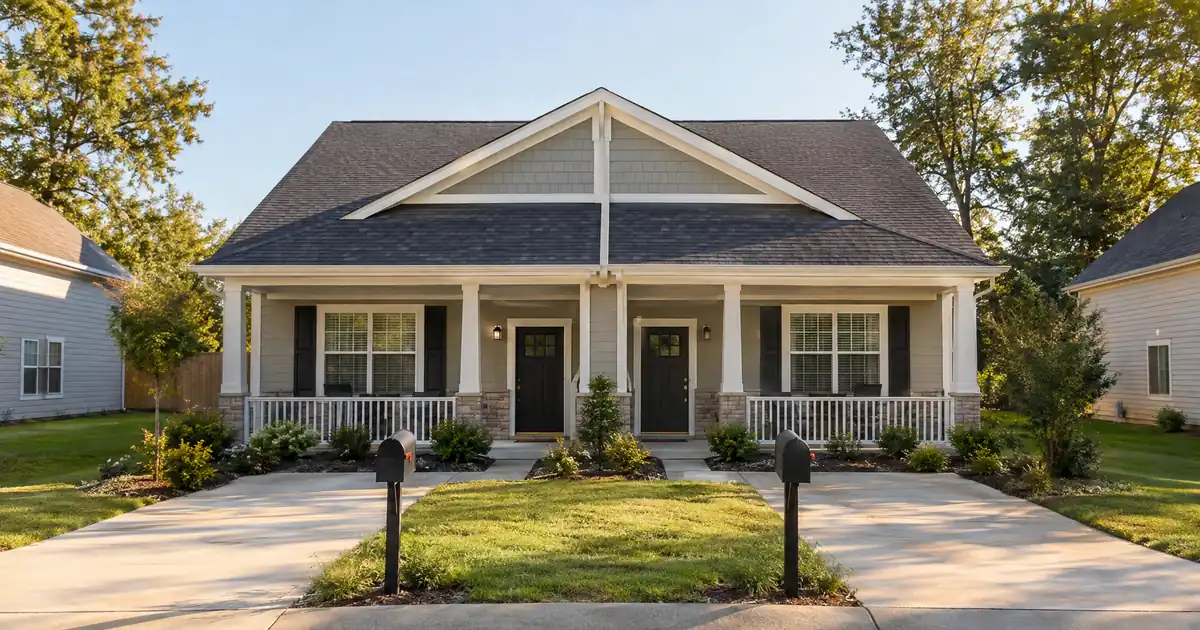
The Quick Read: A hard money lender funds a duplex purchase and rehab based on four things: the property, the rehab plan, the borrower’s track record and liquidity, and a clear way to pay the loan off. Leverage is sized against project cost and capped against after-repair value, and it varies by lender, property, and experience. Every file is reviewed individually, and nothing here is a commitment to lend.
- Fix-and-flip leverage typically runs 85% of project cost with fewer than 2 completed projects, 90% at 2 or more, and 93% at 5 or more.
- Every tier is capped at 75% of after-repair value (ARV), so the lower of the two tests controls.
- Up to 100% of the rehab budget funds in draws against completed work, not at closing.
- The usual minimum credit score is 620, with added conditions below 660.
- Terms run 6 to 18 months, interest-only, with no prepayment penalty.
A duplex is a friendly property type for this product. Lenders treat one to four units of non-owner-occupied residential as standard collateral. The harder questions are whether the numbers leave room for a surprise and whether you have a believable exit.
What this loan actually costs to carry.
Hard money is sized against the project and priced by time. Enter the deal and see how much the program will lend, the cash required at closing, the carry while you hold it, and what is left at the exit.
Leverage tiers on the current program: 85% with fewer than 2, 90% with 2 or more, 93% with 5 or more completed projects — every tier capped at 75% of after-repair value. Loan amounts up to $5,000,000, larger by exception; terms of 6 to 18 months, interest-only, no prepayment penalty. The rehab portion funds in draws against completed work, not at closing.
Program parameters shown update from Lendmire’s centralized guideline source. Rate, points, and months are editable assumptions, not quoted terms.
Cost cap sets the loan · positive spread
Illustrative estimate only — not a quote, Loan Estimate, approval, or commitment to lend. Rate, points, and months are editable assumptions. Hard money is business-purpose financing for real estate investors, not a consumer mortgage. Leverage on the current program tops out at 93% of project cost for investors with a documented track record, capped at 75% of after-repair value, with rehab funding up to 100% of the documented budget released in draws; actual terms vary by lender, borrower experience, property, and exit. Lendmire is a mortgage broker, not a lender.
What Does a Hard Money Lender Check on a Duplex?
A lender checks four groups of requirements: the property, the project, the borrower, and the exit. Underwriting centers on the deal rather than on personal income. A weak group can sink a file, and a strong one can make up for a thin spot elsewhere.
| Group | What the lender checks | Proof usually asked for | Duplex note |
|---|---|---|---|
| Property | Eligible, non-owner-occupied 1-4 unit | Contract, photos, title work | Two units, often two meters |
| Project | Scope, budget, timeline | Line-item budget, contractor bids | Scope per unit and shared systems |
| Borrower | Credit, experience, liquidity | Credit authorization, bank statements | Experience tier sets leverage |
| Exit | Sale or refinance path | Resale comps or rent figures | Two rent streams support a hold |
Notice what is missing: pay stubs and traditional personal-income documents do not drive the decision. Lenders still verify identity, entity documents, and cash, and they still pull credit. Asset-based means the property, the plan, and the exit lead the review, not that the borrower disappears from it.
Key Terms Defined
Hard money loan: A short-term, interest-only, asset-based loan for a business-purpose property deal, often used to buy and renovate.
ARV (after-repair value): The appraised value of the property once the planned work is finished.
Loan-to-cost (LTC): The loan amount as a share of total project cost, meaning purchase price plus rehab budget.
Draw: A release of rehab funds after a lender inspects completed work.
Seasoning: The time a lender wants you to hold a property before it will refinance it.
Exit strategy: How you repay the loan, usually by selling or refinancing into long-term rental financing.
How Is a Duplex Purchase and Rehab Loan Sized?
The loan is the lower of two tests. The cost test takes a percentage of project cost. The value test caps the loan at 75% of ARV. Whichever number is smaller wins, which is why a soft appraisal hurts more than most first-time borrowers expect.
The cost test is tiered by documented completed projects. Across the lenders Lendmire works with, the usual tiers look like this, always varying by lender, property, and experience:
- Fewer than 2 completed projects: 85% of project cost.
- 2 or more completed projects: 90% of project cost.
- 5 or more completed projects: 93% of project cost.
The top tier is reserved for experienced investors. These are loan-to-cost figures, not purchase LTVs. A bridge purchase with no rehab is a different structure, running up to 80% of the purchase price. A cash-out or rate-and-term refinance runs up to 65% of value.
There is no true 100% purchase program. People who hear that hard money funds 100% are usually hearing about the rehab piece: up to 100% of the rehab budget can fund through draws, while you still carry a cost share on the purchase. Loan sizes run up to $5,000,000, with larger loans by exception.
Worked example: the lower test wins
These figures are illustrative modeled assumptions, expressed as shares of ARV. Say purchase plus rehab costs 80% of the expected ARV.
- At the 85% tier, the cost test allows 68% of ARV. That is below the 75% cap, so the cost test controls.
- At the 93% tier, the cost test allows 74.4% of ARV. The two tests nearly meet.
- Now say the appraisal comes in 10% under your estimate. Cost becomes about 88.9% of the new ARV. The 85% tier would allow roughly 75.6%, so the 75% ARV cap takes over.
In that last case you cover the gap with cash. Model the weak-appraisal version before you sign a purchase contract. Lendmire’s piece Hard Money vs DSCR Cash-Out Leverage on Purchase Plus Full Rehab goes deeper on that tradeoff.
What Do Credit and Experience Have to Do With It?
Credit and experience set your tier and your margin for error. The minimum score is typically 620, with additional conditions below 660. First-time investors can qualify at the lower leverage tiers. A thin track record usually means more cash in and a tighter ARV margin.
Experience means documented completed projects, not years of watching videos. A lender wants to see addresses, purchase and sale records, and a before-and-after story. If you lack that, a seasoned contractor and a conservative budget help the file, though they do not change the tier math.
Expect to show:
- An LLC or other entity, where the lender allows it and subject to program terms, plus a personal guarantee in most cases.
- Proof of cash for your cost share, closing costs, and a cushion for the first draw gap.
- A credit authorization. The credit pull is standard even on asset-based loans.
- A scope of work, line-item budget, and contractor bids.
Liquidity expectations vary by lender and leverage. Strong cash can sometimes offset a lighter résumé, but it does not lift you into a higher tier on its own.
How Do Rehab Draws Work on a Two-Unit Property?
Rehab funds are held back and released as reimbursement for inspected, completed work. You usually fund early costs yourself, then recycle reimbursements into the next stage. The loan agreement sets the cadence, inspection method, and treatment of stored materials. Draw terms vary by lender, so read that section before you commit.
A duplex adds wrinkles a single-family flip does not have:
- Two scopes. Lenders want the budget broken out per unit plus shared items like roof, electrical service, and plumbing stacks.
- Separate meters. Separate utilities make rent figures cleaner. Shared meters can complicate both the work and the later rent story.
- Tenants in place. A vacant duplex is simpler to rehab. A duplex with tenants means phasing the work, and lenders want to know how you will handle leases and timing.
- Code and egress. Unit conversions or bedroom changes can trigger permits and inspections that stretch a timeline.
A contingency line in the budget is cheap insurance. Overruns come out of your cash, not the lender’s.
How Is a Duplex Valued for the Loan?
The appraiser values the building as it stands today and as it will stand once complete. A two-unit appraisal typically uses the income-property report, which for two- to four-unit homes is the form described in the Fannie Mae Selling Guide appraisal forms section. Hard money loans are not agency products. The form includes an income approach, so rent matters alongside sold comparables.
A renovation may support a higher appraised value, depending on comps and underwriter review. Sold duplex comps can be scarce, and appraisers sometimes lean on rent-based support or blend in nearby small residential sales. A scope that matches the neighborhood’s finish level appraises more predictably than one that outbuilds it.
What Does Cash to Close Include?
Cash to close is more than the down payment. Plan for these pieces:
- Your cost share on the purchase.
- Your cost share on the rehab, plus the gap before the first draw.
- Closing and lender fees, which vary by lender.
- Reserves and carry while the work is underway. Interest-only carry on the drawn balance eats margin as the project drags.
A fix-and-flip file that looks fine at the headline leverage often needs more cash once those pieces are added.
Which Exit Strategies Work?
The exit is either a sale or a refinance into long-term rental financing. Pick one before you buy, and keep the other as a backup. On a duplex, two rent streams make the hold path realistic.
If you sell, the project needs enough margin to cover resale costs after you repay the loan.
If you hold, many investors refinance out of hard money into long-term DSCR financing once the property is stabilized, and Lendmire brokers that path. A DSCR loan compares the property’s rent to its full monthly obligation. The takeout lender will use its own appraisal and its own rent figures, not your ARV. Its seasoning rules, not the hard money lender’s, decide when the refinance works. Clearing the coverage test also does not equal positive cash flow, since repairs, vacancy, and management sit outside that math. Lendmire’s complete DSCR loans guide walks through the takeout side.
The loan term of 6 to 18 months carries no prepayment penalty, so an early exit does not cost extra. Longer runway is not offered on the current hard money program, so a project that runs past the term needs a refinance.
Where Do the General Rules Break?
Owner-occupied duplex. This is the biggest boundary. The program covers non-owner-occupied residential property, so a plan to live in one unit puts you in a different loan category. DSCR loans are designed for non-owner-occupied investment properties. Because they are business-purpose investor loans, they are reviewed differently from a standard owner-occupied mortgage. The CFPB’s Regulation Z business-purpose rules treat owner-occupied rentals under special tests. Acquiring a property with more than two units is deemed business purpose, but a duplex does not get that automatic treatment. Government renovation programs for owner-occupants also exist, and they are not investor products.
Heavy rehab. The heavier the scope, the more conservative the leverage and the longer the timeline a lender wants to see. A cosmetic refresh and a gut job are different files.
Rehab unfinished at maturity. A half-finished duplex usually cannot refinance into rental financing, since rent coverage cannot be tested yet. The fallback is an extension or another bridge, which costs more.
Ineligible property types. Commercial, industrial, land, and owner-occupied property are not on the program sheet. Ground-up construction is a separate program that can go to 10 units.
One pattern shows up often in files like this. Investors budget the purchase and the rehab carefully and forget to model the takeout appraisal. The strongest files pencil the exit using conservative rents and a low-side ARV before the purchase contract is signed.
How Does Hard Money Compare With the Alternatives?
| Option | Best for | Occupancy | Main limit |
|---|---|---|---|
| Hard money | Buy-and-rehab flips or holds | Non-owner-occupied | Short term, cash needed |
| Owner-occupant renovation loan | Living in one unit | Owner-occupied | Not for investors |
| Long-term rental financing | Stabilized, leased duplex | Non-owner-occupied | Needs a finished property |
Long-term rental financing generally fits a duplex that is finished and leased, which is why it works as the second step rather than the first.
Are You Ready to Apply?
You are likely ready if:
1. The contract price, rehab budget, and ARV are written down, with ARV on the cautious side. 2. The lower-of-two sizing test still works if the appraisal comes in 10% low. 3. You can cover cost share, closing costs, the first-draw gap, and carry. 4. Your credit sits at or above 620, ideally above 660. 5. You can describe the exit in two sentences.
Consider another product if the numbers only work at the highest leverage tier, if you plan to occupy a unit, or if the property is not a finished, rentable building. A bridge purchase with no rehab or a refinance may suit that situation better.
Frequently Asked Questions
Can hard money buy a duplex?
Yes, for a non-owner-occupied duplex. Lenders treat one to four residential units as eligible collateral. Leverage and terms vary by lender, property, and experience.
Can a first-time investor qualify?
Often at the lower leverage tiers. With fewer than 2 completed projects, leverage typically runs 85% of project cost, and you will usually need meaningful cash, a credible scope, and a credit score of at least 620. A credible contractor helps the file.
Do I need income documents?
Hard money underwriting centers on the property, the plan, and the exit rather than personal income. Expect to provide identity and entity documents, bank statements, and a credit authorization. Requirements vary by lender.
Can I live in one unit?
Not on this program. It is built for non-owner-occupied business-purpose deals. If you plan to occupy a unit, you need a different loan type.
What if the appraisal comes in low?
The 75% ARV cap then controls the loan, and you cover the shortfall with cash or renegotiate the price. Running the low-appraisal case before you bid prevents most surprises.
How Lendmire Fits In
Lendmire is a mortgage broker that arranges hard money and DSCR investor loans through select lenders in its wholesale network, across 41 markets, including Washington, D.C. Programs and leverage change, and every file is reviewed individually.
If you are buying, rehabbing or refinancing an investment property on a short timeline and want to see how the numbers work, Lendmire can help you compare hard money options based on the project, the exit plan, leverage, and your goals.
About Lendmire
Lendmire (NMLS# 2371349) is a mortgage brokerage focused on DSCR investor financing, helping arrange programs through wholesale and investor-lending channels in 41 markets, including Washington, D.C. DSCR loans are evaluated by the lender on property cash flow rather than personal income, subject to lender guidelines, supporting LLC closings and accommodating investors with four or more financed properties. Scotsman Guide Top Mortgage Workplace in both 2025 and 2026.
Get Started
Ready to find the right loan for you?
In about 30 seconds you can review financing options available for your investment property. No commitment required.
Informational only. Not a Loan Estimate, approval, or commitment to lend. Program availability and eligibility are subject to lender guidelines, credit approval, property review, and underwriting.
References
1. Fannie Mae Selling Guide appraisal forms section
2. CFPB Regulation Z, §1026.3 (exempt transactions)
This article is part of Lendmire’s hard money loan program — full qualification details, guidelines, and scenarios live on the program page.
Related reading: Does a Scope Change Affect Hard Money Draws on a Rehab Loan? · Hard Money Payoff Requirements When the Loan Matures · Hard Money Loan Alternatives and Requirements for a Rental Investor
Brandon Miller
Founder & CEO, Mortgage Loan Originator, Lendmire LLC
- Mortgage Loan Originator · NMLS# 1129696 · Verify on NMLS Consumer Access
- North Carolina Real Estate Broker · License# 343312 · Verify on NCREC
- North Carolina Insurance Producer · License# 19053198 · Property, Casualty, Life, Health · Verify on NAIC SBS
- Lendmire LLC · Firm NMLS# 2371349 · Verify firm licensure
Disclosure information. Lendmire is a state-licensed mortgage brokerage under NMLS# 2371349. Lendmire is not a depository institution, direct lender, or financial advisor — all loans referenced are placed through wholesale lender partners and are subject to each lender's underwriting standards. This article is provided for general informational purposes and is not a commitment to lend, nor does it constitute financial, legal, or tax advice. Loan programs, terms, rates, and qualification standards change without notice and depend on borrower profile, property type, and the state in which the subject property is located. Equal Housing Opportunity provider. NMLS Consumer Access: nmlsconsumeraccess.org.