
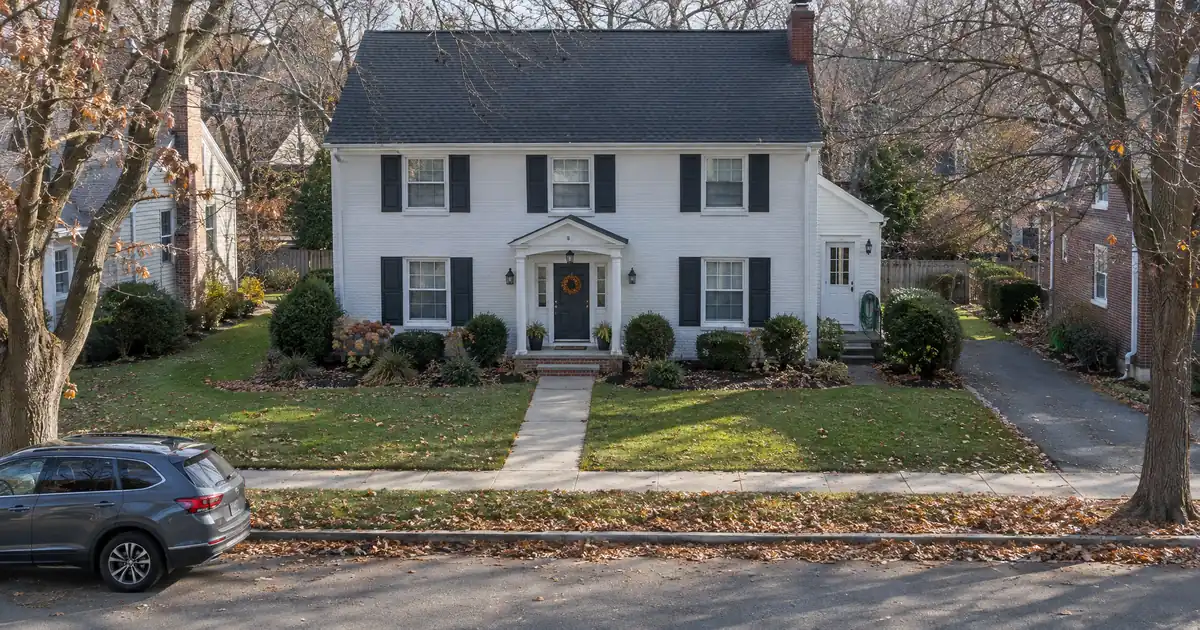
The Quick Read: A W-2 owner of a co-owned home gets the smaller of two numbers: what the equity allows under the lender’s combined loan-to-value cap, and what the owner’s own income and credit support. The co-owner’s name on title changes who signs, not the size of the line.
- The collateral test is home value times the CLTV cap, minus every lien already on the property.
- The capacity test uses the W-2 borrower’s income, credit and debt-to-income ratio, and the lower result sets the line.
- Occupancy sets the ceiling: up to 90% CLTV on a primary or second home at 720 or better, and 70% on an investment property.
- A co-owner on title usually signs the lien, but only becomes a borrower by signing the note.
- On Lendmire’s wholesale network, lines run $25,000 to $750,000 depending on occupancy, credit and valuation.
Every figure below is subject to lender guidelines and full file review. Nothing here is a commitment to lend.
How large a line the equity supports.
An equity line is sized by combined loan-to-value, occupancy, and credit — not by rental coverage. Switch the occupancy or the credit band and the ceiling moves with it.
Investment-property lines require a 700 minimum credit score; second-home lines start at a 640 minimum and primary-residence lines at 600, and the combined-LTV ceiling steps down as the credit band drops on primary-residence and second-home lines and holds on investment-property lines; the line cap steps down on primary-residence lines and holds at every tier on investment-property and second-home lines.
A debt-to-income ratio above 45% requires 680+ credit. Profiles under 640 are limited to single-family homes. At least 75% of the approved line is drawn at closing. Ceilings, floors, and caps update from Lendmire’s centralized guideline source.
Line estimate
Illustrative estimate only — not a quote, Loan Estimate, approval, or commitment to lend. The rate is an editable assumption; equity-line pricing is variable through both the draw and repayment periods and never converts to fixed. Occupancy and credit drive the ceiling together: an investment property tops out at 70% combined LTV (minimum credit 700, line cap $500,000); a second home tops out at 90% combined LTV (minimum credit 640, line cap $500,000), with the ceiling stepping down as the credit band drops (the cap holds at every tier); a primary residence tops out at 90% combined LTV (minimum credit 600), and its $750,000 maximum line is available only at 75% combined LTV or below with a 700-or-better credit profile (720 on the longer-runway program) and a full appraisal. Lines above $500,000 require a full appraisal. Credit, debt-to-income, property type, and full underwriting review all affect the final line.
What Sets the Line Size on a Co-Owned Home?
The line is the lesser of an equity ceiling and an income ceiling. The equity ceiling is value times the lender’s maximum CLTV, minus existing liens. The income ceiling comes from the W-2 borrower’s debt-to-income ratio. A second name on the deed changes neither formula. It changes the paperwork and, sometimes, whose income gets counted.
Experian lays out the collateral formula the same way: appraised value times the lender’s cap, less the mortgage balance, with the limit varying by lender rather than by equity alone. Lenders differ on caps, and the network sees that every day. Some programs stop well short of what the broader market advertises.
Lendmire brokers these lines through select wholesale partners. It is not the lender. The programs are available in 16 states only: AL, CA, CO, FL, GA, IN, MI, MT, NM, NC, OH, PA, TN, TX, VA and WA. That is narrower than the 41-market footprint for investor loans.
The Equity Ceiling: Occupancy Comes First
The CLTV ceiling depends on how the home is used, and the three tiers are far apart. On a primary residence the ceiling reaches 90% CLTV, but only at a 720 or better credit profile and on lines up to $500,000. On an investment property the ceiling is 70% CLTV, and no tier sits above it.
| Occupancy | Credit tier | Max CLTV | Line limit |
|---|---|---|---|
| Primary | 720+ | 90% | Up to $500,000 |
| Primary | 700+ | 85% | Up to $500,000 |
| Primary | 640+ | 80% | Up to $500,000 |
| Primary | 600+ | 60% | Up to $400,000 |
| Second home | 720+ | 90% | Up to $500,000 |
| Second home | 640+ | 75% | Up to $500,000 |
| Investment | 700+ | 70% | Up to $500,000 |
The primary-residence rows are a sample of the tiers, which also run 85% at 680 and 660 and 70% at 620. Second homes run 85% at 700 and 680 and 80% at 660. Market surveys often report that some HELOC lenders go to 90% CLTV; those figures describe the broader market, not this network, where a 90% CLTV on a primary residence or second home requires a 720+ credit profile.
A line above $500,000 is for primary residences only. It needs a credit profile of 700 or better (720 on the 5-year draw structure described below), caps at 75% CLTV, and requires a full appraisal. The maximum line is $750,000.
Texas primaries are a special case. A Texas primary is a homestead and caps at 80% combined loan-to-value, so the higher tiers never apply there. Texas second homes and investment properties follow the standard tables.
Working it as percentages
Take a home worth 100 units with a first mortgage at 50% of value. On a primary at the 85% tier, the equity ceiling is 35% of value. On an investment property at 70%, it is 20% of value. Same house, same owner, a very different line. The line limit then trims whichever number comes out larger.
The CLTV cap is a ceiling, not a target. Lines at or below $500,000 usually run on an automated valuation with no traditional appraisal, though a higher CLTV may call for a second valuation. A borrower can ask for a full appraisal at any size. A full appraisal is required on every line above $500,000.
The Income Ceiling: How a W-2 Owner Gets Counted
Income sets the second ceiling, and it can only pull the line down, never up. Strong pay does not push the line past the equity ceiling. Thin equity is not rescued by a high salary.
The debt-to-income cap on this network is 50% maximum. It drops to 45% for credit profiles from 600 to 679, and a ratio above 45% needs a 680 minimum. The test uses the interest-only payment calculated on the maximum draw. That detail catches people. A borrower who plans to draw only half the line is still qualified as if the whole line were drawn.
Traditional employment income is the easy kind to document. Lenders typically want recent pay stubs and W-2s, plus employment verification. Base pay counts most cleanly. Bonus, overtime and commission usually need a history before a lender will use them. A recent job change can slow the file. A new W-2 job in the same field is usually a lighter lift than a switch in career.
Credit runs on a single-bureau score model keyed to the primary wage earner. The report can be no more than 90 days old at closing, and there are no rescores. Minimum credit is 600 for primaries, 640 for second homes and 700 for investment properties. A bankruptcy needs 4 years of seasoning from discharge or dismissal.
A borrower with a line of this size should read the exposure rules too. A borrower is limited to three lines on the network, and an owner of more than 15 financed properties is not eligible.
What the Co-Owner Does: Three Structures
A co-owner can sign only the lien, join as a co-borrower, or stay out of the loan entirely. Each structure changes whose income and debts are counted, and the line follows from that.
| Structure | Whose income counts | Who signs | Effect on line |
|---|---|---|---|
| W-2 owner alone, co-owner signs lien | Only the W-2 owner | Both sign the security document; one signs the note | Income ceiling set by one earner |
| Both on the loan | Both owners, with both owners’ debts | Both sign note and lien | Higher income ceiling, tighter DTI if the co-owner carries debt |
| Co-owner stays off | Only the W-2 owner | Depends on title and state law | Line may not close if the lender needs the lien |
The first structure is the common one. The W-2 owner qualifies alone and the co-owner joins only as a collateral owner. The second makes sense when the W-2 owner’s income alone cannot support the line. It brings in the co-owner’s credit, debts and income, so the co-owner’s debts can also pull the ratio down. The third is the one that fails most often, because the lender cannot take a valid lien if one owner will not sign.
Here is how it works on the same house. Picture a home with a first mortgage at 50% of value, owned by two siblings, with one W-2 earner applying. If the W-2 earner’s debt ratio is already near the cap, the income ceiling binds before the equity ceiling does, and the line is smaller than the equity would allow. Adding the other sibling as a co-borrower can lift the income ceiling, but only if that sibling’s debts do not offset the gain. If the equity ceiling binds instead, no amount of added income changes the outcome.
For the signing side of this question, Lendmire’s piece Can a W-2 Homeowner Open a HELOC Without a Co-Owner Signing? covers the practical steps. For borrowers whose income is not W-2, the companion read is how a self-employed co-owner is sized.
Why the Co-Owner Usually Still Signs the Lien
The federal credit-discrimination rule, Regulation B, draws a line between the note and the security instrument. Under Regulation B, a creditor generally may not require another person’s signature on the credit instrument when the applicant qualifies alone. A lender also may not insist that a cosigner be a spouse.
For secured credit there is an exception. The regulation text lets the lender require signatures that state law makes necessary to create a valid lien, pass clear title or waive inchoate rights. That is why the co-owner often signs the mortgage or deed of trust while staying off the note.
This is also where tenancy type matters. With tenants in common, a lien signed by one owner typically reaches only that owner’s share, as an attorney answer on Justia explains for a New York situation. Lenders want every owner’s signature for exactly this reason. In community-property and homestead states, state law may require the other spouse’s signature to reach the property at all.
Signing the lien is not the same as being liable for the debt. It does mean the co-owner’s interest in the home secures the line. If the line goes unpaid, the lender can foreclose on that interest even though the co-owner never signed the note. Talk about this with the co-owner before the application, not at the closing table.
Who the Co-Owner Is Matters
The signature rule is not limited to spouses. Regulation B refers to a spouse or other person, so siblings, parents and children, unmarried partners and heirs are all treated the same way. Unequal ownership shares do not shrink the line by themselves. The lender values the whole property and applies the CLTV cap to it. The ownership split matters mostly for who must sign.
Title form is a hard limit. On this network the borrower must hold title as an individual or through an inter vivos revocable living trust. LLCs, corporations, partnerships and irrevocable, blind or land trusts cannot hold title. A property already deeded to an LLC needs a vesting change first, or a DSCR cash-out refinance instead.
A divorce is its own file. An ex stays on the deed until title changes, and a quitclaim does not remove anyone from an existing mortgage obligation. Clear title first, then size the line.
Property Types That Rule the File Out
Single-family, 2-4 unit, PUD, townhome and condominium (including non-warrantable) properties are eligible. Modular factory-built homes are eligible on the 5-year draw structure only. Manufactured homes, co-ops, condotels, log homes, commercial, mixed-use and agriculturally zoned properties are not eligible. A property listed for sale, or listed within the past 60 days, is ineligible in NC, PA, TN, TX and WA.
Draw Structures
Two draw structures exist on primary residences and second homes. The 3-year draw structure runs a 3-year interest-only draw and then a 17-year fully amortizing repayment. The 5-year draw structure runs a 5-year draw and a 25-year repayment. Tennessee shortens both to 3 and 12 years, and 5 and 10 years. Investment lines run the 5-year structure only.
At least 75% of the line is drawn at closing on both structures. Pricing floats during the draw and the repayment period and never converts to fixed. The minimum subsequent draw is $1,000, except in Texas at $4,000.
Where the Plan Breaks
Four problems show up most often on co-owned files:
1. A co-owner who will not sign the lien. No lien, no line. The structure falls apart no matter how strong the W-2 file is.
2. An income ceiling that binds first. The owner who assumed equity would set the number finds the debt ratio does. Paying down debts before applying can move it.
3. An LLC or irrevocable trust on title. The property cannot be used until title is vested in an individual or a revocable living trust.
4. Occupancy assumed instead of confirmed. An investment property at 70% CLTV is a very different line from a primary at 85% or 90%, so check the property’s actual use first.
Mixed signals on credit are the quiet one. On a joint file the score model is keyed to the primary wage earner, so the other owner’s score does not average in, but their debts and history can still show up in the file.
What This Means for an Investor
A HELOC on the investor’s own primary home is a common source of down-payment cash for a rental. A co-owned home can cap the tool, because the co-owner’s lien signature is a gate, and the line ceiling is the lesser of equity and income. A new line’s payment also counts in the debt-to-income ratio on the next loan the borrower applies for, which matters for conventional underwriting.
A line on a primary is upstream of a rental purchase, not a replacement for qualifying on the rental. DSCR loans are designed for non-owner-occupied investment properties, and they qualify primarily on property-level rental income covering the payment, subject to lender guidelines. See the complete DSCR loans guide for how that side works. On a DSCR purchase most files land at 75%-80% LTV, so the down-payment cash a line provides matters. Clearing 1.00x coverage is not the same as positive cash flow, though. Repairs, vacancy, management and capex sit outside the calculation.
Tax treatment varies; consult a qualified professional before relying on any deduction.
Key Terms Defined
CLTV: Combined loan-to-value, the total of all liens on the home divided by its value.
Co-borrower: An owner who signs the note, so their income and debts are counted.
Non-borrowing owner: An owner on title who signs the lien but not the note.
Lien: The security instrument that lets the lender take the home if the debt goes unpaid.
DTI: Debt-to-income ratio, your monthly debts divided by your monthly income.
Frequently Asked Questions
Does my income alone set the size of the line?
Income sets one of the two ceilings, and the lower one governs. A W-2 owner with strong pay still cannot borrow past the equity ceiling. A W-2 owner with a lot of equity can still be held down by the debt-to-income cap of 50%, or 45% for credit profiles from 600 to 679.
Does the other owner’s income count if they only sign the lien?
No. Income counts only for an owner who is a borrower on the note. If the W-2 owner cannot qualify alone, the lender may ask the co-owner to join as a co-borrower, but a lender cannot insist the added person be a spouse.
Does my share of ownership limit what I can borrow?
Not by itself. Your share mostly affects who must sign. With tenants in common, one owner’s lien reaches only that owner’s share, so lenders generally want every owner’s signature.
Is there a different cap for a rental I own with someone else?
Yes. On this network an investment property tops out at 70% CLTV with a 700 minimum credit score and a $500,000 maximum line. Primaries and second homes reach 90% CLTV, but only at 720 or better.
Can a trust or LLC hold the home?
An inter vivos revocable living trust can. LLCs, corporations, partnerships and irrevocable, blind or land trusts cannot. A property already in an LLC needs a vesting change or a DSCR cash-out instead.
If you are considering a home equity line and want to see how the numbers work, Lendmire can help you compare HELOC options based on the property, the equity available, credit profile, combined leverage, and your goals.
About Lendmire
Lendmire is a mortgage brokerage (NMLS# 2371349) arranging home equity lines of credit — primary-residence, second-home and investment-property lines — through a wholesale lending network in its 16 full-service states. Eligibility is determined by the lender on each file. Scotsman Guide named Lendmire a Top Mortgage Workplace in both 2025 and 2026.
Get Started
Ready to find the right loan for you?
In about 30 seconds you can review financing options available for your home or investment property. No commitment required.
Informational only. Not a Loan Estimate, approval, or commitment to lend. Program availability and eligibility are subject to lender guidelines, credit approval, property review, and underwriting.
References
1. Experian – How Much Can You Borrow With a HELOC
2. CFPB – Regulation B § 1002.7
4. Justia Ask a Lawyer – HELOC with one signature
This article is part of Lendmire’s home equity line of credit program — full qualification details, guidelines, and scenarios live on the program page.
Related reading: Can a Hard Money Lender Secure One Loan Across Multiple Properties? · Private vs Direct Hard Money Lender Requirements for a Flip Loan · Can a Non-Bank Servicer Change Your HELOC After Buying the Line?
Brandon Miller
Founder & CEO, Mortgage Loan Originator, Lendmire LLC
- Mortgage Loan Originator · NMLS# 1129696 · Verify on NMLS Consumer Access
- North Carolina Real Estate Broker · License# 343312 · Verify on NCREC
- North Carolina Insurance Producer · License# 19053198 · Property, Casualty, Life, Health · Verify on NAIC SBS
- Lendmire LLC · Firm NMLS# 2371349 · Verify firm licensure
Legal disclosures. Lendmire (NMLS# 2371349) is a state-licensed mortgage brokerage that arranges financing through wholesale lender relationships. Lendmire is not a direct lender, depository institution, or registered financial advisor. The discussion above is general informational content about real estate financing — it is not financial, legal, or tax advice, and readers should consult licensed professionals for guidance on their individual circumstances. Loan inquiries are subject to lender underwriting; this article does not represent a commitment to lend. Loan terms, rates, and qualification standards vary by borrower, property, and state, and are subject to change at any time. Equal Housing Opportunity. NMLS Consumer Access: nmlsconsumeraccess.org.