
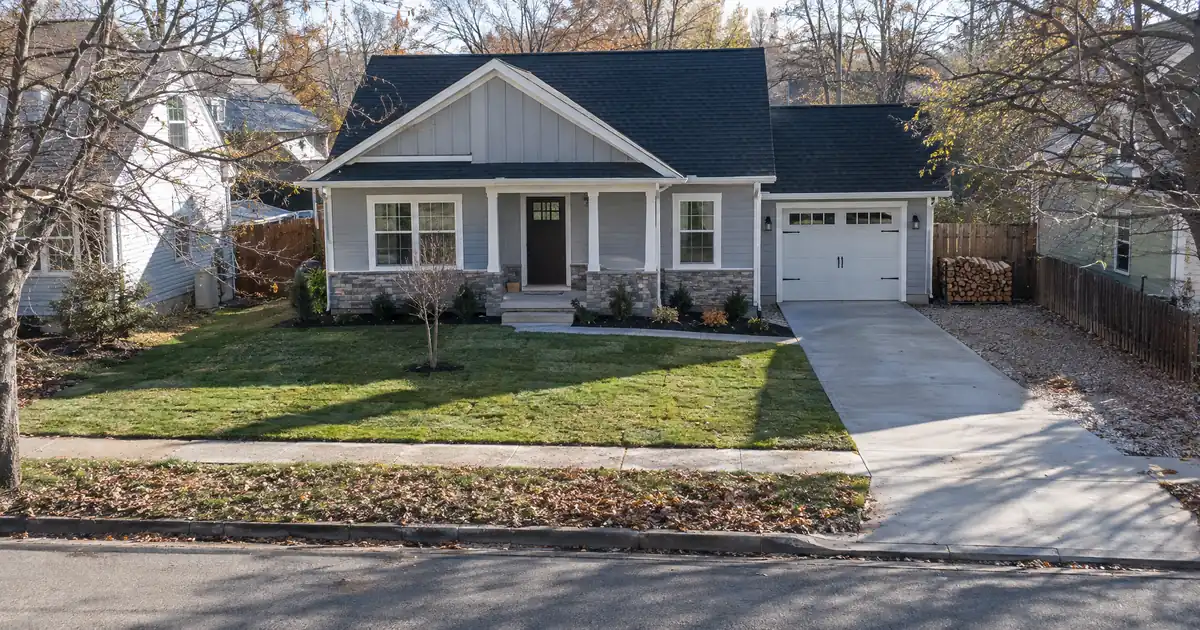
The Quick Read: A first-time flipper on hard money should plan for a spread well above the 70% rule’s 30% discount, because that 30% is not profit. It has to cover rehab overruns, interest, holding costs, and selling costs before any profit shows up. Most beginners should buy at or below 65% to 70% of after-repair value, less the full repair budget, and still hold a separate contingency in cash.
- The 70% rule is a screen: maximum offer equals after-repair value (ARV) times 70%, minus repairs.
- The 30% discount is not take-home. Rehab overruns, financing, carry, and sale costs come out of it.
- Beginners need a bigger cushion than veterans because contractor, scope, and ARV are all unproven.
- Contingency on the rehab budget belongs in the numbers and in cash, not just on paper.
- Thin margin shrinks both exit routes: a sale at a lower price and a refinance into a rental.
What Does the 70% Rule Actually Say?
The 70% rule says your maximum offer is ARV times 70%, minus repair costs. Multiplying ARV by 70% leaves a 30% discount for profit and fixed costs, per FlipperForce. That page also notes that investors using hard money and an agent often need 65 to 75 percent, while licensed cash buyers may reach 75 to 80 percent.
What this loan actually costs to carry.
Hard money is sized against the project and priced by time. Enter the deal and see how much the program will lend, the cash required at closing, the carry while you hold it, and what is left at the exit.
Leverage tiers on the current program: 85% with fewer than 2, 90% with 2 or more, 93% with 5 or more completed projects — every tier capped at 75% of after-repair value. Loan amounts up to $5,000,000, larger by exception; terms of 6 to 18 months, interest-only, no prepayment penalty. The rehab portion funds in draws against completed work, not at closing.
Program parameters shown update from Lendmire’s centralized guideline source. Rate, points, and months are editable assumptions, not quoted terms.
Cost cap sets the loan · positive spread
Illustrative estimate only — not a quote, Loan Estimate, approval, or commitment to lend. Rate, points, and months are editable assumptions. Hard money is business-purpose financing for real estate investors, not a consumer mortgage. Leverage on the current program tops out at 93% of project cost for investors with a documented track record, capped at 75% of after-repair value, with rehab funding up to 100% of the documented budget released in draws; actual terms vary by lender, borrower experience, property, and exit. Lendmire is a mortgage broker, not a lender.
Nothing in law sets a required flip margin. The rule is convention. It is a screen, not an underwrite. It tells you in one minute whether a deal deserves a full spreadsheet. It does not tell you whether the deal works.
The rule also assumes a particular flip: a hard money loan, an agent commission at sale, and a standard hold. Change those and the right number moves. Hot, market-rate markets with many bidders squeeze the cushion.
Key Terms Defined
After-repair value (ARV): what the property should sell for once the renovation is finished, based on sold comps.
70% rule: a screening formula that sets maximum offer at 70% of ARV minus repairs.
Loan-to-cost: the loan as a share of purchase price plus rehab budget, which is how hard money leverage is usually sized.
Draw: a release of rehab funds after a phase of work is completed and checked.
Contingency: extra budget set aside for repairs you did not see coming.
Holding costs: taxes, utilities, insurance, and financing charges that accrue while you own the property.
Three Ways to Measure Margin
Margin gets quoted three ways, and mixing them is how beginners fool themselves. Know which one a number refers to.
| Measure | What it divides by | Where it shows up |
|---|---|---|
| Percent of ARV | Finished sale value | 70% rule, 12-15% profit targets |
| Percent of cost | Total money in the deal | ROI headlines, flip reports |
| Return on cash | Your own cash invested | What experienced flippers optimize |
A profit that looks modest as a share of ARV can look large as a return on cash when the loan funds most of the cost. The reverse is also true. A deal that returns well on cash can still have almost no cushion against a price drop.
For a first-timer, percent of ARV is the safest screen. It ties directly to how far the sale price can fall before the deal loses money.
What Does the Market Actually Pay Flippers?
Less than the headlines suggest. ATTOM’s 2025 year-end report shows a typical flip netted $65,981 in gross profit, a 25.5 percent return on investment, the lowest since 2008 and down from 32.1 percent the prior year. Later data, as reported by WREN, shows the typical gross return falling further from the prior quarter.
Here is the catch. Those are gross figures. Per the same WREN report, ATTOM’s gross profit is the gap between acquisition and resale prices and does not subtract rehab, financing, taxes, insurance, transaction costs, or other carrying expenses.
So a headline return of roughly 25% is not take-home. Rehab, interest, points, and sale costs all come out of it. A beginner with an unknown contractor should expect a result worse than the median, and price the deal that way.
Where the Margin Goes
The 30% discount gets eaten in a predictable order. Work through each line before you trust the number.
1. ARV error. ARV is the largest source of mistakes. A 70% rule built on an inflated ARV is not a 70% rule. Use sold comps, not listings.
2. Rehab overruns. BiggerPockets suggests a contingency of 10% to 15% of the project. A BiggerPockets forum thread shows some investors allowing 5% to 10% of total rehab. The honest range is wide. Older houses and vague scopes belong at the top of it.
3. Holding costs. Taxes, utilities, insurance, and financing charges grow with every day you own the property. ATTOM’s state-level flipping data reports a median of 165 days from purchase to resale. New investors often undercount carry because they assume the project will move smoothly with no delays, according to BiggerPockets.
4. Selling costs. One beginner guide from RealEstateAN puts these typically at 8% to 10%, including agent commissions and closing costs. Treat that as a medium-quality estimate and price your own market.
5. Financing costs. Interest-only carry and loan charges run for as long as the project does. Pricing varies by lender, property, and experience, and is not covered here.
6. Profit. What remains. If the formula returns a negative number, the deal is too thin.
A Home Depot explainer quotes an investor saying fixed costs are typically around 15% of the project, so the 70% rule locks in profit of about 15%. It also warns that if your fixed costs run above or below average, the price or your profit gets thrown off. That is the whole point. The rule works only if your costs match the average.
Why a First-Timer Needs More Cushion
A veteran has a contractor with a track record, a feel for comps, and a sense of how long permits take. A first-timer has none of that. Each unknown is a place for margin to leak.
- Unproven contractor. Scope creep and delays show up on the first job, not the fifth.
- Unproven ARV. You have not yet sold a flip in this neighborhood. Your comps are an opinion.
- Longer timeline. Delays push carry up. One beginner guide illustrates that six months instead of three might add $10,000 to $15,000 in holding costs alone. That is a single-source illustration, not a benchmark.
- Hidden items. Behind walls and under floors is where budgets break.
Some first-time flippers use a 65% rule for exactly this reason. The extra five points are a buffer against what you cannot yet see. A reasonable beginner approach is to screen at 65% to 70%, then run the full line-item profit formula and keep contingency in cash as well.
How Margin Changes Your Cash in the Deal
Margin and leverage are linked. Across the wholesale network, hard money fix-and-flip leverage is tiered by documented completed projects, and every tier is capped at 75% of after-repair value. The loan is sized on cost, so a purchase priced near the 70% rule leaves little room under that value cap.
| Experience tier | Loan-to-cost (typical) | Cap |
|---|---|---|
| Fewer than 2 projects | 85% of project cost | 75% of ARV |
| 2+ completed projects | 90% of project cost | 75% of ARV |
| 5+ completed projects | 93% of project cost | 75% of ARV |
These are typical ranges that vary by lender, property, and experience, and nothing here is a commitment to lend. A first-timer lands in the top row. The cost-based loan is the lower tier, and the ARV cap can bind first on a deal bought near the edge of the rule.
Up to 100% of the rehab budget funds in draws against completed work. Draws reimburse spending that already happened. The investor fronts the first phase and carries any overrun from cash. That is why contingency is part of the margin: it is the cash you need when a draw does not cover the surprise. Lendmire’s piece How Much Cash a First-Time Flipper Needs Between Hard Money Draws covers that side in detail.
Hard money lenders use screens similar to the 70% rule to size loans. A deal that fails the screen may also struggle to get funded at attractive leverage. Credit also matters: a 620 minimum score applies, with additional conditions below 660, though underwriting stays asset-based on the property, the plan, and the exit.
One Deal, Three Outcomes
Run the numbers on a flip priced right at the 70% rule. Treat these as modeled assumptions, not market facts.
Base case. Rehab lands on budget, the hold matches the plan, and the home sells at ARV. The 30% discount covers rehab-related carry, financing, selling costs, and leaves a modest profit.
Rehab overrun. Costs run past budget. Contingency absorbs part. The rest comes from your cash, and profit shrinks directly.
Delayed, lower sale. The hold runs long and the buyer pool pays less than your ARV. Carry rises while the sale price falls. A deal at the edge of the rule can turn negative here.
Thin margin cannot absorb the second and third cases together. A deal bought at 65% of ARV less repairs can. That gap is the practical difference between a beginner who learns from the first flip and one who loses money on it.
Where the General Rule Breaks
The 70% rule is a guideline, not a law. One BiggerPockets commenter calls it more of a guideline than a strict rule, in a forum thread on the 70% rule. Here are the named edge cases.
- Price tier. ATTOM’s Q2 2025 report shows homes bought between $100,000 and $200,000 had the highest typical margin, 37 percent, against 22 percent for $300,000 to $400,000 purchases. Fixed costs bite harder on cheaper homes in percentage terms, and higher-priced homes can carry a different cushion.
- Geography. Returns vary widely by market, from strong gains in Pittsburgh down to a small loss on a typical San Antonio flip. One national rule cannot fit that spread.
- Cash versus hard money. The rule was designed around cash buyers, according to Goliath Data. Financing cost changes the math.
- Long holds. The longer you hold, the less helpful the rule becomes, per Innago.
- High ARV. Some investors apply a higher percentage, such as 75%, on properties with a high after-repair value. That is a loosening of the guideline rather than an established rule, and a first-timer should not rely on it.
When the Flip Does Not Sell
A thin deal narrows the exit. If the price must drop to find a buyer, thin margin disappears fast. The other route is renting the property and refinancing out of hard money. Many investors move from hard money into long-term DSCR financing once the property is stabilized, and Lendmire brokers that path through select lenders.
The refinance exit has its own test: the appraised value has to support the payoff, and rent has to cover the payment. Clearing 1.00 coverage is where select programs start, and it is not the same as positive cash flow, because repairs, vacancy, and management sit outside the calculation. The complete DSCR loans guide walks through that math. A deal priced at the edge of the 70% rule cannot absorb a low appraisal, which closes both exits at once.
Go/No-Go Checklist Before You Make an Offer
1. Is ARV built from sold comps, not active listings?
2. Does the offer sit at or below 65% to 70% of ARV minus repairs?
3. Does the rehab budget include contingency, with that contingency also held in cash?
4. Is carry priced for a hold longer than your plan?
5. Are selling costs included at a realistic share of ARV?
6. Does the deal still show a positive result with rehab over budget and sale price lower?
7. Can you fund the first draw phase from your own cash?
8. Do you have a second exit if the sale stalls?
If two or more answers are no, renegotiate, shrink the scope, find a partner, or walk. Walking is a legitimate result.
Mistakes First-Timers Make With Margin
- Treating the 30% as profit. FlipperForce has a section titled “The 30 Percent Is Not Your Profit” for good reason.
- Using the contractor’s number as the rehab budget. BiggerPockets notes that newbies and seasoned investors alike often leave things out when estimating, and holding costs are a common omission.
- Reading headline flip returns as what they will earn.
- Using one rule in every market.
- Skipping the stress case.
Tax treatment varies; consult a qualified professional.
If you are buying, rehabbing or refinancing an investment property on a short timeline and want to see how the numbers work, Lendmire can help you compare hard money options based on the project, the exit plan, leverage, and your goals.
Frequently Asked Questions
What is the minimum margin a first-time flipper should accept?
Plan to buy at or below 65% to 70% of ARV minus repairs, then confirm the full line-item formula still leaves profit. Treat any deal that goes negative under a rehab overrun and a longer hold as too thin. Figures vary by market and project.
Is the 70% rule enough for a first-timer on hard money?
Not by itself. It is a screen. Run rehab, carry, financing, and selling costs after the screen.
How big should my rehab contingency be?
Sources range from about 5% to 15% of the rehab budget. Older houses and unclear scopes belong at the high end. Hold it in cash too, since draws reimburse completed work only.
Does a thin margin affect my loan?
A thin margin can affect it. Hard money leverage is sized on cost and capped at 75% of ARV across the network, so a deal near the edge may leave little room. Terms vary by lender, property, and experience.
Can a first-timer get hard money at all?
Yes, at the lower leverage tiers, with a 620 minimum score and additional conditions below 660. Underwriting is asset-based, and nothing is guaranteed.
About Lendmire
Lendmire (NMLS# 2371349) is a DSCR-focused mortgage brokerage placing investor loans across 41 markets, including Washington, D.C. DSCR eligibility is generally reviewed by the lender around a property’s rental income rather than personal income documentation, which fits LLC-held rentals, self-employed investors, and portfolios scaling past conventional financed-property limits. Scotsman Guide named Lendmire a Top Mortgage Workplace in both 2025 and 2026.
Get Started
Ready to find the right loan for you?
In about 30 seconds you can review financing options available for your investment property. No commitment required.
Informational only. Not a Loan Estimate, approval, or commitment to lend. Program availability and eligibility are subject to lender guidelines, credit approval, property review, and underwriting.
References
1. FlipperForce: 70% Rule Formula
2. attomdata.com: Year End Home Flipping Report
3. WREN: Home Flipping Returns (ATTOM Q2 data)
4. BiggerPockets: Costs of Flipping a House
6. ATTOM: Home Flipping Trends by State
7. BiggerPockets: Contingency in a Rehab Budget
8. RealEstateAN
10. BiggerPockets forum: 70% rule thread
11. attomdata.com: Q2 Home Flipping Report
12. Goliath Data
13. Innago
This article is part of Lendmire’s hard money loan program — full qualification details, guidelines, and scenarios live on the program page.
Related reading: Hard Money Loan Appraisal Requirements for a Rehab Purchase · Can an Experienced Flipper Get Full Rehab Funding From Hard Money? · Hard Money Loan Down Payment Documentation for a First-Time Investor
Brandon Miller
Founder & CEO, Mortgage Loan Originator, Lendmire LLC
- Mortgage Loan Originator · NMLS# 1129696 · Verify on NMLS Consumer Access
- North Carolina Real Estate Broker · License# 343312 · Verify on NCREC
- North Carolina Insurance Producer · License# 19053198 · Property, Casualty, Life, Health · Verify on NAIC SBS
- Lendmire LLC · Firm NMLS# 2371349 · Verify firm licensure
Legal disclosures. Lendmire (NMLS# 2371349) is a state-licensed mortgage brokerage that arranges financing through wholesale lender relationships. Lendmire is not a direct lender, depository institution, or registered financial advisor. The discussion above is general informational content about real estate financing — it is not financial, legal, or tax advice, and readers should consult licensed professionals for guidance on their individual circumstances. Loan inquiries are subject to lender underwriting; this article does not represent a commitment to lend. Loan terms, rates, and qualification standards vary by borrower, property, and state, and are subject to change at any time. Equal Housing Opportunity. NMLS Consumer Access: nmlsconsumeraccess.org.