
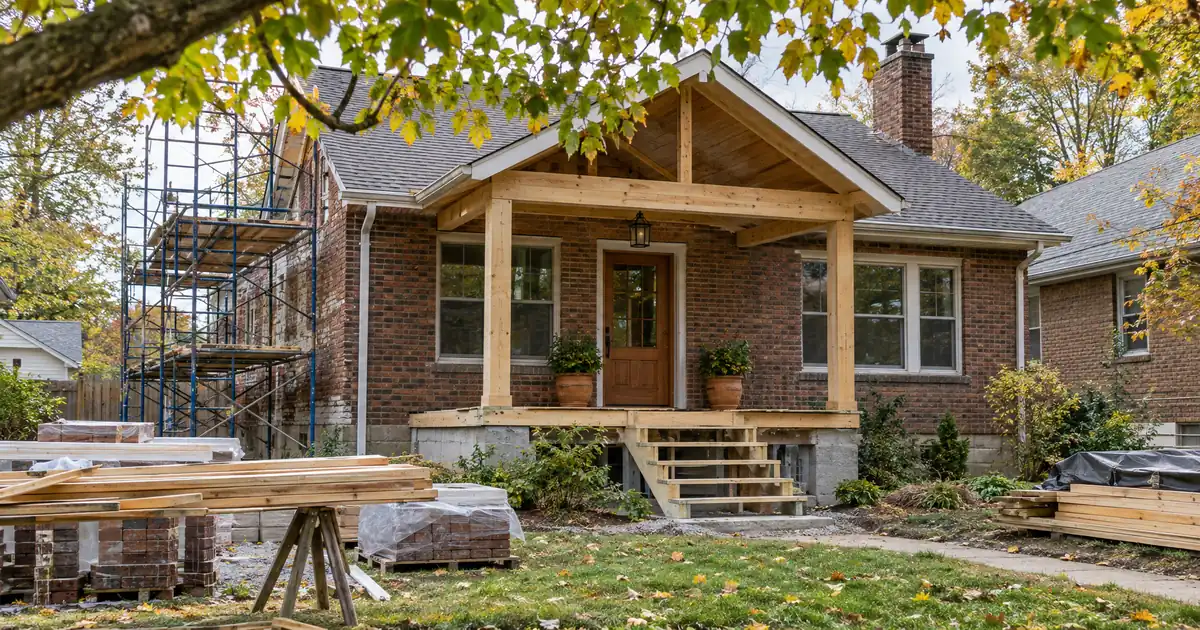
The Quick Read: A strong hard money file lets an underwriter decide without asking a single follow-up question. It answers three things: what the property is worth, how much the borrower has at stake, and how the loan gets repaid. Hard money is asset-based, business-purpose lending, so the file is built around the deal rather than personal income, and every lender writes its own overlays.
- Start the long-lead items first: entity good-standing certificates, insurance quotes, contractor bids, and bank statements.
- Build a one-page deal summary that gives every key number once, so the other documents can be checked against it.
- Group the file into borrower, entity, property, and deal-plan sections, and keep the order the same every time.
- Run a cross-check before submitting, because mismatched names, addresses, and figures are the most avoidable cause of stalled files.
- Across Lendmire’s wholesale network, leverage, credit tiers, and documentation vary by lender, property, and experience, and nothing here is a commitment to lend.
What Is the Underwriter Actually Deciding?
The underwriter is deciding whether the collateral and the plan protect the lender if the borrower stumbles. Business.com’s explainer on private lenders describes collateral value as the overriding factor, with the borrower’s credit and debt levels carrying less weight. Yahoo Finance notes that some lenders still look at loan-to-value and debt-to-income, so the weighting is lender-dependent.
What this loan actually costs to carry.
Hard money is sized against the project and priced by time. Enter the deal and see how much the program will lend, the cash required at closing, the carry while you hold it, and what is left at the exit.
Leverage tiers on the current program: 85% with fewer than 2, 90% with 2 or more, 93% with 5 or more completed projects — every tier capped at 75% of after-repair value. Loan amounts up to $5,000,000, larger by exception; terms of 6 to 18 months, interest-only, no prepayment penalty. The rehab portion funds in draws against completed work, not at closing.
Program parameters shown update from Lendmire’s centralized guideline source. Rate, points, and months are editable assumptions, not quoted terms.
Cost cap sets the loan · positive spread
Illustrative estimate only — not a quote, Loan Estimate, approval, or commitment to lend. Rate, points, and months are editable assumptions. Hard money is business-purpose financing for real estate investors, not a consumer mortgage. Leverage on the current program tops out at 93% of project cost for investors with a documented track record, capped at 75% of after-repair value, with rehab funding up to 100% of the documented budget released in draws; actual terms vary by lender, borrower experience, property, and exit. Lendmire is a mortgage broker, not a lender.
That framing changes how you build the file. You are not proving a salary. You are handing the reviewer a decision package: the asset, the money going in, the work, and the way out.
In the network Lendmire works with, the pattern is consistent. Fix-and-flip leverage is tiered by documented completed projects. It typically runs 93% of project cost at five or more completed projects, 90% of project cost at two or more, and 85% below that, with every tier capped at 75% of after-repair value. Bridge purchases without rehab can reach up to 80% of purchase price, and refinances typically top out around 65% of value. Those tiers are why a clean track-record sheet is worth real effort, and the figures vary by lender, property, and experience.
Key Terms Defined
After-repair value (ARV): the estimated value of the property once the planned work is finished.
Loan-to-cost: the loan amount measured against the total project cost, which is purchase price plus rehab budget.
Draw schedule: the plan for releasing rehab funds in stages as inspected work is completed.
Proof of funds: statements showing the cash for the down payment, closing costs, and reserves.
Exit strategy: the documented plan for repaying the loan, usually a sale or a refinance.
Conditions: the follow-up items an underwriter issues after reviewing the first submission.
The Master Checklist
The table below groups every item by section and shows why the lender wants it. Lead time means how long the item usually takes you to obtain, not how long the lender takes to review it.
| Document | Section | Why the lender wants it | Lead time | Status |
|---|---|---|---|---|
| Signed application | Borrower | Identifies borrower and loan request | Short | Required |
| Credit authorization | Borrower | Allows the credit pull | Short | Required |
| Photo ID | Borrower | Confirms identity | Short | Required |
| Bank statements | Borrower | Shows cash and reserves | Medium | Required |
| Track-record sheet | Borrower | Sets the leverage tier | Medium | Required for tiers |
| Articles and operating agreement | Entity | Shows ownership and authority | Medium | If entity-held |
| EIN letter, good standing | Entity | Proves the entity is active | Long | If entity-held |
| Purchase contract or payoff | Property | Anchors price or balance | Varies | Required |
| Title report or commitment | Property | Confirms clean ownership | Long | Required |
| Insurance quote | Property | Protects the collateral | Medium | Required |
| Scope of work and bids | Deal plan | Supports budget and ARV | Long | Rehab deals |
| Draw schedule | Deal plan | Sets the funding stages | Medium | Rehab deals |
| Exit plan | Deal plan | Shows repayment path | Medium | Required |
A signed application, a credit authorization, the executed purchase agreement, and the appraisal are among the core items a hard money file typically needs, with lender-specific additions layered on top.
How to Assemble It, Step by Step
Step 1: Start the long-lead items
Request the good-standing certificate, the title work, insurance quotes, and contractor bids on day one. These depend on other people’s calendars. Everything else is in your control.
Step 2: Write the one-page deal summary
Put the address, price, rehab budget, ARV, requested leverage, entity name, and exit plan on one page. Every other document gets checked against this sheet. It also gives the underwriter a fast orientation, which prevents the first round of basic questions.
Step 3: Build the borrower section
Include the signed application, credit authorization, photo ID, and recent bank statements for every guarantor. Credit matters here in a lender-dependent way. The network typically sets a 620 minimum, with additional conditions below 660, and first-time investors qualify at the lower leverage tiers. For deeper prep, see Lendmire’s piece How to Improve Your Credit Tier Before a Hard Money Loan Application.
Add the track-record sheet. List each prior project with address, purchase and exit dates, and before-and-after photos. Documented completions can move a borrower into a higher leverage tier, so a missing project here costs real leverage.
Step 4: Build the entity section
If the property will be titled in an LLC, include the articles of organization, a signed operating agreement showing ownership and signing authority, the EIN letter, and a good-standing certificate. Lending to an entity is subject to lender program eligibility, and principals typically sign a personal guarantee because a new entity has no credit history. Form the entity and confirm its status before you submit, not after. Lenders do not all require an LLC, and some will lend to individuals, but those that do require one will stop the file until the papers are clean.
Step 5: Build the property and scope section
For a purchase, include the executed contract. For a refinance, swap it for current property details and payoff information. Add insurance quotes, tax statements, photos, and any inspection reports.
For rehab projects, build a line-item budget by trade, such as roof, plumbing, electrical, paint, and flooring. Attach contractor bids behind each line. The budget, bids, and scope should tell one story. Up to 100% of the rehab budget can fund in draws against completed work, but that is a rehab-budget figure rather than a purchase loan-to-value, and it releases only after inspected progress.
Step 6: Document the exit
State whether the exit is a sale or a refinance, give a timeline, and show a contingency plan. Terms in the network run 6 to 18 months, interest-only, with no prepayment penalty, so the exit has to fit that window. Many investors refinance out of hard money into long-term DSCR financing once the property is stabilized, and Lendmire brokers that path. The complete DSCR loans guide explains how that later file differs.
Step 7: Run the cross-check
Check the file against the deal summary before anyone else sees it. The next table shows the data points that must agree.
| Data point | Must match across |
|---|---|
| Borrower or entity name | Application, ID, operating agreement, contract, insurance |
| Property address | Contract, title, insurance, scope, appraisal order |
| Purchase price | Contract, deal summary, settlement figures |
| Rehab budget | Scope, bids, draw schedule, deal summary |
| Signatures and dates | Every signed form |
A mismatch looks small, but it forces a condition, and each condition costs a round trip.
Step 8: Package and deliver
Use one folder, one file per document, and clear names such as 01-Application and 07-Title-Commitment. Keep the order the same as the master checklist. Send it as a single organized package rather than a string of separate emails, because attachments sent in pieces get lost.
Variations That Change the File
The core file stays the same, but the strategy changes what the lender wants to see.
| Scenario | What changes |
|---|---|
| Purchase | Contract and proof of funds for the down payment |
| Refinance | Payoff details instead of a contract; leverage up to 65% of value |
| Fix-and-flip | Timeline, margins, and past deals |
| Buy-and-hold | Rental projection and rent analysis |
| BRRRR | Renovation budget, refinance plan, proof of past success |
| Entity borrower | Full entity package and guarantor documents |
| First-time investor | Lower leverage tier, stronger cash and plan |
Hard money in the network covers non-owner-occupied residential property of one to four units, with ground-up construction up to ten units. Commercial, industrial, land, hospitality, and owner-occupied property are not offered.
Get Ahead of the Questions
An underwriter will ask about anything that looks unexplained. Answer it before the question arrives with a short cover note.
A tight explanation letter has four parts: what the item is, why it happened, the supporting document, and a single sentence confirming nothing else is pending. Large deposits, a recent credit event, a gap in project history, or a new entity are all good reasons for one.
If a document is missing, say so on the cover note and state when you will supply it. A disclosed gap keeps the reviewer working, while a hidden gap becomes a condition and usually a pause.
A Sample File, Before and After
Picture a hypothetical flip at 90% of project cost, with the borrower holding two completed projects and buying through an LLC.
A weak submission arrives as five separate emails. The operating agreement shows an old entity name, the scope lists nine line items while the bids cover six, and the exit plan is one sentence.
A strong submission arrives as one organized package. The first page is the deal summary, followed by numbered folders for borrower, entity, property, and deal plan. The scope, bids, and draw schedule agree line for line. The cover note explains one large deposit, and the exit plan names a sale timeline and a contingency.
The deal is identical in both cases. Only the presentation changes, and presentation is what you control.
Where the General Rule Breaks
Refinance versus purchase. A refinance file swaps the contract for payoff information, and leverage is lower, up to 65% of value in the network.
Scope changes after submission. Build a contingency line into the budget and ask how unspent amounts can shift between lines.
Entity defects. A missing operating agreement, an EIN mismatch, or a foreign LLC not registered where the property sits can stall the file.
Foreign nationals. Lenders typically ask for a passport and international references on top of the standard file.
Undrawn funds. Ask whether interest is charged on money that has not yet been drawn, since it affects carrying cost.
Hard money versus DSCR files. A hard money file leans on scope, draws, and exit. A DSCR file instead compares rent to the full monthly housing obligation and does not read the draw schedule. Clearing a DSCR test also does not equal positive cash flow, because repairs, vacancy, and management sit outside the calculation.
One last misconception is worth clearing up. A proof-of-funds letter does not lock in a deal. It carries little weight until credit is pulled, the funds are sourced, and the appraisal clears review.
After You Submit
The lender orders the appraisal and title, reviews the file, and issues conditions. HardMoneyHome’s process guide points to appraisal turnaround and how promptly the borrower clears conditions as the main drivers of the timeline. Your part is to respond to each condition completely, in one reply, with the document attached.
Tax treatment varies, so consult a qualified professional.
Putting the File Together
If you are buying, rehabbing, or refinancing an investment property on a short timeline and want to see how the numbers work, Lendmire can help you compare hard money options based on the project, the exit plan, leverage, and your goals. Lendmire is a broker arranging financing through select lenders in its wholesale network across 41 markets, including Washington, D.C. Loan amounts run up to $5,000,000, and larger by exception, subject to lender guidelines.
Frequently Asked Questions
What if I am missing a document when I submit?
Disclose it on the cover note and give a date for supplying it. A named gap lets underwriting continue on the rest of the file. An undisclosed gap usually returns as a condition.
Do I need everything up front?
Submit the full core package, meaning the application, entity papers, property documents, scope, and exit plan. Items such as the appraisal and title commitment come after submission, since the lender orders them. A complete first submission means fewer rounds of conditions.
Do I need a different file for each lender?
The core file can stay the same. Overlays differ, so lenders may ask for extras such as bank statement periods or entity requirements. Keep a master folder and add to it as needed.
Does my credit score still matter?
Yes, though the file is asset-based. The network typically sets a 620 minimum with additional conditions below 660, and first-time investors qualify at the lower leverage tiers. Exact treatment varies by lender and borrower.
Must the property be held in an LLC?
Not always. Some lenders require it and some lend to individuals, subject to program terms. Ask early, because an entity formed after submission can delay the file.
For the underwriting standards that sit behind these file items, see Lendmire’s piece Hard Money Underwriting Criteria for Real Estate Investors.
About Lendmire
Lendmire, NMLS# 2371349, is a non-QM mortgage broker serving real estate investors in 41 markets, including Washington, D.C., through DSCR investor loan programs. Qualification is generally reviewed around the subject property’s rental income, not the borrower’s W-2 history — a practical fit for LLC-titled portfolios and self-employed investors. All scenarios remain subject to lender review and program guidelines. Two consecutive Scotsman Guide Top Mortgage Workplace recognitions (2025, 2026).
Get Started
Ready to find the right loan for you?
In about 30 seconds you can review financing options available for your investment property. No commitment required.
Informational only. Not a Loan Estimate, approval, or commitment to lend. Program availability and eligibility are subject to lender guidelines, credit approval, property review, and underwriting.
References
1. Business.com — Hard Money Loans and Private Lenders
2. Yahoo Finance — Hard Money Loan Explainer
3. HardMoneyHome — How to Get a Hard Money Loan: Application Process, Timeline and Tips
This article is part of Lendmire’s hard money loan program — full qualification details, guidelines, and scenarios live on the program page.
Related reading: How Much a Hard Money Lender Will Lend on a Fix-and-Flip · How a Hard Money Lender Counts Seasoning on a Flip · How to Transfer an LLC-Owned Property Into a New LLC for Hard Money
Brandon Miller
Founder & CEO, Mortgage Loan Originator, Lendmire LLC
- Mortgage Loan Originator · NMLS# 1129696 · Verify on NMLS Consumer Access
- North Carolina Real Estate Broker · License# 343312 · Verify on NCREC
- North Carolina Insurance Producer · License# 19053198 · Property, Casualty, Life, Health · Verify on NAIC SBS
- Lendmire LLC · Firm NMLS# 2371349 · Verify firm licensure
Compliance and disclosures. Lendmire (NMLS# 2371349) is a licensed mortgage broker and is not a direct lender, depository institution, financial advisor, or tax professional. Content in this article is general market analysis and educational information — not financial, legal, or tax advice for any specific situation. Lendmire does not guarantee loan approval; every transaction is subject to underwriting by the funding lender. Mortgage pricing and loan program guidelines are subject to change at any time without notice and vary by borrower characteristics, property type, and state regulations. Lendmire complies with Equal Housing Opportunity. Licensure verification: NMLS Consumer Access.