
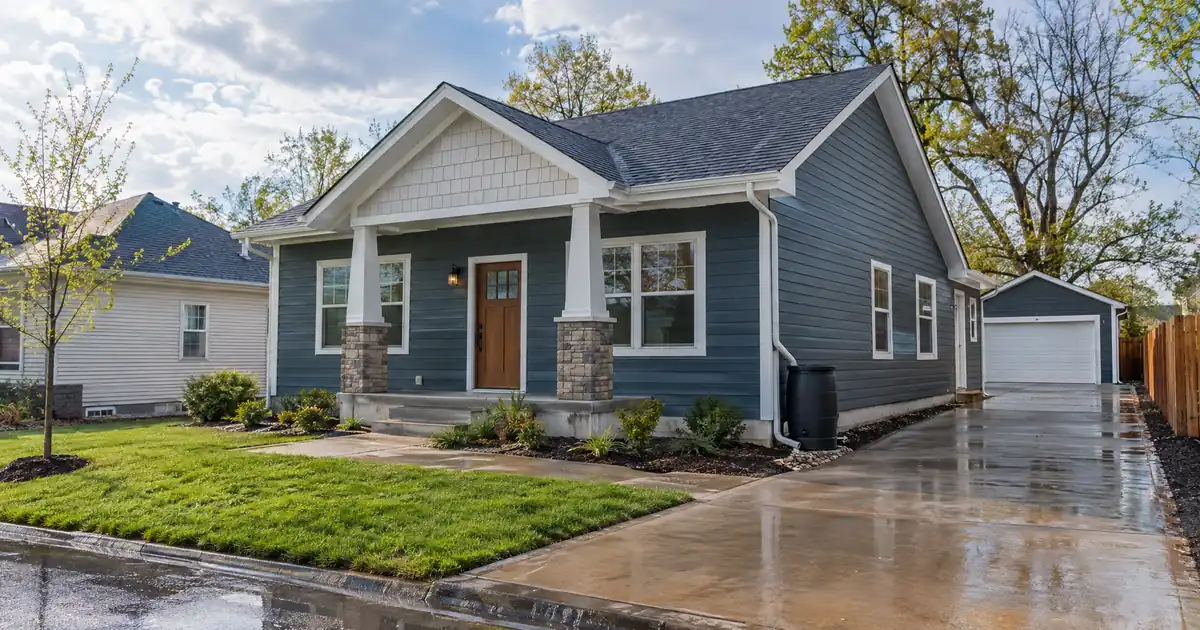
The Quick Read: You exit a stalled flip by picking one of four routes (sell, refinance into long-term rental financing, extend, or bring in new capital) based on why the project stalled and how much runway remains, then running the two most realistic routes in parallel instead of waiting for one to fail.
- Read the note first. An extension is only guaranteed if it is already written into the loan documents.
- A DSCR loan can pay off the bridge, but it needs a leased property, a new appraisal, and title that has seasoned.
- The payoff is the principal, accrued interest, any extension fee, and closing costs. Check that the new loan covers all of it before you order the appraisal.
- Clearing 1.00 coverage on a DSCR loan does not mean the property cash flows.
- An unfinished or vacant property usually needs an extension or a sale first, not a forced refinance.
A stalled flip is a timing problem on day one and a leverage problem by the maturity date. The bridge loan is interest-only, so the full balance comes due at the end of the term. Nothing pays it down along the way. This guide walks through what the balloon is, how a takeout lender looks at your file, which exits exist, and where the usual rules break.
DSCR Cash-Out Calculator
Run the cash-out numbers in your market
Rate source: Freddie Mac 30-yr average via FRED® — Federal Reserve Bank of St. Louis · effective Oct 22, 2026
Prefilled with starting assumptions — enter your property’s value, balance, taxes, and insurance for a more accurate picture.
Program parameters update from Lendmire’s centralized guideline source. Taxes and insurance are editable estimates.
As of Oct 22, 2026 · General Freddie Mac market benchmark, not a Lendmire loan offer. Property value, balance, taxes, and insurance are editable estimates. Maximum loan-to-value varies by lender, program, property type, and seasoning. Not a Loan Estimate, approval, or commitment to lend. Program availability and eligibility are subject to lender guidelines, credit approval, property review, and underwriting.
Why Does the Balloon Date Turn a Slow Flip Into a Bigger Problem?
A balloon payment is one large payment due at the end of a short loan. Cornell’s Legal Information Institute notes that such loans are often refinanced before the balloon comes due. It also warns that balloon loans are hazardous on real estate because collateral value can fall after the loan is made. A flip that has sat unsold is exactly that situation.
First Capital Trust Deed, a hard money lender writing about its own product, describes the balloon as the principal balance plus one monthly payment, due when the term ends. Hard money programs the brokerage places generally run 6 to 18 months, interest-only, with no prepayment penalty. Terms and leverage vary by lender, property, and experience. There are no multi-year options on those programs, so a runway problem cannot be solved by choosing a longer bridge.
Delay gets expensive in three ways. Interest keeps accruing on the full balance. Extension fees add to the payoff. If the date passes, the note’s default pricing can apply on top of both. Each one eats the margin the flip was supposed to earn.
Key Terms Defined
Balloon date: The maturity date when the full remaining loan balance comes due.
Payoff letter: A written statement from your current lender showing the exact amount needed to retire the loan on a given date, including daily interest.
Per diem: The daily interest charge that keeps accruing until the payoff is wired.
Seasoning: The waiting period a lender wants between buying a property and refinancing it. It is lender policy, not a law.
DSCR (debt service coverage ratio): Monthly rent divided by the monthly housing payment: principal, interest, taxes, insurance, and any association dues.
Rate-and-term refinance: A new loan that only pays off the old balance and costs. It returns no cash at closing.
Cash-out refinance: A new loan larger than the payoff, with the extra equity returned to you.
Step One: Read the Note Before You Call Anyone
Find four things in the loan documents: the maturity date, any priced extension option, the prepayment terms, and the default clause. Everything else follows from these.
An extension written into the note is a right you can use. An extension that is not written in is a favor the lender may or may not grant. Note Servicing Center says extension terms are negotiated and normally sit in the original loan documents. It also says extensions are expensive and signal execution risk to future lenders. A single extension is routine. A string of them tells the next lender the project ran into trouble.
First Capital Trust Deed says extensions often go to borrowers who paid on time and are less likely for borrowers who were late. Your payment history helps, but it does not obligate anyone. Most contracts also carry a short grace period on payments. A grace period is not an extension.
Diagnose Why the Flip Stalled
The cause of the stall decides which exits are realistic. Match the cause first, then choose the route.
| Why it stalled | What it rules out | Likely best exit |
|---|---|---|
| Rehab unfinished | Day-one DSCR refinance | Extend, then refinance |
| Finished but unsold | Nothing yet | Price cut, or rent and refinance |
| Finished, no tenant | Coverage testing | Lease up, then refinance |
| Appraisal came in low | Full-leverage takeout | Smaller loan, cash, or sale |
| Title held too briefly | Cash-out refinance | Payoff-only, or extend |
Notice that only one row is about the market. The other four are about paperwork and timing, which you can control. A finished house sitting on the market is the case where the hold-or-sell decision matters most, and Lendmire’s piece How to Run the Hold-or-Sell Decision on a Flip Before Hard Money Matures walks through it.
Triage by Time Left
The less runway you have, the more you need two tracks running at once. These tiers describe planning priorities, not how long any lender will take.
| Runway | First move | Parallel move | Fallback |
|---|---|---|---|
| Comfortable | Finish rehab, list or lease | Pre-screen takeout lenders | Price adjustment |
| Tight | Call lender about extension | Start the DSCR application | Sell as-is |
| Very tight | Request written extension | Line up cash or partner | Investor sale |
| At or past maturity | Call before they call you | Negotiate forbearance | Sale to repay |
The common mistake is waiting for one exit to fail before starting the other. A takeout needs an appraisal, title work, entity documents, and verified reserves. An extension needs a conversation and sometimes a fee. Start both while you still have leverage in the conversation.
The Four Exits
Sell
Selling is the original plan. It pays off the balance plus accrued interest, and nothing about the lender’s guidelines gets in the way. The question is price. Compare the carrying cost of waiting, which is interest plus any extension fee, against the discount a faster buyer would ask. Often a modest price cut costs less than another extension period. An as-is sale to an investor is also an option when the rehab is unfinished.
Rent and Refinance into a DSCR Loan
Many investors refinance out of hard money into long-term DSCR financing once the property is leased and stabilized. A DSCR loan is reviewed primarily on property-level rental income covering the payment, subject to lender guidelines. The brokerage arranges this path as a hard money exit refinance through select lenders in its wholesale network.
Converting a flip to a rental changes the story. The file stops being about resale value and becomes about whether the rent supports the payment. Your personal income matters less, and the property’s lease, appraisal, and your title date matter more. The complete DSCR loans guide covers the full program picture if this is new to you.
Extend or Modify
An extension buys time. It works best when the delay is short, the payment history is clean, and you can show a credible plan: a budget update, listing activity, or a lease in progress. Bring that package to the call. Lenders respond to a plan better than to a request for more time.
Bring In New Capital
A partner, a private lender, or your own cash can pay down the balance enough to make a refinance or an extension workable. This is the usual fix when a low appraisal leaves a gap. It also costs equity or ownership, so price it against the other three routes.
What a DSCR Takeout Actually Requires
A DSCR loan has to clear two tests: enough equity and enough rental coverage. A bridge sized near its ceiling can pass the first test on paper and fail it after accrued interest and fees are added.
Here is how the pieces compare. Hard money fix-and-flip leverage is sized on project cost, with tiers by documented completed projects, and every tier is capped at 75% of after-repair value. A DSCR loan sizes differently: on a cash-out refinance of an investment property, its ceiling is 75% of the new appraised value. On a rate-and-term refinance of an investment property, a DSCR loan can go up to 85%, with the top tiers reserved for stronger credit. Those ceilings are program maximums, and each lender’s actual number depends on credit, coverage, and property type.
Several other DSCR loan guidelines shape the exit:
- Coverage: 1.00 is where select DSCR programs start. A separate select-lender path takes coverage below 1.00 with leverage and terms adjusted. Stronger ratios open better terms.
- Credit: A DSCR loan has a 620 floor in parts of the network. Most programs want around 660, and 700 and above unlocks the strongest leverage.
- Seasoning: A DSCR cash-out refinance typically expects about 6 months of ownership, measured from the recorded deed date, not the date the rehab ended. A rate-and-term payoff has different treatment that varies by lender, so ask early.
- Reserves: A DSCR loan commonly expects about 6 months of PITIA in reserves, stepping up to about 9 months above $1,500,000. PITIA means principal, interest, taxes, insurance, and association dues. Some conservative rate-and-term files can see reserves waived.
- Loan size: Standard DSCR programs run up to $3,000,000, and every file is underwritten individually.
These figures describe what the programs allow, not what any file will receive. They are subject to lender guidelines and credit approval, and nothing here is a commitment to lend.
One caution on the ratio itself. A DSCR loan compares rent to PITIA only. Repairs, vacancy, management, utilities, and capital expenses sit outside the calculation, so clearing 1.00 does not mean the property puts cash in your pocket. Underwrite your own cash flow separately before you decide to hold.
Worked Example: Where the Gap Shows Up
Run the numbers on a flip bought at 85% of project cost, within the 75%-of-after-repair-value cap. The rehab finished late, the listing drew little interest, and you decide to rent. The projected after-repair value was optimistic, and the new appraisal lands 8% below it. These are modeled assumptions, not market data.
The payoff is not just the original balance. It is the principal, plus accrued interest, plus any extension fee, plus the new closing costs. Because the bridge was already sized near its ceiling, a lower appraisal shrinks the cushion fast. A DSCR loan at its rate-and-term ceiling may still cover the payoff, but a cash-out is capped at 75% of the lower value and may not.
Suppose rent covers the new payment at roughly 1.1x. The coverage test passes, but the equity test is what decides the file. You then have four choices: bring cash to closing, take a smaller loan, extend and wait for a stronger appraisal, or sell. That is why the break-even should be run before you order the appraisal, not after.
Where the General Rule Breaks
The seasoning clock may outlast the bridge. If maturity arrives before the DSCR seasoning period clears, you can extend, do a payoff-only exit now and a cash-out later, or take another bridge. The cost of two refinances is two sets of closing costs. Weigh that against one extension fee.
Delayed financing will not rescue a bridge-financed purchase. That exception was built for cash buyers, and a hard money lien on the property generally means the purchase was financed. DSCR programs set their own seasoning rules anyway.
Vacant or unfinished rehab. A DSCR loan cannot test coverage without a lease, so an unleased property usually needs an extension or a second bridge first. Some lenders advertise that they refinance vacant properties, so confirm the specific program before you plan around it.
Short-term rental collateral. A DSCR loan on a short-term rental typically expects around 12 months of hosting history and carries different leverage. A newly listed vacation rental rarely fits a day-one exit.
LLC ownership. Many banks and credit unions will not lend on LLC-held property. DSCR loans to LLCs are common, subject to lender program eligibility, but confirm yours before you commit.
Property type. Manufactured homes, log homes, and barndominiums are not offered in the network’s DSCR programs, so a flip of one of those needs a sale or a different exit.
Past maturity. The loan can sit in default-style pricing while you apply for a takeout. Call the lender before the lender calls you.
The Payoff Step by Step
Once you have a takeout lined up, the mechanics are routine but easy to fumble.
1. Request a payoff letter from the current lender, showing the daily interest and an expiration date.
2. Confirm the letter includes any extension fee and every other charge due.
3. Have title confirm the lien position and wire instructions.
4. Wire the payoff from the new loan’s closing proceeds on or before the letter’s expiration.
5. Confirm the satisfaction or release of the old lien is recorded after payoff.
If the closing slips past the letter’s expiration, accrued interest changes the number. Ask for an updated letter rather than guessing.
What Happens If You Miss the Date?
The lender’s options widen. First Capital Trust Deed lists three possible outcomes at maturity: an extension, a sale or refinance, or a notice of default, which it calls a last resort. Past the date, default pricing can escalate and accrue daily. Forbearance or a modification are the usual workout tools.
None of those are comfortable places to negotiate from. The better position is to reach out while the loan is still performing, with a written plan and a documented exit.
Common Mistakes
- Sizing the takeout on projected value instead of the new appraisal.
- Treating the end of the rehab as the start of the seasoning clock.
- Assuming a signed lease alone satisfies every program.
- Waiting for the extension to fail before starting the refinance.
- Forcing a refinance on an unleased property when a short extension would cost less.
- Counting the DSCR ratio as proof the property cash flows.
Pre-Flight Document Checklist
| Exit path | Have ready |
|---|---|
| Sell | Listing, payoff letter, title |
| DSCR refinance | Lease, deposit, entity papers, reserves |
| Extension | Budget update, plan, payment history |
| New capital | Updated budget and exit timeline |
For a DSCR refinance, the usual stall points are seasoning mismatches and missing lease or deposit documents. Gather them before you apply.
Plan the Exit Before the Bridge Closes
The cleanest exits are designed at the start. Work backward from maturity and make sure the bridge term outlasts the rehab, lease-up, seasoning, appraisal, and underwriting. If it cannot, build the extension into the plan instead of treating it as an emergency.
Frequently Asked Questions
Can I refinance a flip that is not finished?
Usually not into a DSCR loan, because coverage cannot be tested without rent and a finished property to appraise. The realistic paths are an extension to finish the work, a second bridge, or a sale. Once the property is complete and leased, a DSCR takeout becomes workable, subject to lender guidelines.
What if the appraisal comes in low?
You have four choices: bring cash to closing, take a smaller loan, extend and wait, or sell. A DSCR loan sizes on the new appraisal, not your projected value. This is why the break-even should be run before ordering it.
Can I sell for less than the loan balance?
It is possible, but the lender must agree to release its lien for less than the payoff. That is a negotiation, not a right, and it works best when you contact the lender before the maturity date.
What if I am already past the balloon date?
Contact the lender immediately and ask what it will accept: a short extension, forbearance, or a payoff schedule. Start a DSCR application or a sale in parallel. Staying silent usually makes the outcome worse.
Does a good payment history guarantee an extension?
No. It improves your odds, but without a written extension right the lender decides. Treat it as a negotiating asset, not an entitlement.
Next Step
If you are buying or refinancing a rental property and want to see how the numbers work, Lendmire can help you compare DSCR loan options based on the property income, credit profile, leverage, and investor goals. Lendmire is a broker that arranges financing through select lenders in its wholesale network across 41 markets, including Washington, D.C.
About Lendmire
As a non-QM mortgage broker (NMLS# 2371349), Lendmire facilitates DSCR investor loans across 41 markets, including Washington, D.C. DSCR eligibility is generally reviewed around property-level rental income instead of personal income documentation, subject to lender guidelines, serving LLC-structured portfolios and self-employed borrowers who don’t fit conventional boxes. A two-time Scotsman Guide Top Mortgage Workplace (2025, 2026).
Get Started
Ready to find the right loan for you?
In about 30 seconds you can review financing options available for your investment property. No commitment required.
Informational only. Not a Loan Estimate, approval, or commitment to lend. Program availability and eligibility are subject to lender guidelines, credit approval, property review, and underwriting.
References
1. Cornell Legal Information Institute, Wex: balloon payment
2. First Capital Trust Deed: hard money loan balloon payment
3. noteservicingcenter.com: Hard Money Loan Fees Dispelling the Hidden Cost Myth for Investors
This article is part of Lendmire’s hard money loan program — full qualification details, guidelines, and scenarios live on the program page.
Related reading: Can You Borrow Enough on a Hard Money Loan to Flip a Condo? · Hard Money Lender Licensing and Documentation for a Fix and Flip · Hard Money Lender Requirements for the Seller of a Flip
Brandon Miller
Founder & CEO, Mortgage Loan Originator, Lendmire LLC
- Mortgage Loan Originator · NMLS# 1129696 · Verify on NMLS Consumer Access
- North Carolina Real Estate Broker · License# 343312 · Verify on NCREC
- North Carolina Insurance Producer · License# 19053198 · Property, Casualty, Life, Health · Verify on NAIC SBS
- Lendmire LLC · Firm NMLS# 2371349 · Verify firm licensure
Compliance and disclosures. Lendmire (NMLS# 2371349) is a licensed mortgage broker and is not a direct lender, depository institution, financial advisor, or tax professional. Content in this article is general market analysis and educational information — not financial, legal, or tax advice for any specific situation. Lendmire does not guarantee loan approval; every transaction is subject to underwriting by the funding lender. Mortgage pricing and loan program guidelines are subject to change at any time without notice and vary by borrower characteristics, property type, and state regulations. Lendmire complies with Equal Housing Opportunity. Licensure verification: NMLS Consumer Access.