
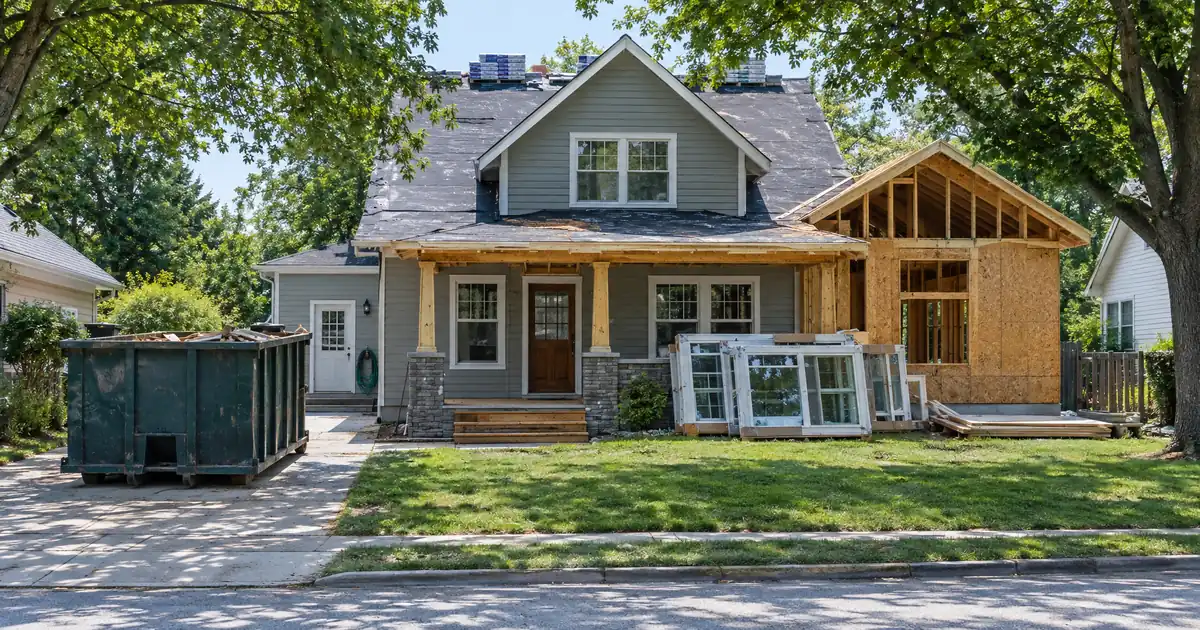
The Quick Read: Heavier, older, or less inspectable scope needs a bigger contingency line, and a scope change after the loan is set needs lender sign-off before the work starts. The reason is simple: the more walls you open, the more unknowns you find, and draws fund the approved budget, not the overrun.
- Contingency is a line inside the submitted rehab budget, not a side account.
- Practitioner sources scale it from roughly 10% on light cosmetic work to as much as 25% on a gut job.
- Draws release against completed, inspected work, so surprises outside the approved budget come out of the borrower’s cash.
- Bigger contingency means a bigger budget, which can raise cash needed up front.
- Hard money terms vary by lender, property, and experience, and nothing here is a commitment to lend.
Key Terms Defined
Contingency line: A budget line, inside the rehab total, set aside for work nobody could price in advance.
Scope of work: The itemized list of repairs by area and trade that the budget is built from.
Holdback: Rehab money the lender keeps back at closing and releases as work is finished.
Draw: A release of holdback funds after completed work is verified.
Change order: A written change to the scope, price, or both.
Overrun: Cost above the approved budget for work already in scope.
Hidden condition: A defect you could not see before opening a wall, floor, or roof.
What this loan actually costs to carry.
Hard money is sized against the project and priced by time. Enter the deal and see how much the program will lend, the cash required at closing, the carry while you hold it, and what is left at the exit.
Leverage tiers on the current program: 85% with fewer than 2, 90% with 2 or more, 93% with 5 or more completed projects — every tier capped at 75% of after-repair value. Loan amounts up to $5,000,000, larger by exception; terms of 6 to 18 months, interest-only, no prepayment penalty. The rehab portion funds in draws against completed work, not at closing.
Program parameters shown update from Lendmire’s centralized guideline source. Rate, points, and months are editable assumptions, not quoted terms.
Cost cap sets the loan · positive spread
Illustrative estimate only — not a quote, Loan Estimate, approval, or commitment to lend. Rate, points, and months are editable assumptions. Hard money is business-purpose financing for real estate investors, not a consumer mortgage. Leverage on the current program tops out at 93% of project cost for investors with a documented track record, capped at 75% of after-repair value, with rehab funding up to 100% of the documented budget released in draws; actual terms vary by lender, borrower experience, property, and exit. Lendmire is a mortgage broker, not a lender.
Why Scope, Not the Loan, Drives Contingency
Scope drives contingency because scope decides how much of the cost is known and how much is a guess. A contractor bid covers the work you can see and describe. A contingency covers the work you can’t.
A paint, flooring, and fixtures job is almost all known work. Surprises are small. A job that opens plumbing, electrical, framing, or the roof is full of unknowns, and each opened wall adds risk. RealEstateSkills recommends about 10% for a light cosmetic job, around 15% for moderate work, and up to 25% for a down-to-the-studs gut, and it makes the point that the buffer only works if it is real money you actually have.
Look at it from the lender’s chair. A hard money loan is short-term, asset-based financing secured by the property, which Corporate Finance Institute describes as a different animal from conventional lending. The lender is lending against what the property will be worth after the work. A rehab that stalls from an underfunded budget threatens that value, so lenders want to see the buffer on paper before they approve the scope.
On the files Lendmire sees across its wholesale network of select lenders, the budget that gets questioned is the one with no contingency line at all. Lenders read that as a borrower who hasn’t opened the walls in their head yet.
Contingency by Scope Level
The right buffer moves in steps with how much of the house you open. This table shows the pattern. Percentages are practitioner ranges from published investor education, not program requirements, and each lender sets its own expectations.
| Scope level | Main hidden-risk sources | Typical buffer range | Lender concern |
|---|---|---|---|
| Light cosmetic | Subfloor, paint-over damage | About 10% | Budget too thin to absorb small finds |
| Moderate, systems touched | Wiring, plumbing, HVAC age | Around 15% | Work found outside approved scope |
| Gut to the studs | Framing, structure, roof, code | Up to 25% | Change orders and stalled draws |
| No walkthrough or older home | Everything unseen | Add 10%-20% on top | Unknown condition |
The less certain the scope, the higher the buffer.
How to Size Your Own Contingency
A single flat percentage is a shortcut. A better method scores each scope category by how uncertain it is, then weights it by cost.
1. Split the budget by category. List cosmetic, roof, structural, electrical, plumbing, HVAC, permits, and exterior as separate lines with their bid amounts.
2. Score each line for uncertainty. Finishes you can see score low. Anything behind a wall, under a floor, or on an old system scores high.
3. Weight by cost. A high-uncertainty line that is 5% of the budget matters less than one that is 40%.
4. Apply a buffer to each line, then add them up. A budget heavy in finishes lands near the low end of the ranges above. One heavy in systems and structure lands near the top.
5. Add a layer for access. If you could not inspect the attic, crawlspace, or sewer line, raise the buffer.
Here is the part most files miss. Mixed scopes blend. A house with a cosmetic interior and a failing roof does not take the cosmetic rate. The roof line carries its own weight.
Worked Example: One Property, Three Scopes
Take one property and scope it three ways. The scenarios below are modeled for illustration, not market data. The buffer percentages come from the practitioner ranges above. The sourced arithmetic example is the RealEstateSkills case of a $40,000 scope plus a 10% contingency, which gives $44,000 to work with.
- Cosmetic refresh, buffer near 10%. The bids cover nearly everything. The contingency line is small, and a rotted section of subfloor eats a fair share of it. Fine, as long as the finds stay small.
- Mid-level with systems, buffer near 15%. Say the kitchen and bath are opened and the panel is updated. Old wiring turns up behind the kitchen wall. The larger contingency absorbs it without a revision.
- Full gut, buffer up to 25%. Demolition exposes framing damage nobody could see. On a gut, expect to spend most of the buffer. If the line was set at the cosmetic level, the overrun is the borrower’s cash.
The lesson isn’t the numbers. It is that the same surprise lands very differently depending on which line was funded.
Where the Contingency Sits Relative to Holdback and Draws
Contingency sits inside the rehab budget, so it is part of the scope total the lender reviews. It is not a separate pot of cash the lender hands over. Up to 100% of the rehab budget funds in draws against completed work on the hard money program parameters Lendmire works with, subject to lender guidelines, and that is a rehab-budget figure, not a purchase leverage figure.
That structure creates a trap. Draws fund the budget, not the overrun.
| Stage | What funds the surprise |
|---|---|
| Surprise inside the contingency line | The contingency, released with the draw |
| Surprise beyond the line | Borrower cash, or an approved budget revision |
| Work outside the original scope | Needs an amended scope before it is paid |
Here is the catch with a fat contingency. A larger budget raises the total project cost, and most construction-style lenders look at total project cost when sizing the borrower’s share. Bigger budget, more cash up front. That is why borrowers keep budgets lean, and it is the trade-off against safety.
On leverage, fix-and-flip files on the hard money program run up to 93% of project cost at 5+ completed projects, 90% at 2+, and 85% with fewer than 2, every tier capped at 75% of after-repair value, and these vary by lender, property, and experience. A contingency that inflates the budget can push the total toward that after-repair-value cap, which limits how much of the buffer can be financed.
When the Scope Changes Mid-Project
Change the scope on paper before you change it on site. That is the whole rule.
| Change type | What the lender needs | What to document |
|---|---|---|
| Reallocation inside the budget | Notice, often easy | Which lines move and why |
| Found work covered by contingency | A change order and inspection | Photos, bids, written explanation |
| New work beyond the budget | A revised scope and approval | Updated budget and who funds it |
The hard one is new scope the inspector never saw. Without an amendment, that work may not be credited at the next draw.
When the Contingency Runs Out
Work down this order. Each step is cheaper than the next.
1. Reallocate. Move unspent money from a line that came in under.
2. Cut scope. Drop items that don’t support the after-repair value. Upgrades go first.
3. Bring cash. Reserves held outside the loan cover what is left.
4. Request a revision. Ask for a new budget before work continues, not after.
Keep these buckets separate. Contingency covers found work. Cash reserves cover overruns past that. Interest and carry reserves cover months the project runs long. Merge them and you can’t tell which one is empty.
Where the General Rule Breaks
The percentages above fail in a few places.
Light rehab. A small budget has little room for an overrun, and a percentage of a small number is a small number. If the borrower holds the cash, a bridge-style purchase without a funded rehab can fit, but then the borrower funds all repairs and absorbs any surprise.
Heavy structural work. Hidden conditions and change orders are the main risk, and the work tends to need many permit-linked draws. Some of it fits a ground-up construction structure better than a standard rehab loan. On the hard money program, ground-up construction runs up to 90% of cost at 3+ completed projects, and it is limited to 10 units.
Unbuildable scope. No contingency fixes that. It is a due-diligence miss.
Program-set reserves. Agency renovation products work differently. The Fannie Mae HomeStyle Renovation program sets a contingency reserve by program rules, required on 2–4 unit properties and optional otherwise, not by scope. Hard money contingency is a negotiated underwriting choice, which is why scope matters so much here.
What the Investor Decision Looks Like
Overrun risk travels to the exit. Whether the plan is a sale or a refinance, any unpaid overrun must be funded with cash. Many investors refinance out of hard money into long-term DSCR financing once the property is stabilized, and Lendmire brokers that path. That refinance depends on the property being rent-ready, so a rehab that stalls from an underfunded contingency delays it. Clearing 1.00 coverage later is also not the same as positive cash flow, since repairs, vacancy, and management sit outside the calculation. The complete DSCR loans guide walks through that exit.
Heavy-scope deals need liquidity beyond the down payment. More draws also mean a longer gap between spending and reimbursement, so working capital needs rise even when the budget is fully covered.
Pre-Submission Checklist
- Itemized scope by area and trade, with bids behind the big lines.
- A contingency line sized by category, not a flat guess.
- Written inclusions and exclusions so there is no dispute about what’s covered.
- A buildability and permit check on anything structural or added.
- Cash on hand for overruns past the contingency.
- A named person who signs change orders.
If you are buying, rehabbing or refinancing an investment property on a short timeline and want to see how the numbers work, Lendmire can help you compare hard money options based on the project, the exit plan, leverage, and your goals. Loan amounts, terms, and approval are set by the lender and vary by property and experience. Short-term rental rules can vary by city, county, HOA, and property type, so confirm local rules before relying on projected rental income. Tax treatment varies; consult a qualified professional.
Frequently Asked Questions
Do I need a contingency if my contractor gave a fixed bid?
Yes. A fixed bid covers the scope as written, not what is behind the walls. Lenders still want a visible contingency line, and a fixed price does not protect you from work found outside that scope.
Is contingency included in the funded rehab amount?
Usually it sits inside the rehab budget the lender reviews, so it is part of the scope total. How it is released depends on the lender. Draws still follow completed, inspected work.
Can I use leftover contingency for upgrades?
It depends on the lender’s terms. Unspent amounts in one line can often move elsewhere in the budget, but upgrades that don’t support the after-repair value are a poor use of buffer you may need later.
What if I find structural damage after demolition?
Stop and document it. Get a bid, photos, and a written change order, then ask the lender before the work continues. Without an amendment, the inspector may not credit new work at the next draw.
How does a bigger scope affect the number of draws?
Heavier work usually means more draws, especially when permits gate the stages. That lengthens the gap between spending and reimbursement, so plan extra working capital.
To see how draws respond once a scope shifts, read Lendmire’s piece Does a Scope Change Affect Hard Money Draws on a Rehab Loan?.
About Lendmire
Lendmire, NMLS# 2371349, is a mortgage brokerage focused on investor financing, arranging DSCR loans in 40 states plus Washington, D.C. — 41 markets total. Qualification is based on the property’s income rather than personal income documentation, subject to lender guidelines, making it a fit for LLC-held rentals and scaling portfolios. Scotsman Guide named Lendmire a Top Mortgage Workplace in both 2025 and 2026.
Get Started
Ready to find the right loan for you?
In about 30 seconds you can review financing options available for your investment property. No commitment required.
Informational only. Not a Loan Estimate, approval, or commitment to lend. Program availability and eligibility are subject to lender guidelines, credit approval, property review, and underwriting.
References
1. RealEstateSkills: Estimating Rehab Costs
2. Corporate Finance Institute: Hard Money Loan
3. Fannie Mae: HomeStyle Renovation
This article is part of Lendmire’s hard money loan program — full qualification details, guidelines, and scenarios live on the program page.
Related reading: Hard Money Flip Loan vs Private Money for a First-Time Investor · How to Budget Down Payment and Rehab Cash on a Hard Money Flip · Hard Money Maximum Loan Amount Requirements for a Flip
Brandon Miller
Founder & CEO, Mortgage Loan Originator, Lendmire LLC
- Mortgage Loan Originator · NMLS# 1129696 · Verify on NMLS Consumer Access
- North Carolina Real Estate Broker · License# 343312 · Verify on NCREC
- North Carolina Insurance Producer · License# 19053198 · Property, Casualty, Life, Health · Verify on NAIC SBS
- Lendmire LLC · Firm NMLS# 2371349 · Verify firm licensure
Important disclosures. Lendmire (NMLS# 2371349) is a licensed mortgage brokerage. Lendmire is not a direct lender, depository institution, or financial advisor. All loan inquiries are subject to lender underwriting; this article does not constitute a commitment to lend. Rates, terms, and program guidelines are subject to change without notice and vary by borrower profile, property type, and state. Information in this article is general in nature and is not financial, legal, or tax advice. Equal Housing Opportunity. NMLS Consumer Access: nmlsconsumeraccess.org.