
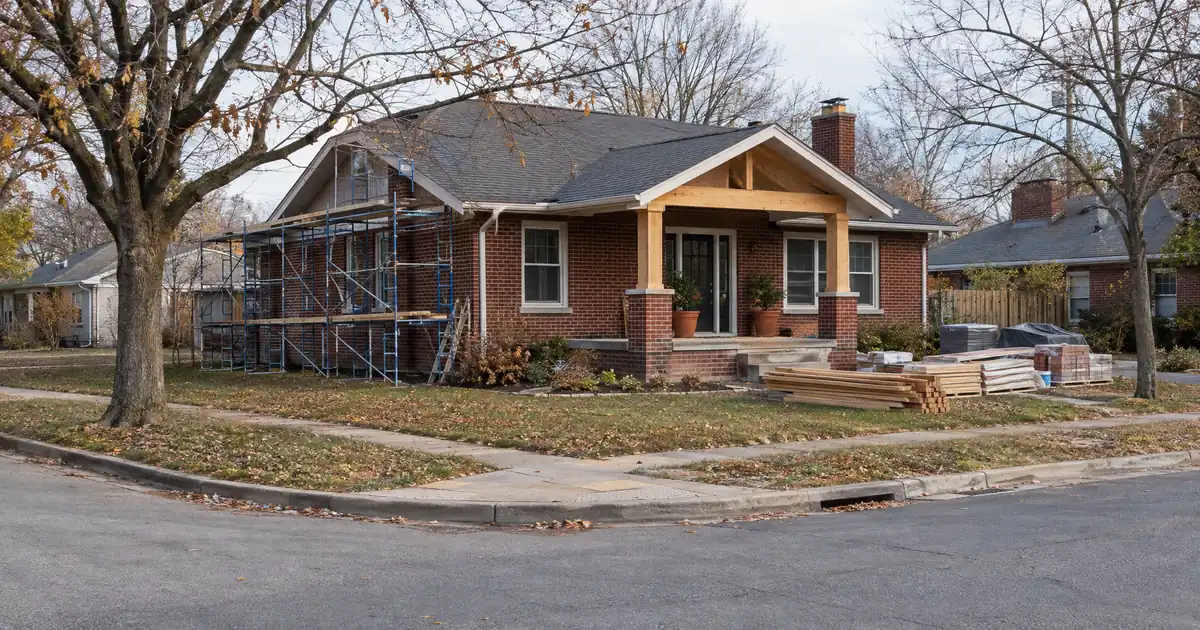
The Quick Read: Credit works as a minimum bar and a dial, but it is not the engine of the decision. The lender first sizes the deal, then checks that your score clears its floor, and then uses the score to set conditions. Typical programs allow a 620 minimum, with extra conditions below 660, though this varies by lender, property, and experience.
- The deal comes first: purchase price, rehab budget, and after-repair value.
- A score below the lender’s floor can stop a file even when the deal is strong.
- Above the floor, your track record, not your score, usually sets the leverage tier.
- Scores under 660 tend to bring added conditions, such as more cash in the deal.
- Credit still matters at the exit, because the refinance that repays the flip needs its own approval.
Key Terms Defined
Hard money lending has its own vocabulary. These are the terms this article uses.
- Hard money loan: a short-term loan secured by the property itself, typically from a private or non-bank lender. Corporate Finance Institute describes these loans as collateral-secured and short-term.
- After-repair value (ARV): what the property should be worth once renovations are finished, usually estimated from comparable sales. Landlord Studio explains how it is calculated.
- Loan-to-cost: the loan as a share of total project cost, meaning purchase plus rehab. It is a different measure from a loan-to-value figure.
- Draw: a release of rehab money after the lender confirms a stage of work is done.
- Guarantor: the person who personally backs the loan, even when an LLC holds title.
- Soft pull and hard pull: a soft pull is a credit check that does not affect your score. A hard pull is a full inquiry that can.
- DSCR loan: a long-term investor loan that qualifies primarily on property-level rental income covering the payment, subject to lender guidelines.
What this loan actually costs to carry.
Hard money is sized against the project and priced by time. Enter the deal and see how much the program will lend, the cash required at closing, the carry while you hold it, and what is left at the exit.
Leverage tiers on the current program: 85% with fewer than 2, 90% with 2 or more, 93% with 5 or more completed projects — every tier capped at 75% of after-repair value. Loan amounts up to $5,000,000, larger by exception; terms of 6 to 18 months, interest-only, no prepayment penalty. The rehab portion funds in draws against completed work, not at closing.
Program parameters shown update from Lendmire’s centralized guideline source. Rate, points, and months are editable assumptions, not quoted terms.
Cost cap sets the loan · positive spread
Illustrative estimate only — not a quote, Loan Estimate, approval, or commitment to lend. Rate, points, and months are editable assumptions. Hard money is business-purpose financing for real estate investors, not a consumer mortgage. Leverage on the current program tops out at 93% of project cost for investors with a documented track record, capped at 75% of after-repair value, with rehab funding up to 100% of the documented budget released in draws; actual terms vary by lender, borrower experience, property, and exit. Lendmire is a mortgage broker, not a lender.
What the Lender Is Really Underwriting on a Flip
A flip lender is underwriting a project, not a paycheck. The loan is short, interest-only, and repaid by a sale or a refinance. Everything the lender checks traces back to one question: will this property be worth enough, soon enough, to repay the loan?
That is why the file starts with the property. The lender looks at the purchase price, the rehab budget, and the after-repair value. It wants tight comparable sales and a rehab scope that a contractor has actually priced. Then it looks at the borrower: cash in the deal, liquidity, experience, and credit.
You will hear that hard money lending ignores credit. That is not accurate for the programs the Lendmire network works with. Credit is checked, and a floor exists. What is true is that the score does not carry the file the way it does on a bank mortgage. A strong deal cannot rescue a score that sits below the floor, and a high score cannot rescue a thin deal.
Experience matters more than most first-timers expect. Here is the table lenders effectively work from.
| Factor | What the lender tests | How credit interacts |
|---|---|---|
| Deal economics | Can the ARV repay the loan? | Credit cannot fix a thin margin |
| Cash in the deal | Do you have real skin in it? | Weaker credit often means more cash |
| Experience | Have you finished projects before? | Sets the leverage tier |
| Liquidity | Can you carry the project? | Reserves can offset a lower score |
| Credit | Is the guarantor reliable? | Acts as a floor, then adjusts conditions |
| Exit | Sale or refinance, and when? | Credit affects the refinance |
How Underwriting Treats Your Score, Step by Step
Here is the order of operations on a typical file across the lenders Lendmire places loans with. Details differ by lender, property, and experience.
1. The deal is sized first. Purchase price, rehab budget, and ARV set the ceiling before anyone looks closely at you.
2. Credit is pulled on the guarantor. Many lenders start with a soft pull to confirm the score range. A full hard pull comes once you commit to a file. Experian explains how the two types differ in their effect on your score.
3. The score meets the floor. In the network, a 620 minimum is common, with additional conditions below 660. A score under the lender’s floor ends the conversation for that lender.
4. Experience sets the leverage tier. Documented completed projects, not the score, decide which tier you land in.
5. Conditions adjust. A score in the lower band can bring more cash in the deal or tighter leverage. Strong reserves and a seasoned contractor can soften that.
6. The exit is tested. The lender asks how the loan gets repaid and whether you can qualify for the refinance if you rent instead of sell.
Credit is mostly a threshold at step three and a conditions dial at step five. It is rarely the thing that sizes the loan.
What the Lender Reads Beyond the Number
Two borrowers can share a 660 score and look very different on the report. Underwriters read the report itself. They want to know why the score is what it is.
| Report item | What it signals | Common mitigation |
|---|---|---|
| High card utilization | Cash stress, often fixable | Pay balances down first |
| Recent late payments | Current reliability risk | Written explanation, reserves |
| Old collections | Past trouble, less urgent | Context and clean recent history |
| Judgments or liens | Possible claims on assets | Resolve before applying |
| Foreclosure or bankruptcy | Serious past event | Seasoning and strong compensating factors |
| Thin file | Little data, not bad data | Larger cash contribution |
Recent behavior carries more weight than old behavior. A lender will usually forgive a collection from several years back sooner than a late payment last month. A letter of explanation helps when the event has a clear cause, such as a medical bill or a divorce. It does not help when the cause is ongoing.
Where the Score Changes the Deal
Credit changes the terms at the margins. It does not rebuild the structure of the loan. Fix-and-flip leverage in the network is tiered by documented completed projects, measured as a share of project cost. Every tier is capped at 75% of after-repair value.
| Completed projects | Typical max of project cost | ARV cap |
|---|---|---|
| 5 or more | Up to 93% | 75% |
| 2 or more | Up to 90% | 75% |
| Fewer than 2 | Up to 85% | 75% |
Those are typical ceilings, not promises, and they vary by lender, property, and experience. Rehab money is separate. Up to 100% of the rehab budget can be released in draws against completed work. That is a rehab-budget figure, not a purchase loan-to-value.
The top tier is reserved for experienced investors. First-time investors qualify at the lower leverage tiers. A 780 score does not move a first-timer into the 93% tier, because the tier follows the track record. What a strong score buys you is room: fewer added conditions and a smoother review.
The rest of the structure stays steady. Terms typically run 6 to 18 months, interest-only, with no prepayment penalty. Loan sizes reach $5,000,000, with larger amounts by exception. The collateral is non-owner-occupied residential property of one to four units. Ground-up construction can go to ten units.
For the deeper question of which score a lender uses when several guarantors are involved, see Lendmire’s piece How a Hard Money Lender Picks the Qualifying Credit Score.
Two Borrowers, One Deal
Run the numbers on one modeled deal and change only the borrower. These are modeled assumptions, not market data. The deal is a light-rehab flip with an ARV that comfortably repays the loan at the 75% cap.
Borrower A has five completed projects and a score in the mid-700s. The file lands in the top leverage tier, up to 93% of project cost, still inside the 75% ARV cap. The score raises no concerns, so underwriting stays focused on the budget and the exit.
Borrower B is on a first flip with a score near 645. The file sits in the 85% tier, again inside the 75% ARV cap. Because the score is under 660, the lender is likely to add conditions. Expect questions about cash reserves and the contractor. Borrower B may still be placed, but the structure will be tighter than A’s.
Borrower C has three completed projects and a score of 615. That is under the 620 floor. The strong track record does not change the outcome with a lender holding that floor. Borrower C’s real options are to raise the score first, or to bring in a partner with stronger credit as a guarantor, which a lender may or may not accept.
The pattern is simple. Experience and the deal set the size. The score decides whether you are in the room and how many conditions come with you.
Where the Rule Breaks: Edge Cases
The general rule is that credit is a floor plus a dial. Several situations bend it.
A low score versus no score. A borrower with a damaged score and a borrower with no credit history look different to underwriters. The first has a record to read. The second has none, and many institutional lenders treat a missing history as a stronger concern than a modest score. Some private lenders will fund either case when the deal margin is wide. Their capital is their own, so they can set their own limits. Institutional sources generally must meet the standards of whoever buys their loans.
The LLC does not hide your credit. Holding title in an LLC is common and, subject to lender program eligibility, usually workable. The lender still looks through the entity to the people behind it. Guarantors with meaningful ownership are typically reviewed individually.
Joint guarantors. When two people guarantee a loan, lenders differ on which score controls. Some use the lower middle score. Others look at the more experienced partner. Ask before you apply.
Borderline scores. A score a few points above a floor still passes. A score a few points below it does not, and lenders rarely make exceptions on that line. Paying down card balances before the pull can move a borderline score above the cutoff.
Ineligible property types. A perfect score does not help a property the network does not offer. Commercial, industrial, land, hospitality, and owner-occupied properties are not on the program sheet.
Weak credit and a wide margin. This is where private lenders differ most. If a deal leaves large margin below the ARV, a lender with flexible capital may accept a lower score. That flexibility usually comes with tighter leverage and more of your own cash.
In Lendmire’s experience placing flip files, the borrowers who run into trouble are seldom the ones with a modest score. They are the ones who learn about a recent late payment or a high utilization balance after they are already under contract. A credit review before you make offers prevents most of those surprises.
What to Do Before You Make an Offer
The practical move is to know your credit position before you have a contract deadline. Use this sequence.
1. Pull your own reports from all three bureaus and check them line by line. Dispute anything that is wrong.
2. Pay down card balances if utilization is high. This can move a score faster than almost any other step.
3. Settle or document open problems. Resolve judgments and write a short explanation for any recent late payment.
4. Gather proof of completed projects. Experience sets your tier, so the paperwork matters.
5. Keep reserves visible. Show cash for the down payment, the carry, and a cushion.
6. Avoid new credit. Do not open accounts or finance purchases before the lender pulls your report.
Then think about the exit while you are still in the flip loan. Credit matters again when the flip becomes a rental. Many investors refinance out of hard money into long-term DSCR financing once the property is stabilized. Lendmire arranges that path, and the complete DSCR loans guide explains how those loans work. DSCR financing qualifies primarily on property-level rental income covering the payment, subject to lender guidelines, and it still has credit floors of its own.
These are business-purpose investor loans, reviewed differently from a standard owner-occupied mortgage. Tax treatment varies, so consult a qualified professional.
Frequently Asked Questions
Do hard money lenders really check credit?
Yes, in the programs Lendmire places files with. The check can start as a soft pull and become a hard pull as the file progresses. The lender is not looking for perfection. It is confirming the guarantor clears a floor and reading the report for recent problems.
What credit score do I need to flip a house with hard money?
Typical programs in the network allow a 620 minimum, with additional conditions below 660. Those figures vary by lender, property, and experience, and they are not a commitment to lend. A higher score generally means fewer conditions rather than a bigger loan.
Will a high score get me more leverage?
Not by itself. Leverage tiers follow documented completed projects. Fewer than two projects typically means up to 85% of project cost, two or more up to 90%, and five or more up to 93%, with every tier capped at 75% of ARV. A strong score makes the review smoother but does not move you up a tier.
Does the credit pull hurt my score?
A hard pull can lower a score slightly, and Allstate’s summary of credit inquiries explains how inquiries affect scores. A soft pull does not. Ask your broker which type applies at each stage.
Can I use an LLC to keep my credit out of it?
No. The lender usually reviews the individuals behind the entity. The LLC may be acceptable as the borrower, depending on program guidelines, but personal credit still gets read.
The Bottom Line and Next Step
Treat your score as a gate you must clear and a dial you can improve. Then spend most of your effort on the parts that size the loan: the deal margin, your track record, and your cash. If you are buying, rehabbing or refinancing an investment property on a short timeline and want to see how the numbers work, Lendmire can help you compare hard money options based on the project, the exit plan, leverage, and your goals. Lendmire is a mortgage broker that arranges these loans through select lenders, across 41 markets, including Washington, D.C.
A flip is won or lost on the margin between cost and resale value, and a clean credit report only keeps you in position to compete for that margin.
For current guidelines and terms, see Lendmire’s DSCR loan programs page.
About Lendmire
Lendmire (NMLS# 2371349) is a mortgage brokerage built around DSCR investor lending, with programs available in 41 markets, including Washington, D.C. DSCR lenders commonly evaluate rental-income coverage instead of personal income paperwork — a practical fit for LLC-owned and multi-property investors. Terms vary by lender, property, leverage, and program. Scotsman Guide named Lendmire a Top Mortgage Workplace in both 2025 and 2026.
Get Started
Ready to find the right loan for you?
In about 30 seconds you can review financing options available for your investment property. No commitment required.
Informational only. Not a Loan Estimate, approval, or commitment to lend. Program availability and eligibility are subject to lender guidelines, credit approval, property review, and underwriting.
References
1. Corporate Finance Institute: Hard Money Loan
2. Landlord Studio: ARV in Real Estate
3. Experian: Hard Inquiry vs Soft Inquiry
4. Allstate: Understanding Credit Inquiries
This article is part of Lendmire’s hard money loan program — full qualification details, guidelines, and scenarios live on the program page.
Related reading: Hard Money Loan Credit Reporting Rules for Personal Credit · Hard Money Fix and Flip Minimum Loan Amount Requirements · Does Every Hard Money Lender Ask the Same Minimum Down on a Flip?
Brandon Miller
Founder & CEO, Mortgage Loan Originator, Lendmire LLC
- Mortgage Loan Originator · NMLS# 1129696 · Verify on NMLS Consumer Access
- North Carolina Real Estate Broker · License# 343312 · Verify on NCREC
- North Carolina Insurance Producer · License# 19053198 · Property, Casualty, Life, Health · Verify on NAIC SBS
- Lendmire LLC · Firm NMLS# 2371349 · Verify firm licensure
Important disclosures. Lendmire (NMLS# 2371349) is a licensed mortgage brokerage. Lendmire is not a direct lender, depository institution, or financial advisor. All loan inquiries are subject to lender underwriting; this article does not constitute a commitment to lend. Rates, terms, and program guidelines are subject to change without notice and vary by borrower profile, property type, and state. Information in this article is general in nature and is not financial, legal, or tax advice. Equal Housing Opportunity. NMLS Consumer Access: nmlsconsumeraccess.org.