
The Quick Read: A hard money lender sizes a flip loan on the property’s value, the rehab plan, and the exit, so rents matter mainly as evidence for the rental refinance that repays the loan, and they are read unit by unit, using the appraiser’s market-rent opinion backed by leases where leases exist.
- The bridge loan is asset-based. It is sized on cost and after-repair value (ARV), not on what the building rents for today.
- Each unit gets its own rent figure. A strong unit does not cover for a weak one.
- A common convention in long-term rental financing is to count the lower of the lease rent and the appraiser’s market rent. That is program practice, not law.
- Vacant units are credited from the appraiser’s market-rent opinion alone.
- The exit lender’s appraisal sets the rent test you must pass, not your own pro forma.
What Is the Bridge Lender Really Underwriting?
The bridge lender underwrites the asset, the scope of work, and the exit. Your personal income and the building’s current rent are secondary.
What this loan actually costs to carry.
Hard money is sized against the project and priced by time. Enter the deal and see how much the program will lend, the cash required at closing, the carry while you hold it, and what is left at the exit.
Leverage tiers on the current program: 85% with fewer than 2, 90% with 2 or more, 93% with 5 or more completed projects — every tier capped at 75% of after-repair value. Loan amounts up to $5,000,000, larger by exception; terms of 6 to 18 months, interest-only, no prepayment penalty. The rehab portion funds in draws against completed work, not at closing.
Program parameters shown update from Lendmire’s centralized guideline source. Rate, points, and months are editable assumptions, not quoted terms.
Cost cap sets the loan · positive spread
Illustrative estimate only — not a quote, Loan Estimate, approval, or commitment to lend. Rate, points, and months are editable assumptions. Hard money is business-purpose financing for real estate investors, not a consumer mortgage. Leverage on the current program tops out at 93% of project cost for investors with a documented track record, capped at 75% of after-repair value, with rehab funding up to 100% of the documented budget released in draws; actual terms vary by lender, borrower experience, property, and exit. Lendmire is a mortgage broker, not a lender.
On the hard money program Lendmire arranges, a fix-and-flip loan typically funds a share of project cost, tiered by how many projects you have completed. Most files land at 85% of project cost with fewer than two completed projects, 90% with two or more, and 93% with five or more. Every tier is capped at 75% of after-repair value, and the top tier is reserved for experienced investors. Terms run 6 to 18 months, interest-only, with no prepayment penalty. A 620 credit score is the minimum, with extra conditions below 660. All of this varies by lender, property, and experience, and nothing here is a commitment to lend.
Notice what is missing from that list. Nothing in it says the rent must cover the payment. The loan is repaid by selling the property or by refinancing it.
So where do rents enter? In two places:
1. The exit plan. If you will hold the property, the takeout lender will test rent against the monthly obligation.
2. The fallback. A lender that likes a plan also likes a plausible hold option if the sale takes longer than expected.
That is why a flipper who plans to keep a fourplex needs to think about rents on the day of purchase. The bridge loan will not ask. The refinance will.
Why Does the 2-4 Unit Line Change the File?
A 2-4 unit property is treated as residential, so the rent question stays inside a residential-style appraisal. At five units and above, the file shifts to a commercial income approach with a full rent roll, trailing operating statements, and net operating income.
The appraisal form tells the story. The small residential income property report, Form 1025, puts rental comparables ahead of the sales comparables and shows the income value indicators below the sales comps. The appraiser is asked for both a sale value and a rent opinion on the same building.
The form’s rent schedule works unit by unit. A sample completed schedule lists each unit’s rental status, lease expiration, current rent, market rent, and who pays utilities. The instructions on that sample say the appraiser reconciles the indicated market rents into an opinion for each unit.
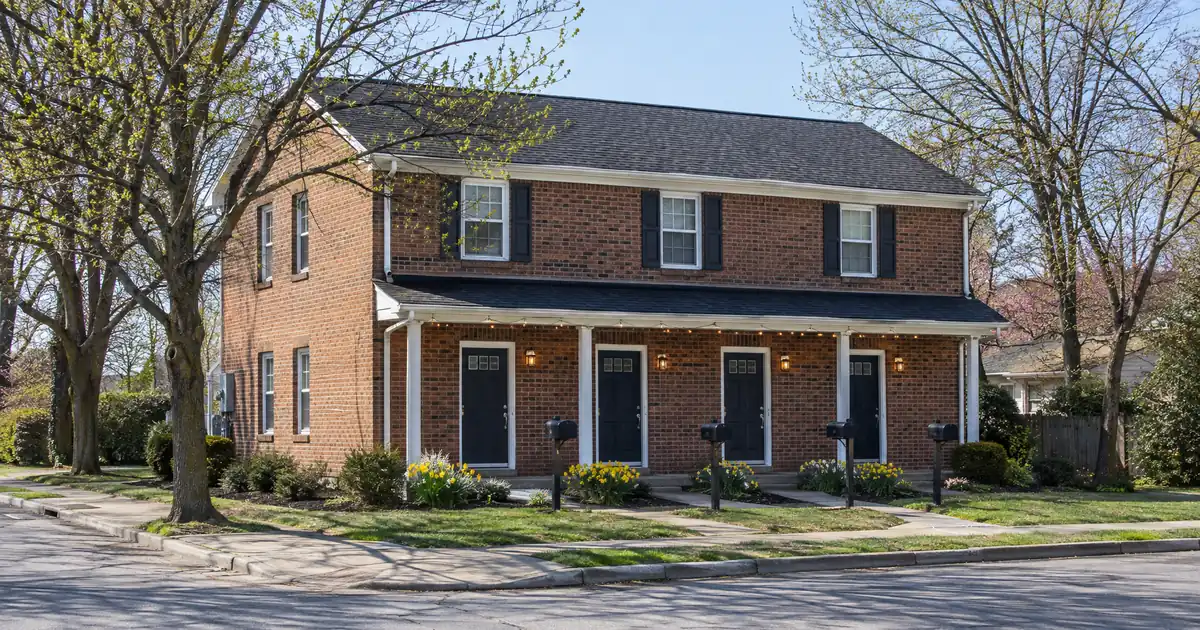
That per-unit structure matters more than any other fact here. A fourplex is not one rent number. It is four rent numbers, and each one can be counted differently.
Which Rent Number Counts?
On the long-term rental loans Lendmire places through its wholesale network, the common convention is the lower of the signed lease rent and the appraiser’s market rent. Most programs work this way. Some differ on vacant units or on how they treat leases signed shortly before the appraisal.
The lower-of idea is a program convention. No federal rule requires it. It exists because a lease can be set below market, and market rent can sit below a lease that was priced too high.
Form 1025 itself is listed in the selling guide’s appraisal-report forms as the report for 2-4 unit properties, including those in condo, co-op, and planned unit projects. Mentioning it here is about the form only. DSCR loans do not follow agency selling-guide rules.
Here is how the rent source usually shifts by occupancy status:
| Unit status | Rent usually counted | What to send |
|---|---|---|
| Leased, near market | Lease rent | Signed lease, deposit proof |
| Leased below market | Lower of lease or market | Lease, rent history |
| Leased above market | Market rent, no extra credit | Lease, comps |
| Month-to-month or expired | Market rent often governs | Rent history, notice |
| Vacant | Appraiser’s market rent | Photos, rental comps |
| Under renovation | Depends on stage and lender | Scope, timeline, post-rehab plan |
Treat the table as a typical pattern. Each lender sets its own overlays, and each file is underwritten individually.
How a Hard Money Lender Reads the Rents Unit by Unit
The reading goes in a fixed order. Learning it helps you predict how a lender will treat your building.
1. Value comes first. The lender looks at as-is value, the rehab budget, and ARV. Rents rarely set the bridge loan amount.
2. The rent facts are pulled per unit. Expect a request for the rent roll and the leases. Some files also ask for twelve months of rent history and proof that lease rents match bank deposits.
3. The credited rent is chosen. For a unit with a lease, the lower-of convention applies. For a vacant unit, the appraiser’s opinion stands alone.
4. The rehab changes the picture. A unit offline during construction has no rent today. A value-add plan is underwritten on the stabilized rent after the work, and the lender’s view of that rent still rests on comparables.
5. The exit lender repeats the process. The refinance lender orders its own appraisal. Your ARV estimate and your pro forma rents do not set the number.
Practice varies on how much hard money lenders haircut rents on 2-4 units, so plan around the appraiser’s view, not around a hoped-for discount.
The Rent Roll Lenders Want
A rent roll is a unit-by-unit table of who lives where and what they pay. A clean one has these columns:
- Unit number and bedroom count
- Tenant status (leased, month-to-month, vacant)
- Lease start and end dates
- Current monthly rent
- Security deposit held
- Who pays which utilities
- Notes on arrears or concessions
If you are buying the building, the seller’s rent roll is a claim, not a fact. Read it with these red flags in mind:
- Stated rents that exceed what the leases show.
- Leases with no matching deposits in the seller’s bank records.
- Several leases expiring in the same month.
- A rent roll dated right before listing.
- Unpaid rent hidden by a rounded total.
- A tenant who pays well below the other units without a reason.
Mismatches between a seller’s rent roll and the signed leases can cause a rental-coverage test to come back lower than the investor expected. Pulling the leases before you commit, not after, is the practical fix.
Worked Example: A Fourplex With Mixed Occupancy
Take a hypothetical fourplex. The figures below are modeled index points, not dollars or market data. Give each unit an appraiser’s market rent of 100 points. Say the monthly obligation (principal, interest, taxes, insurance, and association dues, together called PITIA) is 320 points.
DSCR is the debt service coverage ratio. For a residential rental loan, it is monthly rent divided by PITIA. The commercial-style version uses net operating income instead, so always check which definition a lender is using.
Here is the as-purchased picture:
| Unit | Situation | Lease | Counted |
|---|---|---|---|
| A | Leased at market | 100 | 100 |
| B | Leased below market | 85 | 85 |
| C | Month-to-month | n/a | 100 |
| D | Vacant | none | 100 |
The counted total is 385 points. Divided by 320, coverage runs about 1.20x.
Now run the after-rehab picture. Unit B renews at documented market rent and the vacant unit leases at market. The counted total rises to 400 points, and coverage rises to about 1.25x.
Now change the appraisal. The appraiser sets Unit D’s market rent at 90 instead of 100. The total drops to 390 and coverage slips to about 1.22x. Small moves like this look harmless. Yet taxes and insurance do not shrink with rent, so a rent shortfall cuts the supportable loan by more than the percentage shortfall.
One more lesson sits in this table. If Unit A had been leased above market at 120 points, it would still count at 100. An expensive lease buys no extra credit.
A DSCR of 1.00 means rent equals PITIA. It does not mean profit. Repairs, vacancy, management, and utilities sit outside the ratio, so a building can clear its coverage test and still lose money.
Rent During Rehab and at the Exit
The rent story changes at each stage of the flip, so it helps to see the whole timeline:
1. Purchase. The bridge lender focuses on cost, scope, and ARV. Any tenants in place and their leases are inherited, and a long-term tenant often pays below market.
2. Renovation. Units offline generate no rent, and the lender does not expect them to. Your budget needs to carry that gap.
3. Lease-up. Signing tenants at or near documented market rent before the exit appraisal helps. Filling units cheaply to get them occupied can hurt the counted rent.
4. Refinance. The exit lender orders its own appraisal and applies its own convention. This is the test that matters for a hold.
Many investors refinance out of hard money into long-term DSCR financing once the property is stabilized, and Lendmire brokers that path. Across lenders in the network, 1.00 is where many select programs start. A separate select-lender path takes coverage below 1.00, with leverage and terms adjusted. Stronger coverage opens better leverage tiers. The complete DSCR loans guide covers the rest of the program mechanics.
What If the Appraiser’s Rent Comes In Low?
You have three realistic options:
- Renew or sign leases at documented market rent. A lease that matches the appraiser’s number removes the gap at the next review.
- Adjust the exit. A lower counted rent supports a smaller loan. You can choose a lower-leverage structure, or sell instead of holding.
- Bring cash. More equity at the refinance can offset thinner coverage, but it never erases credit floors, reserve rules, or property eligibility. The strongest files clear both tests: enough equity and enough rental coverage.
Challenging the appraiser works only with real evidence, such as recent leases on comparable units nearby. Listing screenshots and asking rents do not count.
Where the General Rule Breaks
The lower-of rule has edges. These are the common ones:
- Lease below market. The lease governs, so coverage falls even though the unit could rent for more.
- Lease above market. There is typically no extra credit.
- Month-to-month or expired leases. Market rent often governs alone.
- A lease signed just before the appraisal. A deeply discounted new lease can lower the counted rent.
- Vacant units in larger buildings. Some programs count only leased rent, while others use market rent for empty units.
- Owner-occupied units. The hard money program Lendmire arranges covers non-owner-occupied residential property. An owner-occupied unit is outside it.
- Short-term rentals. Form 1007 is a monthly-rent form, so it was not built for nightly rates. A nightly rate multiplied by 30 is not valid support for market rent. Short-term rental rules can vary by city, county, HOA, and property type, so investors should confirm local rules before relying on projected rental income.
- Agency contrast. For FHA loans on 2-4 units with little rental history, HUD requires an appraisal showing fair market rent on Form 1025, plus prospective leases if available. That is an agency product with its own rules. DSCR loans are not agency products.
- Pooled packages. In a portfolio note, coverage can be measured on the pool, so strong rents offset weak ones.
Document Checklist
Gather these before you ask a lender to read your rents:
- A current rent roll in the column layout above
- Signed leases for every occupied unit
- Bank statements showing the deposits that match the leases
- Rent history for the prior twelve months, where available
- The rehab scope and budget
- Your post-renovation rent plan, with comparable rentals
- A written exit plan: sale, or refinance and hold
Key Terms Defined
Rent roll: A unit-by-unit list of tenants, lease dates, and monthly rents for a building.
Market rent: The rent an appraiser estimates a unit would earn on the open market, based on rental comparables.
Contract rent: The rent written in a signed lease.
Stabilized rent: The rent a unit is expected to earn once renovation is finished and tenants are in place.
After-repair value (ARV): The estimated value of the property once the planned renovation is complete.
DSCR: Monthly rent divided by PITIA, which is principal, interest, taxes, insurance, and association dues.
Assignment of rents: A loan provision that can direct tenant rent payments to the lender if the borrower defaults.
Frequently Asked Questions
Do hard money lenders use coverage ratios?
Usually not to size a flip loan. The bridge loan rests on cost, ARV, and the exit. Coverage matters at the rental refinance that repays it, where rent is tested against PITIA.
Does a lease count if it was signed right before the appraisal?
It can, but a lease priced well below market may pull the counted rent down under the lower-of convention. A lease at or near documented market rent supports the figure. Lenders vary on how they treat very new leases.
What is an assignment of rents?
It is a provision in the loan documents that can direct tenant rent payments to the lender if the borrower defaults. It is a protection for the lender, not a rule about how rents are counted for qualifying.
Can I use pro forma rent?
A pro forma helps you plan, and a value-add plan may be underwritten on stabilized rent. But the exit lender’s appraiser sets the number the refinance relies on, so your own projection is not the figure that counts.
What happens to a vacant unit in a fourplex?
A vacant unit is credited from the appraiser’s market-rent opinion on most programs. Some lenders count only leased rent for empty units, and some ask for added reserves when units are vacant. Terms vary by lender and file.
Ready to Run Your Numbers?
If you are buying, rehabbing, or refinancing an investment property on a short timeline and want to see how the numbers work, Lendmire can help you compare hard money options based on the project, the exit plan, leverage, and your goals. As a DSCR-focused mortgage broker, Lendmire arranges financing through select lenders in its wholesale network across 41 markets, including Washington, D.C.
Tax treatment varies; consult a qualified professional.
A duplex, triplex, or fourplex flip is won or lost on the rent the exit appraiser will count, so decide which unit you will lease first before you buy.
About Lendmire
As a non-QM mortgage broker (NMLS# 2371349), Lendmire facilitates DSCR investor loans across 41 markets, including Washington, D.C. DSCR eligibility is generally reviewed around property-level rental income instead of personal income documentation, subject to lender guidelines, serving LLC-structured portfolios and self-employed borrowers who don’t fit conventional boxes. A two-time Scotsman Guide Top Mortgage Workplace (2025, 2026).
Many investors treat hard money as the acquisition tool and plan the exit up front – see the hard money loan overview.
Get Started
Ready to find the right loan for you?
In about 30 seconds you can review financing options available for your investment property. No commitment required.
Informational only. Not a Loan Estimate, approval, or commitment to lend. Program availability and eligibility are subject to lender guidelines, credit approval, property review, and underwriting.
References
2. Sample Form 1025 multi-family appraisal
3. Fannie Mae Selling Guide B4-1.2-01
4. HUD Mortgagee Letter 2023-17
This article is part of Lendmire’s hard money loan program — full qualification details, guidelines, and scenarios live on the program page.
Related reading: Hard Money After Repair Value Loan Requirements for a Flip · Can You Borrow Enough on a Hard Money Loan to Flip a Condo? · Does a Hard Money Lender Cap Loan to Cost on a Flip?
Brandon Miller
Founder & CEO, Mortgage Loan Originator, Lendmire LLC
- Mortgage Loan Originator · NMLS# 1129696 · Verify on NMLS Consumer Access
- North Carolina Real Estate Broker · License# 343312 · Verify on NCREC
- North Carolina Insurance Producer · License# 19053198 · Property, Casualty, Life, Health · Verify on NAIC SBS
- Lendmire LLC · Firm NMLS# 2371349 · Verify firm licensure
Legal disclosures. Lendmire (NMLS# 2371349) is a state-licensed mortgage brokerage that arranges financing through wholesale lender relationships. Lendmire is not a direct lender, depository institution, or registered financial advisor. The discussion above is general informational content about real estate financing — it is not financial, legal, or tax advice, and readers should consult licensed professionals for guidance on their individual circumstances. Loan inquiries are subject to lender underwriting; this article does not represent a commitment to lend. Loan terms, rates, and qualification standards vary by borrower, property, and state, and are subject to change at any time. Equal Housing Opportunity. NMLS Consumer Access: nmlsconsumeraccess.org.