
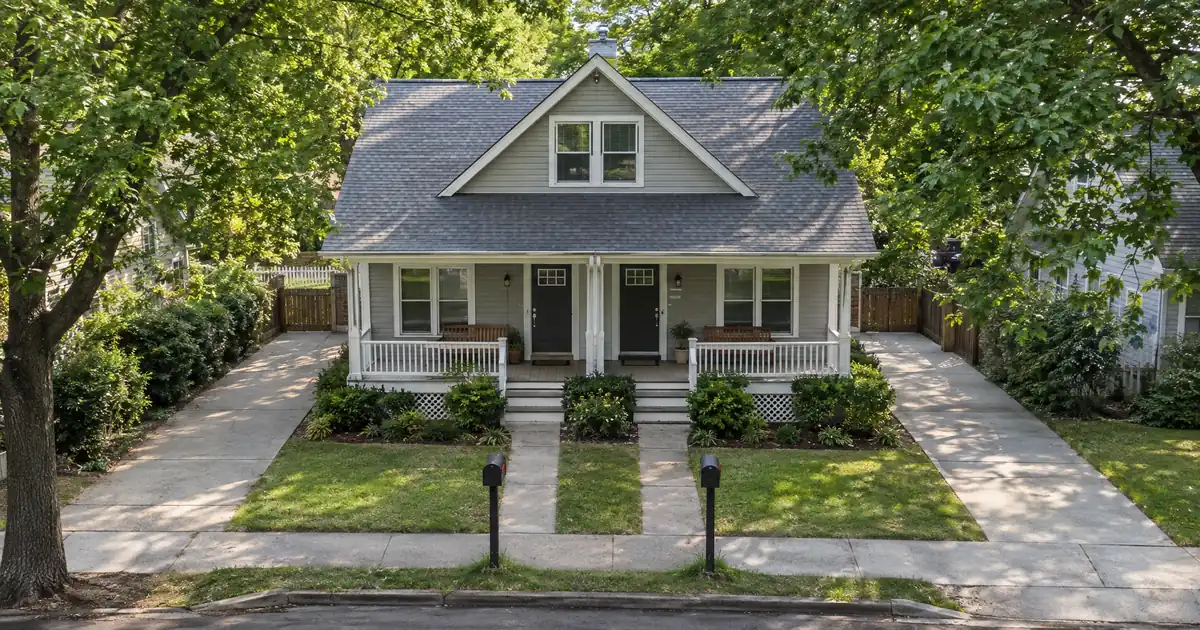
The Quick Read: The core rule is a move-in deadline plus an intent to stay. At least one borrower must move into the home as a principal residence within 60 days of signing the security instrument, and must intend to live there for at least one year, per HUD’s FHA answer on owner-occupants. On a 2-4 unit, you live in one unit and may rent the others. That occupancy promise is what unlocks low-down-payment FHA financing on a small multifamily building.
Key Takeaways
- The clock is 60 days from signing the security instrument, and the intent is one year.
- HUD words the one-year piece as intent to occupy, which is different from a penalty-backed 12-month sentence.
- A 2-4 unit qualifies when you live in one unit. Rent from the other units can help you qualify, but only in reduced form.
- Three- and four-unit buildings face an extra test: the property’s own rent must carry the payment on paper.
- A non-occupying co-borrower cannot be used to reach maximum financing on a 2-4 unit.
What Does “Owner-Occupant” Mean to FHA?
An owner-occupant borrower lives in the home that secures the loan as a principal residence. HUD’s handbook glossary defines a principal residence as the place where the borrower keeps, or will keep, a permanent place of abode. That usually means the borrower lives there most of the calendar year. A person can have only one principal residence at a time.
FHA payment estimate
Starting assumptions reflect an example price and the FHA minimum investment. Replace them with your own figures.
Editable benchmark: 7.32% as of October 22, 2026 · Freddie Mac 30-year average via FRED®. A conventional market reference, not an FHA loan quote.
Illustrative starting assumptions: a $350,000 price, the FHA minimum investment as the down payment, a thirty-year term at the current Freddie Mac benchmark, and property taxes and insurance estimated at typical national rates. Every field is editable.
Illustrative estimate only — not a Loan Estimate, approval, quote, or commitment to lend. The rate field carries the weekly Freddie Mac thirty-year conventional benchmark, a market reference and not an FHA loan quote; your rate is set by the lender at lock. FHA mortgage insurance follows HUD’s published schedule for the term, leverage and loan size entered; taxes, insurance and dues are editable estimates; closing costs are not included; county loan limits are not checked here. Licensed in sixteen states for consumer mortgages. Lendmire is not affiliated with or acting on behalf of FHA, HUD, or the federal government.
Why the strictness? FHA’s low down payment is built for people buying a home to live in. Across the wholesale programs Lendmire places FHA files with, purchase financing reaches 96.5% of the price, with a 3.5% minimum investment at a decision score of 580 or higher. Those terms only work for a principal residence of one to four units. Buy the same building as a pure rental and that program is off the table.
HUD’s FAQ points to Handbook 4000.1 for the rule, which lives on HUD’s handbook page. Lender guidelines and full file review still apply on top of it.
How the Timeline Works, Start to Finish
The occupancy clock does not start at contract, and it does not start at closing day on its own. It starts when you sign the security instrument. Here is the sequence a house hacker walks through:
1. Contract and appraisal. On a 2-4 unit, the appraiser documents fair market rent for the units. HUD Mortgagee Letter 2023-17 points to the small residential income property appraisal form for this. Confirm against the current handbook, since that letter has since been folded into it.
2. Signing. You sign the security instrument and the occupancy statement that comes with it. That is a legal statement of intent, so only sign it if you plan to move in.
3. Move-in window. You have 60 days from signing to occupy.
4. First year. You live there as your principal residence. Rent the other units.
5. The decision point. After the first year, your plans are your own. Stay, move out and rent, or buy your next place.
Plan for this window around your current lease and any tenants already in the building. The 60 days is generous only if the unit you are taking is ready. A tenant-in-place situation, or a unit that needs work, can eat the window fast, so sort out notice dates before you sign.
Which Unit Do You Live In, and What Can You Rent?
You can rent the other units. The unit you occupy is your home. Here is how it breaks down:
| Space | Can it be rented? | What to know |
|---|---|---|
| The other units | Yes | Rent is used in a reduced form for qualifying |
| The unit you live in | No | It is your principal residence |
| A room in your unit | Check with your lender | Roommates change how the file reads |
| Commercial space in the building | Not as income | HUD’s guidance excludes commercial income |
On roommates, a lender reads the file as you living there with a household. A paying roommate is not the same as renting out your unit. Talk through any short-term or room-rental plan with your loan officer before you sign, because it can change how the file reads.
Your own unit’s rent also does not offset your payment. A lender will not let you count what you would pay for your own unit as income.
How Rent Counts Toward Qualifying
Rent helps, but not dollar for dollar. For a 2-4 unit, the lender documents proposed rent from the appraisal, and uses a reduced share of it. Secondary sources describe a 25% reduction for vacancy and maintenance, so verify the exact treatment against Handbook 4000.1. Rental income is not a direct offset to the payment.
Practically, that means you still qualify on your own income, credit and cash to close. The base ratio pair across the programs Lendmire works with is 31/43 (housing to total) with no compensating factors. Documented compensating factors can reach 40/50 at the top tier, and the automated finding governs most files. Rent is one input into that picture, not a replacement for your salary.
The Extra Hurdle on 3-4 Units
Duplexes avoid the self-sufficiency test. Three- and four-unit buildings do not. The idea: the building’s net rental income must cover the full payment on its own, whatever your salary.
From the handbook language quoted in lender worksheets, the test counts fair market rent from all units, including the one you occupy. The lender then subtracts the greater of the appraiser’s vacancy-and-maintenance estimate or 25%. The payment divided by that net figure cannot exceed 100%. If it does, the loan amount has to come down. Confirm the exact formula in Handbook 4000.1.
This is why some 3-4 unit listings fail even for strong borrowers. A well-paid buyer cannot rescue a building whose rents do not carry it. On a rehab, the test reportedly uses current rents, not the rents you hope to charge after renovation.
Reserves tighten too. A 2023 HUD mortgagee letter calls for three months of PITI in reserves after closing on three- to four-unit properties. An archived HUD reference says those reserves cannot come from a gift. Plan for cash beyond the down payment.
If you are comparing FHA against other ways to buy a small multifamily, Lendmire’s FHA vs bank statement vs DSCR for a 2-4 unit house-hack covers that tradeoff. For the owner-occupied path itself, Lendmire’s FHA loan programs page lays out the program.
Co-Borrowers: Who Has to Live There?
At least one borrower must occupy. A second borrower who lives elsewhere is a non-occupying co-borrower. That can help with income, but it will not stretch your leverage on a small multifamily.
HUD’s archived reference guide limits non-occupying co-borrower loans above 75% LTV to one-unit properties. In plain terms, a parent cannot co-sign a fourplex to get you to maximum financing. Handbook language quoted by industry sources says the same. The self-sufficiency test on 3-4 units also applies regardless of who occupies. Leverage, reserves, and pricing vary by lender and program; the final terms follow the full file review.
The program Lendmire arranges does allow a non-occupant co-borrower on an owner-occupied file, but the leverage limit above still governs 2-4 units. If you were counting on a co-signer, ask early.
Where the Rule Bends: Edge Cases
Active-duty military. A borrower who cannot physically live in the home because of active duty can still be treated as an owner-occupant. This applies if a family member will occupy it as their principal residence, or if the borrower intends to occupy it on discharge. The lender asks for orders showing a duty station more than 100 miles away. The wording comes from secondary sources quoting the handbook, so confirm it there.
Relocating for work. FHA generally allows one FHA-insured mortgage on a principal residence at a time. Exceptions include relocating for employment to a home more than 100 miles away, a growing family, vacating a jointly owned home, and non-occupying co-borrower status. HUD’s archived guide contains the original wording, and the current handbook controls.
Moving out and renting. If rental income comes from a home you are vacating, a 2023 HUD mortgagee letter says you must be relocating more than 100 miles away. The lender also wants a lease of at least a year and evidence of the deposit or first month’s rent.
ADUs. A one-unit house with an accessory dwelling unit generally stays a one-unit property. ADU rent counted as effective income is capped at 30% of total monthly effective income, and it cannot be used on cash-out refinances. That is different from a true 2-4 unit house hack.
Cash-out later. The FHA cash-out reaches 80% LTV on a home owned and occupied for 12 months before the case number. Lendmire’s piece on whether a 2-4 unit primary home with a high DTI can get an FHA cash-out goes deeper. Terms vary by lender guidelines, property type, leverage, credit profile, and full file review.
If Your Plans Change
Life shifts. A job transfer in month eight is a different conversation from a plan that never included moving in. The first is a change in circumstances. The second is misrepresentation.
Picture three cases:
- Job transfer. You move within the first year because an employer relocates you. Talk to your servicer, document the reason, and keep the move-out paperwork. A real change in circumstances reads very differently from a plan that never existed.
- Household grows. The family needs a bigger home. The increase-in-family-size exception exists for exactly this, but a second FHA loan is limited to the narrow exceptions above.
- Delayed move-in. The unit needs repairs. Sixty days is the window, so plan renovation and tenant notices before you sign, not after.
The warning on misrepresentation is simple. Signing an occupancy statement you do not intend to honor can put the loan at risk, and it can cause problems with a later refinance. Do not do it.
What Proves You Live There?
Lenders and investigators look for ordinary evidence of life at the address. A practical self-audit:
- Your ID and voter registration show the property address.
- Mail, bank statements and utility bills come to the unit.
- Homeowners insurance lists you as the occupant.
- Your previous lease ended, with dates that line up with the move-in window.
- Your daily life, such as work commute and car registration, points to the property.
Keep copies. If a question comes up later, you want a clean paper trail.
After the First Year
The one-year intent satisfied, you have choices. Stay and keep collecting rent. Move out and rent every unit, bearing in mind the one-mortgage-at-a-time rule when you buy your next home. Or refinance. The FHA rate-and-term with an appraisal reaches 97.75% on a principal residence occupied for the previous twelve months. The FHA Streamline refinances an existing FHA loan with no appraisal, a limited credit review and a net tangible benefit, and the premium continues.
Key Terms Defined
Principal residence. The place where you keep your permanent home and spend most of the year.
Security instrument. The mortgage or deed of trust you sign at closing, which starts the 60-day clock.
Self-sufficiency test. The check on 3-4 unit buildings that the property’s net rent can carry the full payment.
Non-occupying co-borrower. A person on the loan who does not live in the home.
Fair market rent. The rent the appraiser estimates each unit would bring.
PITI. Principal, interest, taxes and insurance, the full monthly housing payment.
Common Mistakes
- Reading “one year” as a hard 12-month requirement. HUD’s wording is intent to occupy.
- Counting the whole rent as income. A reduction applies.
- Assuming the self-sufficiency test applies to duplexes. It is described as a 3-4 unit test.
- Using a co-signer to reach maximum leverage on a fourplex.
- Skipping reserves planning on 3-4 units.
- Buying a second FHA house hack while keeping the first, outside the narrow exceptions.
If you are buying a home and want to see whether an FHA loan fits your file, Lendmire can help you compare the options and what each one asks of the file. Every program figure here is subject to lender guidelines and full file review, and nothing here is a commitment to lend.
Frequently Asked Questions
How soon do I have to move in?
Within 60 days of signing the security instrument. HUD counts from signing, not from contract. If the unit you plan to take has a tenant or needs work, line up notice dates before you sign.
Do I really have to live there for a full year?
HUD’s rule is that you intend to occupy for at least one year. That is an intent standard rather than a penalty clock. Even so, signing the statement with no plan to stay is misrepresentation, so treat the year as the plan.
Can I rent the other units right away?
Yes. That is the point of a house hack. The lender uses a reduced share of the appraiser’s fair market rent for qualifying, and the rent does not directly offset your payment.
Can a parent co-sign to get me maximum financing on a fourplex?
No. Non-occupying co-borrower loans above 75% LTV are limited to one-unit properties, so a co-signer will not stretch leverage on a 2-4 unit. Exact terms depend on the lender’s guidelines, property type, leverage, and a full review of the borrower’s file.
Can I buy another FHA house hack while keeping this one?
Generally only in narrow cases, such as relocating more than 100 miles for work, a growing family, vacating a jointly owned home, or non-occupying co-borrower status. Check current Handbook 4000.1 wording with your loan officer.
For your own numbers, request a scenario review with Lendmire.
About Lendmire
Lendmire, NMLS# 2371349, is a mortgage brokerage with consumer lending licenses in 16 states. FHA, VA, conventional and jumbo purchase and refinance loans are arranged through wholesale lending partners, and each application is reviewed individually by the lender. Scotsman Guide named Lendmire a Top Mortgage Workplace in both 2025 and 2026.
Get Started
Ready to find the right loan for you?
In about 30 seconds you can review financing options available for your home or investment property. No commitment required.
Informational only. Not a Loan Estimate, approval, or commitment to lend. Program availability and eligibility are subject to lender guidelines, credit approval, property review, and underwriting.
References
1. HUD FHA Answers: How does FHA define owner occupant
2. HUD Handbook 4000.1 Glossary
4. HUD Mortgagee Letter 2023-17
5. HUD Archives HOC Reference Guide, Page 2-03
This article is part of Lendmire’s FHA loan program — full qualification details, guidelines, and scenarios live on the program page.
Related reading: How to Document Occupancy as an Heir for an FHA Cash-Out · FHA Cash-Out Requirements for a Condo Building in Litigation · FHA Cash-Out Refinance Requirements on a Paid-Off Home
Brandon Miller
Founder & CEO, Mortgage Loan Originator, Lendmire LLC
- Mortgage Loan Originator · NMLS# 1129696 · Verify on NMLS Consumer Access
- North Carolina Real Estate Broker · License# 343312 · Verify on NCREC
- North Carolina Insurance Producer · License# 19053198 · Property, Casualty, Life, Health · Verify on NAIC SBS
- Lendmire LLC · Firm NMLS# 2371349 · Verify firm licensure
Disclosures. The information presented in this article is general market commentary, not financial, legal, or tax advice. Lendmire is a mortgage brokerage (NMLS# 2371349) — not a direct lender or depository institution — and loan placement is subject to lender underwriting. Nothing in this content represents a commitment to lend. Loan terms, pricing, and program availability vary based on borrower qualifications, property characteristics, and state of subject property, and are subject to change at any time. Lendmire complies with Equal Housing Opportunity requirements. Consumer access: nmlsconsumeraccess.org.