
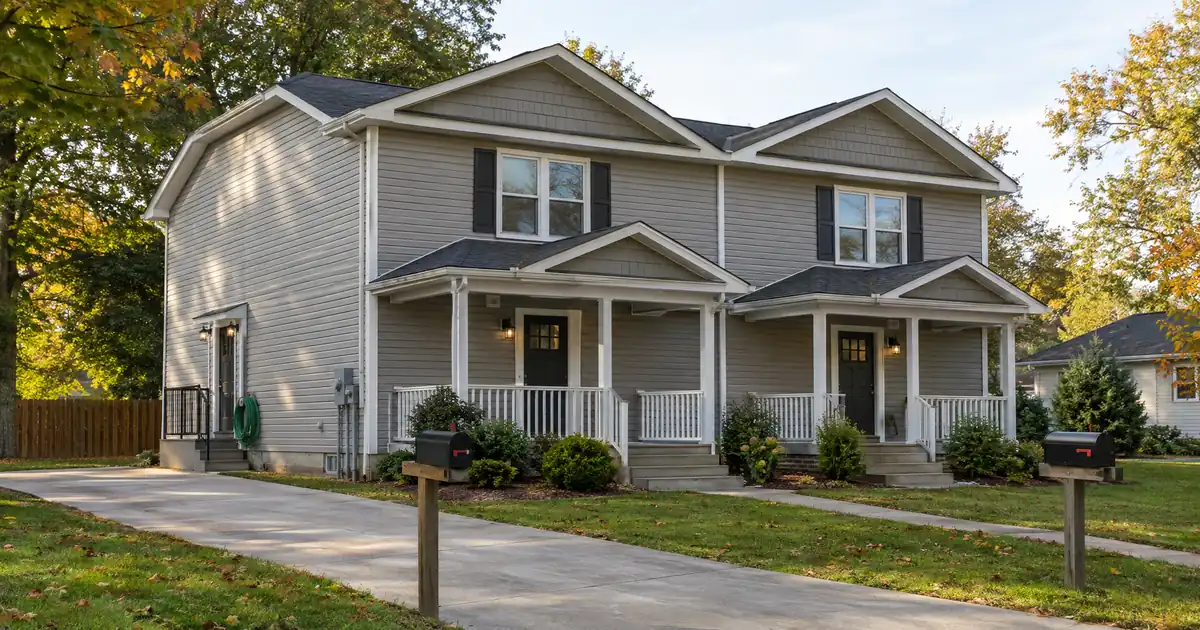
The Quick Read: You must live in one unit of the building as your main home, and you can rent out the others. Reserves come into play mainly when you want the rent from those other units to count toward your qualifying income. A VA purchase can still mean 100% financing with no mortgage insurance, but “no down payment” does not mean “no cash.”
Key Takeaways
- The VA does not finance a fourplex as a pure investment.
- The usual move-in window is about 60 days after closing. Exceptions exist, but they need a specific date and a specific reason.
- Rent from the other units is not free qualifying income. The lender typically discounts it, and VA guidance ties it to landlord capability and reserves.
- Reserves have to be your own seasoned funds. Gifts, home equity, and cash-out proceeds do not count.
- Three- and four-unit reserve treatment varies by lender. Confirm it before you write an offer.
What Does “Occupancy” Mean on a VA Loan?
Occupancy means the home is your place of residence. On a VA purchase, you sign a certification that you intend to live there as your principal residence. That is the whole concept, and it is the reason a vacation home, a second home, or a straight rental purchase does not fit the program.
VA payment estimate
Starting assumptions reflect an example price with no down payment and a first-use funding fee. Replace them with your own figures.
Editable benchmark: 7.32% as of October 22, 2026 · Freddie Mac 30-year average via FRED®. A conventional market reference, not a VA loan quote.
Illustrative starting assumptions: a $350,000 price, no down payment with full entitlement, a first-use funding fee financed into the loan, a thirty-year term at the current Freddie Mac benchmark, and property taxes and insurance estimated at typical national rates. Every field is editable.
Illustrative estimate only — not a Loan Estimate, approval, quote, or commitment to lend. The rate field carries the weekly Freddie Mac thirty-year conventional benchmark, a market reference and not a VA loan quote; your rate is set by the lender at lock. The funding fee follows VA’s published table for the use and down payment entered; the residual-income figure is VA’s guideline for the region and family size, and the rough residual shown subtracts only the housing payment and the debts entered, while VA also deducts taxes, maintenance and utilities. Taxes, insurance and dues are editable estimates; closing costs are not included. Licensed in sixteen states for consumer mortgages. Lendmire is not affiliated with or acting on behalf of the Department of Veterans Affairs.
Intent matters, and so does follow-through. VA training material describes the general standard as moving in within 60 days of closing. The same material says weekend living can satisfy occupancy under VA’s intermittent-occupancy rules, and an unmarried active-duty borrower generally gets up to 12 months. You can read the details in VA’s occupancy training deck. It is older training material, so a lender will apply the current handbook language to your file.
Here is a point that trips people up. The 60 days is not a statute. It is VA’s yardstick for a “reasonable time,” and exceptions are built in. Treat it as the planning default, not a legal cliff.
Across the VA files Lendmire arranges through wholesale lenders, the occupancy question is rarely about the law. It is about whether the plan on paper matches real life. A buyer with a believable move-in date and one named unit usually has a clean file on this point. A buyer whose story shifts between the application and the closing table does not.
If you are just starting to compare options, Lendmire’s VA loan programs page lays out the basic structure: 100% financing, no mortgage insurance, and residual income as the controlling underwriting test.
How Does a 2-4 Unit Differ From a Single-Family Purchase?
The occupancy promise is the same, but the details around it change. In a single-family home, you live in the only unit. In a small multi-unit building, you live in one unit and the building has other units that someone else may live in.
| Factor | Single-family | 2-4 unit |
|---|---|---|
| Occupancy promise | Live in the home | Live in one unit |
| Rent from others | Not applicable | Counts only under conditions |
| Reserves | Rarely a focus | Tied to using rent |
| Property review | One unit | Every unit, vacant ones too |
| Renting the building | Not allowed as a plan | Other units only |
One more point sits underneath that table. The dwelling has to qualify as a building designed mainly as a home with no more than four family units. The federal VA loan regulation adds one extra unit for each additional eligible veteran who co-owns. That reads as a technical footnote, but two eligible veterans buying together can change what is allowed. The same definition limits a condo project to one single-family unit, so a unit inside a condo building is not treated like a whole multi-unit dwelling.
Which Unit Do You Live In?
You pick the unit, and it has to be a real home for you. The practical test is simple: could a reasonable reviewer believe you live there?
Buyers often ask whether they can choose the unit that rents for the least, and whether they can move between units later. Moving between units is a gray area that depends on the lender and the facts. Choosing the cheaper unit to live in is common, since it leaves the higher-rent units producing income. Just make sure the unit you name on the paperwork is the one you actually move into.
A vacant unit at closing is not a problem on its own. The appraiser and the property review still look at every unit, including empty ones. A unit that fails the property standards can hold up the whole building, so a vacant unit with a broken heating system is a bigger issue than an empty one in good shape.
Who Can Satisfy Occupancy, and When Can Move-In Slip?
The borrower is the default occupant. Spouse and dependent occupancy can satisfy the requirement in specific situations, such as active-duty service. A lender will ask for documentation, and the details depend on the lender’s reading of the current handbook. Do not assume a family member living in the building covers you without asking.
If you cannot move in within the usual window, the exception is narrow. In the files Lendmire sees, lenders generally want two things in writing. One is a specific move-in date. The other is a specific event that makes that date possible, such as a posted transfer, a finished repair, or a construction completion. A date more than about 12 months out is generally not treated as reasonable. Common triggers for a delayed move-in include:
- Deployment or a permanent change of station
- Repairs or renovation that have to finish before the unit is livable
- New construction that is not complete at closing
- An imminent retirement or separation date
Delayed occupancy gets harder in a multi-unit building because the other units may already be rented. That does not break the rule, but it puts more weight on your documentation. Keep orders, repair contracts, and any written timeline in the file.
How Is the Loan Underwritten, Step by Step?
The underwriting path for a 2-4 unit is the same as any VA loan, with extra checks around rent. Here is the order of events.
1. Certificate of Eligibility (COE). The lender orders it from VA. It shows your entitlement and whether you owe a funding fee.
2. Occupancy certification. You certify that you will live in one unit as your principal residence.
3. Appraisal. The appraiser values the property, checks the minimum property standards for every unit, and gives an opinion of market rent.
4. Income analysis. The lender decides whether rent will count at all. If you cannot show landlord capability and reserves, prospective rent does not count.
5. Rent credit. Where rent counts, lenders often credit about 75% of the lease or of the appraiser’s market rent. Treat that as lender practice, not a VA number.
6. Landlord capability. You show prior rental or property-management experience, or you plan to hire a management company.
7. Reserves. The lender verifies seasoned funds in your own name, separate from the money you need to close.
8. Overall decision. Credit, debt-to-income (DTI), and residual income all get reviewed.
On the last step, VA sets no minimum credit score. The wholesale programs Lendmire places VA loans with start at a 580 decision score, subject to lender guidelines. Residual income is the controlling test. That is the money left each month after your debts and living costs, measured against a VA table. The 41% DTI figure is a guideline, not a hard cap, but a ratio above it needs residual income well above the table.
When Do Reserves Apply on a 2-4 Unit?
Reserves are cash or liquid assets left over after closing. On this kind of purchase they are tied to how you qualify, so the first question is whether you need the rent to qualify.
| Your situation | What the lender looks at |
|---|---|
| You qualify without rent | Often no special rent test |
| You use rent from other units | Landlord capability plus reserves |
| You own other rentals | Separate reserves for those properties |
If you do use rent, VA’s lender handbook ties it to two conditions: a reasonable likelihood you will succeed as a landlord, and cash reserves. The figure lenders commonly apply is six months of the full housing payment (principal, interest, taxes, and insurance). The handbook text says the reserves must be your own funds. Equity in the property does not count, and neither do gifts or the cash proceeds of a VA cash-out refinance.
The separate rule for rentals you already own is different. VA Pamphlet 26-7, Chapter 4 calls for three months of payment reserves on those properties, along with two years of traditional personal-income documentation showing the rent. Do not mix the two tests up. They apply to different properties.
Here is the honest caveat. Treatment of three- and four-unit buildings is not uniform across lenders. Some apply a reserve requirement even when rent is not used. Others apply none unless rent is counted. The six-month test is tied to using rent, but how a given lender handles a fourplex when you do not use rent can differ. Confirm the lender’s rule and the current handbook language before you commit to a property. Exact terms depend on the lender’s guidelines, property type, leverage, and a full review of the borrower’s file.
On cash to close, the VA funding fee also matters. It is reviewable and runs from 1.25% to 3.3% depending on whether it is your first use of the benefit and how much you put down. It is waived for veterans receiving compensation for a service-connected disability and the other exempt groups. Reserves are separate from both the funding fee and your closing costs.
What Do Reserves Look Like in a Real Purchase?
Think in months of payment, not dollars. Two hypothetical buyers show how the pieces fit together.
Duplex, rent not needed. Say you buy a duplex with 100% financing and your income alone clears the DTI and residual income tests. You live in one side. The other side gets rented, but the lender does not count that rent. The rent is a cushion, not a qualifier. You still plan your own reserves, and the lender may apply its own overlay.
Fourplex, rent needed. Now say you buy a fourplex and your income alone is not enough. You need part of the rent from the three other units to qualify. The lender counts a discounted share of the appraiser’s market rent. You document landlord experience or sign with a management company. You show about six months of the full housing payment in your own seasoned funds, on top of the money needed to close. If a gift or a refinance check was going to be your reserve plan, that plan fails.
Stress test. Run one more number before you make an offer. Remove the rent from your largest unit and see whether you can still carry the full payment. Vacancy and repairs erode rent that qualified you on paper. The loan decision looks at the file at closing, but your budget has to survive month after month.
Where Does the General Rule Break?
A few edge cases are worth knowing before you shop.
- Two eligible veterans buying together. The dwelling definition adds one unit per additional participating veteran, which can change the unit count.
- Active duty and spouse occupancy. An unmarried active-duty borrower generally has up to 12 months, and spouse occupancy can work in specified cases. Get the lender’s reading in writing.
- Cash-out refinance of a 2-4 unit. You certify current or intended occupancy, and the cash proceeds cannot be counted as reserves. Lendmire’s piece VA Cash-Out Rental Income and Reserve Rules on a 2-4 Unit Primary Home covers that side in more detail.
- Mixed-use buildings. Some commercial space is allowed with limits, but the limit is lender-specific in practice, so ask early.
- Streamline refinance of an existing VA loan (IRRRL). This refinances an existing VA loan with no VA appraisal and carries a funding fee unless exempt. It usually needs only a certification of prior occupancy, but ask the lender how it handles that on your file.
- Renting after the first stretch. VA guidance does not set a clear minimum stay before converting to a rental. Lender overlays and occupancy-fraud concerns make timing important, and some lenders and associations expect a longer period.
What If Your Plans Change?
Tell the lender when your plans change, and tell them before closing. Lenders verify occupancy through the file, and a false certification can carry serious consequences. If your real plan is to rent all four units, a VA loan is the wrong tool.
A plan change after closing is different. A job transfer or deployment can be a valid reason to leave, and the lender or VA can help you sort out what that means. The line to watch is between the permitted multi-unit model, where you live in one unit and rent the rest, and a conversion to a full rental after you move out. That second path is not what you certified, so talk to the lender before you act on it.
A simple timeline helps. Occupancy is promised at application. The move-in window runs from closing. Your first lease on the other units usually starts around the same period. Questions about renting your own unit come later, and the answer depends on the lender, the facts, and any association rules.
What Should You Gather Before You Apply?
Pull these together early, because gaps show up late otherwise:
- Your certificate of eligibility, or the information needed to order it
- Proof of seasoned funds in your own name for reserves
- A written record of prior landlord or property-management experience, or a management company agreement
- Existing leases on the building, if any
- Orders, repair contracts, or a written timeline if you expect a delayed move-in
- A note on which unit you plan to occupy
Lendmire’s related piece VA Cash-Out Occupancy Rules for a 2-4 Unit Primary Home covers the cash-out version of the same occupancy question.
Key Terms Defined
Occupancy certification: A signed statement that you intend to live in the home as your principal residence.
Reserves: Your own liquid funds left after closing, kept as a cushion against payment shortfalls.
PITI: Principal, interest, taxes, and insurance, the four parts of the full monthly housing payment.
Residual income: The money left each month after debts and living costs, measured against a VA table.
Entitlement: The amount of VA benefit you can use. Full entitlement allows 100% financing with no VA loan limit, while remaining entitlement may require a down payment, so speak with a loan officer.
Funding fee: A one-time VA charge that can be financed into the loan and is waived for exempt veterans.
Frequently Asked Questions
Can I buy a fourplex with a VA loan?
Yes, if you live in one unit as your principal residence. The building can have up to four units, and the other units can be rented. Property standards apply to every unit, and the lender decides how it treats rent and reserves, subject to lender guidelines and full file review.
Do I need reserves on a 2-4 unit?
It depends on how you qualify. If you use rent from the other units, expect a reserve and landlord-capability test, commonly six months of the full housing payment. Treatment of three- and four-unit buildings varies by lender, so ask before you make an offer.
Can my spouse satisfy the occupancy requirement?
Sometimes. Spouse occupancy can work in specified situations, such as active-duty service, and the lender will want documentation. Do not rely on it without getting the lender’s reading of the current handbook.
What if one unit is vacant at closing?
A vacant unit is allowed, but it still has to meet VA property standards. The bigger question is whether you are counting rent from it. If you are not, the vacancy matters less to the loan, though it matters to your budget.
Can I rent out my own unit later?
Possibly, but not as a plan from the start. VA guidance does not set a clear minimum stay, yet lender overlays and occupancy-fraud concerns make timing important. Talk to the lender before you convert any unit you occupy.
Your Next Step
If you are buying a home and want to see whether a VA loan fits your file, Lendmire can help you compare the options and what each one asks of the file. Bring your plan for which unit you will occupy, your reserve picture, and your landlord experience. Those three items decide most 2-4 unit VA files. Everything here is subject to lender guidelines and full file review, and nothing is a commitment to lend.
For your own numbers, request a scenario review with Lendmire.
About Lendmire
As a mortgage broker (NMLS# 2371349), Lendmire helps homeowners and home buyers in 16 states with FHA, VA, conventional and jumbo purchase and refinance loans arranged through wholesale lenders. Lendmire is never the lender; program terms are set by the lender and the agency guidelines. Scotsman Guide named Lendmire a Top Mortgage Workplace in both 2025 and 2026.
Get Started
Ready to find the right loan for you?
In about 30 seconds you can review financing options available for your home or investment property. No commitment required.
Informational only. Not a Loan Estimate, approval, or commitment to lend. Program availability and eligibility are subject to lender guidelines, credit approval, property review, and underwriting.
References
1. VA training deck: Occupancy, POA, Title
2. eCFR, 38 CFR 36.4301 (VA dwelling definition)
3. VA Pamphlet 26-7, Chapter 4
This article is part of Lendmire’s VA loan program — full qualification details, guidelines, and scenarios live on the program page.
Related reading: Can You Remodel With a VA Cash-Out on an Existing VA Loan? · How to Certify VA Cash-Out Occupancy Before a PCS Move · VA Cash-Out Rules for a 2-4 Unit Primary Home Replacing a Non-VA Loan
Brandon Miller
Founder & CEO, Mortgage Loan Originator, Lendmire LLC
- Mortgage Loan Originator · NMLS# 1129696 · Verify on NMLS Consumer Access
- North Carolina Real Estate Broker · License# 343312 · Verify on NCREC
- North Carolina Insurance Producer · License# 19053198 · Property, Casualty, Life, Health · Verify on NAIC SBS
- Lendmire LLC · Firm NMLS# 2371349 · Verify firm licensure
Compliance and disclosures. Lendmire (NMLS# 2371349) is a licensed mortgage broker and is not a direct lender, depository institution, financial advisor, or tax professional. Content in this article is general market analysis and educational information — not financial, legal, or tax advice for any specific situation. Lendmire does not guarantee loan approval; every transaction is subject to underwriting by the funding lender. Mortgage pricing and loan program guidelines are subject to change at any time without notice and vary by borrower characteristics, property type, and state regulations. Lendmire complies with Equal Housing Opportunity. Licensure verification: NMLS Consumer Access.