
The Quick Read: Usually yes, if cash is tight and you plan to live in one of the units. The loan allows up to 96.5% financing with 3.5% down at a 580 decision score. That is hard to match on a multi-unit purchase. It is worth less if you have strong credit and a large down payment, and it gets harder on three- and four-unit buildings. Everything here is subject to lender guidelines and full file review.
Who Should Pick FHA for a House Hack?
FHA tends to win when cash to close is the limiting factor. It loses ground when you have deep savings, top-tier credit, or a property that can’t pass the extra tests on larger buildings. Here is how the common buyer profiles sort out.
FHA payment estimate
Starting assumptions reflect an example price and the FHA minimum investment. Replace them with your own figures.
Editable benchmark: 7.32% as of October 22, 2026 · Freddie Mac 30-year average via FRED®. A conventional market reference, not an FHA loan quote.
Illustrative starting assumptions: a $350,000 price, the FHA minimum investment as the down payment, a thirty-year term at the current Freddie Mac benchmark, and property taxes and insurance estimated at typical national rates. Every field is editable.
Illustrative estimate only — not a Loan Estimate, approval, quote, or commitment to lend. The rate field carries the weekly Freddie Mac thirty-year conventional benchmark, a market reference and not an FHA loan quote; your rate is set by the lender at lock. FHA mortgage insurance follows HUD’s published schedule for the term, leverage and loan size entered; taxes, insurance and dues are editable estimates; closing costs are not included; county loan limits are not checked here. Licensed in sixteen states for consumer mortgages. Lendmire is not affiliated with or acting on behalf of FHA, HUD, or the federal government.
| Your situation | FHA fit | Why |
|---|---|---|
| Limited cash, wants a duplex | Strong | Low minimum investment |
| Credit is fair, not perfect | Strong | Flexible score and ratios |
| Strong credit, large down payment | Mixed | Conventional can compete |
| Targeting a triplex or fourplex | Harder | Extra rent test and reserves |
| Plans to stay under a few years | Mixed | Insurance cost never fully pays back |
| Property needs heavy repairs | Depends | Appraisal standards apply |
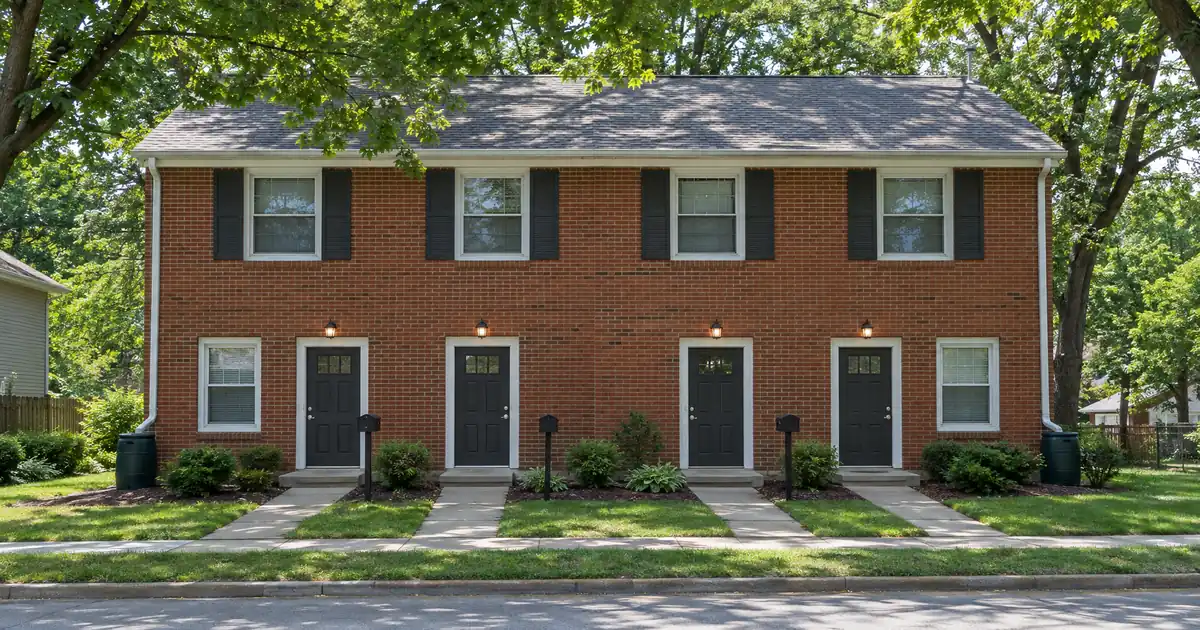
House hacking means you buy a small multi-unit building, live in one unit, and let tenants in the others help pay the mortgage. FHA is a government-insured loan that lenders offer to owner-occupants, and it is the usual starting point for that strategy.
Why FHA Fits a House Hack in the First Place
The pull is the small check at closing. On the wholesale programs Lendmire places FHA files with, the maximum financing is 96.5% of the lesser of price or appraised value. The minimum investment is 3.5%, and the program starts at a 580 decision score. A decision score is the credit score the lender uses to underwrite the file, not necessarily the one on a free app.
You can also use more than your own savings. Seller or interested-party contributions are allowed up to 6% of the price. A non-occupant co-borrower is allowed too, such as a parent who helps you qualify. That person doesn’t live in the home, but the file still needs you to occupy it.
The debt ratios are flexible. The base pair is 31/43. That means housing costs of up to 31% of income and total debts of up to 43%. With documented compensating factors, the ratios can reach 40/50 at the top tier. Compensating factors are strengths like savings or a steady job history. For most files, the automated underwriting finding decides.
Because a house hack is still a home purchase, you can learn how these mechanics work in Lendmire’s overview of FHA loan programs.
What the Mortgage Insurance Really Costs You
Mortgage insurance is the price of FHA’s flexibility. It comes in two parts. The upfront premium is 1.75% of the base loan, and most buyers finance it into the balance. The annual premium falls between 0.15% and 0.75% of the balance. Where you land depends on term, loan amount and LTV (loan-to-value, the loan as a share of the home’s value).
Duration matters as much as the amount. On a thirty-year loan above 90% LTV, the annual premium lasts for the full term. At or below 90% LTV, it ends after eleven years. Final terms depend on the lender’s guidelines, the property type, and the borrower’s complete credit picture.
Here is the catch for house hackers. FHA insurance does not cancel when you reach 20% equity, the way conventional private mortgage insurance often can. If you put down the minimum, you pay it for the life of the loan unless you refinance out of it. A refinance has its own costs and depends on future value and credit, so plan for it as an option, not a promise.
Think of it as renting low cash-to-close. You pay for it monthly. If the building’s rent offsets that cost, the trade can be a good one.
Duplex, Triplex, Fourplex: Where the Rules Change
A duplex is the simplest FHA house hack. Once you reach three or four units, the file picks up extra requirements.
Start with occupancy, which applies to every size. HUD’s FHA answer page on owner-occupants says at least one borrower must move into the home within 60 days of signing the security instrument. That borrower must also intend to stay at least one year. FHA’s single-family program covers one to four units. A five-unit building falls outside it.
Loan limits also scale with unit count. HUD’s announcement of the current loan limits shows a floor and a ceiling for each unit count, and the limit rises as units are added. County loan limits apply, so check your county on HUD’s lookup tool before you shop for price. In many counties the floor is the cap, and it can limit what you can buy.
On three- and four-unit properties, the lender also runs a property-level rent test. It requires you to hold cash reserves after closing. The next section explains how that works. This is a big reason a duplex is often easier to finance than a fourplex.
An accessory dwelling unit, or ADU, counts toward unit count under these rules. Two units plus an ADU can turn a duplex into a three-unit file for test purposes. Ask your lender how an ADU in your target property would be treated before you write an offer.
How the Rent Gets Counted
This is where buyers get confused, because two separate rent calculations exist.
Qualifying income. On a two- to four-unit home, HUD’s Mortgagee Letter 2023-17 allows rent from the subject property to count as effective income. The lender needs support for that rent. If the building has no rental history under you, the appraiser’s fair-market-rent opinion on the small residential income appraisal form usually supplies it. Existing leases may help document rent for current tenants. In practice, the rent from the unit you occupy generally doesn’t help you qualify.
The self-sufficiency test (three and four units only). Here the lender takes the appraiser’s fair market rent for all units, including yours. It subtracts a vacancy and maintenance reduction. That reduction is either the appraiser’s estimate or a fixed minimum, whichever is greater. The remaining rent must cover the full payment, including principal, interest, taxes, insurance and mortgage insurance.
Two things follow from this:
- The appraiser can make the bar harder by estimating higher vacancy.
- A building that passes only barely on paper often leaves no cash flow in real life.
Higher price, taxes, insurance or HOA dues all push against the test. A triplex or fourplex that looked fine at a lower price can fail at the asking price. The lender also verifies reserves after closing for these larger buildings. That is money you must still hold on top of your down payment.
For three- and four-unit buildings, the file also needs a signed borrower’s contract on hotel and transient use. This confirms you won’t run the units as short-term rentals.
FHA vs. Conventional on a Small Multi-Unit
Conventional financing on an owner-occupied 2–4 unit can be a real alternative. Fannie Mae’s eligibility matrix shows that owner-occupied purchases of two to four units can be financed with a smaller down payment than many buyers expect. Lender overlays and automated findings can tighten that, so the figure varies by lender and file. Compare current terms before you assume either route is out.
Conventional has its own rental-income wrinkle. Fannie Mae’s selling guide on rental income generally disallows using rent from the unit you occupy to qualify, with exceptions for boarder income and accessory units. FHA’s approach to subject-property rent on a multi-unit is often friendlier to buyers who need that income to qualify.
| Factor | FHA | Conventional owner-occupant |
|---|---|---|
| Minimum investment | 3.5% at 580 score | Varies by lender and file |
| Mortgage insurance | Upfront plus annual | Private insurance if low down |
| Insurance ends | Term or 11 years | Can cancel with equity |
| Credit flexibility | Wider | Tighter at low down payments |
| 3–4 unit rent test | Self-sufficiency test | Lender-specific rules |
| Property standards | HUD condition rules | Lender and appraisal rules |
The honest reading is a split decision. A buyer with strong credit and a bigger down payment often finds conventional cheaper over time. A buyer with a thin down payment or a lower score often finds FHA is the only route that works. This one is a genuine toss-up on a duplex for borrowers in the middle, so price both and compare the full Loan Estimates.
Appraisal and Property Condition
FHA appraisals apply HUD property standards. The appraiser looks at condition and safety, not just value. Peeling paint in an older building, a failing roof, missing handrails or a broken heating system can stall the file until repairs are made.
That matters on small multifamily, because older buildings are common. Many 2–4 unit properties are decades old. Check the seller’s willingness to repair, or plan a renovation loan. A 203(k) rehab loan is an FHA product that folds repair costs into the financing. It may carry different occupancy timing than the standard rule, so confirm the details with your lender.
The appraiser’s rent opinion also drives the file. If the opinion comes in low, your rent credit and the self-sufficiency test both suffer. Walk the property with your agent first and ask for actual rents and leases.
Two Scenarios Without the Dollar Signs
Scenario one: the optimistic duplex. Say you buy a duplex at 96.5% financing. The other unit’s rent covers a little under half of the full monthly payment. On paper, your net housing cost looks like a modest apartment. This is the version most house-hack content shows.
The same duplex, stress-tested. Now add vacancy between tenants, repairs, utilities you cover, and a reserve for big items like a roof. That rent covers noticeably less than it did on paper, and the mortgage insurance is still part of the bill. You may still come out ahead of renting. You just need to budget from the stress-tested number, not the optimistic one.
Scenario two: the fourplex. The self-sufficiency test now applies. Net rent on all four units, after the vacancy reduction, must cover the full payment. If the price runs near the county limit and taxes are high, the building can fail. If it passes, you still need post-closing reserves. Buyers who skip this math often learn about it late, after they’ve fallen for a building.
What Happens After the First Year
The occupancy commitment is one year. After that, many owners move out and keep the building as a rental. A move like that changes your situation, so check with your lender before you buy about how a future purchase would be treated. An FHA loan is meant for your principal residence, so buying another home with FHA while you hold one usually isn’t possible.
If you stay and build equity, the exit tools matter. An FHA cash-out refinance reaches 80% LTV on a home you have owned and occupied for 12 months before the case number. An FHA Streamline refinances an existing FHA loan with no appraisal and a limited credit review. It needs a net tangible benefit, and the mortgage insurance premium continues. Each figure is subject to lender guidelines and a complete review of property type, leverage, and credit.
If you want the cash-out angle on a multi-unit primary home with a heavy debt load, Lendmire’s explainer Can a 2-4 Unit Primary Home With a High DTI Get an FHA Cash-Out? covers it in detail.
One warning. Occupancy is a verification item. Buying with FHA while planning to rent every unit from day one is misrepresentation, and the consequences are serious. If you aren’t moving in, FHA is the wrong loan.
When FHA Is Not Worth It for a House Hack
Skip it, or at least price the alternative hard, in these cases:
- You have strong credit and a sizable down payment. Conventional can cost less over a long hold, because its insurance can end.
- The building fails the three- or four-unit rent test. The self-sufficiency math is a property test. Better credit won’t fix it.
- The property needs major work. If the appraisal will flag condition items and the seller won’t repair, you may stall.
- You can’t hold the reserves. A triplex or fourplex file needs money left over after closing.
- You’re not moving in. FHA is for principal residences only.
- The price sits at the county limit and the building doesn’t fit under it. Check limits first.
Key Terms Defined
House hacking: Living in one unit of a small multi-unit building while rent from the others offsets your housing cost.
Decision score: The credit score the lender uses to underwrite your file.
LTV (loan-to-value): The loan amount as a percentage of the home’s value or price.
Mortgage insurance premium (MIP): FHA’s insurance charge, paid as an upfront amount and an annual amount.
Self-sufficiency test: A rent test for three- and four-unit FHA purchases, where net rent must cover the full payment.
Reserves: Cash you still hold after closing, apart from your down payment.
Compensating factors: Documented strengths, like savings, that let a file go past the base debt ratios.
Frequently Asked Questions
Can only first-time buyers use an FHA loan?
No. FHA isn’t limited to first-time buyers. The requirement is that you occupy the home as your principal residence. Buyers who have owned before can qualify, subject to lender guidelines and the full file review.
Does rental income count toward qualifying on a duplex?
Yes, in many cases. Rent from the subject property can count as effective income on a two- to four-unit dwelling, supported by documents like an appraisal rent opinion or leases. Rent from the unit you occupy generally doesn’t help you qualify. The exact treatment depends on the lender and the file.
How long does FHA mortgage insurance last?
It depends on your down payment. On a thirty-year loan above 90% LTV, the annual premium lasts for the term. The upfront premium is 1.75% of the base loan and is usually financed.
Can I use FHA on a fourplex?
Often, yes, if you occupy one unit and the building passes the extra tests. FHA covers one to four units. A fourplex needs to pass the self-sufficiency test, and you need reserves after closing. Larger buildings with five or more units are outside the program.
What if my credit score is below 580?
HUD allows lower scores with a bigger down payment. The wholesale programs Lendmire places FHA loans with start at 580. Some lenders set a higher floor than HUD, so options vary by lender. If you’re close, a plan to raise your score may help.
Is It Worth It? A Practical Next Step
Run two numbers before you decide: your stress-tested monthly cost on FHA and on conventional. Then add the cash you need at closing and the cash you must keep in reserve. If FHA is the only route that fits, it is probably worth it. If both fit, the long-hold cost usually favors conventional. If neither fits, the building or price is the problem.
If you are buying a home and want to see whether an FHA loan fits your file, Lendmire can help you compare the options and what each one asks of the file. Reach the team at 828-256-2183 or request a quote. Qualification is subject to lender guidelines, and nothing here is a commitment to lend.
About Lendmire
As a mortgage broker (NMLS# 2371349), Lendmire helps homeowners and home buyers in 16 states with FHA, VA, conventional and jumbo purchase and refinance loans arranged through wholesale lenders. Lendmire is never the lender; program terms are set by the lender and the agency guidelines. Scotsman Guide named Lendmire a Top Mortgage Workplace in both 2025 and 2026.
Get Started
Ready to find the right loan for you?
In about 30 seconds you can review financing options available for your home or investment property. No commitment required.
Informational only. Not a Loan Estimate, approval, or commitment to lend. Program availability and eligibility are subject to lender guidelines, credit approval, property review, and underwriting.
References
1. HUD FHA Answers: How does FHA define owner-occupant
2. HUD Press Release 25-145: FHA loan limits
3. HUD Mortgagee Letter 2023-17
4. Fannie Mae Eligibility Matrix
5. Fannie Mae Selling Guide: Rental Income
This article is part of Lendmire’s FHA loan program — full qualification details, guidelines, and scenarios live on the program page.
Related reading: Does a Late Payment on Your FHA Loan Block an FHA Cash-Out? · Can an FHA Cash-Out Fund a Renovation on a 2-4 Unit Primary Home? · Can a Homeowner With an FHA Loan Use an FHA Cash-Out for Any Purpose?
Brandon Miller
Founder & CEO, Mortgage Loan Originator, Lendmire LLC
- Mortgage Loan Originator · NMLS# 1129696 · Verify on NMLS Consumer Access
- North Carolina Real Estate Broker · License# 343312 · Verify on NCREC
- North Carolina Insurance Producer · License# 19053198 · Property, Casualty, Life, Health · Verify on NAIC SBS
- Lendmire LLC · Firm NMLS# 2371349 · Verify firm licensure
Disclosures. The information presented in this article is general market commentary, not financial, legal, or tax advice. Lendmire is a mortgage brokerage (NMLS# 2371349) — not a direct lender or depository institution — and loan placement is subject to lender underwriting. Nothing in this content represents a commitment to lend. Loan terms, pricing, and program availability vary based on borrower qualifications, property characteristics, and state of subject property, and are subject to change at any time. Lendmire complies with Equal Housing Opportunity requirements. Consumer access: nmlsconsumeraccess.org.