
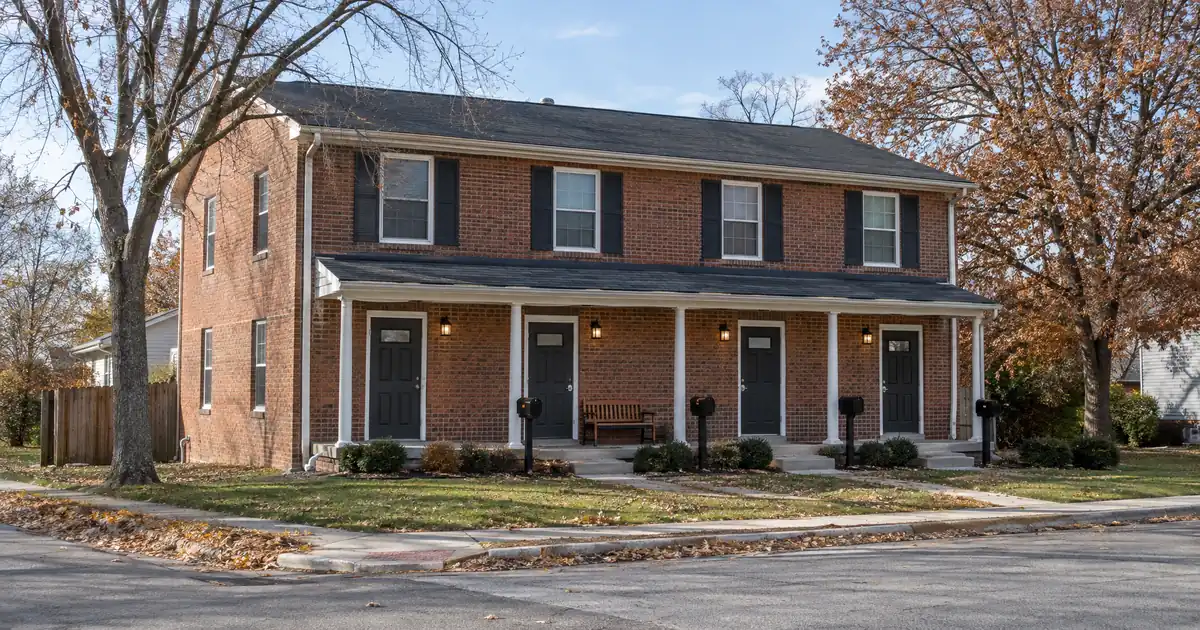
The Quick Read: Yes, as long as you live in one of the four units as your principal residence. A fourplex is the largest building FHA will finance, and it carries two hurdles a duplex does not: a self-sufficiency test on the building’s rent and documented cash reserves after closing. The program lets you start with a 3.5% minimum investment at a 580 or higher decision score, subject to lender guidelines and full file review.
What does “house hacking a fourplex with FHA” actually mean?
It means you buy a four-unit building with a standard FHA loan, live in one unit, and rent the other three. There is no separate “FHA multifamily loan” for this. It is the same one-to-four-unit residential FHA loan used for a single-family home, with extra underwriting on the larger buildings.
FHA payment estimate
Starting assumptions reflect an example price and the FHA minimum investment. Replace them with your own figures.
Editable benchmark: 7.32% as of October 22, 2026 · Freddie Mac 30-year average via FRED®. A conventional market reference, not an FHA loan quote.
Illustrative starting assumptions: a $350,000 price, the FHA minimum investment as the down payment, a thirty-year term at the current Freddie Mac benchmark, and property taxes and insurance estimated at typical national rates. Every field is editable.
Illustrative estimate only — not a Loan Estimate, approval, quote, or commitment to lend. The rate field carries the weekly Freddie Mac thirty-year conventional benchmark, a market reference and not an FHA loan quote; your rate is set by the lender at lock. FHA mortgage insurance follows HUD’s published schedule for the term, leverage and loan size entered; taxes, insurance and dues are editable estimates; closing costs are not included; county loan limits are not checked here. Licensed in sixteen states for consumer mortgages. Lendmire is not affiliated with or acting on behalf of FHA, HUD, or the federal government.
Don’t confuse it with HUD’s commercial apartment financing. That is a different program for different buyers. The loan discussed here is a consumer mortgage, so a Loan Estimate and Closing Disclosure apply like on any home purchase.
Across the wholesale programs Lendmire places FHA files with, the pattern is consistent. The borrower qualifies as an owner-occupant. The building qualifies as a one-to-four-unit residence. On three- and four-unit buildings, the building also has to qualify on its own numbers. That last part is where fourplex files get stuck.
What are the rules at a glance?
The core rules are occupancy, property type, leverage, credit, and the extra tests on three- and four-unit buildings. The table below pulls them together.
| Requirement | What it means | What to confirm |
|---|---|---|
| Occupancy | Live in one unit as your principal residence | Move-in timing and intent to stay |
| Property type | One to four units, residential | Unit count and legal use |
| Leverage | Up to 96.5% financing, 3.5% minimum investment | Your decision score and lender guidelines |
| Credit | Wholesale programs start at a 580 decision score | Where your file lands |
| Ratios | Base 31/43, up to 40/50 with documented factors | What the automated finding allows |
| 3-4 units | Self-sufficiency test and reserves | Appraiser’s rent figure and reserve documentation |
Seller or interested-party contributions can run to 6% of the price. A non-occupant co-borrower is allowed, which can help a first-time buyer whose income alone runs tight. All of this is subject to lender guidelines. None of it is a commitment to lend.
If you want the program overview first, Lendmire’s FHA loan programs page lays out how these loans are arranged.
How does the occupancy rule work in practice?
You must move in within 60 days of signing the security instrument and intend to stay at least one year. HUD’s FHA Q&A page states both points. HUD defines a principal residence as the dwelling where you keep your permanent place of abode and live most of the calendar year. You can have only one at a time.
So the occupancy rule is about intent and facts. You sign the occupancy terms at closing. Then you actually live there. A buyer who signs those terms with no plan to move in has a bigger problem than a declined file.
Two practical points come up often:
- Servicemembers have their own occupancy provisions. HUD points them to 24 CFR 203.31.
- After the first year, borrowers can generally move out and keep the building. The catch: HUD generally insures one principal residence per borrower, so moving out and buying a second FHA home takes a recognized exception.
The usual exceptions involve a job relocation to a new principal residence more than 100 miles away, a growing family, vacating a jointly owned property that a co-borrower keeps, or non-occupying co-borrower status. Each carries its own conditions, so a file that relies on one needs the details checked against the current handbook before the buyer plans around it.
How does rental income count when you qualify?
Lenders count only part of the rent, and that part is not what you will collect. The handbook lets rental income from the subject property count as effective income on a two-to-four-unit home, with documentation. HUD Handbook 4000.1 is the active FHA policy document, and the occupancy, rental income, self-sufficiency and reserve rules all live there.
Underwriting applies a haircut to the rent. The appraiser produces a rent schedule on 2-4 unit properties, and the lender works from the appraiser’s market rent, not the seller’s listing or the leases the seller hands you. In qualifying income, your own unit is not treated as tenant income.
Here’s the catch for buyers. The haircut is conservative on purpose. It does not predict your real cash flow, and it does not replace a vacancy cushion of your own. Real life includes turnover, repairs and a unit that sits empty for a month.
Rental income also helps with the ratios. The base pair is 31/43 with no compensating factors, and documented compensating factors can reach 40/50 at the top tier. The automated finding governs most files, so the pair you see on paper is a starting point, not a ceiling or a floor.
What is the self-sufficiency test, step by step?
On three- and four-unit buildings, the building’s rent has to cover its own housing payment at a conservative level. Duplexes and single-family homes skip this test. A fourplex does not.
The test, as it is generally described from the handbook, runs like this:
1. Start with the appraiser’s market rent for all four units. That includes the unit you will live in. It is the appraiser’s number, not the seller’s.
2. Subtract a reduction. The lender takes off the greater of 25% of that rent or the appraiser’s vacancy-and-maintenance estimate.
3. Compare to the full housing payment. The principal, interest, taxes, insurance and monthly mortgage insurance, divided by the net rent, cannot exceed 100%.
4. Check the result. If it lands over 100%, the building fails, whatever your paycheck says.
This is the point of the test. It looks at the property, not the borrower. A strong salary does not rescue a building that fails it.
Now a walkthrough with no dollar figures. Picture a fourplex where three units are rented and one is vacant for you to move into. The appraiser prices all four at market rent, including yours. After the reduction, the net rent has to cover the full housing payment. If the seller’s leases are below market, the appraiser’s rent may still help you. If the seller’s leases are above market, the appraiser’s rent may come in lighter than the listing implied.
The lesson: shop rents as well as price. Two fourplexes at the same price can behave very differently once the appraiser’s rent comes back. The exact handbook wording should be confirmed in Handbook 4000.1 by the lender on the file.
What if the fourplex fails the test?
You have a few honest options:
- Negotiate the price down so the payment shrinks against the same rent.
- Increase the down payment above the minimum, which lowers the loan and the payment.
- Look at a triplex or duplex, where the test does not apply.
- Compare another owner-occupied loan type for the same building.
A failed test is a property problem. Changing lenders will not fix it, because the same handbook test applies across FHA lenders.
What changes when tenants are already in the building?
Existing tenants and leases need a close read before you offer. This is the part many buyers skip, and it surprises them at the appraisal.
Look at these items:
- Lease terms. Fixed-term leases run with the building. Month-to-month tenants are more flexible but less certain.
- Which unit you take. The unit you occupy has to be open by your move-in date. If every unit is leased, find out when one frees up, or whether a tenant will leave. Don’t plan on displacing a tenant with lease time left.
- Rent roll accuracy. The leases, the deposits and what tenants actually pay should line up. Gaps show up when the lender reconciles the file.
- Utilities. Separately metered units behave differently from a building with shared meters. Ask early.
For documentation, expect the lender to want the contract, income and asset records, the appraisal with the rent schedules, leases if units are rented, and the occupancy certification. Clean, consistent rent evidence leaves fewer preventable gaps for the lender to chase.
What does the appraisal look at on a fourplex?
The FHA appraiser values the property and produces the rent data that drives the test. An older building also gets looked at for condition. Safety, soundness and sanitation items can turn into required repairs before closing, and the buyer and seller need to agree on who handles them.
Ask your agent about roofs, heating, electrical and any units that are not move-in ready. A fourplex with one gutted unit is a different file from one with four rentable units. The appraiser’s rent for a unit in poor shape may not reflect what you hoped.
What does it cost beyond the down payment?
Plan for mortgage insurance, closing costs, and reserves. The CFPB explains that FHA mortgage insurance is required on all FHA loans, has an upfront part and a monthly part, and that the upfront part can be rolled into the loan. The cost does not change with your credit score.
In the programs Lendmire works with, the upfront premium is 1.75% of the base loan, and it is typically financed. The annual premium runs between 0.15% and 0.75% of the balance, depending on term, loan amount and LTV. On a thirty-year loan above 90% LTV, the annual premium lasts for the term. At or below 90% LTV, it ends after eleven years. These are program mechanics, not a price quote.
Two effects matter for a fourplex buyer. Financing the upfront premium raises the loan amount. And the monthly premium sits inside the housing payment the building has to cover in the self-sufficiency test.
Reserves are the other cash item. On three- and four-unit purchases, lenders generally look for documented reserves after closing. Some do not allow gift funds to count toward them. The exact requirement depends on the lender and the automated finding, so ask for it in writing at the start. Reserves documentation trips up files more often than the down payment does.
County loan limits apply and change every year. The four-unit limit is much higher than the one-unit limit, so a fourplex fits more markets under FHA than buyers expect. HUD publishes the annual limits, and your lender will check your county’s figure.
How does FHA compare with other owner-occupied options?
The best choice depends on your leverage, your credit and whether the building passes the test. This is a qualitative comparison.
| Factor | FHA | Conventional | VA |
|---|---|---|---|
| Max units | Four | Four | Four |
| Occupancy | Live in one unit | Live in one unit | Live in one unit |
| Self-sufficiency test | Yes, on 3-4 units | Generally no | Check the program |
| Who it fits | Lower down payment, tighter credit | Stronger credit, more down | Eligible veterans |
Conventional owner-occupied 2-4 unit loans do not use the FHA self-sufficiency test, and VA can finance up to four units for eligible veterans with no down payment. Confirm current terms with a lender and with the agencies before you decide. Lendmire arranges FHA, VA, conventional and jumbo loans through wholesale lenders, so a borrower can compare the paths on one file.
What happens after the first year?
You have choices. Many house hackers stay for years and let the rent from three units carry much of the building. Others move out after the occupancy period and keep the building as a rental.
If you move out, remember the one-principal-residence limit. FHA will not generally insure a second home purchase while the first FHA loan is your principal residence, unless an exception applies. Refinancing later into another loan type is also possible. Occupancy is judged at closing and across the first year, and a later refinance is a new file with its own rules.
Landlord duties begin on day one. That includes repairs, vacancy, local landlord-tenant rules and insurance suited to a multi-unit building. Those are outside the loan, but they decide whether the plan works.
Who does this not fit?
FHA on a fourplex is a poor fit for some buyers:
- Buyers who do not plan to live there. Occupancy is the whole point of the loan.
- Buyers whose debt ratios are already tight before adding a larger payment.
- Buyers with no reserves. Three- and four-unit files lean on them.
- Buyers who need to count 100% of the rent. Underwriting will not.
- Buyers expecting to chain several FHA fourplexes. One principal residence at a time is the general rule.
Honest read: a fourplex that passes the test, with a fair price and a clean rent roll, is one of the stronger ways to buy a first home with a low investment. A fourplex that barely passes, on a seller’s inflated rent, is a trap.
Key Terms Defined
Principal residence: the home where you keep your permanent place of abode and live most of the year.
Self-sufficiency test: the check on three- and four-unit buildings that the net rent covers the full housing payment.
Mortgage insurance premium (MIP): FHA’s insurance charge, with an upfront part and a monthly part.
Reserves: documented funds you hold after closing, often required on three- and four-unit purchases.
Decision score: the credit score a lender uses to underwrite the file.
Security instrument: the signed mortgage or deed of trust that starts the 60-day occupancy clock.
Frequently Asked Questions
Can I buy a fourplex with an FHA loan?
Yes, if you live in one unit as your principal residence. A fourplex is the largest FHA-eligible size, and county loan limits apply. The building also has to pass the self-sufficiency test, subject to lender guidelines and full file review.
Can I rent the other three units right away?
Yes. Renting the other units is the point of house hacking. What changes is how lenders count the rent: they use the appraiser’s market rent with a reduction, not what the seller’s leases show. Plan for the unit you occupy to be available by your move-in date.
What if my fourplex fails the self-sufficiency test?
Negotiate the price, add more down payment, or look at a triplex or duplex, where the test does not apply. A strong income does not override a failed test on a three- or four-unit building. Another lender will face the same handbook rule.
Can I move out early?
You must move in within 60 days and intend to stay one year. After that, borrowers can generally move out and keep the building. Moving out and buying another FHA home needs a recognized exception, because FHA generally insures one principal residence per borrower.
Is an FHA multifamily loan the same as commercial FHA financing?
No. The loan for a house hacker is the standard one-to-four-unit residential FHA loan. HUD’s commercial apartment financing is a separate program that does not apply to a buyer living in one unit.
If you are buying a home and want to see whether an FHA loan fits your file, Lendmire can help you compare the options and what each one asks of the file.
For your own numbers, request a scenario review with Lendmire.
About Lendmire
Lendmire is a mortgage brokerage (NMLS# 2371349) licensed for consumer mortgage lending in 16 states, arranging FHA, VA, conventional and jumbo purchase and refinance loans through a wholesale lending network. Eligibility is determined by the lender on each file. Scotsman Guide named Lendmire a Top Mortgage Workplace in both 2025 and 2026.
Get Started
Ready to find the right loan for you?
In about 30 seconds you can review financing options available for your home or investment property. No commitment required.
Informational only. Not a Loan Estimate, approval, or commitment to lend. Program availability and eligibility are subject to lender guidelines, credit approval, property review, and underwriting.
References
1. HUD FHA Q&A: How does FHA define principal residence?
2. HUD Housing Handbooks page (Handbook 4000.1)
3. CFPB: What is mortgage insurance and how does it work?
4. HUD news: FHA loan limits announcement
This article is part of Lendmire’s FHA loan program — full qualification details, guidelines, and scenarios live on the program page.
Related reading: Can a Homeowner With an FHA Loan Do an FHA Cash-Out in Texas? · Does a Late Payment on Your FHA Loan Block an FHA Cash-Out? · Can an FHA Cash-Out Fund a Renovation on a 2-4 Unit Primary Home?
Brandon Miller
Founder & CEO, Mortgage Loan Originator, Lendmire LLC
- Mortgage Loan Originator · NMLS# 1129696 · Verify on NMLS Consumer Access
- North Carolina Real Estate Broker · License# 343312 · Verify on NCREC
- North Carolina Insurance Producer · License# 19053198 · Property, Casualty, Life, Health · Verify on NAIC SBS
- Lendmire LLC · Firm NMLS# 2371349 · Verify firm licensure
Required disclosures. Lendmire (NMLS# 2371349) operates as a licensed mortgage broker, not a direct lender or depository. The discussion in this article is general in nature and should not be relied upon as financial, legal, or tax advice — every investment scenario is unique and should be reviewed by a qualified professional. Any loan inquiry is subject to lender underwriting, and this article is not a commitment to lend or a guarantee of approval. Mortgage rates, loan terms, and program guidelines vary by borrower, property, and state, and may change without notice. Equal Housing Opportunity. Verify licensure at NMLS Consumer Access.