
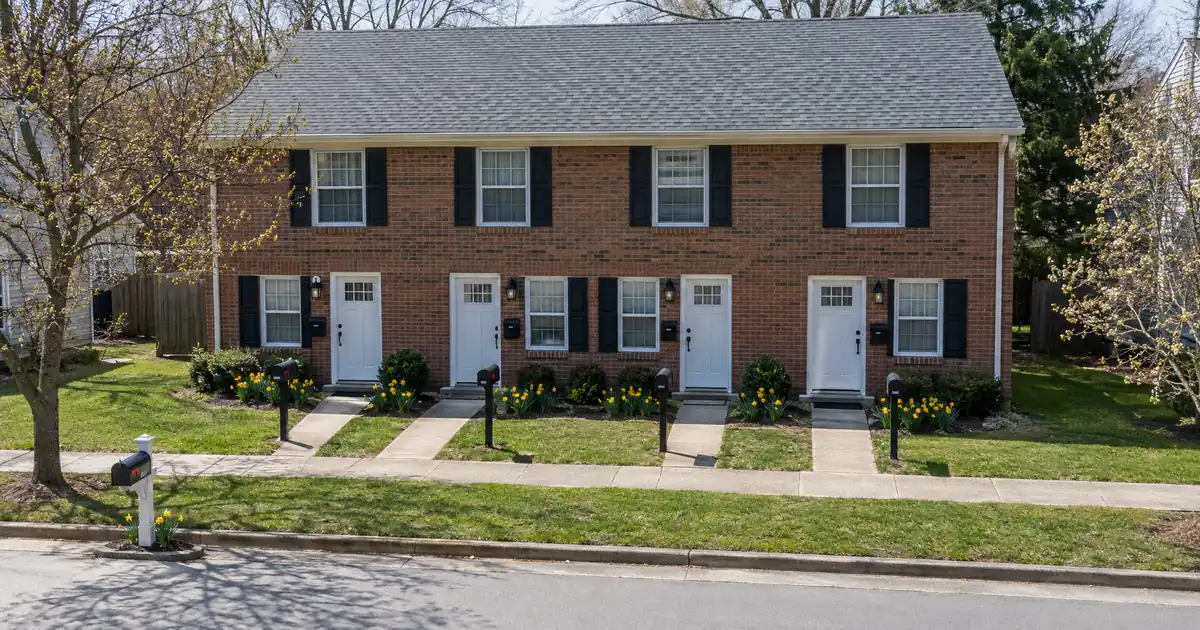
The Quick Read: Yes, in most cases. The FHA Streamline is built to skip the appraisal, and that holds for a duplex, triplex or fourplex you live in, the same as for a single-family home. What decides eligibility is the loan you already have, not the unit count. The existing mortgage must be FHA-insured, current, seasoned, and the refinance must show a net tangible benefit, all subject to lender guidelines and full file review.
What Does “No Appraisal” Actually Mean on a Streamline?
It means the lender does not order a new valuation and does not test the new loan against the home’s current value. HUD’s older streamline chapter, Handbook 4155.1 Chapter 6, states that an appraisal is not required on a streamline refinance. The FDIC’s summary of the FHA Streamline says the same and adds that no loan-to-value limit applies.
Refinance savings and break-even estimate
The starting figures are an example value with a balance in proportion and a placeholder for costs. Replace them with yours, and enter the current rate from your statement.
Editable benchmark: 7.32% as of October 22, 2026 · Freddie Mac 30-year average via FRED®. A conventional market reference, not a refinance quote.
Illustrative starting assumptions: a $350,000 home value, a $245,000 current balance, a current rate you enter and a remaining term seeded at twenty-five years, closing costs seeded at $5,000 as an editable placeholder (not a fee quote) and rolled into the new loan, a thirty-year term at the current Freddie Mac benchmark, and property taxes and insurance estimated at typical national rates. Every field is editable.
Illustrative estimate only — not a Loan Estimate, approval, quote, or commitment to lend. The new rate field carries the weekly Freddie Mac thirty-year conventional benchmark, a market reference and not a refinance quote; a refinance is priced by the lender at lock, and the current rate, the remaining term and the closing costs are figures you enter. The current payment is estimated from the balance, the current rate and the remaining term; the break-even divides the closing costs by the monthly saving and ignores the interest effect of a longer term. On the VA IRRRL the funding fee is added to the loan unless the veteran is exempt. Taxes and insurance are editable estimates. Licensed in sixteen states for consumer mortgages; Lendmire is a broker, never the lender.
For a 2-4 unit owner, that is the useful part. Nobody has to re-prove the building's value or its rents. Equity doesn't matter. A fourplex that lost value since purchase is not penalized, and a duplex with thin equity is not blocked.
Here's the catch. "No appraisal" does not mean "no rules." Seasoning, payment history, the net tangible benefit test and lender review still apply. The loan is also manually underwritten rather than run through the automated scorecard.
Across the wholesale programs Lendmire places FHA files with, the unit count rarely changes the streamline file. The documents that cause trouble are payment history, occupancy proof and the benefit test, not the number of doors.
Are 2-4 Unit Homes Eligible at All?
Yes, when you occupy the property. HUD's archived Refinances reference guide describes the collateral as a one-to-four-unit property that must be owner-occupied for a standard streamline. That page is historical, so the current rule set sits in HUD Handbook 4000.1, which lenders follow today. Treat the archive as background and the lender's current guidelines as the working answer.
FHA treats a one-to-four-unit home as part of its standard single-family program. That is why the purchase rules on the program page, such as 96.5% maximum financing with a 3.5% minimum investment from a 580 decision score, apply to 2-4 unit homes too. Those figures belong to purchase. A streamline works off your existing loan instead. Lendmire's FHA loan programs page covers the full set.
What Must Be True Before a Streamline Works?
Five things, in order of how often they derail a file.
1. The existing loan is FHA-insured. A conventional or VA loan on the same building cannot be streamlined into this product.
2. Seasoning is met. Per the FDIC summary, at least six payments must have been made, at least six full months must have passed since the first payment due date, and at least 210 days must have passed since the note date of the loan being refinanced. If the loan was assumed, six payments must have been made since the assumption. Lenders check this when the case number is assigned.
3. Payment history is clean. Payments on all mortgages secured by the property must have been made within the month due for the recent period before disbursement. Exact late-payment counts vary by lender overlay, so a borrower with a recent late payment should ask before applying.
4. Net tangible benefit is documented. The lender must show the refinance helps you. HUD's older chapter defined this as a 5% payment reduction or a move from an adjustable to a fixed loan. The current Handbook uses different tests, built on a meaningful reduction in the combined interest and mortgage insurance cost, or an adjustable-to-fixed switch. Don't rely on old numbers.
5. You occupy the property. Occupancy reflects current use, not how the home was used when the original loan was made. Lenders can verify it with employment documents or utility bills.
Credit-Qualifying or Non-Credit-Qualifying?
There are two tracks, and the choice depends on who is on the loan.
On the non-credit-qualifying track, everyone on the existing loan stays on it. There is no credit or capacity analysis, and an abbreviated application is used. On the credit-qualifying track, a lender runs a full credit review. That track is typically used when a borrower is being removed from the loan, such as after a divorce.
FHA does not require a credit report except on credit-qualifying streamlines. Either way, lenders may add their own overlays, such as a credit-score minimum. Some lenders set a higher floor than others, so two lenders can treat the same borrower differently.
Does the Multi-Unit Extra Testing Carry Over?
This is the question most pages leave unanswered. For a purchase, three- and four-unit homes face an additional self-sufficiency test, which checks whether rents can carry the payment, and a reserve requirement. HUD's archived reference guide ties those requirements to the non-streamline refinance discussion. Final terms depend on the lender's guidelines, the property type, and the borrower's complete credit picture.
For a current streamline, the picture is less clear in public sources. The Handbook text lists property eligibility and acceptability criteria among the exemptions for credit-qualifying streamlines, and some lenders state that reserves are not required. But those are lender statements and Handbook reproductions, not a clean HUD sentence waiving self-sufficiency for three- and four-unit streamlines. Sources conflict, so treat this as a point to confirm.
My read: on a duplex, expect no extra test. On a triplex or fourplex, ask the lender in writing whether any rent test or reserve requirement applies to its streamline, because overlays differ. Don't assume the answer from a purchase-loan article. Leverage, reserves, and pricing vary by lender and program; the final terms follow the full file review.
How Do Duplexes, Triplexes and Fourplexes Compare on a Streamline?
| Factor | Duplex | Triplex / Fourplex |
|---|---|---|
| Existing FHA loan required | Yes | Yes |
| New appraisal | Not required | Not required |
| Occupancy | Owner-occupied | Owner-occupied |
| Rent test | Not expected | Confirm with lender |
| Reserves | Confirm with lender | Confirm with lender |
| Cash out | No | No |
The pattern: the core streamline rules stay the same across unit counts. The gray area is the extra testing on three- and four-unit homes, and that comes down to lender overlays.
Where Do Value, Rent and Unit Data Come From Without an Appraisal?
Mostly from the old loan. The new loan amount is capped using the existing loan's balance, not today's value. The FDIC summary ties the maximum mortgage to the existing balance, and the Handbook uses the lesser of the outstanding principal balance (plus certain items) or the original principal balance, less any upfront premium refund. Mortgage insurance is also based on the value from the prior FHA loan, as shown in HUD's refinance authorization system.
Rent is not re-documented. A new appraisal with a rent schedule, Form 1025, is used to document projected rent on 2-4 unit homes with no rental history. HUD's Mortgagee Letter 2023-17 discusses that in a purchase or Simple Refinance setting. It is not a streamline requirement.
So an appraisal is not ordered in the normal course. If a lender happens to hold one, it does not change eligibility or the maximum loan.
What About Cash Back and Closing Costs?
Cash back is capped at $500 on a streamline, per HUD's archived reference guide. Refund of an old escrow balance is not counted toward that limit. You cannot pull equity out of the building to fund repairs, a new unit or other goals.
Closing costs work differently than most borrowers expect. Under the consolidated Handbook, costs generally can't be financed into a streamline, because no appraisal supports a higher balance. They are paid in cash, through a lender credit, or in some cases built into the loan terms. Confirm the current treatment with the lender. Any "no closing costs" offer simply moves those costs into the balance or the loan terms. It does not erase them.
Mortgage insurance continues. A streamline keeps FHA's mortgage insurance in place, and a portion of the old upfront premium may be refunded. Across the program, the upfront premium is 1.75% of the base loan, and the annual premium runs from 0.15% to 0.75% of the balance depending on term, amount and LTV. Lenders explain how that applies to your refinance on the Loan Estimate.
Scenario: The House-Hacker With a Fourplex
Picture a homeowner who bought a fourplex with an FHA loan, lives in one unit and rents the other three. The loan is well past seasoning, every payment has been made on time, and the borrower still lives there.
A streamline fits when the goal is a lower combined cost or a switch from an adjustable loan to a fixed one. The lender confirms the existing FHA loan, checks seasoning and payment history, verifies occupancy with a utility bill, and documents the net tangible benefit. No appraisal is ordered. No one re-proves the rents.
Now change one fact. The owner wants cash to finish a vacant unit. A streamline cannot do that, because cash back is capped at $500. The alternatives are the FHA rate-and-term refinance with an appraisal, which reaches 97.75% on a principal residence occupied for the previous twelve months, or the FHA cash-out, which reaches 80% LTV on a home owned and occupied for 12 months before the case number. Both need an appraisal. Terms vary by lender guidelines, property type, leverage, credit profile, and full file review.
Change another fact. The owner moved out two years ago and rents all four units. Occupancy is now the problem. A former primary home can still be streamlined in limited cases, but only without an appraisal, not into an adjustable loan, and with the loan limited to the unpaid balance less any premium refund. Expect more scrutiny and tighter lender overlays.
When a Streamline Is the Wrong Tool
- You want cash out. Use a cash-out refinance with an appraisal.
- You want to finance closing costs or repairs. Streamlines generally don't allow it.
- Your current loan isn't FHA. There is nothing to streamline.
- You need to remove a borrower. That is possible, but it triggers credit qualifying.
- You want to drop FHA mortgage insurance. A streamline keeps it. A different loan type is the path, and it needs its own appraisal and underwriting.
If your debt load is the worry, see Lendmire's article Can a 2-4 Unit Primary Home With a High DTI Get an FHA Cash-Out?.
Key Terms Defined
Streamline refinance: A refinance of an existing FHA loan with limited documentation and no new appraisal.
Net tangible benefit: The documented improvement a refinance must give the borrower, such as a lower combined cost or a move from adjustable to fixed.
Seasoning: The minimum number of payments and time that must pass on the current loan before it can be refinanced.
Credit-qualifying streamline: A streamline with a full credit review, typically used when a borrower is being removed from the loan.
Self-sufficiency test: A purchase-loan test for three- and four-unit homes checking whether rents can support the payment.
Upfront premium refund: A partial credit of the old loan's upfront mortgage insurance premium, applied against the new one.
Frequently Asked Questions
Will an appraisal ever be ordered on a streamline?
Not in the normal course. An appraisal isn't required, and a lender's possession of one doesn't change eligibility or the maximum loan. An appraisal enters when you choose a different product, such as a rate-and-term or cash-out refinance.
Do I have to live in the building?
Yes, for a standard streamline on a 2-4 unit home. Occupancy is judged by current use, and lenders can verify it with employment records or utility bills. Former primary homes follow narrower rules, and lender overlays vary.
Can I roll closing costs into the new loan?
Generally not. Because no appraisal supports a larger balance, costs are typically paid in cash, covered by a lender credit, or built into the loan terms. Confirm the current rule with the lender before relying on it.
Does my triplex or fourplex have to pass the self-sufficiency test again?
Public sources conflict. HUD tied that test to purchase and non-streamline refinance discussions, and some lenders skip reserves on streamlines. Ask the lender for its written position, since overlays decide this.
Can I take cash out of a duplex with a streamline?
No. Cash back is capped at $500. For more, an FHA cash-out refinance on a home owned and occupied for 12 months reaches 80% LTV with an appraisal, subject to lender guidelines.
Next Step
If you are weighing a refinance and want the break-even run on your own numbers, Lendmire can help you compare the programs on the same home. Program details are subject to lender guidelines and full file review, and nothing here is a commitment to lend.
For your own numbers, request a scenario review with Lendmire.
About Lendmire
Lendmire (NMLS# 2371349) is a mortgage brokerage serving homeowners and home buyers in 16 states. FHA, VA, conventional and jumbo purchase and refinance loans are arranged through wholesale lending channels; Lendmire brokers the financing and the lender underwrites each application. Scotsman Guide named Lendmire a Top Mortgage Workplace in both 2025 and 2026.
Get Started
Ready to find the right loan for you?
In about 30 seconds you can review financing options available for your home or investment property. No commitment required.
Informational only. Not a Loan Estimate, approval, or commitment to lend. Program availability and eligibility are subject to lender guidelines, credit approval, property review, and underwriting.
References
1. HUD Handbook 4155.1 Ch. 6 Sec. C
2. FDIC summary of FHA Streamline Refinance
3. HUD Archives HOC Reference Guide, Refinances p. 2-19
4. HUD Mortgagee Letter 2023-17
This article is part of Lendmire’s FHA loan program — full qualification details, guidelines, and scenarios live on the program page.
Related reading: Can You Get an FHA Cash-Out on a Rural Home With Acreage? · Can a Retiree on Social Security Get an FHA Cash-Out on an Inherited Home? · Does Rent Help Qualify a 2-4 Unit Primary Home for FHA Cash-Out?
Brandon Miller
Founder & CEO, Mortgage Loan Originator, Lendmire LLC
- Mortgage Loan Originator · NMLS# 1129696 · Verify on NMLS Consumer Access
- North Carolina Real Estate Broker · License# 343312 · Verify on NCREC
- North Carolina Insurance Producer · License# 19053198 · Property, Casualty, Life, Health · Verify on NAIC SBS
- Lendmire LLC · Firm NMLS# 2371349 · Verify firm licensure
Disclosures. The information presented in this article is general market commentary, not financial, legal, or tax advice. Lendmire is a mortgage brokerage (NMLS# 2371349) — not a direct lender or depository institution — and loan placement is subject to lender underwriting. Nothing in this content represents a commitment to lend. Loan terms, pricing, and program availability vary based on borrower qualifications, property characteristics, and state of subject property, and are subject to change at any time. Lendmire complies with Equal Housing Opportunity requirements. Consumer access: nmlsconsumeraccess.org.