
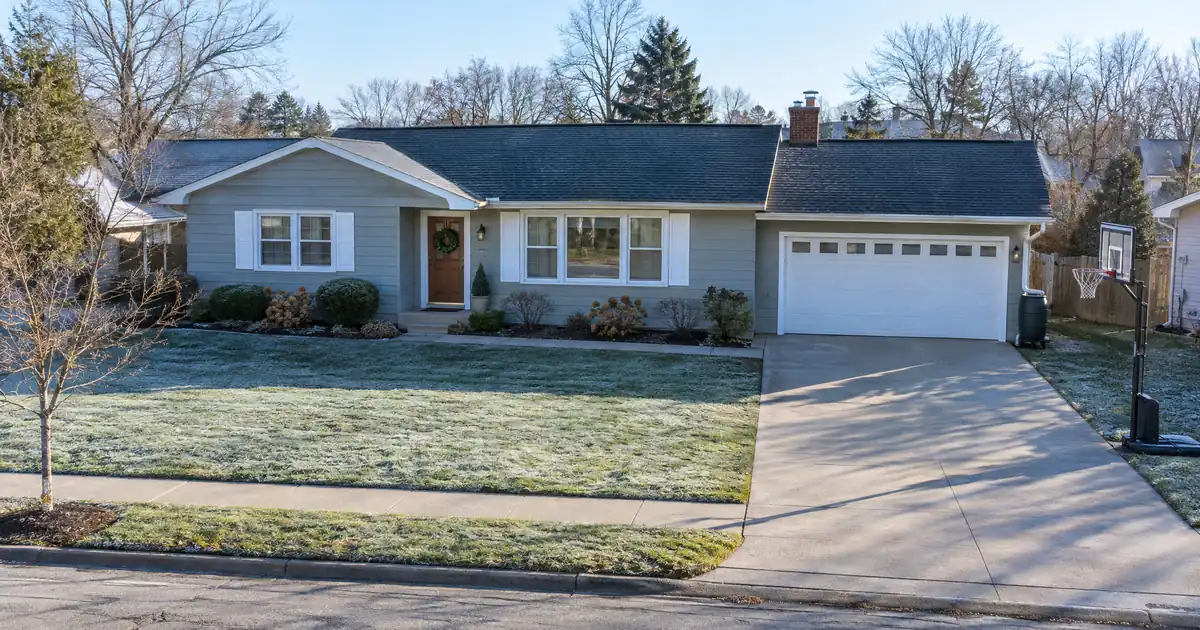
The Quick Read: Most refinances involve some check of your home’s value, but a full appraisal is not always the form that check takes. On conventional loans, an automated system decides case by case whether an appraisal is needed. FHA Streamline and VA streamline refinance loans drop the requirement by program design. Everything else defaults to a full appraisal, subject to lender guidelines and full file review.
Notice what is missing from that list: a button you can press to ask for a waiver. You don’t request one. The loan program or the automated system makes the call, and your job is to understand which path you are on.
Refinance savings and break-even estimate
The starting figures are an example value with a balance in proportion and a placeholder for costs. Replace them with yours, and enter the current rate from your statement.
Editable benchmark: 7.32% as of October 22, 2026 · Freddie Mac 30-year average via FRED®. A conventional market reference, not a refinance quote.
Illustrative starting assumptions: a $350,000 home value, a $245,000 current balance, a current rate you enter and a remaining term seeded at twenty-five years, closing costs seeded at $5,000 as an editable placeholder (not a fee quote) and rolled into the new loan, a thirty-year term at the current Freddie Mac benchmark, and property taxes and insurance estimated at typical national rates. Every field is editable.
Illustrative estimate only — not a Loan Estimate, approval, quote, or commitment to lend. The new rate field carries the weekly Freddie Mac thirty-year conventional benchmark, a market reference and not a refinance quote; a refinance is priced by the lender at lock, and the current rate, the remaining term and the closing costs are figures you enter. The current payment is estimated from the balance, the current rate and the remaining term; the break-even divides the closing costs by the monthly saving and ignores the interest effect of a longer term. On the VA IRRRL the funding fee is added to the loan unless the veteran is exempt. Taxes and insurance are editable estimates. Licensed in sixteen states for consumer mortgages; Lendmire is a broker, never the lender.
Why Does a Refinance Need Any Valuation at All?
A refinance needs a valuation because the new loan is sized against what the home is worth. That ratio is called loan-to-value, or LTV: the loan balance divided by the home's value. The lender, and the investor who buys the loan later, wants proof that the house backs the debt.
Leverage limits are written as LTV caps. On the wholesale programs I arrange for owner-occupants, a rate-and-term refinance on a one-unit primary residence can reach 95% LTV. A rate-and-term refinance (the industry also calls it "limited cash-out") swaps your existing mortgage for a new one with a different rate or term. It pays off the first mortgage and closing costs, and it can also pay off a purchase-money second lien. You get only incidental cash back. Exact terms depend on the lender's guidelines, property type, leverage, and a full review of the borrower's file.
The value drives the answer. A home worth more than estimated gives you a lower LTV and more room. A home worth less can push you over a cap or into mortgage insurance. Mortgage insurance is required above 80% LTV. You can request cancellation at 80% of the original value, and the servicer must end it automatically at 78%. Every figure here varies by lender and program.
So the valuation is not busywork. It decides whether the loan fits the program at all. If you want the full menu of options, Lendmire's refinance programs page lays out what can be arranged for a home you live in.
Who Decides Whether You Need an Appraisal?
Three parties decide: the loan program, the automated underwriting system, and the lender. Each one can only tighten the requirement from the level above it. A program can waive the appraisal, but a lender can still choose to order one.
The program. FHA Streamline and VA streamline refinance are built without an appraisal requirement. That is a rule of the product, not a favor.
The lender. Lenders add their own rules, called overlays. A program that doesn't require an appraisal may still meet a lender that wants one. VA's own regional guidance acknowledges lenders may require an appraisal and credit report on their own. Across the wholesale programs I place files with, that discretion shows up often enough that you should ask early rather than assume.
How Do Conventional Appraisal Waivers Work?
On a conventional refinance, the automated system compares your estimated value and loan details against a large database and decides how much collateral checking is needed. The result is one of three outcomes: no appraisal, no appraisal but a property data report, or a full appraisal.
Fannie Mae calls its offer value acceptance. Desktop Underwriter accepts the value the lender submitted, using Fannie Mae's database of past appraisals plus its own analytics. On a refinance, that submitted value is an estimate from the lender or borrower. Every lender reaches this through the underwriting system, with no separate registration.
The middle option: a property data report
Sometimes the system won't waive entirely but will accept a lighter check. Fannie Mae offers a comparable path it calls value acceptance plus property data.
This option costs less than a full appraisal, but you still have someone walking through your home. Plan for that.
What drives the system's answer
The official pages point to a handful of inputs: your LTV, the property type, the transaction type, and whether the database holds usable prior-appraisal or property data. Appraisals can age out of that database, which is one reason a home with no recent history may be sent to a full appraisal. Credit score and assets are not listed among the decision inputs on the agency pages, so don't count on a strong score to earn a waiver.
Equity helps in a plain way. Fannie Mae's eligible refinance leverage ceilings for value acceptance are tiered, and the limited cash-out tiers sit higher than the cash-out tiers. More equity puts you inside more of them.
Where Does the General Rule Break?
The general rule breaks on property type, occupancy, cash-out, and a few file-specific wrinkles. A waiver offered on one loan can be unavailable on a near-identical one.
| Situation | What changes |
|---|---|
| Cash-out refinance | Lower waiver leverage ceilings than limited cash-out |
| Second home or investment property | Different leverage ceilings than a primary home |
| Certain property types | Excluded from value acceptance |
| Condo | One-unit condos can be eligible |
| Buying out a co-owner | Proceeds rules apply to the borrower who ends as sole owner |
| Changed loan details | An earlier offer is not permanent |
Take these one at a time.
Cash-out. If you take meaningful cash out, expect a full appraisal as the more likely outcome. Fannie Mae's waiver ceilings are lower for cash-out than for limited cash-out, so a cash-out file has less room before the system asks for an appraisal. Confirm current language with your lender, because that detail changes.
Occupancy. Occupancy changes the ceiling. A principal residence gets the highest leverage, and second homes and rental properties get lower limits.
Property type. Fannie Mae lists one-unit properties, including condos, as eligible. Certain property types are excluded, and the Selling Guide is where the list lives. If you own something unusual, assume you need to ask.
Condos and project review. Condo owners sometimes confuse two separate waivers. A Fannie Mae-to-Fannie Mae limited cash-out refinance can qualify for a waiver of condo project review, with an 80% LTV limit for it. That is a different waiver from skipping the appraisal. You can get one without the other. Final terms depend on lender guidelines, property type, leverage, and the borrower's complete credit picture.
Buying out a co-owner. Say you and an ex-partner own a home and one of you refinances to buy the other out. Under Fannie Mae's limited cash-out rules, a borrower who ends up as sole owner may not take any of the proceeds. Structure the payout carefully.
Changed files. Offers aren't permanent. If the loan changes in a way that affects risk, the system's answer can change with it. Treat any "no appraisal" finding as conditional until closing.
Condition. Fannie Mae's relief covers the lender's exposure on condition, as well as value. That protects the lender from repurchase demands. It does not certify the home to you. A waiver is not an inspection.
What About FHA Streamline and VA IRRRL?
Both government streamlines drop the appraisal by program design, and both require that your existing loan be the same type. You can't swap a conventional loan into one.
FHA Streamline. For an existing FHA loan, the Streamline involves no appraisal and a limited credit review. It must show a net tangible benefit, meaning the refinance has to actually leave you better off in a measurable way. FHA's no-cash-out refinance that does use an appraisal is the rate-and-term option, which reaches 97.75% LTV. The Streamline is the lighter path, but it has tradeoffs. Under HUD handbook history, a Streamline cannot finance closing costs the way a refinance with an appraisal can. Check current handbook language before you count on either side of that. These specifics are subject to lender guidelines and a full review of property, leverage, and credit.
VA IRRRL. VA says no appraisal or credit underwriting package is required when you apply for an IRRRL. It requires an existing VA loan, a net tangible benefit, and seasoning of the later of 210 days and six payments. The funding fee is 0.5% unless you are exempt. VA says costs can be folded into the new loan, and that moving from an adjustable rate to a fixed one may raise your rate.
That last point deserves a plain-English reading. "No appraisal" does not mean "no consequences." On either program, a lender can still order an appraisal as an overlay, and some do.
Above the conforming loan limit, the jumbo lanes take over. Those carry a 660 decision score, leverage up to 90%, loans up to $5,000,000, and a 50% ratio ceiling on the fixed lanes, subject to lender guidelines. Expect a full appraisal as the norm there.
How Does a Waiver Compare to the Other Valuation Types?
Several valuation formats exist, and which one you get depends on the program and the system's finding. Here is how they line up.
| Valuation type | Who visits the home | Typical use |
|---|---|---|
| Full appraisal | Licensed appraiser | Default when no offer applies |
| Property data report | Trained data collector | When the system wants facts, not an appraisal |
| Automated value only | Nobody | Waiver on eligible conventional files |
| Program waiver | Nobody | FHA Streamline, VA IRRRL |
A full appraisal remains the default. Everything else is an exception earned by the file or granted by the program.
Three Scenarios, Same Homeowner
Run the same homeowner through three refinances. No dollar figures, just percentages and outcomes.
Scenario one: a conventional rate-and-term with healthy equity. Say you owe well under 80% of the home's value on a one-unit primary residence and want a different term. The lender submits the file with an estimate of value. If the system returns value acceptance, no appraisal is ordered. If the estimate looks stale or the database is thin, you get a property data report or a full appraisal. Your equity makes the waiver plausible. It does not make it certain.
Scenario two: the same home, now with cash out. You want a meaningful chunk of equity out. The cash-out leverage limits are tighter, and conventional cash-out on a one-unit primary residence tops out at 80% LTV, subject to lender guidelines. Expect the system to be less generous. A full appraisal is the common result. If a low value comes back, Lendmire's piece How to Respond When a Rental Cash-Out Refinance Appraisal Comes In Low covers the sequence, though it is written around rental properties.
Scenario three: your existing loan is FHA. The Streamline path skips the appraisal and focuses on net tangible benefit. The tradeoff is the closing-cost treatment noted above. You may prefer an FHA rate-and-term with an appraisal if you want costs financed and your value supports it.
Should You Skip the Appraisal When You Can?
Usually yes, if the offer arrives with no strings. That is the benefit side.
The cost side is less obvious. Because the automated step relies on an estimated value, an overstated estimate can make the waiver fail or push the file to an appraisal. Be realistic about your number. A waiver also gives you no independent opinion of value. If you plan to sell soon, or you suspect the home is worth less than you think, an appraisal tells you something a waiver won't.
Thinking out loud from the broker's side: the stronger play for most owner-occupants is to accept the waiver when offered and keep a separate sanity check on value. The appraisal fee savings are real, but they are small compared to a wrong decision on loan size.
What If an Appraisal Does Happen?
Then you have rights. Under the ECOA valuations rule, the creditor must notify you of your right to a free copy of any appraisal or written valuation after you apply, and deliver it promptly. The CFPB's consumer summary says this covers automated valuation reports and broker price opinions, not only appraisals. You can waive the timing so copies arrive at closing.
Two clarifications help here. The rule governs disclosure. It does not require a lender to obtain an appraisal. And "no appraisal" does not mean "no valuation." If any written valuation was developed, you can ask for it.
If the value comes in low, the usual moves are to ask the lender whether a reconsideration of value is possible, adjust the loan amount, bring cash to close the gap, or compare another program. Which one fits depends on how far short the number is and what your LTV cap is.
Key Terms Defined
Appraisal: A licensed appraiser's written opinion of what your home is worth, based on a visit and comparable sales.
Appraisal waiver (value acceptance, ACE): An automated finding that lets a conventional lender skip the appraisal on an eligible file.
Property data report: A fact-gathering visit by a trained data collector, used instead of an appraisal when the system allows.
LTV (loan-to-value): Your loan balance divided by your home's value, shown as a percentage.
Limited cash-out refinance: A refinance that pays off your first mortgage and closing costs, with only incidental cash back to you.
Net tangible benefit: A measurable improvement a streamline refinance must deliver to you, such as a better loan structure.
Overlay: A lender's own rule layered on top of the program's minimum.
Frequently Asked Questions
Can I ask my lender for an appraisal waiver?
No. On conventional loans the offer comes from the automated system's analysis, not from a borrower request. What you can do is give an accurate estimate of value and ask the lender early whether your file looks like a candidate. Equity and a one-unit property help, but the system decides.
Does a waiver mean my home passed an inspection?
No. Fannie Mae's relief on condition protects the lender from repurchase risk. It doesn't certify the home to you. If you worry about repairs or defects, a waiver gives you no information, so hire an inspector separately if it matters.
Do FHA Streamline and VA IRRRL loans never involve an appraisal?
Not never. Both programs drop the requirement, but a lender can still order an appraisal as its own overlay. Ask your lender up front. Also note that an FHA rate-and-term refinance, which reaches 97.75% LTV, does use an appraisal. Terms depend on the lender's guidelines, the property type, the leverage, and a full review of the credit profile.
Will a cash-out refinance get a waiver?
Rarely, and it depends on the file. Fannie Mae's waiver leverage ceilings are lower for cash-out than for limited cash-out, so there is less room. Confirm current language with your lender, subject to lender guidelines.
If I skip the appraisal, can I still get a copy of the valuation?
Yes, if any written valuation was developed. The rule doesn't force a lender to get one, but it does require delivery of any that exist.
If you are weighing a refinance and want the break-even run on your own numbers, Lendmire can help you compare the programs on the same home.
About Lendmire
Lendmire is a mortgage brokerage (NMLS# 2371349) licensed for consumer mortgage lending in 16 states, arranging FHA, VA, conventional and jumbo purchase and refinance loans through a wholesale lending network. Eligibility is determined by the lender on each file. Scotsman Guide named Lendmire a Top Mortgage Workplace in both 2025 and 2026.
Get Started
Ready to find the right loan for you?
In about 30 seconds you can review financing options available for your home or investment property. No commitment required.
Informational only. Not a Loan Estimate, approval, or commitment to lend. Program availability and eligibility are subject to lender guidelines, credit approval, property review, and underwriting.
References
1. Fannie Mae – Value Acceptance
2. Fannie Mae Selling Guide B4-2.1-02, Waiver of Project Review
3. Fannie Mae Selling Guide B2-1.3-02, Limited Cash-Out Refinance Transactions
4. HUD
6. CFPB
This article is part of Lendmire’s Refinance series — every loan program’s qualification details, guidelines, and scenarios live on the loan options page.
Related reading: Can a Condo Owner Skip the Appraisal on a Refinance to Lower the Payment? · Smaller Cash-Out Refinance Now vs Waiting for a Higher Appraisal · Can You Cash-Out Refinance a Condo?
Brandon Miller
Founder & CEO, Mortgage Loan Originator, Lendmire LLC
- Mortgage Loan Originator · NMLS# 1129696 · Verify on NMLS Consumer Access
- North Carolina Real Estate Broker · License# 343312 · Verify on NCREC
- North Carolina Insurance Producer · License# 19053198 · Property, Casualty, Life, Health · Verify on NAIC SBS
- Lendmire LLC · Firm NMLS# 2371349 · Verify firm licensure
Disclosure information. Lendmire is a state-licensed mortgage brokerage under NMLS# 2371349. Lendmire is not a depository institution, direct lender, or financial advisor — all loans referenced are placed through wholesale lender partners and are subject to each lender's underwriting standards. This article is provided for general informational purposes and is not a commitment to lend, nor does it constitute financial, legal, or tax advice. Loan programs, terms, rates, and qualification standards change without notice and depend on borrower profile, property type, and the state in which the subject property is located. Equal Housing Opportunity provider. NMLS Consumer Access: nmlsconsumeraccess.org.