
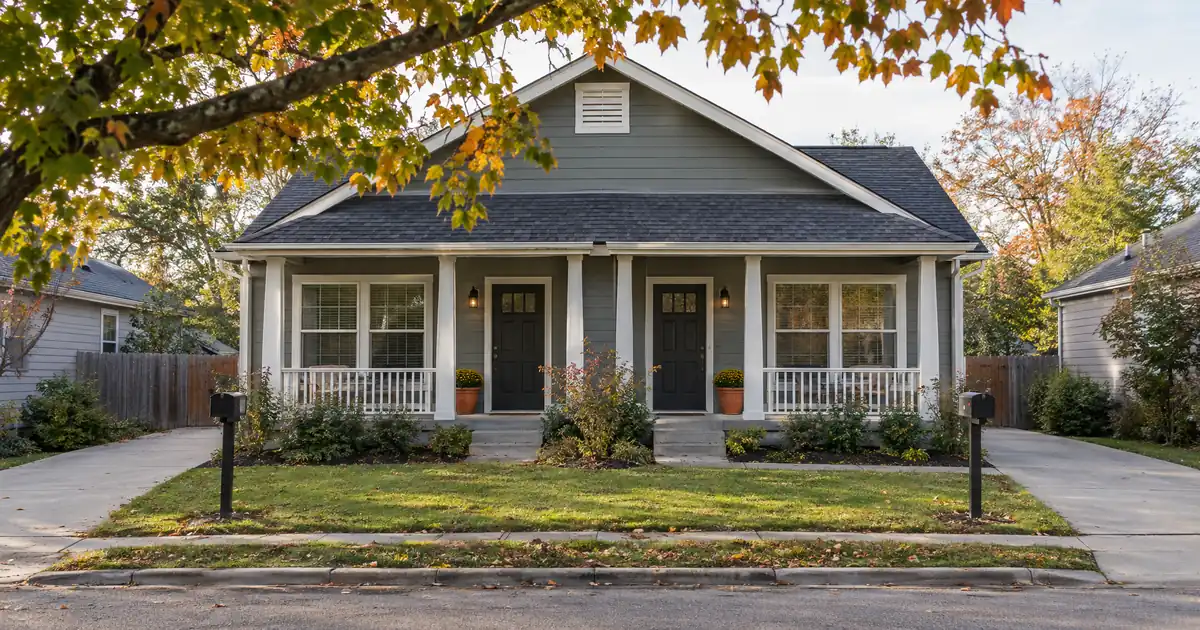
The Quick Read: Fannie Mae’s affordable conventional program lets you buy a duplex, triplex, or fourplex if you live in one of the units and your household income stays within 80% of the area median where the property sits. Leverage on a 2-4 unit tops out at 95% of the value, not the 97% you see advertised. Expect six months of reserves, and expect the lender to count only a documented share of the rent from the other units.
Key Takeaways
- You must live in one unit. Investment purchases are a different loan.
- The 80% income cap follows the property’s location, not your current address.
- The 97% leverage band is for one-unit, fixed-rate purchases. A 2-4 unit tops out at 95%.
- Condos, co-ops, and manufactured homes are out on 2-4 units.
- Rent from the other units can help you qualify, but only with leases and an appraiser’s rent schedule behind it. Exact terms depend on the lender’s guidelines, property type, leverage, and a full review of the borrower’s file.
What Is This Program, Really?
It is a low-down-payment conventional loan built for moderate-income households. Borrower income cannot exceed 80% of area median income (AMI) for the property’s location, per the Fannie Mae HomeReady product matrix. The program covers purchases and limited cash-out refinances. It covers one-unit homes and 2-4 unit principal residences.
Conventional payment estimate
The starting figures are an example price at the first-time buyer’s minimum down payment. Replace them with yours.
Editable benchmark: 7.32% as of October 22, 2026 · Freddie Mac 30-year average via FRED®. A conventional market reference, not a conventional loan quote.
Estimate seeded at the low end of Fannie Mae’s published range (0.58%–1.86% a year); the insurer prices the actual premium on the score and the leverage. Applies only above 80% loan-to-value.
Illustrative starting assumptions: a $350,000 price, the first-time buyer’s minimum down payment, a thirty-year term at the current Freddie Mac benchmark, mortgage insurance at the low end of Fannie Mae’s published range, and property taxes and insurance estimated at typical national rates. Every field is editable.
Illustrative estimate only — not a Loan Estimate, approval, quote, or commitment to lend. The rate field carries the weekly Freddie Mac thirty-year conventional benchmark, a market reference and not a conventional loan quote; your rate is set by the lender at lock. The mortgage insurance figure is an editable estimate seeded from Fannie Mae’s published typical range, not a premium quote; the insurer prices the actual premium, and the cancellation month assumes scheduled payments with no extra principal and no change in value. Taxes, insurance and dues are editable estimates; closing costs are not included. Conforming loan limits apply by county. Licensed in sixteen states for consumer mortgages.
“Principal residence” is the phrase to remember. You live there. Buy a fourplex to rent all four doors and you are in a different lane with different leverage limits.
Lendmire arranges these loans through wholesale lenders, and the structure below matches what shows up on 2-4 unit files. Browse Lendmire’s conventional loan programs for the wider menu. Every figure here is subject to lender guidelines and full file review, and nothing here is a commitment to lend.
How Much Can You Borrow Against a 2-4 Unit?
Up to 95% of the value on a purchase. That is the ceiling for 2-4 unit principal residences, which means a 5% minimum down payment. The Fannie Mae Eligibility Matrix lists the same 95% cap for 2-4 unit purchases and limited cash-out refinances.
The famous 97% number is narrower. It applies to a one-unit principal residence with a fixed rate when at least one borrower is a first-time buyer. A duplex does not get it. Not ideal if that is what you read online.
Some older lender charts still show lower caps of 85% for two units and 75% for three and four. Those are stale. The live matrix is the authority, so check it before you plan your down payment.
High-balance loans are the exception. Where the loan runs above the standard conforming limit, the matrix applies tighter caps on 2-4 units. Your county’s limit and unit count drive this. The Federal Housing Finance Agency publishes a county-by-county list for each unit count, and multi-unit limits sit well above the one-unit figure. Pull your county’s number before you shop.
| Feature | One unit | 2-4 units |
|---|---|---|
| Top leverage | 97% (first-time, fixed) | 95% |
| Condo or co-op | Eligible | Not eligible |
| Reserves (automated file) | None required | Six months |
| Rent from the property | Boarder income only | Documented unit rent |
| Cash-out refinance | 80% LTV | 75% LTV |
Step by Step: How the File Gets Underwritten
The lender works through the file in a set order. Here is the sequence.
1. Check the income cap at the property address. The lender looks up the AMI for the census tract or address of the home you are buying. That limit counts the income of every borrower on the note whose income is used to qualify. A neighbor two counties over can have a different cap than you do. Lenders use Fannie Mae’s own AMI data, not other tables, and the automated system flags whether the entered income appears to be within the limit.
2. Run the file through automated underwriting. HomeReady loans can be run through Desktop Underwriter or reviewed by hand, according to Selling Guide section B5-6-02. Manual underwriting carries a lower maximum LTV and tighter ratios. Some loans must go through the automated system, including anything with LTV above 95% and high-balance loans. Across the wholesale programs Lendmire works with, the automated finding governs most files. The decision score starts at 620, and the total debt-to-income ceiling is 50%. Manually underwritten loans run at 36% or 45% depending on reserves and score factors.
3. Count the rent. This is where 2-4 unit files get interesting. More on that in the next section.
4. Verify reserves. An automated 2-4 unit file calls for six months of reserves, per Fannie Mae’s minimum reserve rules. One-unit buyers face no minimum. Reserves are money left after closing, so budget for them on top of your down payment.
5. Complete homebuyer education if it applies. When every occupying borrower is a first-time buyer, a purchase requires an education course. The provider must be independent of the lender.
6. Appraisal. On a 2-4 unit, the appraiser also completes a rent schedule. Those figures feed both your qualifying income and the lender’s delivery data.
How Does Rent From the Other Units Count?
Partly. A lender does not hand you credit for the full rent roll. The standard treatment discounts gross rent to allow for vacancy and upkeep. Fannie Mae’s guidance confirms that HomeReady counts documented rental income from a 2-4 unit principal residence.
What the lender wants to see:
- Signed leases for the units you will rent out.
- The appraiser’s rent schedule for the subject property.
- A documented history if the units are currently occupied.
Gross monthly rent from the eligible units must be reported on every 2-4 unit principal residence loan, even if you do not use that rent to qualify. So the appraisal’s rent figures matter whether or not you lean on them.
Here is the catch for first-time landlords. Lenders generally limit rental income when a borrower has no landlord or property-management history. The cap relates to the property’s own housing payment, so the rent can help offset it but cannot push your income past it. Confirm how your lender applies that limit before you build a budget on it.
Picture a buyer purchasing a triplex at 95% of the value. They live in one unit. The other two are leased at documented rents. Their household income sits comfortably below the 80% AMI line at that address. The lender adds a discounted share of the rent to income, runs the file, and the debt-to-income ratio drops enough to clear the automated ceiling. Now flip it: no leases, vacant units, appraiser rent schedule blank. The same buyer may fall short. Same property. Different file.
Boarder income is a separate rule. Rent from a roommate who has lived with you for 12 months can count as stable income. On a one-unit home it is capped at 30% of total gross qualifying income, and the boarder cannot be on the loan. Fannie Mae’s boarder income rules cover the documentation. Do not assume boarder income and unit rent on a 2-4 unit property add together; confirm how the two interact with the lender before relying on both.
Where the General Rule Breaks
Most of the surprises on these files come from a short list of edge cases.
The 97% myth. “Three percent down on a duplex” is a misreading of the program. It is not available on 2-4 units. Plan for 5% down at minimum. Every figure here varies by lender and program — guidelines, property type, leverage, and credit profile all apply.
Condos and co-ops. A condo unit in a two-to-four unit building is not eligible under this program. The same goes for manufactured housing.
Income over the cap. A raise or a co-borrower’s income can push you above 80% of AMI. Then HomeReady is off the table, and you fall back to a standard conventional loan. On a 2-4 unit, that is a smaller loss than on a one-unit home, since the standard program also reaches 95% on a principal residence. You give up the program’s other features, not the leverage.
Non-occupant co-borrowers. Fannie Mae’s HomeReady chart allows a co-borrower who will not live in the home, with down payment and ratio conditions. If that person is on the note, their income counts toward the 80% cap. A parent who helps you qualify can also disqualify you. Run both numbers first.
Community Seconds. An eligible subordinate loan from a community program can raise combined leverage beyond the first mortgage cap. Availability depends on the program and the lender, so ask early.
Cash-out refinances. HomeReady covers purchases and limited cash-out only. A true cash-out on a 2-4 unit principal residence is a standard conventional loan, capped at 75% LTV. For the details, see Lendmire’s piece Conventional Cash-Out Refinance Requirements on a 2-4 Unit Primary Home. Final terms depend on lender guidelines, property type, leverage, and the borrower’s complete credit picture.
Owning other properties. Buying another home elsewhere does not by itself trigger the extra reserve rules. Those apply when the subject is a second home or investment property. The occupied 2-4 unit does not trigger them.
Freddie Mac’s counterpart. Home Possible is Freddie Mac’s version, with its own 80% income limit and its own rental-income rules. It is not the same as HomeReady underwriting, so the two can produce different answers on the same file.
What About Mortgage Insurance?
At 95% leverage, mortgage insurance is part of the deal. It is required above 80% LTV. You can request cancellation when your balance reaches 80% of the original value, if you have a good payment history, no subordinate liens, and no decline in value. The servicer must terminate it automatically at 78%. Published typical annual premiums run from 0.58% to 1.86% of the balance, a range and not a quote. These specifics are subject to lender guidelines and a full review of property, leverage, and credit.
HomeReady reduces the coverage requirements above 90% LTV, according to Fannie Mae’s chart. That shapes how the insurer prices the file. Ask your lender how it plays out on your scenario. Terms depend on the lender’s guidelines, the property type, the leverage, and a full review of the credit profile.
Is It the Right Loan for Your 2-4 Unit?
This one is a genuine toss-up for many buyers. Think about three questions.
1. Is your household income under the cap at the property’s address? If not, the question answers itself.
2. Do you have the six months of reserves? If your cash is thin after closing, that requirement can sink a file that otherwise works.
3. Can you document the rent? Leases and a solid appraisal rent schedule turn rental income into qualifying power.
If you are a veteran, a VA loan may be worth comparing too. Lendmire’s piece VA Cash-Out vs Staying Conventional on a 2-4 Unit Primary Home walks through that tradeoff on a 2-4 unit primary home.
Common Reasons These Files Stall
- Income lands above the cap once a co-borrower or boarder-style income is added.
- No reserves documented after the down payment.
- Rent assumed at 100% instead of the discounted share.
- A condo or co-op unit chosen by mistake.
- Leverage planned at 97% when the property type allows 95%.
- Leases missing or inconsistent with the appraiser’s rent schedule.
Key Terms Defined
Area median income (AMI): the middle household income for the area where the property sits. The program caps your income at 80% of it.
Principal residence: the home you live in as your main address. Investment properties and vacation homes do not qualify.
Reserves: liquid money you hold after closing, counted in months of the home’s housing payment.
Boarder income: rent from a roommate who lives with you, subject to a 12-month residency history and a cap on a one-unit home.
Automated underwriting: the computer review that issues an approve or refer finding. It governs most conventional files.
Limited cash-out refinance: a refinance that pays off your existing first mortgage and closing costs, with only incidental cash back.
Where to Go From Here
If you are buying a home and want to see whether a conventional loan fits your file, Lendmire can help you compare the options and what each one asks of the file. Bring your income, your target address, and what you expect the other units to rent for. Lendmire can reach you at 828-256-2183.
Frequently Asked Questions
Can I get 3% down on a duplex with this program?
No. The 97% band is limited to one-unit, fixed-rate purchases. A 2-4 unit principal residence is capped at 95%, so plan for at least 5% down, subject to lender guidelines. Check the live Fannie Mae matrix, since older lender charts show different figures.
Do I have to be a first-time buyer?
No. Repeat buyers qualify if their income is within the limit. Homebuyer education is required only when all occupying borrowers are first-time buyers on a purchase. The 97% leverage option does require at least one first-time buyer, but it applies to one-unit homes only. The exact numbers vary by lender and program and follow a full review of property, leverage, and credit.
Can I buy a triplex or fourplex and rent every unit?
No. You have to occupy one unit as your principal residence. If you plan to rent all of the units, you are looking at investment property rules, which carry lower leverage than a principal residence.
What happens if I move out later?
The occupancy requirement applies when you close. Life changes happen, and moving out after purchase is not the same as misrepresenting intent at closing. Talk to your loan officer before you sign about how long the lender expects you to stay, since the specifics sit in your loan documents.
Is the income limit the same everywhere?
No. The cap is 80% of AMI for the property’s location, and the loan limit also varies by county and unit count. A household that qualifies for a home in one county may exceed the cap in another.
For your own numbers, request a scenario review with Lendmire.
About Lendmire
As a mortgage broker (NMLS# 2371349), Lendmire helps homeowners and home buyers in 16 states with FHA, VA, conventional and jumbo purchase and refinance loans arranged through wholesale lenders. Lendmire is never the lender; program terms are set by the lender and the agency guidelines. Scotsman Guide named Lendmire a Top Mortgage Workplace in both 2025 and 2026.
Get Started
Ready to find the right loan for you?
In about 30 seconds you can review financing options available for your home or investment property. No commitment required.
Informational only. Not a Loan Estimate, approval, or commitment to lend. Program availability and eligibility are subject to lender guidelines, credit approval, property review, and underwriting.
References
1. Fannie Mae HomeReady Product Matrix
2. Fannie Mae Eligibility Matrix
3. Federal Housing Finance Agency: 2026 Conforming Loan Limit Values
4. Fannie Mae Selling Guide B5-6-02: HomeReady Underwriting Methods and Requirements
5. Fannie Mae Selling Guide B3-4.1-01: Minimum Reserve Requirements
6. Fannie Mae Selling Guide B3-3.4-04
This article is part of Lendmire’s conventional loan program — full qualification details, guidelines, and scenarios live on the program page.
Related reading: Conventional Loan Requirements for a House Hacker Buying a 2–4 Unit · Conventional Loan Credit Score Requirements for Two Borrowers · Conventional Loan Asset Income Requirements for a Condo Purchase
Brandon Miller
Founder & CEO, Mortgage Loan Originator, Lendmire LLC
- Mortgage Loan Originator · NMLS# 1129696 · Verify on NMLS Consumer Access
- North Carolina Real Estate Broker · License# 343312 · Verify on NCREC
- North Carolina Insurance Producer · License# 19053198 · Property, Casualty, Life, Health · Verify on NAIC SBS
- Lendmire LLC · Firm NMLS# 2371349 · Verify firm licensure
Disclosure information. Lendmire is a state-licensed mortgage brokerage under NMLS# 2371349. Lendmire is not a depository institution, direct lender, or financial advisor — all loans referenced are placed through wholesale lender partners and are subject to each lender's underwriting standards. This article is provided for general informational purposes and is not a commitment to lend, nor does it constitute financial, legal, or tax advice. Loan programs, terms, rates, and qualification standards change without notice and depend on borrower profile, property type, and the state in which the subject property is located. Equal Housing Opportunity provider. NMLS Consumer Access: nmlsconsumeraccess.org.