
The Quick Read: A conventional loan can finance a duplex, triplex or fourplex when you live in one unit, with leverage up to 95% on a two- to four-unit principal residence. The file is built around your occupancy, your credit and ratios, six months of reserves, and a documented, haircut view of the rent from the units you don’t occupy. Rent can help you qualify, but only if you pass an experience test and the lease or appraisal supports it. Final terms depend on lender guidelines, property type, leverage, and the borrower’s complete credit picture.
Key Takeaways
- Occupying one unit makes the building a principal residence, which unlocks owner-occupant leverage on up to four units.
- Leverage on a two- to four-unit principal residence reaches 95%. A one-unit first-time-buyer purchase can reach 97%, which a house hack cannot.
- Two- to four-unit purchases carry a six-month reserve requirement. One-unit primary homes have none.
- Rent from the other units is counted at a reduced share, and the unit you live in generally counts for nothing.
- A fifth unit moves you out of consumer conventional lending altogether.
What Counts as a House Hack to a Conventional Lender?
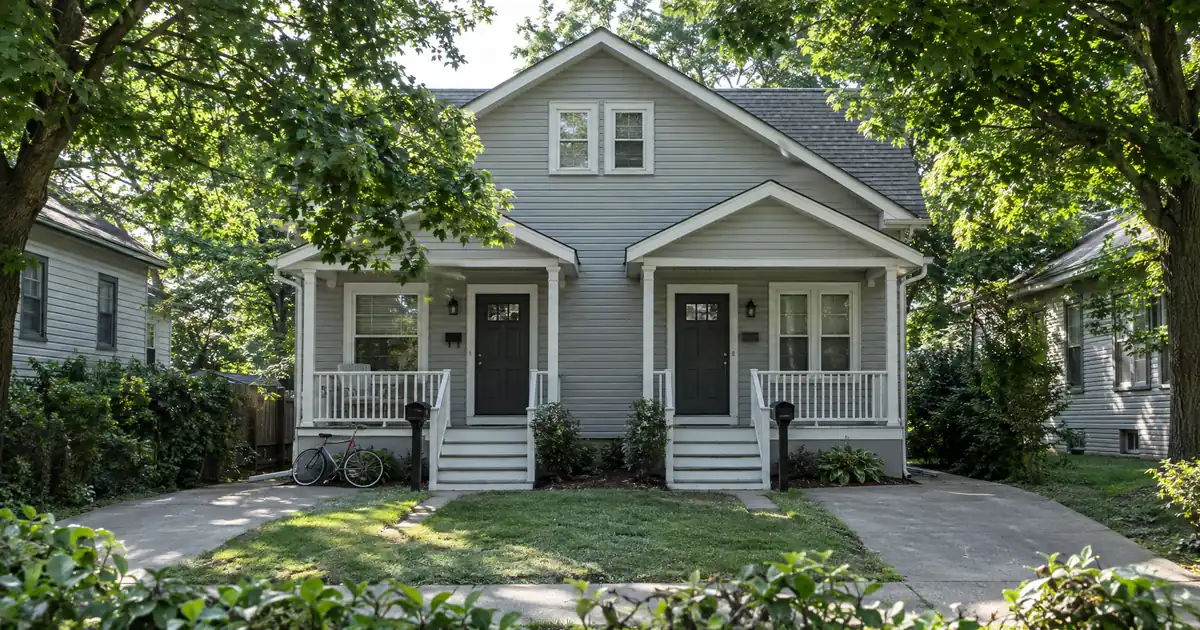
A house hack is a two- to four-unit property where you occupy one unit as your principal residence. Fannie Mae’s rental-income rule covers a two- to four-unit principal residence in which the borrower occupies one of the units. That occupancy is what makes the loan an owner-occupant loan instead of an investment loan.
Conventional payment estimate
The starting figures are an example price at the first-time buyer’s minimum down payment. Replace them with yours.
Editable benchmark: 7.32% as of October 22, 2026 · Freddie Mac 30-year average via FRED®. A conventional market reference, not a conventional loan quote.
Estimate seeded at the low end of Fannie Mae’s published range (0.58%–1.86% a year); the insurer prices the actual premium on the score and the leverage. Applies only above 80% loan-to-value.
Illustrative starting assumptions: a $350,000 price, the first-time buyer’s minimum down payment, a thirty-year term at the current Freddie Mac benchmark, mortgage insurance at the low end of Fannie Mae’s published range, and property taxes and insurance estimated at typical national rates. Every field is editable.
Illustrative estimate only — not a Loan Estimate, approval, quote, or commitment to lend. The rate field carries the weekly Freddie Mac thirty-year conventional benchmark, a market reference and not a conventional loan quote; your rate is set by the lender at lock. The mortgage insurance figure is an editable estimate seeded from Fannie Mae’s published typical range, not a premium quote; the insurer prices the actual premium, and the cancellation month assumes scheduled payments with no extra principal and no change in value. Taxes, insurance and dues are editable estimates; closing costs are not included. Conforming loan limits apply by county. Licensed in sixteen states for consumer mortgages.
The unit ceiling is firm. Conventional conforming loans secure a property of four or fewer units. Five units or more is commercial territory, handled outside the consumer lane.
Across the wholesale programs Lendmire places files with, the main surprise for first-time house hackers is not the down payment. It’s that the building gets underwritten as a home and a small rental at once. Both halves of the file have to hold up.
How Is a 2–4 Unit Conventional Loan Underwritten?
The deal works through seven checks: occupancy, reported rent, appraisal, rental income, experience, reserves, and the automated finding. Each one can change your maximum price. Here is the sequence.
Step 1: Occupancy and intent
You sign a security instrument promising to move in. Freddie Mac’s Guide cites the 60-day occupancy language in the standard instrument, and the usual expectation is that you stay for at least a year. Only one borrower on the loan needs to occupy.
Underwriters watch for patterns that look like an investor buying with an owner-occupant loan. Fannie Mae’s “Getting It Right” guidance lists occupancy red flags: an appraisal showing every unit rented, a sales contract that assumes an existing lease, or a buyer moving out of a single-family home into a multi-unit building. None of these is disqualifying alone. They do invite more questions.
Step 2: Gross rent gets reported
The lender reports monthly gross rent for each unit in the delivery data, even when you don’t use rent to qualify. So the rent picture exists on every 2–4 unit file.
Step 3: Full appraisal
Expect a full appraisal on a multi-unit building. For 2–4 units, Fannie Mae uses the Small Residential Income Property Appraisal Report (Form 1025) and a rental worksheet (Form 1037). The appraiser’s market-rent schedule feeds the income calculation when there’s no lease to rely on.
Step 4: Counting rent from the other units
Rent from your own unit generally doesn’t count. The rent from the units you don’t occupy can, and the lender doesn’t take it at face value.
On a purchase, Freddie Mac uses 75% of gross monthly rent, taken from the existing lease or from the appraiser’s market rent when there’s no lease. The 25% haircut stands in for vacancy and upkeep. Freddie also expects the lease to be current and fully executed, with the seller as landlord.
The usual practice is to add that 75% figure to your qualifying income while the full housing payment stays in your ratio. Confirm the exact mechanics against Form 1037 on your file, since lenders apply the worksheet themselves.
Step 5: The experience test
This is the step that catches buyers off guard. Fannie Mae’s SEL-2023-09 announcement ties full use of rental income to a primary housing expense and at least one year of property management experience. Without that history, the rent you can count may be limited.
In practice, that means a buyer who rents or owns today and has run a rental before faces a very different file than a buyer living with family who has never been a landlord. For the second buyer, the rent may be limited or unusable, and qualifying rests mostly on personal income. Describe your history to the loan officer early. The details sit in Fannie Mae’s rental income sections, and the exact caps are worth confirming against the current guide.
Step 6: Reserves
Fannie Mae’s minimum reserve rule says a one-unit principal residence has no minimum reserve requirement, while a two- to four-unit principal residence calls for six months. Automated findings can require more. Reserves are cash you must show after closing, not a lender fee, and they’re the line item that surprises low-down-payment buyers most.
Step 7: The automated finding
The file runs through automated underwriting. Across the wholesale conventional programs, the decision score floor starts at 620 (640 on an adjustable rate under manual underwriting), and the total ratio ceiling on an automated file is 50%. A manually underwritten loan runs tighter: 36% or 45%, with reserve and score factors from the Eligibility Matrix. All of this is subject to lender guidelines and full file review.
How Much Down Payment Does a 2–4 Unit House Hack Need?
Up to 5% down on an eligible conforming loan, or 95% LTV. Fannie Mae’s Eligibility Matrix lists 95% as the maximum for two- to four-unit principal-residence purchases. The same matrix shows 97% for a one-unit fixed-rate purchase, so the house hack gives up two points of leverage compared with the first-time-buyer single-family lane. These specifics are subject to lender guidelines and a full review of property, leverage, and credit.
Here’s the leverage ladder by occupancy and use:
| Scenario | Max LTV |
|---|---|
| 1 unit, first-time buyer, fixed | 97% |
| 1 unit, other purchase | 95% |
| 2–4 units, you occupy one | 95% |
| Second home | 90% |
| Investment, 1 unit | 85% |
| Investment, 2–4 units | 75% |
The last two rows are the point of living there. The same building bought without occupying it drops to 75% leverage. Occupancy is worth a lot, which is also why underwriters police it. Terms depend on the lender’s guidelines, the property type, the leverage, and a full review of the credit profile.
The 95% figure applies to conforming loan amounts, not high-balance loans, so a pricey market may push a fourplex out of the 95% lane. The limit is updated every year under federal law.
Two programs deserve a note. HomeReady and Home Possible, the income-limited programs, carry a limit of 80% of area median income. Fannie Mae’s product matrix allows 2–4 unit principal residences under HomeReady but excludes condos and co-ops. That page is dated, so confirm current terms before relying on it.
What Does Mortgage Insurance Do on a House Hack?
Above 80% LTV, mortgage insurance applies. At 95% leverage, you’ll carry it at closing. The mechanics matter more than any premium, since premiums vary with credit and leverage. Published typical annual premiums have run from 0.58% to 1.86% of the balance, a range and never a quote. The exact numbers vary by lender and program and follow a full review of property, leverage, and credit.
The good news is that it comes off. You can request cancellation when the balance reaches 80% of the home’s original value, assuming good payment history, no subordinate liens and no decline in value. The servicer must terminate it automatically at 78%. The CFPB’s explanation of PMI removal walks through the borrower’s rights. Federal cancellation rules were written with single-family primary residences in mind, so ask your servicer how they apply to a multi-unit building.
That’s a real contrast with FHA, where mortgage insurance can stay for the life of the loan depending on the down payment.
Where the General Rule Breaks
The rules above hold for the standard case. These edge cases change the outcome.
No landlord history, no housing expense. The buyer living rent-free with relatives may find rental income limited or excluded. Plan to qualify on personal income, and treat the rent as a cushion rather than a qualifying tool.
An ADU on a single-family home. Not a house hack in the agency sense. Fannie Mae allows rent from one accessory dwelling unit on a one-unit principal residence, capped at 30% of qualifying income, with limits for borrowers under 12 months of management experience. Boarder income is generally ineligible, though HomeReady allows up to 30% of qualifying income.
Cash-out on a building you already own. Cash-out refinancing on a two- to four-unit principal residence tops out at 75% LTV, versus 80% on a one-unit home. Seasoning also applies: the loan being paid off must be at least 12 months old, and a borrower on title for six months. Refinance documentation leans on traditional personal-income documentation and rental history, not the purchase lease method. Lendmire’s piece Conventional Cash-Out Refinance Requirements on a 2-4 Unit Primary Home covers that path. Final terms depend on the lender’s guidelines, the property type, and the borrower’s complete credit picture.
High-balance loans. Treat 95% as a conforming-loan feature. If your price pushes the loan above the county limit, other lanes apply, and leverage typically steps down.
Manual underwriting. Credit score and reserve rules differ for manual files, so a loan the automated system won’t approve can’t simply be re-run by hand at the same terms.
Moving out. After the occupancy period, you may rent out the unit you lived in. Plan the timing around the security instrument’s one-year expectation. Buying your next house hack later is possible, but the new loan has to be a fresh owner-occupant purchase with its own occupancy promise.
Future refinancing. Refinance later as a landlord and the occupancy class changes, with different leverage and reserve rules.
Do Conventional Loans Have a Rent-Sufficiency Test Like FHA?
Conventional financing on 2–4 units generally doesn’t apply the rent-based self-sufficiency test that FHA uses on three- and four-unit buildings. Treat it as a general difference and ask your loan officer how the file will be tested. The programs should be kept separate: self-sufficiency is an FHA rule, not a conventional one.
If you’re deciding between conventional and a government loan, the useful questions are about credit, leverage and how long you’ll keep the loan. Conventional tends to suit a borrower with solid credit who wants mortgage insurance that ends at 78%. FHA can suit a borrower with weaker credit who can live with its insurance structure. And if you’re weighing a short-term rental strategy on the building, Lendmire’s article DSCR vs Conventional Airbnb Loan on a 2-4 Unit takes that up directly.
What Does a House Hacker Actually Decide?
Picture a buyer eyeing a fourplex. Three decisions drive the file.
First, how much cash to hold back. The 95% leverage keeps down payment low, but the six-month reserve requirement means the cash left after closing matters as much as the cash going in. A buyer who spends everything on the down payment may fail the reserve test. Each figure is subject to lender guidelines and a complete review of property type, leverage, and credit.
Second, how much to lean on rent. Counting 75% of the other units’ rent can raise the price you qualify for. But a vacancy hits your household budget directly, even though the haircut is built into qualifying. A cautious buyer qualifies without the rent and treats it as upside.
Third, how clean the occupancy story is. Moving from a single-family home you own into a multi-unit building draws questions. Document why you’re moving and when you’ll occupy the unit.
Insurance also has to match the occupancy. A policy with rental coverage that doesn’t fit an owner-occupied loan can raise questions. As for taxes: tax treatment can depend on your situation; borrowers should speak with a qualified tax professional before relying on any deduction or credit.
Common Mistakes
- Counting all the rent. Underwriters use a reduced share and apply experience tests.
- Assuming 15–25% down is required. Many older articles state that rule. Current agency leverage on eligible 2–4 unit principal-residence purchases is 95%.
- Skipping reserves. Reserves aren’t needed on a one-unit primary home, but they are on 2–4 units.
- Buying a fourplex as an owner-occupant and renting every unit. Occupancy is a representation and an obligation. Fannie Mae names occupancy misrepresentation as a recurring defect category, and the consequences can be serious.
- Treating the conforming limit as one number. It varies by county and unit count.
Key Terms Defined
Principal residence: The home where you live as your main address, which sets owner-occupant leverage and pricing.
LTV (loan-to-value): The loan balance as a percentage of the property’s value or price.
Reserves: Verified cash or liquid assets left after closing, measured in months of housing payments.
Gross monthly rent: The total rent a unit brings in before any vacancy or expense adjustment.
Form 1025: The appraisal form for two- to four-unit properties, including the market-rent schedule.
Conforming loan limit: The maximum loan size eligible for Fannie Mae or Freddie Mac purchase, set by FHFA by county and unit count. Leverage, reserves, and pricing vary by lender and program; the final terms follow the full file review.
Frequently Asked Questions
Can I use a conventional loan to buy a fourplex?
Yes, if you occupy one of the units and the loan amount falls within the conforming limit for four units. A building with five or more units is commercial and isn’t financed through a consumer conventional loan. Leverage reaches 95% on eligible conforming loans, subject to lender guidelines and full file review.
Do I need landlord experience to use the rent?
Often, yes. Agency guidance ties full use of rental income to a primary housing expense and at least a year of property management experience. Without it, the rent you can count may be limited or excluded, and you may qualify on your personal income. Confirm the current cap with your loan officer.
How long do I have to live in the building?
You generally must move in within 60 days of signing and stay at least a year, per the standard security instrument. Only one borrower needs to occupy. After that period, renting out your unit is generally possible, though the terms of your documents and lender should be reviewed first.
Does the unit I live in count as income?
No, generally not. Rent from your own unit is ineligible. The rent from the units you don’t occupy may be counted at a reduced share, supported by a lease or the appraiser’s market-rent schedule.
What credit score do I need?
The wholesale conventional programs generally start at a 620 decision score, with 640 on an adjustable rate under manual underwriting. The automated finding governs most files, with a total ratio ceiling of 50%. Higher credit typically means more favorable mortgage insurance terms.
Next Step
If you are buying a home and want to see whether a conventional loan fits your file, Lendmire can help you compare the options and what each one asks of the file. A call to 828-256-2183 or a look at Lendmire’s conventional loan programs is a reasonable place to start. Program details are subject to lender guidelines, and nothing here is a commitment to lend.
For your own numbers, request a scenario review with Lendmire.
About Lendmire
Lendmire is a mortgage brokerage (NMLS# 2371349) licensed for consumer mortgage lending in 16 states, arranging FHA, VA, conventional and jumbo purchase and refinance loans through a wholesale lending network. Eligibility is determined by the lender on each file. Scotsman Guide named Lendmire a Top Mortgage Workplace in both 2025 and 2026.
Get Started
Ready to find the right loan for you?
In about 30 seconds you can review financing options available for your home or investment property. No commitment required.
Informational only. Not a Loan Estimate, approval, or commitment to lend. Program availability and eligibility are subject to lender guidelines, credit approval, property review, and underwriting.
References
1. Fannie Mae Selling Guide B3-3.8-01, General Rental Income Information
2. Freddie Mac Guide 8405.1 Occupancy waivers
3. Fannie Mae “Getting It Right” occupancy
4. Fannie Mae Selling & Servicing Guide Forms
5. Freddie Mac Guide 5306.1, Rental income
7. Fannie Mae Selling Guide B3-4.1-01 Minimum Reserve Requirements
8. Fannie Mae Eligibility Matrix
9. CFPB: When can I remove PMI?
10. Fannie Mae ADU income and HomeReady boarder income
This article is part of Lendmire’s conventional loan program — full qualification details, guidelines, and scenarios live on the program page.
Related reading: Can a First-Time Buyer Get a Conventional Loan With No Income Limit? · Conventional Cash-Out Refinance Requirements for a Second Home · Can You Avoid PMI on a Conventional Loan Without a Fifth Down?
Brandon Miller
Founder & CEO, Mortgage Loan Originator, Lendmire LLC
- Mortgage Loan Originator · NMLS# 1129696 · Verify on NMLS Consumer Access
- North Carolina Real Estate Broker · License# 343312 · Verify on NCREC
- North Carolina Insurance Producer · License# 19053198 · Property, Casualty, Life, Health · Verify on NAIC SBS
- Lendmire LLC · Firm NMLS# 2371349 · Verify firm licensure
Legal disclosures. Lendmire (NMLS# 2371349) is a state-licensed mortgage brokerage that arranges financing through wholesale lender relationships. Lendmire is not a direct lender, depository institution, or registered financial advisor. The discussion above is general informational content about real estate financing — it is not financial, legal, or tax advice, and readers should consult licensed professionals for guidance on their individual circumstances. Loan inquiries are subject to lender underwriting; this article does not represent a commitment to lend. Loan terms, rates, and qualification standards vary by borrower, property, and state, and are subject to change at any time. Equal Housing Opportunity. NMLS Consumer Access: nmlsconsumeraccess.org.