
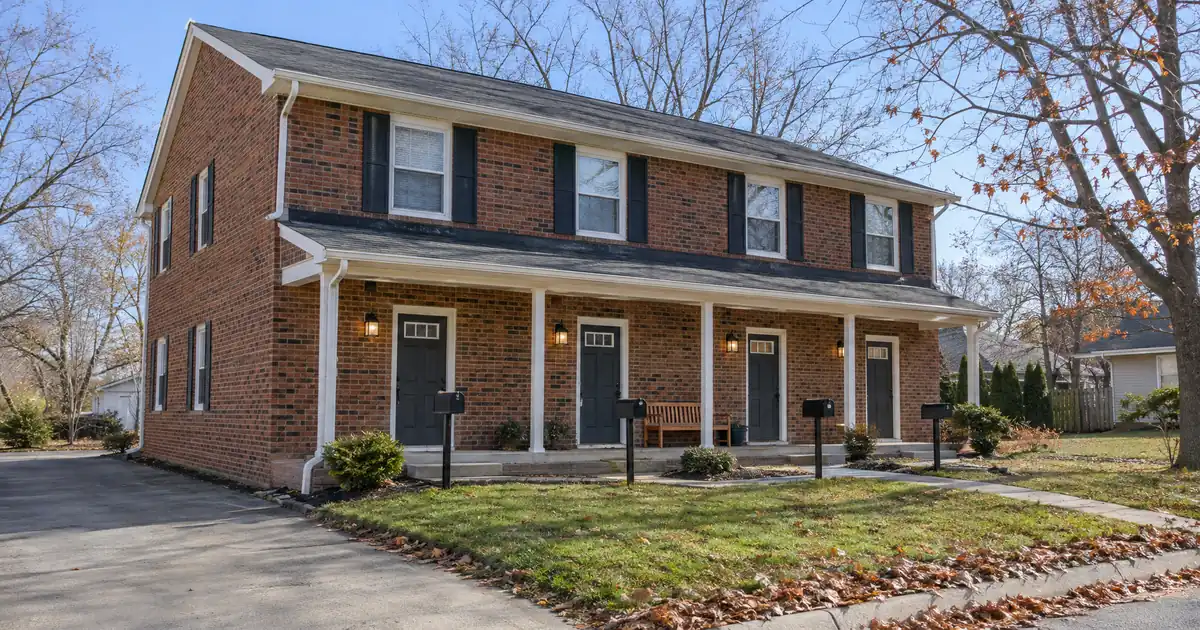
The Quick Read: A refinance on a duplex, triplex or fourplex you live in is underwritten on four things: your occupancy, the unit count, the type of refinance, and the strength of your file. A “better terms” refinance, meaning a lower payment or a shorter term, is usually a rate-and-term refinance. It pays off the old first mortgage and closing costs without pulling out meaningful equity. Multi-unit homes get tighter leverage limits and heavier reserve rules than one-unit homes, and those differences decide most outcomes.
Most owner-occupants of a 2-4 unit home are surprised by one thing. The program that works for a single-family house does not always carry over to the building next door. Some of the best-known low-down-payment refinance tiers stop at one unit. The rent from your neighbors’ units helps you qualify, but rent from your own unit does not.
Refinance savings and break-even estimate
The starting figures are an example value with a balance in proportion and a placeholder for costs. Replace them with yours, and enter the current rate from your statement.
Editable benchmark: 7.32% as of October 22, 2026 · Freddie Mac 30-year average via FRED®. A conventional market reference, not a refinance quote.
Illustrative starting assumptions: a $350,000 home value, a $245,000 current balance, a current rate you enter and a remaining term seeded at twenty-five years, closing costs seeded at $5,000 as an editable placeholder (not a fee quote) and rolled into the new loan, a thirty-year term at the current Freddie Mac benchmark, and property taxes and insurance estimated at typical national rates. Every field is editable.
Illustrative estimate only — not a Loan Estimate, approval, quote, or commitment to lend. The new rate field carries the weekly Freddie Mac thirty-year conventional benchmark, a market reference and not a refinance quote; a refinance is priced by the lender at lock, and the current rate, the remaining term and the closing costs are figures you enter. The current payment is estimated from the balance, the current rate and the remaining term; the break-even divides the closing costs by the monthly saving and ignores the interest effect of a longer term. On the VA IRRRL the funding fee is added to the loan unless the veteran is exempt. Taxes and insurance are editable estimates. Licensed in sixteen states for consumer mortgages; Lendmire is a broker, never the lender.
This guide walks through the loan from start to finish. It covers what the loan is, how it is underwritten, which structures exist, where the usual rules break, and how to decide. Lendmire is a mortgage broker. It arranges these loans through wholesale lenders and never lends directly. Every figure below is subject to lender guidelines and full file review, and nothing here is a commitment to lend.
What Counts as a 2-4 Unit Primary Home?
A 2-4 unit primary home is a duplex, triplex or fourplex where you live in one unit as your main residence. Lenders treat it as residential, not commercial, as long as it has four units or fewer. Occupancy is the deciding variable: the same building financed as an investment property gets much tighter terms.
On a rate-and-term refinance, the occupancy question shows up in three places:
- Your intent to live there. You certify that the building is your principal residence. A refinance is not a place to be loose with that statement.
- Your title and mortgage history. The existing loan's type (conventional, FHA or VA) decides which refinance paths are open.
- The unit count. Moving from one unit to two, three or four changes leverage, reserves and how rent is counted.
Second homes and investment properties follow separate, tighter leverage rules. If your building is a rental you do not live in, occupancy decides the leverage, and this article does not apply.
Key Terms Defined
Rate-and-term refinance: A new loan that pays off your existing first mortgage and closing costs, with only incidental cash back. Agencies call it a "limited cash-out" refinance.
Cash-out refinance: A new loan larger than your payoff, where the extra goes to you as cash. It carries lower leverage limits and stricter seasoning.
LTV (loan-to-value): The loan amount divided by the home's appraised value, shown as a percentage.
Reserves: Liquid savings you must still hold after closing. Multi-unit homes usually require more of them than one-unit homes.
Seasoning: How long you have owned the home or held the existing loan before a new loan may be written, mainly for cash-out.
Net tangible benefit: The test a government streamline refinance must meet, showing the new loan measurably helps you.
Rent schedule: The appraiser's report of what each unit rents for, used to support the rent income on the other units.
What Are the 2-4 Unit Primary Home Refinance Requirements?
Across the conventional wholesale programs Lendmire places files with, a rate-and-term refinance on a one-unit principal residence reaches 95% LTV. A cash-out on a 2-4 unit principal residence stops at 75%, versus 80% on one unit. The 2-4 unit rate-and-term ceiling sits lower than one-unit and varies by lender, so confirm it on your file.
The table below shows the main requirements side by side. Figures are typical guidelines on most files, not promises.
| Requirement | Rate-and-term (limited cash-out) | Cash-out (conventional) |
|---|---|---|
| Max LTV, one unit | 95% (97% on special program) | 80% |
| Max LTV, 2-4 units | Lower than one-unit; varies by lender | 75% |
| Mortgage insurance | Required above 80% LTV | Required above 80% LTV |
| Credit | Typically starts at a 620 decision score | Typically starts at a 620 decision score |
| Seasoning | Rarely a hurdle | Existing loan 12+ months; 6 months on title |
| Cash back | Small, incidental amount | Yes, within the LTV cap |
The 97% tier is the one that trips up multi-unit owners. Per the Fannie Mae Selling Guide on limited cash-out refinances, the 95.01% to 97% tier applies to one-unit principal residences only, on a fixed rate. A duplex or fourplex cannot use it. Fannie Mae's Eligibility Matrix sets the ceilings by transaction type and unit count, and it is the document to check for current numbers, since agency matrices change.
Credit, Ratios and Mortgage Insurance
Most conventional wholesale programs start at a 620 decision score. On an adjustable rate under manual underwriting the floor is 640. The automated finding governs most files, with a total debt-to-income ceiling of 50%. Manually underwritten loans run 36% or 45%, depending on the score and reserve factors.
If you borrow above 80% LTV, mortgage insurance applies. You can request cancellation at 80% of the original value with good payment history, no second liens and no decline in value. The servicer must end it automatically at 78%. Typical annual premiums run from 0.58% to 1.86% of the balance, a published range and not a quote. Terms depend on the lender's guidelines, the property type, the leverage, and a full review of the credit profile.
How Is the Loan Underwritten, Step by Step?
Underwriting a 2-4 unit refinance follows six steps. Each one is where a multi-unit file differs from a one-unit file.
1. Pick the product by goal. A lower rate or shorter term on a conventional loan means a rate-and-term refinance. A real equity pull means cash-out. An existing FHA or VA loan opens the streamline paths covered below.
2. Apply and review the Loan Estimate. The lender issues a Loan Estimate after application. It shows the loan terms, cash to close and whether a prepayment penalty applies.
3. Run automated underwriting. The system reviews credit, income and assets, and decides which documents you need. Heavier reserves apply to 2-4 unit homes.
4. Order the appraisal. A multi-unit appraisal includes comparable sales and a rent schedule for every unit. Multi-unit homes generally get a full appraisal. The appraisal-waiver options common on one-unit loans mostly do not apply.
5. Count the income. The lender decides how much rent from the other units can be used, and documents it.
6. Compare the Closing Disclosure to the Loan Estimate before you sign.
The appraised value matters more than most owners expect. It sets the LTV, and LTV sets the maximum loan, the mortgage insurance and sometimes the program itself. A building that appraises lower than hoped can push you from a rate-and-term refinance that works to one that does not.
How Does Rental Income From the Other Units Count?
Rent from the other units can generally count toward qualifying, but rent from your own unit cannot. How much counts depends on documentation, such as leases and the appraiser's rent schedule, and on your history as a landlord.
A few patterns come up repeatedly on these files:
- Experienced landlords with a documented rental history usually get more of the income counted.
- First-time owners of a multi-unit may find the lender limits how rent is used. In some cases it only offsets the housing payment.
- A vacant unit is a problem. A lender will ask how the rent will be supported without a current lease.
- Your own unit's rent is not income, no matter what the market would pay for it.
The lender decides first whether the income is eligible at all. Gather leases, bank deposits showing rent and any traditional personal-income documentation that reports the rent before you apply. Mismatches between the leases and the appraiser's rent schedule are a common reason files stall.
Where Does the General Rule Break?
Five edge cases change the answer for 2-4 unit owners. Each is a place where a one-unit rule does not carry over.
The 97% tier excludes your building. The first-time-buyer style tier is limited to one-unit principal residences. If a lender's advertisement mentions 97%, check the unit count in the fine print.
Reserves are heavier. The Selling Guide requires meaningful post-closing reserves on a 2-4 unit principal residence and none as a general minimum on a one-unit one. Even a refinance meant only to lower the payment can need real savings left over.
The owner of your existing loan matters. Streamline-style options depend on who holds your current mortgage, and you cannot change that after the fact. Check whether it is conventional, FHA or VA before choosing a path.
Paying off other liens can change the label. Paying off a second lien that did not fund the purchase can turn a "limited" refinance into a cash-out. A purchase-money second lien can usually be paid off within a rate-and-term. Confirm which type yours is before you apply.
Cash-out has its own credit and seasoning rules. A cash-out on a 2-4 unit home sits at 75% LTV. The existing first mortgage must be at least 12 months old, and you must have been on title for 6 months, with exceptions for delayed financing, inheritance and legal awards. Lendmire's piece Does a 2-4 Unit Primary Home Cash-Out Refinance Need Higher Credit? covers the credit side. The exact numbers vary by lender and program and follow a full review of property, leverage, and credit.
What If You Already Have an FHA or VA Loan?
An existing FHA or VA loan opens a streamline path that skips most of the standard underwriting. Both can work on a 2-4 unit home, and both require that the new loan helps you.
The FHA Streamline needs an existing FHA-insured mortgage that is current and a net tangible benefit. The HUD Streamline page lays out these basics. On the files Lendmire sees, the streamline means no appraisal and a limited credit review. FHA does not allow closing costs to be added to the new loan balance in a streamline. Some lenders offer a "no cost" streamline by raising the interest rate to cover the costs. The cost is real. It is just paid over time inside the rate. An FHA rate-and-term refinance with an appraisal reaches 97.75% LTV for borrowers who do not want the streamline route. Final terms depend on the lender's guidelines, the property type, and the borrower's complete credit picture.
The VA IRRRL requires an existing VA-backed loan and a certification that you live in the home or did before. VA's IRRRL page also says a second-mortgage holder must agree to subordinate. The program carries a 0.5% funding fee unless you are exempt, has no VA appraisal, and requires seasoning of the later of 210 days and six payments. Nothing about unit counts. Multi-unit homes are commonly eligible, but confirm with the lender. The IRRRL generally cannot produce cash back.
Neither streamline is automatic. A lender can add its own conditions on top of the agency rules.
Choosing Your Refinance Type
Match the refinance to the goal you actually have. The table maps common goals to the loan that usually fits.
| Your goal | Usual fit | Watch for |
|---|---|---|
| Lower payment or shorter term | Rate-and-term | Closing-cost recovery time |
| Remove mortgage insurance | Rate-and-term at 80% LTV or less | Appraised value |
| Existing FHA loan, lower cost | FHA Streamline | Net tangible benefit |
| Existing VA loan, lower cost | VA IRRRL | Funding fee, occupancy certification |
| Pull equity for repairs or debt | Cash-out at 75% LTV | Seasoning, higher credit bar |
| Loan above conforming limit | Jumbo lane | Higher score, own reserve rules |
For a jumbo refinance, the wholesale lanes typically start at a 660 decision score and reach 90% leverage on loans up to $5,000,000, with a 50% ratio ceiling on the fixed lanes. Those figures vary by program and file.
When a refinance does not make sense. If you plan to sell soon, the savings may never repay the closing costs. If you roll costs into the balance, break-even moves later. A longer new term can lower the payment while raising total interest paid. The break-even is simple: divide total closing costs by monthly savings. The result is the number of months before you come out ahead.
A Worked Example
Take a hypothetical duplex where you live in one unit and rent the other. Say your current loan is at 70% of the appraised value. You want a lower payment and no cash out.
On a rate-and-term refinance, the new loan equals the payoff plus closing costs, so leverage stays near 70%. That is well under 80%, so mortgage insurance does not apply. The other unit's documented rent counts toward your income. Your own unit's rent does not. The lender confirms reserves, runs the file through automated underwriting, and orders a multi-unit appraisal with a rent schedule.
Now change one variable. Say you want cash out for a kitchen remodel. The cash-out cap on a 2-4 unit home is 75% LTV, so your room is about five points of the home's value above the current 70%. If your loan was at 78%, a cash-out is off the table entirely. Same house, different goal, different answer. Each figure is subject to lender guidelines and a complete review of property type, leverage, and credit.
Documents and Common Reasons Files Stall
Expect to provide pay stubs and W-2s, or traditional personal-income documentation if you are self-employed, plus bank statements, current leases for the rented units and your current mortgage statement. Landlords with newly vacant units should be ready to explain how that rent will be supported.
Files most often stall for these reasons:
- Reserves that fall short once the heavier multi-unit rule is applied.
- Leases that do not match the appraiser's rent schedule.
- An occupancy picture that is unclear, such as a planned move-out.
- Seasoning not yet met on a cash-out.
- An appraisal below expectations, which resets the LTV.
What Should You Know About Your Rights as a Borrower?
You are not committed to any lender until you sign the final closing documents, according to the Consumer Financial Protection Bureau. Compare Loan Estimates side by side before you choose. Check the prepayment penalty line and the total cost of the loan, not just the payment.
Tax treatment can depend on your situation; borrowers should speak with a qualified tax professional before relying on any deduction or credit.
Frequently Asked Questions
Can I use the 97% LTV refinance on my duplex?
No. The 95.01% to 97% tier is limited to one-unit principal residences with a fixed rate. A duplex, triplex or fourplex falls under the lower 2-4 unit ceilings, which vary by lender. Ask for the unit-count ceiling in writing before you pay for an appraisal.
Does the rent from my own unit help me qualify?
No. Rent from the unit you live in generally cannot be used. Documented rent from the other units can count, subject to lender guidelines and your landlord history. Bring leases and bank deposits that show the rent.
Do I need reserves on a 2-4 unit refinance even if I only want a lower payment?
Yes, in most cases. Multi-unit principal residences carry heavier post-closing reserve requirements than one-unit homes, regardless of the refinance type. Lenders may add more based on the automated findings. Plan to keep real savings after closing.
Can I refinance a 2-4 unit home with an FHA or VA loan?
Often, yes. The FHA Streamline covers one- to four-unit primary residences when the existing loan is FHA-insured and current. The VA IRRRL is commonly available on 2-4 unit homes too, though VA's own page does not list unit counts. Both require a net tangible benefit, and lenders can add conditions.
How do I know if the refinance is worth it?
Divide your total closing costs by your monthly savings to find the break-even in months. If you expect to keep the home longer than that, the refinance usually pays off. Rolling costs into the balance or choosing a longer term can push the break-even later and raise total interest.
Your Next Step
If you are weighing a refinance and want the break-even run on your own numbers, Lendmire can help you compare the refinance programs on the same home. Bring your current mortgage statement, your leases and your appraisal expectations, and the comparison will show which structure fits the goal you actually have.
For your own numbers, request a scenario review with Lendmire.
About Lendmire
Lendmire (NMLS# 2371349) is a mortgage brokerage serving homeowners and home buyers in 16 states. FHA, VA, conventional and jumbo purchase and refinance loans are arranged through wholesale lending channels; Lendmire brokers the financing and the lender underwrites each application. Scotsman Guide named Lendmire a Top Mortgage Workplace in both 2025 and 2026.
Get Started
Ready to find the right loan for you?
In about 30 seconds you can review financing options available for your home or investment property. No commitment required.
Informational only. Not a Loan Estimate, approval, or commitment to lend. Program availability and eligibility are subject to lender guidelines, credit approval, property review, and underwriting.
References
1. Fannie Mae Selling Guide: Limited Cash-Out Refinance Transactions
2. Fannie Mae Eligibility Matrix
3. HUD: FHA Streamline Refinance
4. VA: Interest Rate Reduction Refinance Loan
5. Consumer Financial Protection Bureau
This article is part of Lendmire’s Refinance series — every loan program’s qualification details, guidelines, and scenarios live on the loan options page.
Related reading: How Seasoning Works on a Cash-Out Refinance of Your Home · How an Appraiser Values Your Home for a Cash-Out Refinance · Cash-Out Refinance vs Selling Your Home
Brandon Miller
Founder & CEO, Mortgage Loan Originator, Lendmire LLC
- Mortgage Loan Originator · NMLS# 1129696 · Verify on NMLS Consumer Access
- North Carolina Real Estate Broker · License# 343312 · Verify on NCREC
- North Carolina Insurance Producer · License# 19053198 · Property, Casualty, Life, Health · Verify on NAIC SBS
- Lendmire LLC · Firm NMLS# 2371349 · Verify firm licensure
Important disclosures. Lendmire (NMLS# 2371349) is a licensed mortgage brokerage. Lendmire is not a direct lender, depository institution, or financial advisor. All loan inquiries are subject to lender underwriting; this article does not constitute a commitment to lend. Rates, terms, and program guidelines are subject to change without notice and vary by borrower profile, property type, and state. Information in this article is general in nature and is not financial, legal, or tax advice. Equal Housing Opportunity. NMLS Consumer Access: nmlsconsumeraccess.org.