
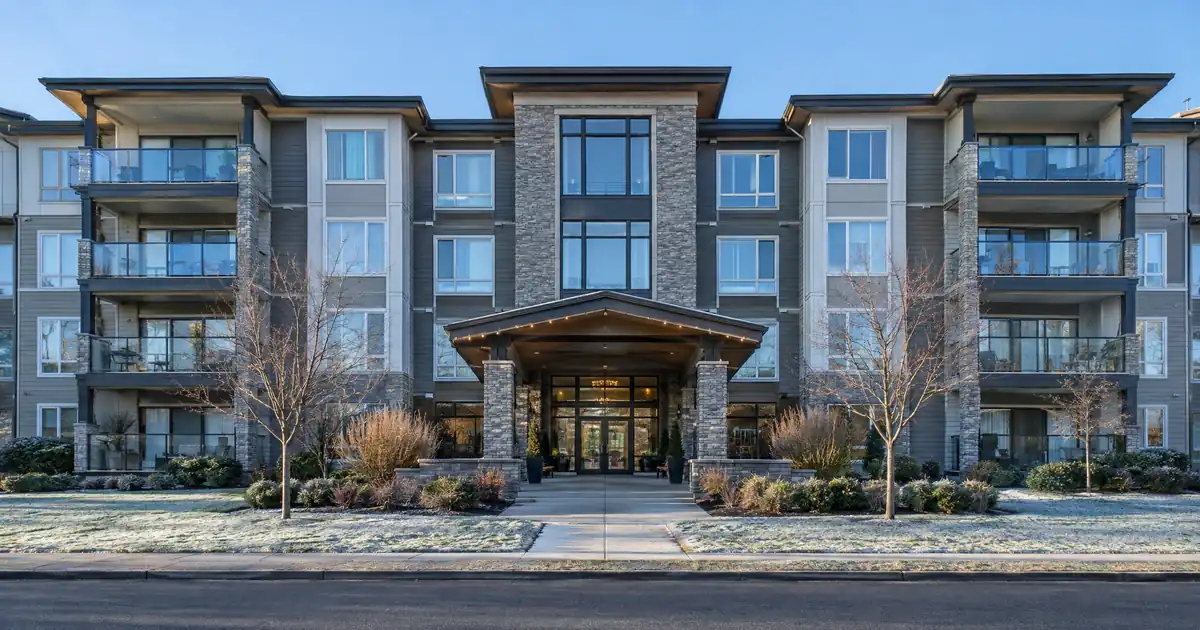
The Quick Read: The property rules come from the first mortgage, not from the assistance. A condo or townhome can work with assistance, but the building has to pass the FHA, USDA or HUD-184 test for the first lien. The assistance does not relax any property requirement. Whether a “townhome” passes depends on its legal structure, not on how it looks from the street.
Most buyers check their own eligibility first: credit, income, savings. For a condo or townhome, check the building first. A fully qualified buyer can still lose a deal because the project fails review.
Key Takeaways
- The first lien sets the property test. Assistance sits behind it.
- “Townhome” is a style. Legally it can be a condominium, a planned unit development (PUD), or a site condominium.
- Condos get project-level review. Many townhomes in a PUD are treated more like single-family homes, but the lender confirms the classification.
- Primary residence only. No second homes, no rentals.
- No assistance option requires a first-time buyer.
- Ask for the HOA documents before you write the offer.
What Is Down Payment Assistance, and Where Does the Property Fit In?
Down payment assistance comes in four shapes through the wholesale programs Lendmire places files with. Lendmire is a mortgage broker, so these are arranged through wholesale lenders, subject to program guidelines and full underwriting. Details are on the down payment assistance programs page.
- Grant-style assistance: 2% or 3.5% of the purchase price. Nothing to repay. It is released at closing, with no lien and no payment. Credit floor of 620. It pairs with FHA first liens only.
- Forgivable second lien: 3.5% of the lesser of price or appraised value. No interest and no payment. It is forgiven after the first 36 or 60 on-time first-lien payments. Credit floor of 640.
- Repayable second lien: 3.5% or 5% of the lesser of price or value. This is a real loan with a monthly payment and a balloon due in year 10. Credit floor of 660.
- Refinance-cost second lien: 1% to 3.5% of the balance on an FHA refinance, with combined leverage up to 104%. These specifics are subject to lender guidelines and a full review of property, leverage, and credit.
The forgivable and repayable seconds pair with FHA, USDA and HUD-184 first liens. The grant pairs with FHA only. Nobody has to be a first-time buyer. Repeat and move-up buyers qualify. And it has to be your primary residence. Assistance is never available on a second home or a rental.
Here is the point that matters for this article. The assistance is a separate product with its own rules. The building still has to qualify under the first mortgage. No assistance option overrides that.
Is a Townhome a Condo?
Not always, and the difference decides the review path. The labels come from HUD’s own Handbook 4000.1 glossary.
Condominium project: A project where owners hold an undivided interest in the common elements. The units can be attached, semi-detached or detached.
Planned unit development (PUD): A development where an HOA owns the common areas and every homeowner must belong and pay assessments.
Site condominium: A project of detached homes, with no shared garages or other attached buildings, that is legally set up as a condo. The glossary adds further conditions.
Approved condominium project: A condo that meets FHA’s approval requirements, through either a lender review or a HUD review.
Single-Unit Approval: FHA approval of one unit in a condo project that is not on the approved list.
CLTV (combined loan-to-value): The first loan plus every subordinate loan, divided by value.
A quick clue to the classification is the appraisal form. The standard one-unit form covers a unit in a PUD but is not designed for a condominium unit. Condos use a different form. The real test, though, is the recorded declaration and the title report. If the legal documents say “condominium,” the condo rules apply, even if the unit looks like a row house.
How Does the Lender Test the Building and the Buyer?
Here is the step-by-step on how these files move, from the file side.
1. Choose the first lien and the assistance. The first lien is FHA, USDA or HUD-184. The assistance shape has to match. The grant needs an FHA first lien.
2. Classify the property. The lender reads the declaration, the title report and the appraisal. This is where a “townhome” turns out to be a condo, or a PUD, or neither.
3. Check project status. For FHA, the lender looks at whether the condo is on HUD’s approved list. If it is not, the lender checks whether Single-Unit Approval is possible. For USDA and HUD-184, the lender checks that the project is accepted under the underlying agency standards.
4. Collect the HOA documents. Declaration, bylaws, budget, balance sheet, insurance certificates, plus owner-occupancy and delinquency data. HUD’s Form HUD-9992 shows the kind of project facts requested. The HOA or its manager produces most of this, so part of the process is outside the buyer’s control.
5. Underwrite the buyer with the assistance in the picture. For FHA, HUD defines CLTV as the base loan plus all outstanding subordinate mortgages, divided by adjusted value. A repayable second adds a monthly payment that counts against the buyer’s debt ratios. A grant and a forgivable second do not add a payment. Assistance funds are not the borrower’s own funds, and the file documents where they come from.
6. Appraisal and insurance. For a condo, the HOA carries the master hazard policy, and flood coverage where required. The unit owner usually carries an interior policy too.
7. Close with the lien order intact. The agency-backed loan stays in first position and any assistance lien is subordinate. That also applies at a later refinance. USDA’s draft refinance guidance says assistance seconds cannot be rolled into a new guaranteed loan. They are subordinated or paid off.
Three layers decide the outcome: the project, the unit, and the buyer plus the assistance. A file can fail at the first layer while the other two are perfect.
What Does FHA Require of a Condo?
An FHA condo unit needs an approved project or Single-Unit Approval. That is the mechanical rule, and it is where most condo files either clear or stall.
Approval comes through a lender review or a HUD review. Approved projects recertify on a schedule. A project can recertify only within a window of six months before to six months after its approval expires. Outside that window it re-applies for a full review.
If the project is not approved, Single-Unit Approval is the fallback. HUD’s FHA Connection help page lists the conditions:
- The project must be ready for occupancy and have at least five units.
- In projects with ten or more units, FHA concentration is capped at 10%.
- In projects with fewer than ten units, no more than two FHA-insured mortgages are allowed.
- The lender submits Form HUD-9991 when it requests the FHA case number.
A 2019 HUD mortgagee letter confirms those limits. It also says HUD may suspend new FHA case numbers when concentration is exceeded.
The broader framework comes from the final rule on project approval for single-family condominiums. It lets HUD set owner-occupancy, FHA concentration and commercial-space standards within ranges, by notice. Those standards have moved over time. Historically, FHA looked for a majority of units to be owner-occupied. Current reserve, delinquency and owner-concentration tests should come from your loan officer against the live Handbook 4000.1, not from a blog post.
What About PUD Townhomes?
PUD townhomes are generally treated more like single-family homes for FHA purposes, but confirm it. Guidance on this point is not uniform. An older HUD help page says a PUD must be approved by HUD to be eligible for FHA insurance, while common industry practice treats PUD units as needing no project-level approval, with that requirement applying to condos. The safe path: the lender confirms the classification and any HOA review against current Handbook rules.
Don’t assume a townhome is the easy choice. A townhome that is legally a condo gets the condo review. A condo that sits inside a larger PUD or master association must still meet the condo requirements. This matters for USDA, which leans on those agency standards.
How Do USDA and HUD-184 Treat Condos and Townhomes?
USDA does not run its own condo approval. It relies on others. Projects with ineligible characteristics are out. They must be a permanent residence and cannot be income-producing. The property must also sit in an eligible rural area.
Two USDA file points show up on condo and PUD files. HOA dues count in the buyer’s debt-to-income ratio. And a condo not on the FHA list can still work if it meets conventional project guidelines and the lender documents that decision in the file. Draft USDA language also lists project types that don’t qualify, such as condo hotels and timeshares.
HUD-184 is stricter on condos. Its handbook lists townhouses and row houses as eligible, and units in FHA-approved condominium projects. The property must also be in an approved area.
One misconception to clear up. HUD-184 does not itself provide down payment assistance or grants. In the Lendmire network, the forgivable and repayable seconds can sit behind an HUD-184 first lien, but the first lien itself carries no assistance.
Where Does the General Rule Break?
Six edge cases come up on real files.
- The condo-classified townhome. The label doesn’t remove project review. The declaration decides.
- FHA concentration at the limit. A project can be approved and still closed to new FHA buyers. A buyer can be fully qualified and have no path into that building. Concentration can also run out between contract and closing.
- Condo inside a master association. The condo requirements apply to the unit, even though it is inside a larger PUD.
- New or phased projects. Single-Unit Approval needs a project ready for occupancy. Brand-new phases may not be there yet.
- USDA projects not on the FHA list. Acceptable if the lender documents it under the other agencies’ standards. The file needs that paper trail.
- Assistance programs from other sources. Many public programs add their own property limits, such as price caps or excluded property types. That is why the Lendmire options are matched to specific first liens, and why no option stacks with another assistance program.
The network’s assistance options add one more property boundary. The grant covers 1-4 unit primary residences, including FHA-approved condominiums and PUDs. The second-lien options cover single-family detached or attached homes, condominiums and PUDs, and they exclude unique property types. The second liens also allow minor non-structural repair escrows up to $5,000, with 150% of the estimate escrowed and the work completed within 90 days.
How Does the Assistance Shape Change the Buying Experience?
The shape of the assistance changes what you carry after closing, not whether the building qualifies.
| Assistance shape | Adds a lien? | Adds a payment? | Watch for |
|---|---|---|---|
| Grant | No | No | Homebuyer education; income or category test |
| Forgivable second | Yes | No | Selling or refinancing before forgiveness |
| Repayable second | Yes | Yes | Debt ratios; balloon in year 10 |
| Refinance-cost second | Yes | Yes | Combined leverage up to 104% |
The grant is the one with an income test: household income at or below 140% of area median income, unless a qualifying category applies. Categories include first responders, educators, medical workers, civil servants, military personnel, first-time buyers, and buyers in underserved census tracts. The second-lien options carry no income limit beyond USDA’s own on a USDA first lien.
The FHA first lien underneath has its own mechanics. The minimum investment is 3.5% with a 96.5% first-lien leverage. The upfront mortgage insurance premium is a percentage of the base loan and can be financed. Annual mortgage insurance varies by tier. One-unit FHA loan limits for 2026 run from $541,287 to $1,249,125 by county. All of it is subject to lender guidelines and full underwriting.
HOA dues also change the budget. They count in debt-to-income on condo and PUD files, and a repayable second adds its own payment on top. Together they can lower the loan size a buyer qualifies for.
How Do You Vet a Building Before Making an Offer?
Request the building paperwork before you write the offer, or make the offer contingent on it. Work through this list.
1. Ask the agent which loan types the building has closed. An FHA-approved project is a good sign for an FHA file.
2. Ask whether it is a condo or a PUD. Get the answer from the recorded documents, not from a listing.
3. Request the HOA package. Declaration, bylaws, budget, balance sheet, insurance certificates.
4. Look for the usual red flags. Low reserves, heavy delinquent dues, a high share of investor-owned units, pending litigation, large commercial space, a developer still in control.
5. Give your loan officer the package early. Let the lender run the classification and the project review before you spend on an appraisal.
6. Confirm the assistance option’s own limits. Check price caps and property types against the program guidelines.
What Does It Look Like in Practice?
Three illustrative scenarios, with no dollar figures.
The building that passes. A buyer is purchasing a unit in an FHA-approved condo with healthy HOA finances. The first lien is FHA, and the buyer picks a forgivable second. The lender confirms the project status, the buyer stays under the debt ratios with HOA dues counted, and the file closes with the lien order intact.
The building that fails on one issue. A townhome-style unit turns out to be a condo in a project with no FHA approval and too many FHA loans already. Single-Unit Approval is unavailable. The buyer is fully qualified and the assistance is available, but the property is not reviewable on this program. The buyer needs a different building.
The fallback. A buyer finds out late that the project fails the FHA test. Options: a different building, a different first-lien program if the project passes under USDA’s accepted-agency route and the property is in an eligible area, or a contract contingency so the buyer can walk away. Which of those works depends on the building and the program.
What If the Building Doesn’t Qualify?
Four options, in rough order of how often they apply:
- Pick a different building. Often the cleanest.
- Check whether Single-Unit Approval is possible, if the project meets the unit-count and concentration conditions.
- Check whether another first-lien program accepts the project. USDA can accept a project that meets conventional agency project guidelines, if the property is in an eligible area.
- Use a contract contingency up front so a failed review doesn’t cost the deposit.
What Should You Ask the Lender?
- Is this a condo, a PUD, or something else, based on the recorded documents?
- Is the project FHA-approved, and is it open to new FHA cases?
- If not approved, does it meet the Single-Unit Approval conditions?
- Which assistance shape pairs with this first lien?
- What do HOA dues and any repayable second do to my debt ratios?
- What are the assistance program’s own property limits?
If you are buying a primary home and want to see whether a down payment assistance option fits your file, Lendmire can help you compare the grant, forgivable and repayable structures alongside an FHA, USDA or HUD-184 first mortgage. Lendmire’s consumer lending is licensed in 16 states.
Frequently Asked Questions
Can I use down payment assistance on a condo?
Yes, if the building passes the first-lien program’s project test. For FHA, that means an approved project or Single-Unit Approval. The grant covers FHA-approved condominiums, and the second-lien options cover condominiums too. It must be your primary residence, subject to program guidelines and full underwriting.
Can I use it on a townhome?
Usually, but the legal structure decides how it is reviewed. A townhome in a PUD is generally treated more like a single-family home. A townhome that is legally a condominium gets the condo review. Your lender confirms the classification.
Does the HOA matter if my credit and income qualify?
Yes. A condo project that fails the review cannot be financed with that program, whatever your credit or assistance eligibility. HOA finances, owner-occupancy, insurance and litigation can all matter. HOA dues also count in your debt-to-income ratio.
Does FHA Single-Unit Approval work with assistance?
It can, because the assistance sits behind the FHA first lien. The first lien still has to satisfy the Single-Unit Approval conditions: a project ready for occupancy, at least five units, and limits on FHA concentration. Your loan officer confirms against current HUD rules.
Do I have to be a first-time buyer?
No. None of the options requires you to be a first-time buyer, so repeat and move-up buyers can qualify. The grant carries an income test of 140% of area median unless a qualifying category applies. Your loan officer can confirm which categories apply to your situation.
Investors who want the broader program framework can review how DSCR loans work.
About Lendmire
Lendmire (NMLS# 2371349) is a mortgage broker licensed for consumer lending in 16 states. Lendmire arranges FHA, USDA and HUD-184 purchase loans with down payment assistance options through wholesale lenders; every file is underwritten by the lender under the applicable program guidelines. Scotsman Guide named Lendmire a Top Mortgage Workplace in both 2025 and 2026.
Get Started
Ready to find the right loan for you?
In about 30 seconds you can review financing options available for your home or investment property. No commitment required.
Informational only. Not a Loan Estimate, approval, or commitment to lend. Program availability and eligibility are subject to lender guidelines, credit approval, property review, and underwriting.
References
1. USDA
2. HUD Handbook 4000.1 Glossary
This article is part of Lendmire’s down payment assistance program — full qualification details, guidelines, and scenarios live on the program page.
Related reading: How To Qualify For Down Payment Assistance As A Repeat Buyer · Grant Vs Forgivable Vs Repayable Down Payment Assistance Explained · Does Down Payment Assistance Have an Income Limit?
Brandon Miller
Founder & CEO, Mortgage Loan Originator, Lendmire LLC
- Mortgage Loan Originator · NMLS# 1129696 · Verify on NMLS Consumer Access
- North Carolina Real Estate Broker · License# 343312 · Verify on NCREC
- North Carolina Insurance Producer · License# 19053198 · Property, Casualty, Life, Health · Verify on NAIC SBS
- Lendmire LLC · Firm NMLS# 2371349 · Verify firm licensure
Important disclosures. Lendmire (NMLS# 2371349) is a licensed mortgage brokerage. Lendmire is not a direct lender, depository institution, or financial advisor. All loan inquiries are subject to lender underwriting; this article does not constitute a commitment to lend. Rates, terms, and program guidelines are subject to change without notice and vary by borrower profile, property type, and state. Information in this article is general in nature and is not financial, legal, or tax advice. Equal Housing Opportunity. NMLS Consumer Access: nmlsconsumeraccess.org.