
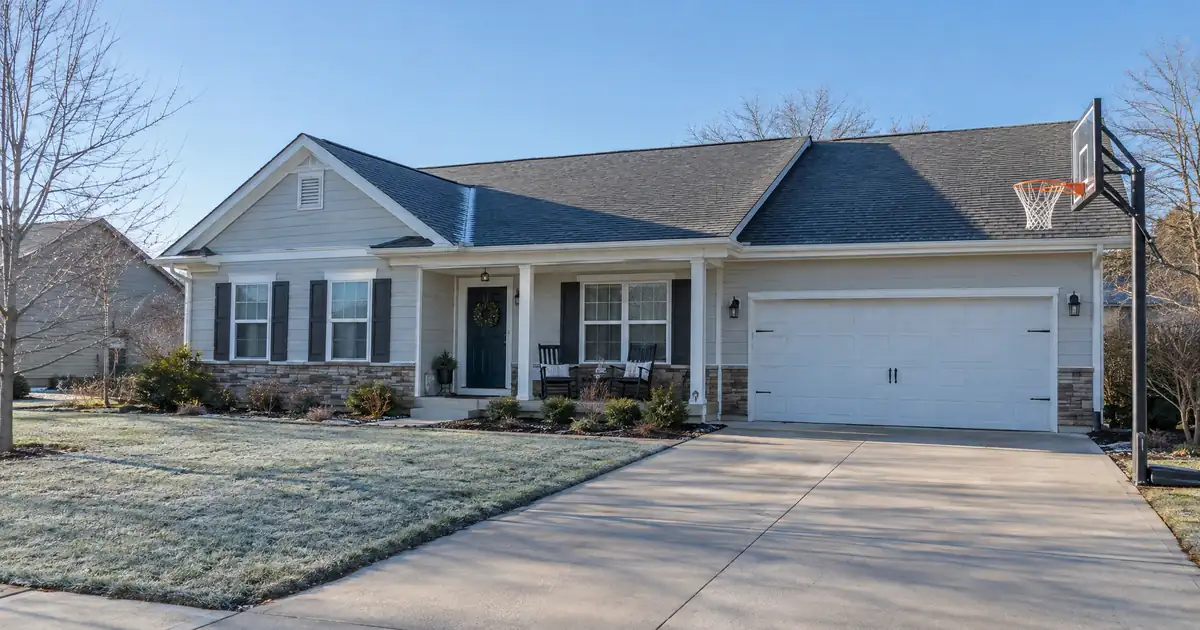
The Quick Read: A second-home purchase asks you to hold cash after closing, measured in months of the new home’s full housing payment, not a flat dollar amount. The base requirement is modest, and it is higher than the zero a one-unit primary residence can carry. It climbs when you already own other financed properties or when the automated underwriting review flags extra risk. The reserve figure is separate from your down payment and closing costs.
Key Takeaways
- Reserves are liquid assets left over after you pay the down payment and closing costs.
- The count is in months of the full payment: principal, interest, taxes, insurance and association dues.
- A second home carries a small base requirement. Other financed properties can add to it.
- The automated underwriting finding, not a rule of thumb, sets your final number.
- Plan your cash in three buckets: down payment, closing costs, then reserves on top.
What Are Reserves, and What Are They Not?
Reserves are verified, accessible money you still have after the loan closes. Think of them as the lender’s proof that one bumpy month will not sink a home with two housing payments behind it.
Conventional payment estimate
The starting figures are an example price at the first-time buyer’s minimum down payment. Replace them with yours.
Editable benchmark: 7.32% as of October 22, 2026 · Freddie Mac 30-year average via FRED®. A conventional market reference, not a conventional loan quote.
Estimate seeded at the low end of Fannie Mae’s published range (0.58%–1.86% a year); the insurer prices the actual premium on the score and the leverage. Applies only above 80% loan-to-value.
Illustrative starting assumptions: a $350,000 price, the first-time buyer’s minimum down payment, a thirty-year term at the current Freddie Mac benchmark, mortgage insurance at the low end of Fannie Mae’s published range, and property taxes and insurance estimated at typical national rates. Every field is editable.
Illustrative estimate only — not a Loan Estimate, approval, quote, or commitment to lend. The rate field carries the weekly Freddie Mac thirty-year conventional benchmark, a market reference and not a conventional loan quote; your rate is set by the lender at lock. The mortgage insurance figure is an editable estimate seeded from Fannie Mae’s published typical range, not a premium quote; the insurer prices the actual premium, and the cancellation month assumes scheduled payments with no extra principal and no change in value. Taxes, insurance and dues are editable estimates; closing costs are not included. Conforming loan limits apply by county. Licensed in sixteen states for consumer mortgages.
People mix up three different pots of cash. Keeping them apart is the whole game.
| Pot of cash | What it does | Counts as reserves? |
|---|---|---|
| Down payment | Reduces the loan amount | No |
| Closing costs | Pays one-time loan and title charges | No |
| Reserves | Stays in your accounts after closing | Yes |
A second home sits at a maximum of 90% loan-to-value (LTV) on a purchase in the programs Lendmire arranges. That means roughly 10% down at the leanest. A one-unit primary residence goes to 95%, or 97% for a qualifying first-time buyer. So the second home asks for more of your own money up front, and then it asks for reserves too. These specifics are subject to lender guidelines and a full review of property, leverage, and credit.
Lendmire brokers these files through wholesale lenders. The reserve line is one of the first things that surprises a buyer, because it does not show up on a listing or a payment estimate. Here is how the number gets built. Our conventional loan programs page covers the broader program picture.
How Is the Reserve Number Calculated?
The lender prices the full monthly housing payment on the second home, then multiplies it by the required number of months. The result is the cash you must still hold after closing. The month count is the part that moves.
The payment used for the math is broader than your principal and interest. Freddie Mac’s Guide section 5501.2 lists the pieces: principal and interest, hazard insurance, real estate taxes, mortgage insurance when it applies, and association dues. Payments on any secondary financing count too. Fannie Mae’s Selling Guide describes the same basis as PITIA: principal, interest, taxes, insurance and association dues.
Here is the sequence in practice:
1. The file goes through automated underwriting. Fannie Mae uses Desktop Underwriter. Freddie Mac uses Loan Product Advisor. The finding lists the reserves your file must show.
2. The lender builds the full payment on the second home, including dues.
3. The base months are applied for a second home.
4. Other financed properties are counted, which can add reserves.
5. Your assets are verified and tested against what the lender counts.
6. Funds to close are subtracted. Only what remains is reserves.
Step six trips people up. The same dollar cannot do two jobs. If your statements show a balance that barely covers the down payment and closing costs, you have no reserves. Not ideal.
Because the payment includes dues, taxes and insurance, a condo in a resort area can demand more cash than a similarly priced house with low carrying costs. The month count is the same. The payment it multiplies is bigger.
How Does a Second Home Compare to Other Occupancy Types?
Occupancy sets the reserve starting point. A one-unit primary residence can carry no general minimum under the Fannie Mae guide, a second home carries a modest one, and a higher tier applies to larger or investment properties.
| Occupancy | Max LTV on purchase | Reserve posture |
|---|---|---|
| One-unit primary residence | 95% (97% first-time, fixed rate) | No general minimum |
| Two- to four-unit primary residence | 95% | Higher base requirement |
| Second home | 90% | Modest base requirement |
| Investment property | 85% (one unit), 75% (two to four) | Highest base tier |
The logic is straightforward. A lender sees a second home as the payment you will skip first if money gets tight. A primary residence is the one you protect. So the second home earns a cushion and a lower leverage cap.
One sentence on a related trap: occupancy is decided by how you actually use the home, and a place you rent out heavily can be treated as an investment property. That changes the leverage and the reserve tier.
When Do You Owe More Than the Base Amount?
Three things raise the number: other financed properties, risk the automated review sees in your file, and manual underwriting. The two agencies also handle the add-on differently, which explains why online answers contradict each other.
Other financed properties. If you own other homes with mortgages or home equity lines, reserves can go up. Your primary residence and the subject property are left out of the count, per the Fannie Mae Selling Guide. Properties being sold and accounts paid off by closing are also excluded. Fannie Mae applies a percentage to the combined unpaid balances on the other financed properties. Freddie Mac adds months of payment for each other financed second home or investment property. Same goal, different arithmetic. Both agencies also cap how many financed properties a borrower can carry on a second-home loan.
Risk the review sees. The Fannie Mae guide says Desktop Underwriter can require more reserves based on its overall risk assessment. On a Freddie Mac loan, the Loan Product Advisor Feedback Certificate controls. A thin credit history, a higher total ratio or a high LTV can all nudge that number up. Credit and ratio context for the programs Lendmire arranges: wholesale conventional programs start at a 620 decision score, and the automated finding governs most files with a total ratio ceiling of 50%.
Manual underwriting. Some files cannot be run through automation. Then the minimum reserves come from the Fannie Mae Eligibility Matrix, which also lists a separate maximum-LTV line for second homes and points to the added reserves for multiple financed properties. Manual loans run to 36% or 45% total ratio, depending on the reserve and score factors in that matrix.
Special programs have their own rules. Freddie Mac notes that Home Possible and HeritageOne carry separate reserve provisions in its guide.
Three Borrower Pictures, No Dollar Signs
Picture a buyer who owns a home with a mortgage and has no other financed property. Buying a second home at 90% LTV, this buyer faces the base second-home requirement. Nothing gets added. Terms depend on the lender’s guidelines, the property type, the leverage, and a full review of the credit profile.
Now say a buyer owns a primary residence, a prior vacation cabin with a mortgage and a home equity line on that cabin. The new purchase triggers the base requirement plus an add-on tied to the cabin’s debts. The same buyer, with the same income, needs noticeably more cash.
Consider a third borrower with several financed properties. Fannie Mae’s percentage works on the combined balances, so the add-on grows with the debt. Freddie Mac’s per-property month count grows with the number of properties. That borrower may also face a higher credit threshold as the property count rises. A loan officer should run both agencies’ views before you pick a path. Honestly, this is where a broker earns the keep: the same file can look quite different through each lens.
What Counts as Reserves?
Reserves must be verified, liquid and seasoned, which means they sit in an eligible account with a documented history. Freddie Mac’s second-home rules require that funds used to qualify, reserves included, come from eligible borrower sources under its asset sections. Freddie Mac’s second-home section points straight back to the reserve rules.
| Asset | How it is generally treated |
|---|---|
| Checking and savings | Counts, with statement history |
| Stocks, bonds, mutual funds | Often counts, sometimes at a discounted value |
| Retirement accounts | May count, often discounted, with vested balances only |
| Home equity on another property | Does not count as cash |
| Unvested stock or restricted funds | Generally does not count |
| Gift of equity | Not acceptable to supplement reserves under Fannie Mae |
The practical tip: do not move money around right before you apply. A large unexplained deposit forces a paper trail, and a liquidated brokerage account may need to show where the proceeds landed. Retirement and brokerage balances can be valued below face because the lender allows for taxes and market swings. Ask what discount your lender applies before you assume a balance carries full weight.
Gift funds are their own category. Rules for second homes differ from primary-residence rules, so check before a relative writes a check you hope to count.
How Much Cash Do You Need in Total?
Add three buckets: the down payment, the closing costs, and the reserves that must remain afterward. Most buyers budget the first two and forget the third.
Walk the steps in percentages and months. At 90% LTV your down payment is 10% of the price. Closing costs come on top. Then the reserve months multiply the new home’s full payment, dues included. Any of those three can be the one that decides whether you are ready.
A worksheet you can fill in on your own:
- Down payment (percent of price)
- Estimated closing costs
- Monthly payment on the second home (principal, interest, taxes, insurance, dues)
- Reserve months your loan officer says the finding requires
- Extra reserves tied to other financed properties
- Total liquid cash needed, then compare it to verified, eligible accounts
Reserves can also work in your favor. Extra liquid assets can serve as a compensating factor on a borderline file. That cushion does not replace credit or income requirements, but it can help the file.
What If You Are Short on Reserves?
You have four practical moves, and each has a cost.
- Put more down. A bigger down payment lowers the loan, but it also drains the same pot reserves come from, so this only helps if you have cash to spare.
- Buy a less expensive home. A smaller payment shrinks the reserve target.
- Document more assets. Older statements from a brokerage or retirement account may count once verified.
- Wait. Time lets savings build and lets recent deposits season.
Skip the temptation to borrow the reserves. Money borrowed against another asset may not count, and it adds to your obligations.
Common Mistakes That Derail Second-Home Files
- Counting the down payment twice. Reserves are what remains after closing.
- Forgetting association dues. They are in the payment the months multiply.
- Assuming a primary residence’s zero minimum carries over. It does not. That rule is specific to a one-unit primary home.
- Treating a quoted figure as final. The automated finding can require more.
- Ignoring other mortgages and credit lines. They can add to the total.
- Assuming Fannie Mae and Freddie Mac behave identically. The add-on methods differ.
- Relying on a number from an old article. Guides get updated, and lender overlays can sit on top.
If you are weighing the jumbo side of this, Lendmire’s piece How Much Reserves a Jumbo Lender Wants From a Second-Home Buyer covers that lane. And if you may tap equity on a second home later, here is how a conventional cash-out refinance on a second home is sized.
Key Terms Defined
Reserves: Verified liquid assets you still hold after closing, counted in months of the new home’s payment.
PITIA: Principal, interest, taxes, insurance and association dues, the full monthly housing payment.
LTV (loan-to-value): The loan amount divided by the home’s value or price. A 90% LTV means 10% down. The exact numbers vary by lender and program and follow a full review of property, leverage, and credit.
Automated underwriting: Software from Fannie Mae or Freddie Mac that reviews your file and lists the conditions you must meet.
Seasoned funds: Money that has sat in your account long enough to show it is yours and not a recent loan.
Financed property: A home or rental with a mortgage or home equity line against it.
Frequently Asked Questions
Do I need reserves on a second home if I would not need them on my primary home?
Yes. The no-minimum treatment in the Fannie Mae guide is specific to a one-unit principal residence. A second home carries a base requirement. The automated finding and your other financed properties can raise it.
Is the reserve number the same at every lender?
Not always. The agencies set the framework, but the automated finding on your file sets your number, and a lender can add its own overlay. Different wholesale lenders may set a stricter number on the same file. A broker can compare options for you.
Can I use a retirement account for reserves?
Often yes, if the balance is vested and verifiable. Lenders frequently count only a portion of the value, to allow for taxes and penalties. Ask what share your lender counts before you rely on it.
Does the down payment count toward my reserves?
No. The down payment and closing costs are funds to close. Reserves are what remains afterward, so your statements need to cover both.
What if I already own several financed properties?
Expect more reserves. Fannie Mae adds a percentage of the balances on your other financed properties, and Freddie Mac adds months for each. Higher property counts can also bring stricter credit expectations.
Where to Go From Here
If you are buying a home and want to see whether a conventional loan fits your file, Lendmire can help you compare the options and what each one asks of the file. Program figures are subject to lender guidelines and full file review, and nothing here is a commitment to lend.
For your own numbers, request a scenario review with Lendmire.
About Lendmire
As a mortgage broker (NMLS# 2371349), Lendmire helps homeowners and home buyers in 16 states with FHA, VA, conventional and jumbo purchase and refinance loans arranged through wholesale lenders. Lendmire is never the lender; program terms are set by the lender and the agency guidelines. Scotsman Guide named Lendmire a Top Mortgage Workplace in both 2025 and 2026.
Get Started
Ready to find the right loan for you?
In about 30 seconds you can review financing options available for your home or investment property. No commitment required.
Informational only. Not a Loan Estimate, approval, or commitment to lend. Program availability and eligibility are subject to lender guidelines, credit approval, property review, and underwriting.
References
1. Freddie Mac Guide 5501.2, Reserves
2. Fannie Mae Selling Guide B3-4.1-01, Minimum Reserve Requirements
3. Fannie Mae Eligibility Matrix
4. Freddie Mac Guide 4201.12, Second Home Mortgages
This article is part of Lendmire’s conventional loan program — full qualification details, guidelines, and scenarios live on the program page.
Related reading: Can You Buy a 2-4 Unit Primary Home With a Conventional Loan? · Can a Gift Fund the Down Payment on a Conventional Second Home? · Conventional Loan Asset Income Requirements for a Second Home
Brandon Miller
Founder & CEO, Mortgage Loan Originator, Lendmire LLC
- Mortgage Loan Originator · NMLS# 1129696 · Verify on NMLS Consumer Access
- North Carolina Real Estate Broker · License# 343312 · Verify on NCREC
- North Carolina Insurance Producer · License# 19053198 · Property, Casualty, Life, Health · Verify on NAIC SBS
- Lendmire LLC · Firm NMLS# 2371349 · Verify firm licensure
Legal disclosures. Lendmire (NMLS# 2371349) is a state-licensed mortgage brokerage that arranges financing through wholesale lender relationships. Lendmire is not a direct lender, depository institution, or registered financial advisor. The discussion above is general informational content about real estate financing — it is not financial, legal, or tax advice, and readers should consult licensed professionals for guidance on their individual circumstances. Loan inquiries are subject to lender underwriting; this article does not represent a commitment to lend. Loan terms, rates, and qualification standards vary by borrower, property, and state, and are subject to change at any time. Equal Housing Opportunity. NMLS Consumer Access: nmlsconsumeraccess.org.