
The Quick Read: You qualify by living in one of the units, clearing the credit and ratio tests, and holding extra cash after closing. Conforming conventional loans allow up to 95% LTV (5% down) on a two- to four-unit principal residence, subject to lender guidelines and full file review. The 97% first-time-buyer option does not extend to multi-unit homes. Rent from the other units can help your income, but the full payment on the building still counts against you.
A duplex, triplex, or fourplex is a smart way to buy a home with help from tenants. It is also a loan that gets underwritten differently from a one-unit house. Lendmire’s conventional loan programs cover these properties, and the mechanics below come from how these files actually move through the wholesale lenders Lendmire works with. Lendmire is a mortgage broker. It arranges the loan. The lender approves it.
Conventional payment estimate
The starting figures are an example price at the first-time buyer’s minimum down payment. Replace them with yours.
Editable benchmark: 7.32% as of October 22, 2026 · Freddie Mac 30-year average via FRED®. A conventional market reference, not a conventional loan quote.
Estimate seeded at the low end of Fannie Mae’s published range (0.58%–1.86% a year); the insurer prices the actual premium on the score and the leverage. Applies only above 80% loan-to-value.
Illustrative starting assumptions: a $350,000 price, the first-time buyer’s minimum down payment, a thirty-year term at the current Freddie Mac benchmark, mortgage insurance at the low end of Fannie Mae’s published range, and property taxes and insurance estimated at typical national rates. Every field is editable.
Illustrative estimate only — not a Loan Estimate, approval, quote, or commitment to lend. The rate field carries the weekly Freddie Mac thirty-year conventional benchmark, a market reference and not a conventional loan quote; your rate is set by the lender at lock. The mortgage insurance figure is an editable estimate seeded from Fannie Mae’s published typical range, not a premium quote; the insurer prices the actual premium, and the cancellation month assumes scheduled payments with no extra principal and no change in value. Taxes, insurance and dues are editable estimates; closing costs are not included. Conforming loan limits apply by county. Licensed in sixteen states for consumer mortgages.
What Counts as a 2-4 Unit Home?
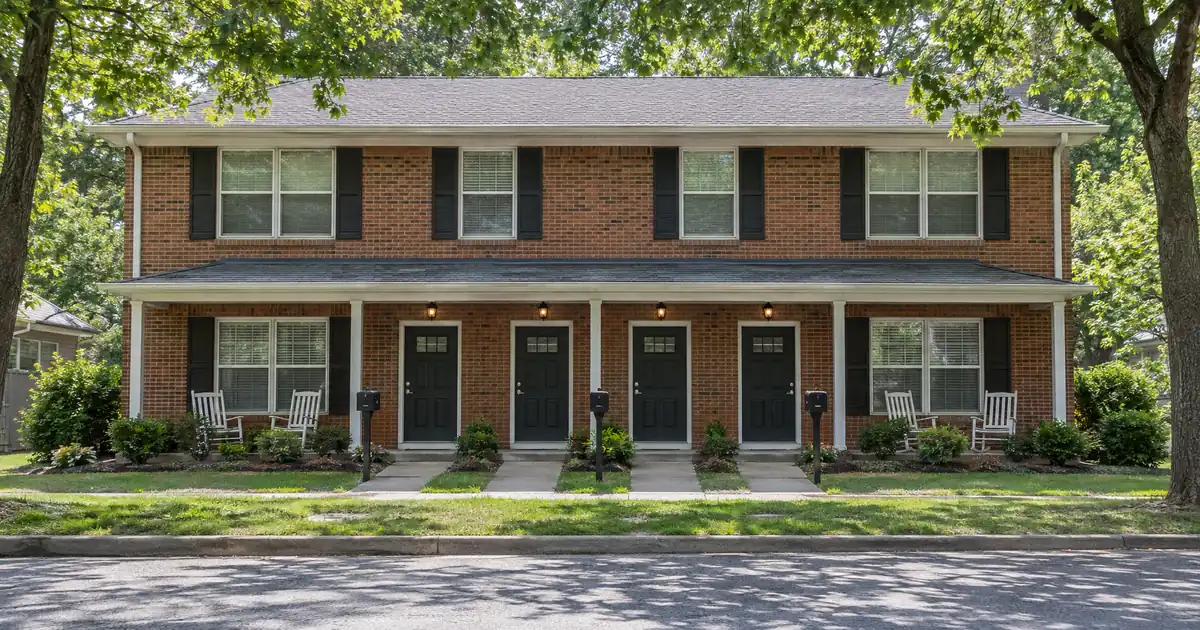
A 2-4 unit home is one building with two, three, or four separate living units that you finance as a residence. Because you live in one unit, the lender treats it as a home loan, not a commercial loan.
Each unit needs its own living space. Think kitchen, bath, sleeping area, and a separate entrance or access. The unit count has to be legal, not just physical. A basement someone converted without permits can get the unit count questioned. The appraisal then decides what the lender sees.
Two other points matter early. The loan must fit under the county’s conforming loan limit, and that limit rises with unit count. FHFA publishes the limits each year, including higher ceilings in high-cost areas. Look up your county for the exact figure for your unit count. And the property type matters: a condo or co-op building with two to four units brings an extra project review.
How Much Down Do You Need?
The answer is 5% on most eligible files. The agencies cap two- to four-unit principal residences at 95% LTV. LTV, or loan-to-value, is the loan amount divided by the home’s value or price, whichever is lower.
Fannie Mae’s Eligibility Matrix lists 95% for two- to four-unit principal residences on purchases. Freddie Mac’s Seller/Servicer Guide now shows the same 95% for a two-unit home on an automated “Accept” finding. Freddie’s own LPA update says the higher limit applies to certain Accept purchases and no-cash-out refinances on two- to four-unit primary residences. It also says manually underwritten and super conforming loans were left out of that change.
Older rules asked for much more. A few years ago, a three- or four-unit buyer often needed 20% or 25% down. That is no longer the rule on eligible files.
Here is the part that trips people up. The 97% option, which needs 3% down, is for a one-unit home with a fixed rate when at least one borrower is a first-time buyer. It does not apply to a duplex. Even the income-limited programs, HomeReady and Home Possible, which carry an income limit of 80% of area median income, top out at 95% on two to four units. Skip any quote that promises 3% down on a fourplex. Final terms depend on lender guidelines, property type, leverage, and the borrower’s complete credit picture.
Freddie also rounds LTV up to the next whole number. So 94.01% counts as 95%. A down payment that falls just short of 5% can fail the test. Count the cash to the dollar.
| Property | Typical max LTV (purchase) | Minimum down |
|---|---|---|
| One-unit, first-time buyer, fixed rate | 97% | 3% |
| One-unit, standard | 95% | 5% |
| Two- to four-unit primary residence | 95% | 5% |
| Second home | 90% | 10% |
All figures are subject to lender guidelines. A lender can set stricter rules on a given file.
How Is the Loan Underwritten, Step by Step?
Underwriting a 2-4 unit loan runs in a fixed order: occupancy, automated approval, credit and ratios, rental income, reserves, and appraisal. Each step can decide the outcome, so it helps to know where you stand before you write an offer.
Step 1: Occupancy
You must live in one unit as your principal residence. That is the condition behind the 95% leverage. An investment purchase of a two- to four-unit property is capped at 75% LTV. Occupancy decides the leverage, and that is the whole story on that point. These specifics are subject to lender guidelines and a full review of property, leverage, and credit.
Step 2: The automated finding
Most files start with an automated underwriting system, which scores credit, assets, income, and property data. Freddie’s 95% needs an Accept finding. Across the wholesale programs placed through Lendmire, the automated finding governs most files. A manually underwritten loan carries tighter ratios and reserve factors.
Step 3: Credit and ratios
The wholesale conventional programs start at a 620 decision score. That is the credit score the lender uses to decide, usually the lowest middle score among borrowers. Some lenders set a higher floor. Adjustable-rate loans under manual underwriting start at 640.
The total ratio ceiling is 50% on an automated finding. This is your debt-to-income ratio, or DTI: your monthly debts divided by your monthly gross income. Manually underwritten loans run at 36% or 45%, depending on the reserve and score factors in the Eligibility Matrix.
Past credit events carry waiting periods set by the agencies. The wait is four years from a chapter 7 discharge, seven from a foreclosure, and four from a short sale or deed-in-lieu. Documented extenuating circumstances can shorten these.
Step 4: Rental income
This is the main lever on a multi-unit loan, and it gets its own section below.
Step 5: Reserves
Reserves are the months of housing payments you still hold in the bank after closing. Fannie Mae’s Selling Guide requires none on a one-unit principal residence. It lists six months for a two- to four-unit principal residence. The automated finding may ask for more. Treat reserves as extra cash on top of your down payment and closing costs. This is the item first-time multi-unit buyers miss most.
Eligible gift funds can help with reserves. Gifts of equity cannot.
Step 6: The appraisal
A 2-4 unit property is appraised on a form built for small income properties, Form 1025. It includes the appraiser’s opinion of market rent for each unit. That rent figure feeds the income calculation. A duplex can sometimes use the one-unit form, but that is the exception, and the lender decides.
How Does Rental Income Help You Qualify?
Rent from the other units can count as income, but only a portion of it does, and the full payment stays on the debt side. This surprises most buyers. The tenants help your income. They do not erase the payment.
For a two- to four-unit principal residence, the underwriting system adds net rental income to your qualifying income. Net means a portion of the market rent after a vacancy and expense factor, not the full amount. It does not subtract the building’s payment from that income. The full payment, including principal, interest, taxes, insurance, and any HOA dues (the PITIA), stays in your DTI. Fannie Mae’s DU job aid spells out that treatment.
Your landlord history changes how much counts. Fannie Mae’s guidance puts it this way:
- A year or more of history. If you own a home or carry a housing expense, and you have at least a year of rental income or documented property management experience, there is no restriction on the rental income used.
- Less than a year. The rental income used is capped at the subject property’s PITIA.
Picture a first-time buyer purchasing a fourplex who has only ever rented. That buyer has a housing expense but no landlord history. The cap applies. Rent can help, though not by the full amount the leases show. A buyer with no housing expense and no history may find rental income cannot count at all.
Documents a lender usually asks for: the appraiser’s rent schedule, signed leases if the units are occupied, and proof of your current housing payment. Fannie Mae uses Form 1037 as the worksheet for the calculation.
One trap: the accessory dwelling unit (ADU) income rule is for one-unit homes. A true 2-4 unit property uses the subject-property rental rules above, not the ADU rule.
What Does Mortgage Insurance Do on These Loans?
Above 80% LTV, the loan carries mortgage insurance (PMI), which protects the lender if you default. Across the wholesale conventional programs, published typical annual premiums run 0.58% to 1.86% of the balance. That is a range, never a quote. Your score and LTV set where you land. Terms depend on the lender’s guidelines, the property type, the leverage, and a full review of the credit profile.
The good news is the exit. You can request cancellation at 80% of the original value, with a good payment history, no subordinate liens, and no decline in value. The servicer must end it automatically at 78%. The CFPB explains that PMI also ends the month after the loan’s amortization midpoint, as long as you are current. These rules measure against the original value, not today’s value.
This is where conventional and FHA differ in practice. FHA allows more leverage on 2-4 units, but its mortgage insurance usually lasts far longer. Conventional PMI comes with federal cancellation rights.
Where Do the Rules Bend or Break?
The 95% figure is a ceiling, not a promise. Several situations pull the number down or change the file.
- Large loan amounts. Freddie’s table keeps 85% for two-unit super conforming loans and for manually underwritten loans. So the 95% is mostly a conforming-amount, automated-approval feature. Ask your loan officer about the high-balance rules before you shop above the standard limit.
- Cash-out refinance. If you already own the building, a conventional cash-out on a two- to four-unit principal residence is capped at 75% LTV. A one-unit home gets 80%.
- Second loans. Subordinate financing is allowed on a primary residence, and the combined LTV has the same ceiling. A down payment assistance second or HELOC counts toward the 95%.
- Other properties you own. The extra reserves for multiple financed properties apply to second homes and investment properties. They do not apply to a 2-4 unit primary residence.
- Condo or co-op buildings. These add a project review, and the appraisal needs a condo or co-op addendum.
- Appraisal surprises. If the appraiser’s market rent comes in low, the rental income you counted shrinks. If the unit count or condition is off, the loan can stall. The exact numbers vary by lender and program and follow a full review of property, leverage, and credit.
Conventional or Something Else?
Conventional fits best when you have solid credit and a fixed monthly picture, and you want mortgage insurance that can come off. FHA may fit a borrower with a lower score who wants more leverage, at the cost of longer mortgage insurance. A veteran with entitlement may have another route. The right call depends on your score, your loan size, and how long you plan to hold the home.
| Your situation | Conventional tends to fit when… |
|---|---|
| Strong credit, steady income | PMI can cancel later |
| Lower credit score | A lender sets a higher floor, so compare |
| Large loan above the standard limit | Leverage drops, so run the numbers |
| Newly self-employed | Documentation is the real test |
If you are newly self-employed, Lendmire’s article How a Newly Self-Employed Buyer Purchases a 2-4 Unit Home With Low Down covers that path.
Why Do 2-4 Unit Applications Stall?
Most stalls come from a short list of problems. None is exotic. All can be fixed if you catch them early.
1. A reserves gap. The buyer has the down payment but not the six months of extra payments. Fix: ask for the reserve requirement before you make an offer, and plan gift funds if the lender allows them.
2. Rent that cannot be documented. Income is calculated by rule from market rent or leases, not taken at face value. Fix: gather leases and the rent schedule early.
3. A DTI that does not fit. The full payment stays in the ratio. Fix: pay down debts, or look at a smaller building.
4. A down payment just under 5%. The rounding rule bites. Fix: bring slightly more cash than the minimum.
5. Occupancy plans that do not match the loan. The loan assumes you live there. Fix: be straight with your loan officer about your move-in plan.
6. A property that does not appraise as a legal 2-4 unit. Fix: confirm the unit count and permits before you commit. Final terms depend on the lender’s guidelines, the property type, and the borrower’s complete credit picture.
What Is the Practical Path From Pre-Approval to Closing?
Start with a pre-approval that names the property type. Say “two- to four-unit primary residence” up front. Then the lender sizes your reserves, your rental-income treatment, and your loan limit correctly from day one.
Your documents list usually includes pay stubs or income records, two months of bank statements, ID, and your housing history. Add leases if you are buying an occupied building. After you have a contract, the appraisal on Form 1025 comes next, followed by final underwriting. You will get a Loan Estimate and a Closing Disclosure along the way. Compare them line by line.
Occupancy deserves one more plain sentence. The loan is a principal residence loan, so plan to live in the unit. Plans change, and you should talk through “what if” with your loan officer before you sign, not after.
Key Terms Defined
LTV (loan-to-value): The loan amount divided by the home’s value or price, whichever is lower.
PITIA: Principal, interest, taxes, insurance, and any HOA dues. It is the full monthly housing payment.
DTI (debt-to-income ratio): Your monthly debts divided by your monthly gross income.
Reserves: Months of housing payments you hold in the bank after closing.
PMI (private mortgage insurance): Insurance on a conventional loan above 80% LTV that protects the lender, and that can be cancelled later.
Conforming loan limit: The maximum loan size that Fannie Mae and Freddie Mac can buy, set by FHFA by county and unit count. Leverage, reserves, and pricing vary by lender and program; the final terms follow the full file review.
Principal residence: The home where you live as your main address.
Frequently Asked Questions
Can I really buy a fourplex with 5% down?
Often yes, on an eligible file. The agencies allow up to 95% LTV on a two- to four-unit principal residence. You must live in one unit, the loan must fit the conforming limit, and the file must clear credit, ratio, reserve, and appraisal tests. Manual underwriting and super conforming loans can carry lower limits.
Does the 3% down first-time-buyer loan work on a duplex?
No. The 97% option is for a one-unit home with a fixed rate when at least one borrower is a first-time buyer. A duplex tops out at 95% LTV, which means 5% down, even under the income-limited programs. Terms vary by lender guidelines, property type, leverage, credit profile, and full file review.
Does the rent from the other units count in full?
No. Underwriting counts a portion of the market rent after a vacancy and expense factor. With a year or more of landlord history or documented property management experience, there is no restriction on the amount used. With less than a year, it is capped at the building’s PITIA. The full payment stays in your DTI.
How much cash do I need beyond the down payment?
Plan on closing costs plus reserves. Six months of reserves is the Fannie Mae figure for a two- to four-unit principal residence, and the automated finding may ask for more. Eligible gift funds can help with reserves, but gifts of equity cannot.
When can I drop mortgage insurance?
You can request cancellation at 80% of the original value if your payment history is good, there are no subordinate liens, and value has not declined. The servicer must end it automatically at 78%, provided you are current. It also ends the month after the loan’s midpoint.
If you are buying a home and want to see whether a conventional loan fits your file, Lendmire can help you compare the options and what each one asks of the file. Talk to a loan officer at 828-256-2183, subject to lender guidelines and full file review. Nothing here is a commitment to lend.
For your own numbers, request a scenario review with Lendmire.
About Lendmire
Lendmire (NMLS# 2371349) is a mortgage broker licensed for consumer lending in 16 states. Lendmire arranges FHA, VA, conventional and jumbo purchase and refinance loans through wholesale lenders; every file is underwritten by the lender under the applicable program guidelines. Scotsman Guide named Lendmire a Top Mortgage Workplace in both 2025 and 2026.
Get Started
Ready to find the right loan for you?
In about 30 seconds you can review financing options available for your home or investment property. No commitment required.
Informational only. Not a Loan Estimate, approval, or commitment to lend. Program availability and eligibility are subject to lender guidelines, credit approval, property review, and underwriting.
References
1. FHFA conforming loan limit announcement
2. Fannie Mae Eligibility Matrix
3. Freddie Mac Seller/Servicer Guide, Section 4203.1
4. Freddie Mac LPA feedback message update (Bulletin 2025-12)
8. CFPB: When can I remove private mortgage insurance?
This article is part of Lendmire’s conventional loan program — full qualification details, guidelines, and scenarios live on the program page.
Related reading: Conventional Loan Requirements for a Condo With a Low Down Payment · Should a Low-Down First-Time Buyer Pay Extra on a Conventional Loan? · Is Minimum Down a Mistake on a 2-4 Unit Conventional Loan?
Brandon Miller
Founder & CEO, Mortgage Loan Originator, Lendmire LLC
- Mortgage Loan Originator · NMLS# 1129696 · Verify on NMLS Consumer Access
- North Carolina Real Estate Broker · License# 343312 · Verify on NCREC
- North Carolina Insurance Producer · License# 19053198 · Property, Casualty, Life, Health · Verify on NAIC SBS
- Lendmire LLC · Firm NMLS# 2371349 · Verify firm licensure
Legal disclosures. Lendmire (NMLS# 2371349) is a state-licensed mortgage brokerage that arranges financing through wholesale lender relationships. Lendmire is not a direct lender, depository institution, or registered financial advisor. The discussion above is general informational content about real estate financing — it is not financial, legal, or tax advice, and readers should consult licensed professionals for guidance on their individual circumstances. Loan inquiries are subject to lender underwriting; this article does not represent a commitment to lend. Loan terms, rates, and qualification standards vary by borrower, property, and state, and are subject to change at any time. Equal Housing Opportunity. NMLS Consumer Access: nmlsconsumeraccess.org.