
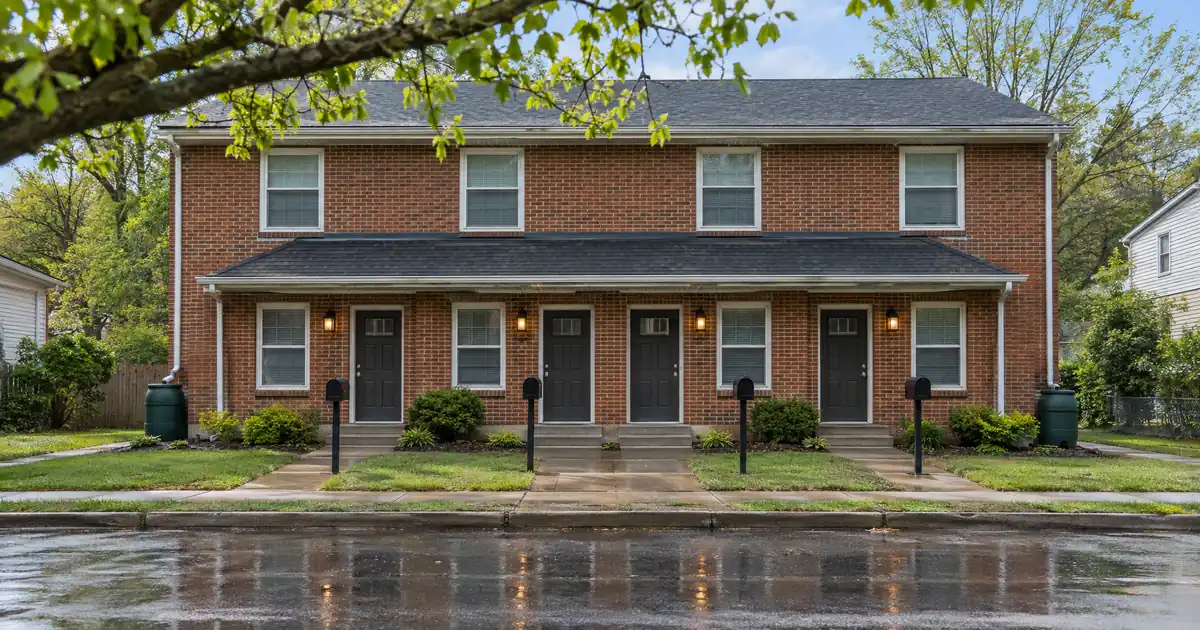
The Quick Read: It depends on your cash after closing, not on the down payment alone. Five percent down is allowed on a two- to four-unit home you live in, but it costs more than the same move on a one-unit home. It becomes a mistake when it leaves you with thin reserves, a tight payment-to-income ratio, and no cushion if a unit sits empty.
What Does “Minimum Down” Mean on a 2-4 Unit?
On a 2-4 unit principal residence, minimum down is 5% (95% loan-to-value). A one-unit home can go to 97% (3% down) for a fixed-rate loan when a borrower is a first-time buyer. The extra two points of leverage don’t carry over to a duplex, triplex, or fourplex. Every figure here varies by lender and program — guidelines, property type, leverage, and credit profile all apply.
Conventional payment estimate
The starting figures are an example price at the first-time buyer’s minimum down payment. Replace them with yours.
Editable benchmark: 7.32% as of October 22, 2026 · Freddie Mac 30-year average via FRED®. A conventional market reference, not a conventional loan quote.
Estimate seeded at the low end of Fannie Mae’s published range (0.58%–1.86% a year); the insurer prices the actual premium on the score and the leverage. Applies only above 80% loan-to-value.
Illustrative starting assumptions: a $350,000 price, the first-time buyer’s minimum down payment, a thirty-year term at the current Freddie Mac benchmark, mortgage insurance at the low end of Fannie Mae’s published range, and property taxes and insurance estimated at typical national rates. Every field is editable.
Illustrative estimate only — not a Loan Estimate, approval, quote, or commitment to lend. The rate field carries the weekly Freddie Mac thirty-year conventional benchmark, a market reference and not a conventional loan quote; your rate is set by the lender at lock. The mortgage insurance figure is an editable estimate seeded from Fannie Mae’s published typical range, not a premium quote; the insurer prices the actual premium, and the cancellation month assumes scheduled payments with no extra principal and no change in value. Taxes, insurance and dues are editable estimates; closing costs are not included. Conforming loan limits apply by county. Licensed in sixteen states for consumer mortgages.
Here is the part buyers miss. Principal residence means you live in one of the units. That occupancy is what unlocks the 95% figure. The same building bought purely as a rental falls under much tighter limits. On conventional loans, investment property on two to four units tops out at 75% loan-to-value.
That is the only rental-property comparison this article needs. Everything below assumes you are the owner-occupant.
Lendmire’s conventional loan programs are built around that same occupancy rule. Lendmire is a mortgage broker. It arranges these loans through wholesale lenders, and every figure here is subject to lender guidelines and full file review.
The Fannie Mae Eligibility Matrix is the agency’s own chart of maximum leverage by unit count and loan purpose. It lists 95% for 2-4 unit principal-residence purchases. The exact current number depends on how the file is run through the system, so treat the lender’s matrix as the final word.
What Does a Low Down Payment Really Cost?
Minimum down costs you in four ways: a bigger loan, mortgage insurance, less equity, and a thinner margin on your debt-to-income ratio. None of these is a dealbreaker alone. Together they make the least forgiving setup on the menu.
A bigger loan. Every point you don’t put down is a point you borrow and carry. That raises the payment and leaves a smaller gap between what you owe and what the building is worth.
Mortgage insurance. Private mortgage insurance, or PMI, is a monthly charge that protects the lender if you stop paying. The Consumer Financial Protection Bureau says it may be required when you put down less than 20 percent. It is added to your mortgage payment. It also does not protect you. If you fall behind, you can still lose the home.
Across the wholesale programs Lendmire places files with, mortgage insurance is required above 80% loan-to-value. Its price depends on your credit score and your leverage. A stronger score and more down both pull it lower. The exact monthly amount appears on your Loan Estimate, so compare it there instead of guessing.
Less equity. At 95% loan-to-value, a modest dip in value puts you close to owing more than the building is worth. That matters if you want to sell or refinance in the first few years.
A thinner ratio. Lenders add the full housing payment into your debt-to-income test. Rent from the other units helps, but only part of it counts (more on that below). A bigger loan with a discounted rent credit leaves less room.
Here is how the two ends of the range compare, in plain terms.
| Factor | Minimum down (5%) | Larger down payment |
|---|---|---|
| Loan size | Largest | Smaller |
| Mortgage insurance | Required, higher tier | Lower, or none at 20% |
| Equity cushion | Thin | Thicker |
| Cash kept after closing | Most | Less |
| Debt-to-income margin | Tightest | Wider |
The trade runs in both directions. Minimum down keeps cash in your account. Cash in your account is useful, and the next section shows why it is also required.
The Part Most Articles Skip: Reserves and Cash After Closing
Minimum down is a cash-after-closing question as much as a down-payment question. On a 2-4 unit purchase, the automated underwriting system typically asks for six months of reserves. One-unit principal residences have no minimum reserve requirement in the same system.
Reserves are money left in your accounts after closing, measured against your full monthly housing payment. That payment is called PITIA: principal, interest, taxes, insurance, and any association dues. Fannie Mae’s minimum reserve requirements state the six-month figure for a two- to four-unit principal residence. They also say funds needed to close are subtracted from your available assets before the reserve test. Final terms depend on lender guidelines, property type, leverage, and the borrower’s complete credit picture.
Read that twice. Your down payment, closing costs, and prepaid items all come out of your assets first. Whatever is left must cover the reserve requirement. Terms depend on the lender’s guidelines, the property type, the leverage, and a full review of the credit profile.
Picture a buyer with a clean 5% down payment saved and little else. The down payment is fine. The closing costs eat into the rest. The reserve test then comes up short. The deal fails on cash after closing, not on the down payment. This is where minimum-down files on 2-4 units most often run into trouble.
Putting less down can help here, since it leaves more cash behind. But a buyer who stretches to the minimum and has nothing left over is not safe either. Think of down payment, closing costs, and reserves as one budget. Every dollar spent in one place is a dollar missing from the others.
One exception is worth knowing so you don’t over-apply it. Fannie Mae exempts high-LTV refinance loans from the minimum reserves. That exemption does not extend to purchases.
Will the Other Units’ Rent Cover the Gap?
Not the way most buyers hope. Rent from the other units can help you qualify. It does not reduce your cash to close, and it does not count toward reserves.
Several rules shape how rent is treated:
- Your own unit’s rent is generally out. Fannie Mae’s rental income rules say income from the unit you occupy cannot generally be used to qualify. The units you don’t live in are the potential qualifying income.
- The rent has to be documented. That means a lease, or a market-rent figure from the appraisal when no lease exists.
- Only part of it counts. Under Freddie Mac’s guide, the lender uses 75% of gross monthly rent on a purchase. The haircut covers vacancy and upkeep.
- Experience can matter. Landlord or property-management history can affect how much rental income a lender may use. Ask your loan officer how the current guidelines treat a first-time landlord.
Run it as a quick thought exercise. A triplex with two rented units shows two rents on paper. Three-quarters of that gets counted. That counted amount is then weighed against the full payment on a loan that is as large as the program allows. The buyer who assumed “the tenants pay my mortgage” meets a smaller number than expected.
Buyers who hear that rent “covers” the loan are mixing up two ideas. Rent can ease qualifying. It cannot replace cash.
Stress Test: What Happens When the Rent Doesn’t Show Up?
At minimum down, a vacancy or a repair hits harder because you have a bigger payment and less equity behind it. This is where the real risk sits, and it is worth checking against your own savings before you commit.
| Event | Thin equity, thin cash | Stronger equity or cash |
|---|---|---|
| A unit sits empty for a few months | Payment squeezes your own income | Reserves absorb it |
| A major repair (roof, furnace) | May force debt or a missed payment | Paid from savings |
| Values dip modestly | Close to owing more than it’s worth | Still has room to sell |
| A refinance is needed later | Harder to qualify, may need cash in | More options open |
The buyer with 5% down and strong reserves can still handle all of this. The buyer with 5% down and almost nothing left is carrying a building with no shock absorber. The exact numbers vary by lender and program and follow a full review of property, leverage, and credit.
Ask yourself one plain question: if the best unit emptied tomorrow, could you carry the whole payment on your own income for several months? If the answer is no, the minimum is the wrong setup. A bigger down payment does not fix it, but a larger cash cushion might.
How the Ratios Respond to Your Down Payment
Qualifying has two pieces: your credit score and your debt-to-income ratio. Across the wholesale conventional programs Lendmire works with, the starting point is a 620 decision score. The automated finding governs most files, with a total ratio ceiling of 50%. Manually underwritten loans use 36% or 45% depending on the score and reserve factors in the agency matrix.
A smaller down payment pushes the loan up, so the payment goes up, so your ratio goes up. Counted rent only offsets part of that. If the ratio is already near the ceiling, a modest bump in down payment can bring it back into range.
Scores matter here too. Higher scores generally earn lower mortgage insurance costs and more room on the other factors. Waiting periods after credit events come from the agencies, not the broker: four years after a Chapter 7 discharge, seven after a foreclosure, and four after a short sale or deed-in-lieu. Shorter periods may apply with documented extenuating circumstances.
When Minimum Down Is the Right Call
Minimum down works when the file is strong everywhere except the cash you chose to put in. Check each of these:
- Reserves hold. After down payment and closing costs, you still meet the six-month reserve test with room to spare.
- Income is steady. You could carry the full payment without any rent, at least for a while.
- The property is sound. Roof, systems, and structure won’t need big work soon.
- The ratio has margin. You clear the debt-to-income ceiling with the discounted rent counted, not the full rent.
- You plan to stay. A longer hold gives equity time to build, and gives mortgage insurance time to come off.
- Other uses for the cash are real. Renovation or a safety fund may do more for you than extra equity.
If most of those are true, minimum down is a reasonable trade. It buys earlier ownership of a building that helps pay for itself.
When to Put More Down
Put more down when any one of these is thin, and keep in mind that a larger down payment does not fix every shortfall:
- Reserves are tight. This one is subtle. A bigger down payment does not help the reserve test. If your reserves are short, you need more total cash, not a different split.
- Income varies. Commission, seasonal, or self-employed income makes a big payment riskier.
- You’ve never been a landlord. Rent shortfalls are easier to absorb when you know how long turnover really takes.
- The building is older. Deferred maintenance eats cash without warning.
- The ratio is borderline. A larger down payment lowers the loan and can pull the ratio into range.
There is also a middle path. You don’t need to jump from 5% to 20%. A smaller bump, enough to move you down a mortgage-insurance tier or ease a tight ratio, can change the whole file without draining your savings. Ask your loan officer to show you the file at two or three down-payment levels side by side. The comparison is usually clearer than the theory.
This one is a genuine judgment call. A buyer with strong reserves and modest income may prefer the minimum. A buyer with large savings and an uneven income may prefer more down. Neither is wrong.
Does Unit Count Change the Answer?
Yes, mostly at the margins. The leverage cap is the same across two, three, and four units. The risk profile is not.
| Property | Rent exposure | Practical read |
|---|---|---|
| Duplex | One other rent | Vacancy hits hard; you carry most of the payment |
| Triplex | Two other rents | More income, still sensitive to a single vacancy |
| Fourplex | Three other rents | Most rent diversification; largest loan and most upkeep |
A fourplex spreads the risk across more tenants. It also means a larger loan, more building to maintain, and more reserves needed for the payment. The duplex is easier to carry from your own income but leans on one tenant. Neither shape fits every buyer.
Condos, planned developments, and co-ops add one wrinkle. The appraiser must complete project information as an addendum. Your lender will tell you if your building falls in this category.
What About Low-Down Programs for Income-Limited Buyers?
Some buyers qualify for affordable programs such as HomeReady and Home Possible. These carry an income limit of 80% of area median income. Freddie Mac’s Home Possible fact sheet says it covers primary residences only, for purchases and no-cash-out refinances.
Details vary by lender and by loan-to-value. Some require a minimum contribution from your own funds on 2-4 units, and some require landlord education. Confirm both with your loan officer before counting on either.
Can You Get Out of Mortgage Insurance Later?
Yes. Conventional mortgage insurance is not permanent. Under the Homeowners Protection Act, you may request cancellation when your balance reaches 80% of the original value. That generally requires good payment history, no subordinate liens, and no decline in value. The servicer must end it automatically when the balance is first scheduled to reach 78%.
Two points trip people up. The 80% mark is measured against the original value, not today’s. A new appraisal cannot restart that clock, though it can show whether value has dropped.
That makes the minimum-down choice more forgiving than it first looks. The insurance is a cost with an end date. A buyer who plans to stay and pay on schedule is not locked into it forever.
If you may need to access equity later, a 2-4 unit cash-out refinance is limited to 75% loan-to-value on a principal residence, below the 80% for one-unit homes. Equity you didn’t build at purchase is harder to reach. Lendmire’s piece Can You Buy a 2-4 Unit With Little Down on a Conventional Loan? covers the entry side of that same trade.
Key Terms Defined
Loan-to-value (LTV): The loan amount divided by the home’s value or price, whichever is lower. A 95% LTV means you put 5% down. Final terms depend on the lender’s guidelines, the property type, and the borrower’s complete credit picture.
PITIA: Principal, interest, taxes, insurance, and any association dues. It is your full monthly housing payment.
Reserves: Money left in your accounts after closing, measured in months of PITIA.
Private mortgage insurance (PMI): A monthly charge on conventional loans above 80% LTV that protects the lender, not you. Each figure is subject to lender guidelines and a complete review of property type, leverage, and credit.
Debt-to-income ratio (DTI): Your monthly debts, including the new payment, divided by your gross monthly income.
Principal residence: The home you live in as your main address. On a 2-4 unit, you occupy one unit.
A Quick Self-Check Before You Choose
Answer these honestly:
1. After the down payment and closing costs, do you still hold six months of full payments in reserve?
2. Could you carry the entire payment from your own income if a unit sat empty?
3. Does your DTI clear the ceiling when only 75% of the rent is counted?
4. Is the building in good shape, or are big repairs coming?
5. Do you plan to stay long enough for equity to build and PMI to come off?
6. Would a small increase in down payment fix your weak spot?
Mostly yes? Minimum down is probably a reasonable trade. Two or more no’s? Look harder at the middle path.
Frequently Asked Questions
Is 5% down on a duplex a bad idea?
Not by itself. Five percent is the standard maximum leverage for an owner-occupied 2-4 unit purchase. It becomes a bad idea when it leaves you short on reserves or without margin for a vacancy. The size of the cushion after closing matters more than the percentage. Leverage, reserves, and pricing vary by lender and program; the final terms follow the full file review.
Do I need 20% down on a multi-unit?
No. A principal-residence 2-4 unit can go to 95% loan-to-value. Twenty percent only removes mortgage insurance, and the cancellation rules can remove it later anyway. Putting more down is a choice about risk and cost, not a requirement. Terms vary by lender guidelines, property type, leverage, credit profile, and full file review.
Do I need more reserves on a 2-4 unit than a one-unit home?
Usually yes. Fannie Mae’s automated system asks for six months of reserves on a 2-4 unit principal residence, versus none for one unit. Reserves are measured against your full housing payment, and funds used to close are subtracted first.
Can rental income help me qualify?
Yes, from the units you don’t occupy. It needs a lease or appraiser market-rent figure, and only part of it counts. Freddie Mac uses 75% of gross monthly rent on a purchase. The rent from your own unit generally doesn’t count.
Will mortgage insurance ever go away?
On a conventional loan, yes. You may request cancellation at 80% of the original value, subject to conditions. The servicer must end it automatically at 78%. The dates are based on the original value, not a new appraisal.
If you are buying a home and want to see whether a conventional loan fits your file, Lendmire can help you compare the options and what each one asks of the file.
For your own numbers, request a scenario review with Lendmire.
About Lendmire
As a mortgage broker (NMLS# 2371349), Lendmire helps homeowners and home buyers in 16 states with FHA, VA, conventional and jumbo purchase and refinance loans arranged through wholesale lenders. Lendmire is never the lender; program terms are set by the lender and the agency guidelines. Scotsman Guide named Lendmire a Top Mortgage Workplace in both 2025 and 2026.
Get Started
Ready to find the right loan for you?
In about 30 seconds you can review financing options available for your home or investment property. No commitment required.
Informational only. Not a Loan Estimate, approval, or commitment to lend. Program availability and eligibility are subject to lender guidelines, credit approval, property review, and underwriting.
References
1. Fannie Mae Eligibility Matrix
2. Consumer Financial Protection Bureau: What is private mortgage insurance?
3. Fannie Mae Selling Guide: Minimum Reserve Requirements
4. Fannie Mae Selling Guide: Rental Income
5. Freddie Mac Seller/Servicer Guide 5306.1
6. Freddie Mac’s Home Possible fact sheet
This article is part of Lendmire’s conventional loan program — full qualification details, guidelines, and scenarios live on the program page.
Related reading: Can You Buy a 2-4 Unit Primary Home With a Conventional Loan? · Conventional Loan Requirements for a House Hacker Buying a 2–4 Unit · Can You Buy a 2-4 Unit With Little Down on a Conventional Loan?
Brandon Miller
Founder & CEO, Mortgage Loan Originator, Lendmire LLC
- Mortgage Loan Originator · NMLS# 1129696 · Verify on NMLS Consumer Access
- North Carolina Real Estate Broker · License# 343312 · Verify on NCREC
- North Carolina Insurance Producer · License# 19053198 · Property, Casualty, Life, Health · Verify on NAIC SBS
- Lendmire LLC · Firm NMLS# 2371349 · Verify firm licensure
Legal disclosures. Lendmire (NMLS# 2371349) is a state-licensed mortgage brokerage that arranges financing through wholesale lender relationships. Lendmire is not a direct lender, depository institution, or registered financial advisor. The discussion above is general informational content about real estate financing — it is not financial, legal, or tax advice, and readers should consult licensed professionals for guidance on their individual circumstances. Loan inquiries are subject to lender underwriting; this article does not represent a commitment to lend. Loan terms, rates, and qualification standards vary by borrower, property, and state, and are subject to change at any time. Equal Housing Opportunity. NMLS Consumer Access: nmlsconsumeraccess.org.