
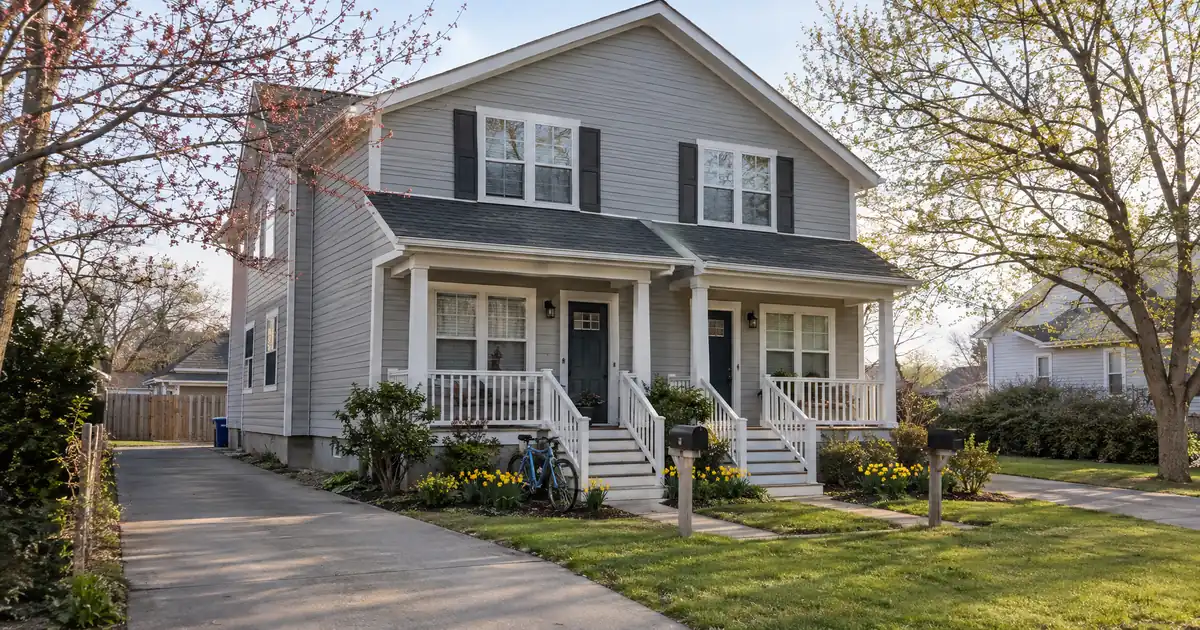
The Quick Read: It depends on the loan’s purpose and on how you use the home. On a cash-out refinance, the new loan tops out at 75% of the home’s value for a second home or a 2-4 unit home. That compares with 80% on a one-unit primary residence. A rate-and-term refinance can go higher, but the 95% ceiling belongs to one-unit primary homes. Subject to lender guidelines and full file review.
What Does “How Much Can Be Financed” Actually Measure?
The limit applies to the whole new loan, not to your equity. Lenders express it as loan-to-value, or LTV: the new loan divided by the home’s appraised value. A 75% cap means the new loan can be no more than 75% of value, and you keep at least 25% as equity.
Refinance savings and break-even estimate
The starting figures are an example value with a balance in proportion and a placeholder for costs. Replace them with yours, and enter the current rate from your statement.
Editable benchmark: 7.32% as of October 22, 2026 · Freddie Mac 30-year average via FRED®. A conventional market reference, not a refinance quote.
Illustrative starting assumptions: a $350,000 home value, a $245,000 current balance, a current rate you enter and a remaining term seeded at twenty-five years, closing costs seeded at $5,000 as an editable placeholder (not a fee quote) and rolled into the new loan, a thirty-year term at the current Freddie Mac benchmark, and property taxes and insurance estimated at typical national rates. Every field is editable.
Illustrative estimate only — not a Loan Estimate, approval, quote, or commitment to lend. The new rate field carries the weekly Freddie Mac thirty-year conventional benchmark, a market reference and not a refinance quote; a refinance is priced by the lender at lock, and the current rate, the remaining term and the closing costs are figures you enter. The current payment is estimated from the balance, the current rate and the remaining term; the break-even divides the closing costs by the monthly saving and ignores the interest effect of a longer term. On the VA IRRRL the funding fee is added to the loan unless the veteran is exempt. Taxes and insurance are editable estimates. Licensed in sixteen states for consumer mortgages; Lendmire is a broker, never the lender.
Two other labels matter. CLTV (combined LTV) adds any second mortgage or HELOC that stays in place. A HELOC is a home equity line of credit. A rate-and-term refinance swaps your current loan for a new one with a different rate or term, and gives you only incidental cash back. A cash-out refinance lets you borrow more than you owe and keep the difference.
Here is how the caps stack up across the wholesale lenders behind Lendmire's refinance programs. Figures are subject to lender guidelines.
| Property use | Cash-out cap | Rate-and-term | Purchase cap, for context |
|---|---|---|---|
| 1-unit primary | 80% | 95% (97% in a first-time-buyer lane) | 95% (97% first-time buyer) |
| 2-4 unit primary | 75% | Lower than 1-unit; set on the file | Up to 95% |
| Second home | 75% | Lower than primary; set on the file | 90% |
A 2-4 unit second home isn't a thing here. Under Fannie Mae's Eligibility Matrix, the refinance rows for second homes list one unit only. A multi-unit building you don't live in gets treated as an investment property, which is a different loan with different rules.
Why Does the Home's Use Decide the Limit?
Lenders set lower caps where they carry more risk. The pattern is consistent: an owner-occupied one-unit home gets the highest leverage, a second home gets less, and a multi-unit building gets less on cash-out.
The reasoning is plain. If money gets tight, people protect the home they sleep in first. A vacation place comes second. A building with several kitchens also adds repair, vacancy and appraisal risk.
So the label on the file decides the number. Before you run any math, sort your home into one of three buckets:
- Primary residence, 2-4 units: you live in one unit and rent the others. You occupy it as your main home.
- Second home: a one-unit property you occupy part of the year. It sits far enough from your main home to make sense as a place you use yourself.
- Investment property: you don't occupy it, or you plan to rent it. This article doesn't cover it.
Mislabeling a rental as a second home is a bad idea. It misstates occupancy on the file, and the lender's review can catch it.
How Much Can You Refinance on a Second Home?
Cash-out on a second home caps at 75% of value. A rate-and-term refinance on a second home can run higher than that, though below the 95% a one-unit primary home can reach. The exact ceiling depends on the lender and the file.
For scale, the agency purchase ceiling on a second home is 90%. Refinance ceilings tend to follow the same pattern: second homes sit below primary homes. Confirm the number on your own file before you plan around it.
Picture a second home with an existing mortgage equal to 60% of its value. Under a 75% cash-out cap, you have 15 percentage points of value to work with. That slice must cover closing costs and any lien you pay off. What's left is your cash. Costs shrink it, so the headline cap is never the cash in your hand. Final terms depend on lender guidelines, property type, leverage, and the borrower's complete credit picture.
Second homes face one more hurdle. Appraisal waivers, where the lender skips the appraisal, often don't apply to them. Plan on a full appraisal.
How Much Can You Refinance on a 2-4 Unit Home You Live In?
Cash-out on an owner-occupied 2-4 unit home caps at 75% of value, five points below a one-unit primary home. The rate-and-term ceiling is also below the one-unit 95%, and lenders set it file by file.
Here is the good part. The other units' rent can help you qualify. Debt-to-income, or DTI, compares your monthly debts to your monthly income.
Across the wholesale programs Lendmire places files with, most files run through automated underwriting. Manually underwritten loans carry a minimum score of 620 and a 45% DTI ceiling, while the total ratio ceiling on a file approved through automated underwriting can reach 50%.
Rental income helps most when the property is a good fit for your budget. A fourplex where three tenants pay most of the carry looks very different from a duplex where you're stretching.
If you plan to pull equity from a 2-4 unit home you live in, Lendmire's piece How Much a Cash-Out Refinance Returns on a 2-4 Unit Primary Home goes deeper on that side.
From Cap to Cash: The Simple Formula
Here is the math, step by step. It works in percentages, so any home size fits.
1. Maximum new loan = value × the cap for your use and purpose.
2. Subtract what you owe on the first mortgage.
3. Subtract any second lien you pay off, plus closing costs you finance.
4. What's left is your cash, if there is any.
Say your cap is 75% and the first mortgage is 70% of value. You have 5 points before costs. A few points of closing costs could wipe that out. At that spot, a cash-out is the wrong tool.
Costs are shown on your Loan Estimate, the standard form lenders give you after you apply. It shows closing costs financed and cash to close. Read it line by line.
LTV isn't always the binding limit either. The conforming loan limit, your credit, your DTI and your reserves can each cap the loan before LTV does. Reserves are cash left in the bank after closing. The tightest limit wins.
The Rate-and-Term Route: What "Limited Cash-Out" Can and Can't Do
A rate-and-term refinance is also called a limited cash-out refinance. It's built for changing the loan, not raising money. The new loan pays off your first mortgage, your closing costs, and a purchase-money second lien. A purchase-money second is a loan taken at the time you bought the home.
Fannie Mae's Selling Guide limits payoffs to those items. Cash back is capped at a small amount.
The trap is the second lien. Say you took a HELOC years after buying and spent it on a kitchen. Folding that HELOC into a rate-and-term loan can reclassify the whole thing as cash-out. The cap drops, and you may be back to 75% or 80%.
The top tier is narrow too. The 97% lane applies only to a one-unit principal residence with a fixed rate. It also requires that the existing loan be agency-owned, and the first-time-buyer program must allow it. It doesn't apply to second homes or 2-4 unit homes. Skip any plan that depends on it for those.
Mortgage insurance enters above 80% LTV. You can ask to cancel it at 80% of the original value, with good payment history, no subordinate liens and no decline in value. The servicer must end it automatically at 78%. Lower leverage on a second home or 2-4 unit means you may avoid it altogether. These specifics are subject to lender guidelines and a full review of property, leverage, and credit.
What Else Can Shrink the Number?
Plenty. Experience with these files shows the cap is rarely the problem. Something else usually is.
- Seasoning on a cash-out. The first mortgage you're paying off must be at least 12 months old, counting note date to note date. You must also have been on title for 6 months. Delayed financing, inheritance and legal-award exceptions exist.
- Credit. Wholesale conventional programs start at a 620 decision score. Some lenders set a higher floor on second homes or multi-unit loans.
- A fresh cash-out. If you just did a cash-out on the same property, a limited cash-out may be off the table for a while.
- Pricing adjustments. Lenders add pricing adjustments for higher LTV, lower scores and multi-unit cash-out. That affects cost, not eligibility. We don't quote amounts here.
- Number of financed homes. Owning several mortgaged properties can trigger extra reserves.
- The appraisal. If the value comes in low, every cap shrinks with it.
What About FHA and VA Loans?
FHA and VA refinances work differently. They don't run a fresh LTV test; they work off your existing loan.
The FHA Streamline is for an existing FHA loan. It offers no appraisal and a limited credit review. It requires a net tangible benefit, meaning the new loan must measurably help you. HUD says lenders can't roll closing costs into the new loan, and homes you don't occupy as a principal residence can only be refinanced without an appraisal. No cash comes out. If you want to pull equity from an FHA loan, that's a different product.
The VA IRRRL is for an existing VA loan. It carries a 0.5% funding fee unless you're exempt, no VA appraisal, and a net tangible benefit. Seasoning is the later of 210 days and 6 payments. VA says you only have to certify that you once lived in the home. So a house that has since become a rental can qualify, which no other VA refinance allows.
For the VA side of second homes and house hacks, see Lendmire's piece Can a VA Loan Finance a Second Home or a 2-4 Unit House Hack?.
Above the conforming limit, jumbo programs take over. They start at a 660 decision score, reach 90% leverage on some lanes, and go up to $5,000,000 with a 50% ratio ceiling on the fixed lanes. Terms vary by occupancy, so confirm what applies to a second home or multi-unit. Terms depend on the lender's guidelines, the property type, the leverage, and a full review of the credit profile.
What If the Cap Isn't Enough?
You have four moves.
- Settle for a smaller refinance. Take the lower loan and skip the cash.
- Wait. Paying down principal or a higher appraisal raises your equity.
- Pay the second lien separately. Keep the refinance clean as a rate-and-term.
- Pick a different tool. A HELOC can sit beside a first mortgage you keep.
One more distinction. This article covers refinancing a second home or 2-4 unit you already own. Using your primary home's equity to buy a second home is a different transaction with different caps.
Key Terms Defined
LTV (loan-to-value): the new loan as a percentage of the home's appraised value.
CLTV: LTV counting every loan against the home, including a second mortgage or HELOC that stays.
Rate-and-term (limited cash-out) refinance: a new loan that replaces your first mortgage, with only incidental cash back.
Cash-out refinance: a new, larger loan where you keep the difference between it and what you owed.
Seasoning: the waiting period a lender requires before you can refinance or take cash out.
Net tangible benefit: a measurable improvement the new loan must give you, a requirement for FHA and VA streamlines.
Frequently Asked Questions
Can a second home be a duplex or fourplex on a refinance?
No. The agency refinance tables list second homes as one-unit properties only. A multi-unit building you don't live in is treated as an investment property. A multi-unit home you do live in is a 2-4 unit primary residence.
What cash-out cap applies to a duplex I live in?
Usually 75% of value, per the program figures above. That is five points below the 80% cap on a one-unit primary home. Rent from the other unit can help you qualify, but the cap itself doesn't move.
Does a rate-and-term refinance on a second home have a lower cap than a primary home?
Yes. The 95% ceiling is for one-unit primary homes. Second homes sit below it, and the exact ceiling is set by the lender on your file. Expect a larger equity cushion than a primary home needs.
Can I use rental income to qualify on a 2-4 unit refinance?
Often, yes, when you live in one of the units. The lender decides how much counts.
Why did my cash-out come in smaller than the cap suggested?
Because the cap measures the whole new loan. Your payoff, any second lien and financed closing costs all come out of it first. A low appraisal, seasoning rules or credit can also cut the loan before LTV does.
If You're Weighing a Refinance
Start by naming the home correctly: primary, second home or 2-4 unit you live in. Then pick the purpose, rate-and-term or cash-out. Lendmire arranges both, along with FHA, VA and jumbo options, through wholesale lenders. All are subject to lender guidelines, and none is a commitment to lend.
If you want the break-even run on your own numbers, request a scenario review with Lendmire and compare the programs on the same home.
About Lendmire
Lendmire — NMLS# 2371349 — is a mortgage broker that arranges FHA, VA, conventional and jumbo home purchase and refinance financing in 16 states through wholesale lenders. Every option is subject to the lender's guidelines and full underwriting. Scotsman Guide named Lendmire a Top Mortgage Workplace in both 2025 and 2026.
Get Started
Ready to find the right loan for you?
In about 30 seconds you can review financing options available for your home or investment property. No commitment required.
Informational only. Not a Loan Estimate, approval, or commitment to lend. Program availability and eligibility are subject to lender guidelines, credit approval, property review, and underwriting.
References
1. Fannie Mae Eligibility Matrix
2. Fannie Mae Selling Guide B2-1.3-02, Limited Cash-Out Refinance Transactions
3. HUD, FHA Single Family Streamline
4. U.S. Department of Veterans Affairs, Interest Rate Reduction Refinance Loan
This article is part of Lendmire’s Refinance series — every loan program’s qualification details, guidelines, and scenarios live on the loan options page.
Related reading: 2-4 Unit Primary Home Refinance Requirements for Better Terms · Second Home Refinance Cancellation Rules and First Payment Due Date · Second Home Refinance Requirements for a Lower Payment
Brandon Miller
Founder & CEO, Mortgage Loan Originator, Lendmire LLC
- Mortgage Loan Originator · NMLS# 1129696 · Verify on NMLS Consumer Access
- North Carolina Real Estate Broker · License# 343312 · Verify on NCREC
- North Carolina Insurance Producer · License# 19053198 · Property, Casualty, Life, Health · Verify on NAIC SBS
- Lendmire LLC · Firm NMLS# 2371349 · Verify firm licensure
Compliance and disclosures. Lendmire (NMLS# 2371349) is a licensed mortgage broker and is not a direct lender, depository institution, financial advisor, or tax professional. Content in this article is general market analysis and educational information — not financial, legal, or tax advice for any specific situation. Lendmire does not guarantee loan approval; every transaction is subject to underwriting by the funding lender. Mortgage pricing and loan program guidelines are subject to change at any time without notice and vary by borrower characteristics, property type, and state regulations. Lendmire complies with Equal Housing Opportunity. Licensure verification: NMLS Consumer Access.