
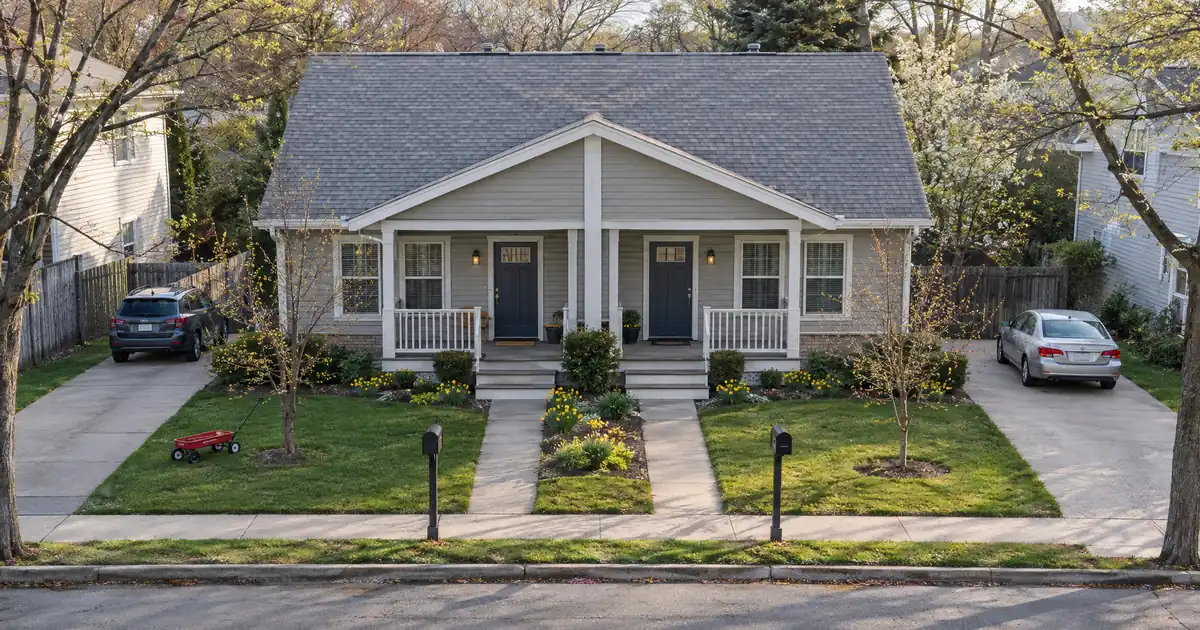
The Quick Read: It works when you live in one unit and the assistance option allows your building’s unit count. Duplexes have the most choices. Three- and four-unit buildings are narrower, and across the wholesale programs Lendmire places files with, that lane is the grant-style option. Whichever option you pick, the assistance sits on top of a government-backed first mortgage, and both layers have to approve the property.
Key Takeaways
- You must live in the building as your primary residence. Rentals, vacation homes and second homes are out.
- The first mortgage (FHA is the common one) allows one to four units. Each assistance option sets its own unit limit.
- Grant-style assistance covers one to four units. The forgivable and repayable second liens cover one to two.
- You do not have to be a first-time buyer for any option.
- Three- and four-unit buildings add rent-based tests and cash reserves that a duplex usually avoids.
What Does “Assistance” Mean on a Small Multi-Unit Home?
Down payment assistance is money that covers some or all of your required cash investment, and sometimes closing costs, on a primary home. It arrives at closing and goes to the transaction. It does not come to you as cash back.
Buying a 2-4 unit home is often called “house hacking.” You live in one unit and tenants in the others help carry the building. Lenders treat these buildings as residential property, so the same consumer rules apply as on a single-family home.
The assistance comes in four shapes. Lendmire arranges them through wholesale lenders, subject to program guidelines and full underwriting. You can see the full menu on the page for down payment assistance programs.
1. Grant-style assistance. It is 2% or 3.5% of the purchase price. There is nothing to repay, no lien, no payment and no interest.
2. Forgivable second lien. It is 3.5% of the lesser of price or appraised value. There is no interest and no payment. It is forgiven after 36 or 60 on-time first-mortgage payments.
3. Repayable second lien. It is 3.5% or 5% of the lesser of price or value. It is a real loan with a monthly payment, a 30-year amortization and a balloon due in year 10.
4. Refinance-cost second lien. It covers closing costs on an FHA refinance, from 1% to 3.5% of the balance, with combined leverage up to 104%. Every figure here varies by lender and program: guidelines, property type, leverage and credit profile all apply.
Skip option four for a purchase. It exists for owners who already live in the building, so it stays out of the comparison below.
Which Option Fits Which Unit Count?
Unit count is the first filter, and it splits the purchase options cleanly. Here is how the three purchase options line up.
| Option | Units | Repay? | Credit floor |
|---|---|---|---|
| Grant | 1-4 | Nothing to repay | 620 |
| Forgivable second | 1-2 | Forgiven over 36 or 60 payments | 640 |
| Repayable second | 1-2 | Yes, monthly, balloon in year 10 | 660 |
Credit floors are the lowest representative score among borrowers. The second-lien options allow a blended score in some cases, subject to program guidelines.
A duplex can use any of the three. A triplex or fourplex fits the grant. That is the practical difference. If you are eyeing a fourplex, build the plan around the grant and check its other conditions first.
Grant conditions
The grant pairs with an FHA first mortgage at 96.5% loan-to-value. Income must be at or below 140% of the area median, unless you fall into a qualifying category. Those categories are:
- first responders
- educators
- medical personnel
- civil servants
- military personnel
- first-time buyers
- buyers in an underserved census tract
A homebuyer education course is required. You pay for it up front, and the cost is credited back at closing. The grant is not offered in Washington. It cannot be combined with any other assistance program.
Second-lien conditions
The forgivable and repayable seconds carry no income limit beyond USDA’s own on a USDA first mortgage. They apply to single-family detached or attached homes, condominiums and PUDs, and they exclude unusual property types. They also allow minor non-structural repairs held back in escrow, up to $5,000. The escrow is 150% of the estimate, and the work must be completed within the timeframe the lender and program guidelines set, which varies by file.
The repayable second does not allow manual underwriting. It needs an automated approval.
How the First Mortgage and the Assistance Are Underwritten
Think of two separate approvals. The first mortgage has to work, and the assistance has to work on top of it. Failing either one ends the plan.
Step 1: Choose the first mortgage and confirm the unit count. HUD’s handbook glossary defines single-family as one- to four-unit dwellings. So FHA treats a fourplex as an ordinary residential home loan. The FHA loan carries a minimum required investment. It also has an upfront mortgage insurance premium that can be financed into the loan, plus an annual premium that varies by loan size and leverage. FHA limits vary by county, and limits rise with unit count.
Step 2: Pick the assistance and read its property rules. The first mortgage may allow four units while the assistance allows two. Check this before you write an offer. It is the most common place a plan fails.
Step 3: Understand how the lender classifies the assistance. HUD’s guidance defines secondary financing as any non-first-mortgage debt that creates a lien. It says a lien is not a gift, even with no payments or with forgiveness. A grant that leaves no lien is treated differently. That is why the grant and the second liens have different paperwork.
Step 4: Test the numbers. For a repayable second, the monthly payment counts in your debt ratios. For a forgivable second, there is no payment, but the lien is disclosed and counted in combined leverage. For every option, the lender runs an automated approval, and the assistance options follow that finding.
Step 5: Document the file. Expect an application, the assistance commitment or grant agreement, an appraisal with a rent schedule, copies of leases, and an occupancy certification. The grant also needs the education certificate. A repayable second adds its own loan disclosure, including a balloon notice.
Step 6: Close. The assistance funds go into the closing, not into your pocket. Government and nonprofit seconds on FHA loans cannot produce cash back, apart from refunds of earnest money or costs paid outside closing.
Not sure how a given structure counts toward your 3.5%? Ask the lender in writing. HUD’s archived guidance says a nonprofit second cannot fund the minimum investment unless the provider is a government entity. Your lender confirms the treatment for your file.
What Changes at Three and Four Units?
Plenty. A duplex is underwritten much like a single-family home. A triplex or fourplex brings in extra tests.
A 2023 HUD mortgagee letter allows rental income from the subject property to count as income on a two- to four-unit home. Lenders count a discounted share of the appraiser’s rent estimate, not the full projected rent. The letter also requires three months of mortgage payments (PITI) in reserves after closing on three- and four-unit properties. FHA’s self-sufficiency test applies to those same buildings. It checks whether the building’s discounted rent can carry its own payment.
For you, that means three things:
- Rent helps you qualify, but not dollar for dollar.
- Reserves are a separate pile of cash from your down payment.
- Assistance does not replace reserves.
Plan your savings accordingly. A buyer who clears the grant’s credit floor can still stall on reserves at a fourplex.
Here is a scenario with no dollar figures. A renter wants a duplex and has thin savings. They are not a first-time buyer, since they sold a home years ago, but they work as a nurse and so fit a grant category. The grant covers 3.5% of the price toward the FHA minimum investment. They still budget for closing costs and for reserves if the lender asks for them.
Now take a different buyer, one moving up from a single-family home. They earn above the 140% test and are not in a qualifying category. They want a duplex. The forgivable second has no income limit, so it fits, provided the credit score clears 640. They accept that the lien exists until it is forgiven after the on-time payments.
Where the Rules Break
USDA on a rented building. USDA’s guaranteed program excludes income-producing property and requires you to occupy the home as your primary residence. A USDA purchase of a rented multi-unit building is generally a poor fit. Confirm it with the lender and the agency before counting on it. USDA also caps household income at 115% of the area median.
HUD-184. This program serves eligible one- to four-unit homes in approved areas, such as tribal trust land. But the forgivable and repayable seconds pair with it only on one to two units, so a triplex or fourplex on this loan would not use those seconds. Confirm how a particular structure is treated with a lender experienced in this loan.
The accessory dwelling unit. A duplex plus a separate accessory unit can read as a three-unit property to FHA. That brings in the heavier tests. Have the lender confirm how the appraiser will classify it before you make an offer.
Forgivable does not mean “gift.” The lien is real until it is forgiven. If you sell or refinance early, the unforgiven balance comes due.
The repayable second’s balloon. The balance is due in year 10. Most buyers plan to sell or refinance before then. Know your plan before you take it.
No stacking. No option can be combined with another assistance program. A mortgage credit certificate is also not permitted with the second-lien options.
Building type. The grant covers one- to four-unit primary residences, including FHA-approved condominiums and PUDs. The second-lien options exclude unusual property types. A building that does not fit the standard categories needs an early review.
What Happens After Closing?
You owe an occupancy commitment. These are primary-residence programs, so moving out and renting every unit changes the picture.
Other points to plan for:
- Forgivable second: forgiveness requires on-time first-mortgage payments, with no payment 90 days or more late.
- Repayable second: you pay monthly, so it lowers the cash flow you counted on from the other units.
- Grant: there is no later repayment.
When Assistance Is the Wrong Tool
Assistance is not always the right fit. Consider skipping it when:
- You can fund the 3.5% minimum and reserves yourself, and you do not want a lien on the building.
- Your building classifies in a way the options exclude.
- A repayable second’s payment would push your debt ratios over the limit. A payment on the assistance affects qualifying just as the first mortgage does.
A fourplex buyer who misses the grant’s conditions has few other assistance options at that unit count. In that case, the useful move is to compare a larger savings plan against a smaller building. A duplex opens more doors.
HUD-approved housing counselors offer pre-purchase counseling and can walk through your budget. Many public programs, run by state and local agencies, cap assistance or add recapture periods. You can compare those with the options above, remembering that nothing can stack.
Key Terms Defined
Secondary financing: any loan other than your first mortgage that places a lien on the property.
Minimum required investment: the 3.5% of price or value that FHA expects you to put into the purchase.
Combined loan-to-value: the first mortgage plus all other liens, divided by the property’s value.
Self-sufficiency test: an FHA check on three- and four-unit buildings that asks whether discounted rent can carry the building’s payment.
Forgivable second: a lien with no interest or payment that is wiped out after enough on-time first-mortgage payments.
Balloon: a lump sum due at the end of a set period, which for the repayable second is year 10.
Frequently Asked Questions
Do I have to be a first-time buyer?
No. None of the options requires it. Repeat and move-up buyers qualify. The three-year first-time definition is only one of several categories under which a buyer can meet the grant’s income test.
Can I use assistance on a fourplex?
Yes, through the grant option, which covers one to four units on an FHA first mortgage. The forgivable and repayable seconds stop at two units. Expect the rent test and three months of reserves on the building, subject to lender guidelines.
Can I use assistance if I plan to rent out the whole building?
No. Assistance is for owner-occupied primary residences only. You must live in one of the units. It cannot go toward a rental, a second home or a vacation property.
Does the rent from the other units count toward qualifying?
Partly. FHA lenders can count a discounted share of the appraiser’s rent estimate on a two- to four-unit home, not the full amount. The share depends on lender and agency rules, so ask your loan officer how it will be calculated on your file.
What if I earn too much for the grant?
Check whether you fall into a qualifying category, such as an educator, medical worker or first responder. If you do not, the forgivable or repayable second may fit a duplex, since neither has an income limit beyond USDA’s on a USDA loan.
Next Step
If you are buying a primary home and want to see whether a down payment assistance option fits your file, Lendmire can help you compare the grant, forgivable and repayable structures alongside an FHA, USDA or HUD-184 first mortgage. Programs change, and every file is underwritten individually, so nothing here is a commitment to lend.
Investors who want the broader program framework can review how DSCR loans work.
About Lendmire
Lendmire (NMLS# 2371349) is a mortgage brokerage serving home buyers in 16 states. Down payment assistance programs are arranged with FHA, USDA and HUD-184 first liens through wholesale lending channels; Lendmire brokers the financing and the lender underwrites each application. Scotsman Guide named Lendmire a Top Mortgage Workplace in both 2025 and 2026.
Get Started
Ready to find the right loan for you?
In about 30 seconds you can review financing options available for your home or investment property. No commitment required.
Informational only. Not a Loan Estimate, approval, or commitment to lend. Program availability and eligibility are subject to lender guidelines, credit approval, property review, and underwriting.
References
1. HUD Handbook 4000.1 Glossary
2. HUD FHA Connection, Secondary Financing Background
This article is part of Lendmire’s down payment assistance program — full qualification details, guidelines, and scenarios live on the program page.
Related reading: How to Check Down Payment Assistance Eligibility in Minutes · Down Payment Assistance Property Rules for a Two-to-Four Unit Primary Home · Down Payment Assistance Document Checklist for a Primary Home Purchase
Brandon Miller
Founder & CEO, Mortgage Loan Originator, Lendmire LLC
- Mortgage Loan Originator · NMLS# 1129696 · Verify on NMLS Consumer Access
- North Carolina Real Estate Broker · License# 343312 · Verify on NCREC
- North Carolina Insurance Producer · License# 19053198 · Property, Casualty, Life, Health · Verify on NAIC SBS
- Lendmire LLC · Firm NMLS# 2371349 · Verify firm licensure
Compliance and disclosures. Lendmire (NMLS# 2371349) is a licensed mortgage broker and is not a direct lender, depository institution, financial advisor, or tax professional. Content in this article is general market analysis and educational information — not financial, legal, or tax advice for any specific situation. Lendmire does not guarantee loan approval; every transaction is subject to underwriting by the funding lender. Mortgage pricing and loan program guidelines are subject to change at any time without notice and vary by borrower characteristics, property type, and state regulations. Lendmire complies with Equal Housing Opportunity. Licensure verification: NMLS Consumer Access.