
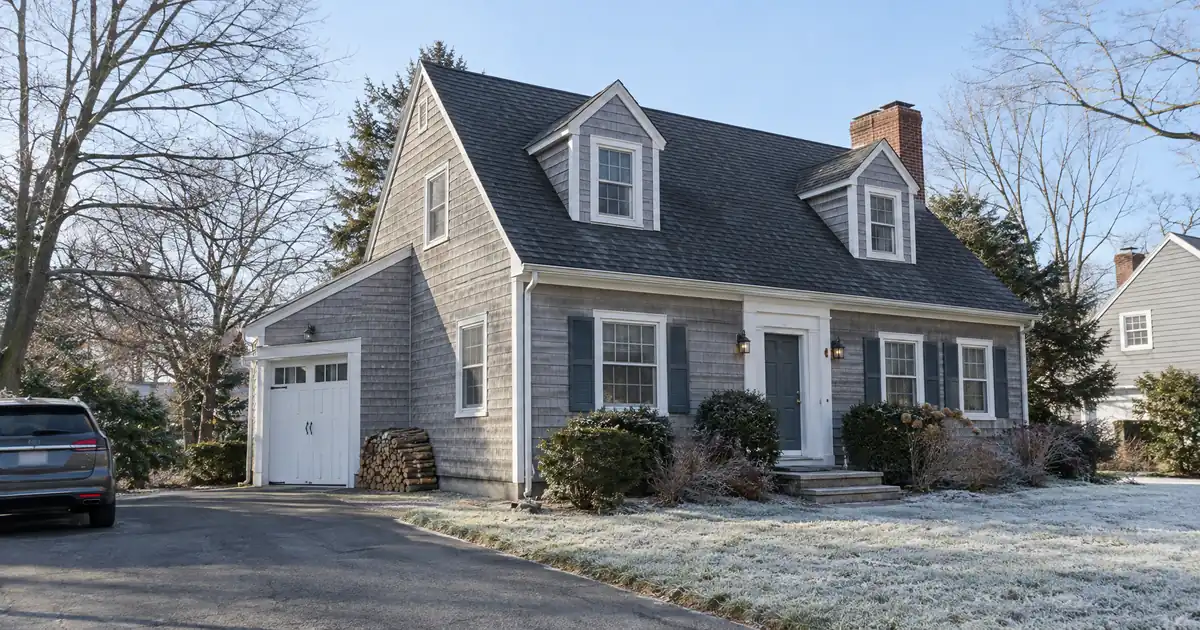
The Quick Read: A lender chooses its own value basis for a recent purchase, and it is often the lower of the purchase price or an appraised or automated value. No federal waiting period sets this; each lender writes its own seasoning policy. Because the down payment is most of the equity in a new purchase, equity usually limits the line more than the calendar does.
- Federal rules set no seasoning period for a HELOC after a purchase; each lender sets its own.
- The value basis can be the purchase price, the purchase appraisal, an automated value, or a fresh appraisal.
- Combined loan-to-value (CLTV) is every lien divided by that chosen value.
- On this network, an investment-property line tops out at 70% CLTV, so a typical down payment leaves little room.
- A rental-income-based DSCR cash-out refinance is the usual alternative once the property is seasoned.
What Does “Value” Mean to a HELOC Lender?
Value is whatever number the lender decides to underwrite against. For a home bought months ago, that is rarely the number you would pick. Lenders weigh the closing statement price, the appraisal done for your purchase, an automated valuation, or a new appraisal.
How large a line the equity supports.
An equity line is sized by combined loan-to-value, occupancy, and credit — not by rental coverage. Switch the occupancy or the credit band and the ceiling moves with it.
Investment-property lines require a 700 minimum credit score; second-home lines start at a 640 minimum and primary-residence lines at 600, and the combined-LTV ceiling steps down as the credit band drops on primary-residence and second-home lines and holds on investment-property lines; the line cap steps down on primary-residence lines and holds at every tier on investment-property and second-home lines.
A debt-to-income ratio above 45% requires 680+ credit. Profiles under 640 are limited to single-family homes. At least 75% of the approved line is drawn at closing. Ceilings, floors, and caps update from Lendmire’s centralized guideline source.
Line estimate
Illustrative estimate only — not a quote, Loan Estimate, approval, or commitment to lend. The rate is an editable assumption; equity-line pricing is variable through both the draw and repayment periods and never converts to fixed. Occupancy and credit drive the ceiling together: an investment property tops out at 70% combined LTV (minimum credit 700, line cap $500,000); a second home tops out at 90% combined LTV (minimum credit 640, line cap $500,000), with the ceiling stepping down as the credit band drops (the cap holds at every tier); a primary residence tops out at 90% combined LTV (minimum credit 600), and its $750,000 maximum line is available only at 75% combined LTV or below with a 700-or-better credit profile (720 on the longer-runway program) and a full appraisal. Lines above $500,000 require a full appraisal. Credit, debt-to-income, property type, and full underwriting review all affect the final line.
The distinction matters because a line is sized from value, not from what you think the home is worth today. Many lenders hold value at the purchase price until their own clock runs out. Investors commonly report 6-month and 12-month purchase-price periods on BiggerPockets. Those are individual experiences, not rules.
Key Terms Defined
Purchase price: The amount on your settlement statement, supported by the deed and closing documents.
Purchase appraisal: The valuation ordered for your original mortgage, which some lenders will reuse for a few months.
Automated valuation (AVM): A computer estimate built from public records and nearby sales, with a confidence score attached.
CLTV: All liens on the property added together and divided by the lender’s chosen value.
Seasoning: The period a lender wants to pass after closing before it trusts a higher value.
How Underwriting Treats a Recent Purchase, Step by Step
1. The lender picks the value basis. This is policy, not law. Even a brand-new appraisal may be capped at the purchase price for a set period.
2. A valuation is ordered if needed. Lines at or below $500,000 on this network ordinarily run an automated valuation with no traditional appraisal, though a higher CLTV may call for a secondary valuation. Every line above $500,000 requires a full appraisal, and a borrower may request a full appraisal in any case.
3. CLTV is computed. Line size equals value times the allowed CLTV, minus the existing first-mortgage balance. A BiggerPockets commenter walks through this arithmetic.
4. Personal underwriting runs. The file is sized on credit, income, and debt-to-income. On this network the maximum DTI is 50%, with 45% for credit profiles from 600 to 679.
5. Title is checked. The borrower must hold title individually or in a revocable living trust.
The documents usually involved: the closing statement, the recorded deed, the first-mortgage statement, income and credit records, and the valuation report.
Where the Bar Sits: Regulation Versus Lender Choice
Three federal bank regulators raised the residential appraisal threshold from $250,000 to $400,000, and the OCC’s release describes evaluations as generally less burdensome than appraisals. The Federal Register final rule confirms the agencies adopted that figure as proposed. A firsttuesday summary notes the exemption covers 1-4 unit residential loans from regulated lenders and excludes loans eligible for sale to government-sponsored enterprises.
That rule permits lighter valuation. It does not entitle you to skip an appraisal, and it says nothing about seasoning.
Which Value Wins When the Numbers Disagree?
| Situation | Likely value anchor | Why |
|---|---|---|
| Closed a few months ago, no changes | Purchase price or reused appraisal | Value hasn’t had time to prove itself |
| Market rose since closing | Often still the purchase price | Lender caps at price until its clock ends |
| Bought below market | Purchase price, unless you pay for a new appraisal | Gap is real but unproven |
| Renovated after closing | Purchase price, until a full appraisal | Automated models can’t see interiors |
| Line above $500,000 | Full appraisal | Required on this network |
Policies differ by lender, so ask up front which basis the lender uses and whether it will accept a fresh appraisal.
What Happens to the Line When the Number Moves
Run the same borrower under two value assumptions. Say a primary residence bought for $500,000 with a $400,000 first mortgage.
- Value held at price: $500,000 at a 75% CLTV cap allows $375,000 of total debt. That is already below the $400,000 owed, so the line is zero.
- Value reappraised at $580,000: the same cap allows $435,000 of total debt. The room above the first mortgage is what the line can use.
Use these as illustrative inputs only. The point: a small down payment leaves nothing under the cap no matter how long you wait, and a higher appraisal is what creates room. One BiggerPockets buyer saw a quote move from a line based on a $358,000 appraisal to one based on the $290,000 sale price, per the same thread.
If the Home Is Worth More Than You Paid
Market movement, improvements, and below-market purchases all create a gap between price and value. A lender that holds value at the purchase price will ignore all three. Improvements may support a higher appraised value, depending on comps and underwriter review, but only if the lender will order a fresh appraisal.
Ways to ask for a better number:
- Request a full appraisal rather than an automated value, which some borrowers pay for.
- Gather receipts and permits for work done since closing.
- Supply recent comparable sales.
- Challenge a low result with those comps before the file closes.
Automated models are weakest on condition and upgrades, which is why a rehabbed property is a poor fit for them.
Buyer Profiles at a Glance
| Buyer | Likely outcome | What to bring |
|---|---|---|
| Large down payment | Real room under the cap | Closing statement, credit file |
| Minimal down payment | Little or no line | Patience, or a different product |
| Renovator | Needs a full appraisal | Receipts, before-and-after documentation |
| Bought below market | Gap recognized only with an appraisal | Comps, purchase documents |
Occupancy Changes the Ceiling
Occupancy sets the cap. On this network, a primary-residence line reaches 90% CLTV only at a 720-or-better credit profile, up to $500,000. A second home can also reach 90% at 720 or better, up to $500,000. An investment-property line tops out at 70% CLTV, requires a 700 minimum credit profile, and caps at $500,000.
Market surveys report wide variation in investment-property HELOC limits, with figures from 60% to 90% in BiggerPockets threads. The network figure is 70% on an investment property. Lines are also scarce on rentals; some lenders say no because the product name includes “home.”
Where the General Rule Breaks
- Entity ownership. An LLC, corporation, or land trust cannot hold title on these lines. A property already deeded to an LLC needs a vesting change or a different product.
- Ineligible property types. Manufactured homes, co-ops, condotels, log homes, and commercial or mixed-use properties are not offered.
- Delayed financing. A cash-out exception for cash buyers waives seasoning on a refinance. Placing other financing on the property after a cash purchase can spoil it, so sequence matters.
- Large lines. Anything above $500,000 is primary-residence only, needs a 700 credit profile or better (720 on the longer-runway structure), caps at 75% CLTV, and needs a full appraisal.
What the Investor Decision Looks Like
If the home is a rental, the decision is usually between a personal-credit line and a rent-based refinance. A line is sized on personal credit and DTI. A DSCR cash-out refinance qualifies primarily on property-level rental income covering the payment, subject to lender guidelines, and can generally be held in an LLC, subject to lender program eligibility. Cash-out on the DSCR side tops out around 75% LTV on a standard rental, with about 6 months of seasoning the common expectation, and DSCR compares rent to PITIA only, so clearing 1.00 is not the same as positive cash flow. Lendmire’s complete DSCR loans guide covers those mechanics.
If you want to understand how a lender caps a line after a value change, see Lendmire’s piece Can a Lender Cut Your HELOC Limit After Your Home Value Drops?. Tax treatment varies; consult a qualified professional.
If you are considering a home equity line and want to see how the numbers work, Lendmire can help you compare HELOC options based on the property, the equity available, credit profile, combined leverage, and your goals. Lendmire is a broker arranging financing through select lenders in its wholesale network, and every figure is subject to lender guidelines and full file review.
Frequently Asked Questions
Can I use my purchase appraisal for a HELOC?
Sometimes. Some lenders reuse a purchase appraisal a few months old, while others anchor to the purchase price. Ask which your lender does before you apply.
Do I have to wait before applying?
No federal waiting period applies. Seasoning is lender policy, and equity from your down payment usually matters more than the calendar.
Can I dispute a low value?
Yes, in practice. Request a full appraisal and supply comps and improvement receipts. Whether the lender accepts them is its decision.
Does a renovation count right away?
Not if the lender holds value at the purchase price. A full appraisal is the usual way to have improvements considered.
Does it matter if I paid below market?
It can, but only if the lender will accept a new valuation. Otherwise the lower price remains the anchor.
About Lendmire
Lendmire, NMLS# 2371349, is a mortgage brokerage that arranges home equity lines of credit through wholesale lending partners in its 16 full-service states. Lines on primary residences, second homes and investment properties are each reviewed individually by the lender under the program’s occupancy, credit and combined-loan-to-value guidelines. Scotsman Guide named Lendmire a Top Mortgage Workplace in both 2025 and 2026.
Get Started
Ready to find the right loan for you?
In about two minutes you can review financing options available for your home or investment property. No commitment required.
Informational only. Not a Loan Estimate, approval, or commitment to lend. Program availability and eligibility are subject to lender guidelines, credit approval, property review, and underwriting.
References
1. BiggerPockets: first home and investment property HELOC
2. BiggerPockets: HELOC on an investment property
3. OCC joint release on final appraisal rule
4. Federal Register, Real Estate Appraisals final rule
6. BiggerPockets: HELOCs for investment property
This article is part of Lendmire’s HELOC & home equity loan program — full qualification details, guidelines, and scenarios live on the program page.
Related reading: Home Equity Agreement vs HELOC Requirements for a Primary Home · Credit Requirements for a Home Equity Investment vs. a HELOC · Is It Irresponsible to Use a HELOC for a Trip and Home Repairs?
Brandon Miller
Founder & CEO, Mortgage Loan Originator, Lendmire LLC
- Mortgage Loan Originator · NMLS# 1129696 · Verify on NMLS Consumer Access
- North Carolina Real Estate Broker · License# 343312 · Verify on NCREC
- North Carolina Insurance Producer · License# 19053198 · Property, Casualty, Life, Health · Verify on NAIC SBS
- Lendmire LLC · Firm NMLS# 2371349 · Verify firm licensure
Disclosures. The information presented in this article is general market commentary, not financial, legal, or tax advice. Lendmire is a mortgage brokerage (NMLS# 2371349) — not a direct lender or depository institution — and loan placement is subject to lender underwriting. Nothing in this content represents a commitment to lend. Loan terms, pricing, and program availability vary based on borrower qualifications, property characteristics, and state of subject property, and are subject to change at any time. Lendmire complies with Equal Housing Opportunity requirements. Consumer access: nmlsconsumeraccess.org.