
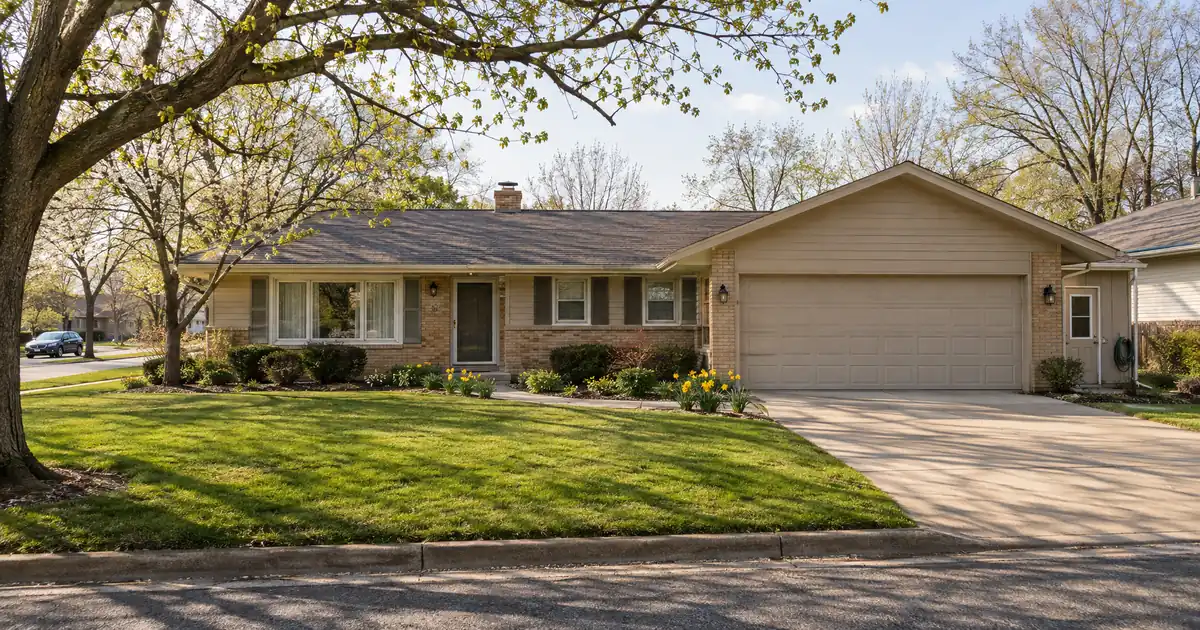
The Quick Read: A home equity line is secured by the building, so the lender checks that the building is insured before it lends. It reads the declarations page for four things: who is insured, how much dwelling coverage there is, how big the deductible is, and whether the lender is named. Most snags come from a mismatch on one of those four.
- No law makes you carry homeowners insurance. The line agreement does.
- Dwelling coverage is judged against rebuild cost, not market value or purchase price.
- Your first mortgage and the new line add together, so a limit that satisfied the first lien alone may now be short.
- A rental needs a landlord policy, not an owner-occupied homeowners form.
- Flood is a separate policy, and a new line can trigger a fresh flood check.
Key Terms Defined
Declarations page: the one- or two-page summary of your policy. It shows the insured names, the property address, the policy dates, the coverage limits, the deductibles, and the lienholders.
Dwelling coverage: the part of the policy that pays to repair or rebuild the structure. It does not pay for the land.
Replacement cost: what it would cost to rebuild the structure with similar materials. It excludes land value and has little to do with what a buyer would pay.
Mortgagee clause: the wording that names a lender on your policy. It lets the lender receive notice of cancellation and get paid ahead of you on a covered loss.
Hazard insurance: the lender’s term for property coverage. In practice it means your homeowners policy, and lenders use the two terms interchangeably, as Policygenius notes in its lender-requirements explainer.
Force-placed insurance: coverage a lender or servicer buys on your behalf when your own policy lapses, then bills to you.
Combined loan-to-value (CLTV): all loans secured by the property, added together, divided by the property’s value.
How large a line the equity supports.
An equity line is sized by combined loan-to-value, occupancy, and credit — not by rental coverage. Switch the occupancy or the credit band and the ceiling moves with it.
Investment-property lines require a 700 minimum credit score; second-home lines start at a 640 minimum and primary-residence lines at 600, and the combined-LTV ceiling steps down as the credit band drops on primary-residence and second-home lines and holds on investment-property lines; the line cap steps down on primary-residence lines and holds at every tier on investment-property and second-home lines.
A debt-to-income ratio above 45% requires 680+ credit. Profiles under 640 are limited to single-family homes. At least 75% of the approved line is drawn at closing. Ceilings, floors, and caps update from Lendmire’s centralized guideline source.
Line estimate
Illustrative estimate only — not a quote, Loan Estimate, approval, or commitment to lend. The rate is an editable assumption; equity-line pricing is variable through both the draw and repayment periods and never converts to fixed. Occupancy and credit drive the ceiling together: an investment property tops out at 70% combined LTV (minimum credit 700, line cap $500,000); a second home tops out at 90% combined LTV (minimum credit 640, line cap $500,000), with the ceiling stepping down as the credit band drops (the cap holds at every tier); a primary residence tops out at 90% combined LTV (minimum credit 600), and its $750,000 maximum line is available only at 75% combined LTV or below with a 700-or-better credit profile (720 on the longer-runway program) and a full appraisal. Lines above $500,000 require a full appraisal. Credit, debt-to-income, property type, and full underwriting review all affect the final line.
Why Does a HELOC Lender Care About Your Policy?
Because the house is the collateral. If a fire destroys it and nothing pays for the rebuild, the lender’s lien sits on a pile of ash.
No statute requires you to insure your own home. The requirement is contractual. You agree to keep the property insured when you sign the line documents, and the lender confirms it at the start.
A HELOC adds one wrinkle that a first mortgage does not. It usually sits behind another loan, or it stands alone in first position on a home that is paid off. Either way, the lender wants the policy to protect the total debt against the property, not only its own slice.
Lendmire is a broker, not a lender. It places equity lines through select wholesale partners, and each partner sets its own written insurance conditions. Those conditions differ in detail, but the logic is the same across the network: right insured, enough dwelling coverage, lender named, policy in force.
Home equity lines are a narrower product than DSCR loans. Through Lendmire’s wholesale partners, they are available in the 16 states where Lendmire offers full-service lending, which is a smaller footprint than the DSCR investor platform.
What Does the Lender Read on the Declarations Page?
The declarations page is the document an underwriter actually opens. A full policy runs dozens of pages, but nobody reads it cover to cover during a HELOC review. The summary page carries what matters.
Here is the usual read, field by field:
| Field | What the lender checks | Common snag |
|---|---|---|
| Named insured | Matches the borrower or title holder | Name or entity mismatch |
| Property address | Matches the collateral exactly | Old address, missing unit |
| Policy dates | In force, with time left | Policy expires soon |
| Dwelling limit | Meets the required amount | Limit below combined debt |
| Deductible | Within the lender’s cap | Large percentage deductible |
| Mortgagee section | Lender listed correctly | Lender missing or misspelled |
Flood Insurance Guru, a flood-insurance practitioner site, lists the same four problems as common reasons a HELOC stalls: a building limit below the combined loan balances, a deductible that is too high, a lender missing from the mortgagee clause, and a name mismatch. That matches what a broker sees on files. The problems are rarely exotic. They are usually clerical, and they are fixable if you catch them before the lender does.
A few details on the table:
Named insured. The lender wants the policy to protect the person who owes the debt. Title and vesting matter here. Lines placed through Lendmire’s wholesale partners require the individual borrower or a revocable living trust to hold title. An LLC cannot. If the policy lists an entity that does not hold title, expect a conditions request.
Deductible. Lenders commonly cap deductibles, according to Insurance.com, and they want proof of coverage at closing. Public figures for HELOC deductible caps are scarce, so ask your lender for its number. Watch percentage deductibles for wind or hail in particular. A deductible written as a percentage of the dwelling limit can be much larger than it looks.
Policy dates. A policy that expires soon invites a request for the renewal. Renew early if you can and send the new page.
How Does the Lender Judge the Coverage Amount?
The yardstick is rebuild cost, and the lender looks at your total secured debt against it. Market value is the wrong number, because it includes land. Land does not burn, so it cannot be insured.
Marketplace explainers say lenders generally want the building insured to replacement cost. Policygenius adds that a common alternative is the unpaid loan balance, if that balance is at least 80% of the insurable value. That is a general consumer description, not a rule for any one line. Each lender in a wholesale network sets its own standard, so read your lender’s written conditions.
The second-lien math is where people trip. Say your first mortgage equals 70% of rebuild cost, and a new line adds another 15%. The combined debt is 85% of rebuild cost. A dwelling limit that sat comfortably above the first loan may not clear the combined amount. And if your combined liens ever exceed rebuild cost, you generally need to insure only up to rebuild cost. Coverage above that buys nothing useful.
Two things follow:
- Compare your dwelling limit to the sum of all liens, including the line’s full limit, not just the amount you plan to draw. An open line can be drawn later, so the safe habit is to size coverage to the whole commitment.
- Do not let anyone talk you into coverage equal to market value. Neighborhood prices swing with the market. Rebuild costs follow labor and materials.
Valuation adds a second number. On lines at or below $500,000, the wholesale programs ordinarily run an automated valuation with no traditional appraisal, though a higher CLTV may require a second valuation. A full appraisal is required on every line above $500,000, and a borrower can request one in any case. The appraisal estimates what the property is worth. Your insurer estimates what it costs to rebuild. Some lenders accept the insurer’s figure, and some may check it against the appraiser’s cost-new estimate. Both numbers can be right and still differ widely.
Where Does Your Lender Sit on the Policy?
The lender goes in the mortgagee section by name, with the loan number if you have it. A second-lien lender is typically listed after the first mortgagee. Insurance.com describes the clause as giving the lender notice of cancellation and a claim on loss proceeds ahead of the owner. That is why naming the lender is not a formality.
Here is who may appear on the page:
1. You, as named insured.
2. Your first mortgage lender, as first mortgagee.
3. The HELOC lender, listed second.
If both loans are with the same lender, the lender may not need to appear twice, provided coverage is sufficient. That detail is lender-specific, so ask before you assume.
Mortgagee and loss payee are close cousins. The practical difference is small for a borrower. What matters is that the wording on the page matches what your lender’s conditions list. A near-miss spelling can trigger a request to reissue.
When Does Flood Coverage Enter the Picture?
Flood is the one layer that is federally required for regulated lenders, and a new line can trigger it even when your first mortgage never did. Standard homeowners policies exclude flood. So if the building sits in a mapped high-risk flood zone, the lender will want a separate flood policy.
A HELOC is secured by the building, so it triggers the same review as a purchase loan. The FDIC Consumer Compliance Examination Manual sets the minimum flood coverage at the lesser of three numbers: the outstanding loan principal, the maximum the federal flood program offers for the structure, or the insurable value of the property. It gives the cap for single-family and two-to-four-unit buildings as $250,000. The manual also has a section on second mortgages and home equity loans.
That math has one odd result. If your combined debt is higher than the federal cap, the federal minimum is the cap. A lender can still require more as a loan condition. Flood coverage also pays on the building, not the land, which is why insurable value, not market price, drives the third number.
A first mortgage can also pre-date the flood map. A map change or a new loan event prompts a fresh zone check. If your first mortgage never needed flood coverage, do not assume the new line will skip it.
Where the General Rule Breaks
Most explainers about lender insurance requirements assume an owner-occupied house with one mortgage. Real files break that assumption in a handful of places.
A rental on a homeowners form. This is the central investor issue. A standard homeowners policy is written for the owner who lives there. A long-term rental generally needs a landlord policy, often written on a dwelling-fire form. Hippo’s landlord guide describes the DP-1, DP-2, and DP-3 forms, with DP-3 the most comprehensive and similar to a homeowners form. Mashvisor notes that a homeowners policy on a house rented full-time can cause claim trouble. Renting one room in a home you live in is generally a different case.
Landlord policies also add loss-of-rents coverage, which homeowners policies generally lack. A lender may reject an owner-occupied form on a rental, and an uninsured loss lands on you either way.
Investment property lines. On an investment property, equity lines through Lendmire’s wholesale partners top out at 70% CLTV, require a credit profile of 700 or better, and cap at a $500,000 line. They run on one structure: a five-year interest-only draw followed by a 25-year repayment. Because the collateral is a rental, expect the lender to ask which policy form you carry.
Title held in an LLC. An equity line cannot be written on a property deeded to an LLC, a corporation, or a partnership. If your rental is already in an LLC, the insurance question is moot until the vesting changes. The other route is a DSCR cash-out refinance, which is built for entity ownership, subject to program eligibility. The complete DSCR loans guide covers how that structure works. For co-owned property, Lendmire’s piece How a Lender Reads Partner Ownership on an Investment Property HELOC covers who must appear on title and on the policy.
Condos. Condominiums, including non-warrantable ones, are eligible through the wholesale partners. The master policy covers the building shell and common areas. Many lenders also want an interior policy, usually called HO-6 or walls-in coverage, if the master policy stops at the studs. Ask for both documents.
Properties outside the programs. Manufactured homes, co-ops, condotels, log homes, commercial, mixed-use, and agricultural-zoned properties are not offered on these lines. No policy fixes that.
Insurer replacement value versus appraisal. Some lenders accept the insurer’s number. Some may question it. Treat that as a lender-by-lender point.
What Does the Investor Decision Look Like?
For investors, the policy is a pre-application task, not a closing-day surprise. Run through this list before you apply.
1. Pull the current declarations page for each property you plan to borrow against.
2. Confirm the named insured matches how title is held.
3. Add up the first lien and the full line limit. Compare that sum to the dwelling limit.
4. Check the form. A rental needs a landlord form with loss-of-rents coverage.
5. Check the deductible, especially any percentage-based wind or hail deductible.
6. Ask your agent to add the new lender in the mortgagee section once you have its name and loan reference.
7. Check the flood zone. If it is mapped high-risk, price a separate policy now.
When you call the agent, say plainly what you need. Ask for the dwelling limit to be raised to the combined-debt figure, ask for the mortgagee addition, and ask for the new declarations page sent to you in writing. Agents and borrowers often talk past each other on this call. A request that names the specific change moves faster in the agent’s system than a vague worry about the lender.
The insurance line also touches DSCR math. Coverage there is monthly rent compared with the full housing payment, and the payment includes insurance. A landlord policy generally costs more than a homeowners policy, so a rental’s coverage ratio uses the higher premium. Clearing a 1.00 DSCR is also not the same as positive cash flow, since repairs, vacancy, and management sit outside the ratio. A flood policy adds to the expense side as well. Price the policy before you price the deal.
After the Line Is Open
Your obligation does not end at closing. The policy renews, insurers non-renew, premiums move, and an open line may sit untouched for years during its draw period. Send the lender the new page at each renewal, and tell your agent right away if you switch carriers so the mortgagee wording follows.
If coverage lapses, the lender or servicer can buy force-placed insurance and bill you. The CFPB says it is usually pricier than a policy you buy yourself. Federal servicing rules, including Regulation X section 1024.37, set notice steps before a charge for covered mortgage loans. Whether they reach an open-end line depends on the loan, so read your own line agreement and do not count on a warning period.
Putting It Together
The lender wants one thing from your policy: proof that the building behind the lien is protected for the full amount of debt against it. Match the names, size the dwelling limit to combined debt, list the lender, use the right form for a rental, and check flood. Every figure on the program side is subject to lender guidelines and a full file review.
If you are considering a home equity line and want to see how the numbers work, Lendmire can help you compare HELOC options based on the property, the equity available, credit profile, combined leverage, and your goals. If the rental sits in an LLC, a DSCR cash-out may be the better fit.
Frequently Asked Questions
Does a HELOC lender require homeowners insurance if I own the house outright?
Yes, in practice. With no first mortgage, the line may sit in first position, and the lender still needs the building protected. The requirement comes from the line agreement, not from a law. Expect the same declarations page review and the same mortgagee wording.
Does my lender need to be named on the policy?
Usually yes. The lender is listed in the mortgagee section so it gets cancellation notice and is paid ahead of you on a covered loss. If both loans are with one lender, it may not need two listings.
Can I use my regular homeowners policy on a rental?
Generally no. Homeowners forms are written for owner-occupied homes, and a full-time rental usually needs a landlord or dwelling-fire policy. A lender may reject the wrong form, and a claim could be disputed. Renting a room in a home you live in is generally treated differently.
Does a HELOC trigger flood insurance if my first mortgage did not?
Yes, it can. A new loan secured by the building prompts a fresh flood zone check. If the building is in a mapped high-risk zone, the lender will require flood coverage up to the lesser of the loan balance, the federal program cap, or insurable value.
What happens if my coverage lapses after the line opens?
The lender or servicer can buy force-placed coverage and charge you. It usually costs more than a policy you buy yourself and may cover less. Send each renewal page on time and tell your agent if you change carriers.
About Lendmire
Lendmire (NMLS# 2371349) is a mortgage broker. Home equity lines of credit — on a primary residence, a second home or an investment property — are arranged through wholesale lenders in Lendmire’s 16 full-service states, and every line is underwritten by the lender under its program guidelines. Scotsman Guide named Lendmire a Top Mortgage Workplace in both 2025 and 2026.
Get Started
Ready to find the right loan for you?
In about two minutes you can review financing options available for your home or investment property. No commitment required.
Informational only. Not a Loan Estimate, approval, or commitment to lend. Program availability and eligibility are subject to lender guidelines, credit approval, property review, and underwriting.
References
1. Policygenius, Mortgage Lender Requirements for Homeowners Insurance
2. Flood Insurance Guru, HELOC Flood Insurance
3. Insurance.com, How Much Home Insurance Does a Lender Require
4. FDIC Consumer Compliance Examination Manual, Flood Disaster Protection Act
5. Hippo, Landlord Home Insurance Obligations
6. Mashvisor, Landlord Insurance vs. Homeowners Insurance
7. CFPB, Your Mortgage Servicer Must Comply With Federal Rules
This article is part of Lendmire’s HELOC & home equity loan program — full qualification details, guidelines, and scenarios live on the program page.
Related reading: Does a HELOC on a Rental Change What You Owe at Sale? · How to Satisfy Flood Insurance Requirements on a HELOC · Can You Get a HELOC Right After Closing on a Home?
Brandon Miller
Founder & CEO, Mortgage Loan Originator, Lendmire LLC
- Mortgage Loan Originator · NMLS# 1129696 · Verify on NMLS Consumer Access
- North Carolina Real Estate Broker · License# 343312 · Verify on NCREC
- North Carolina Insurance Producer · License# 19053198 · Property, Casualty, Life, Health · Verify on NAIC SBS
- Lendmire LLC · Firm NMLS# 2371349 · Verify firm licensure
Compliance and disclosures. Lendmire (NMLS# 2371349) is a licensed mortgage broker and is not a direct lender, depository institution, financial advisor, or tax professional. Content in this article is general market analysis and educational information — not financial, legal, or tax advice for any specific situation. Lendmire does not guarantee loan approval; every transaction is subject to underwriting by the funding lender. Mortgage pricing and loan program guidelines are subject to change at any time without notice and vary by borrower characteristics, property type, and state regulations. Lendmire complies with Equal Housing Opportunity. Licensure verification: NMLS Consumer Access.