
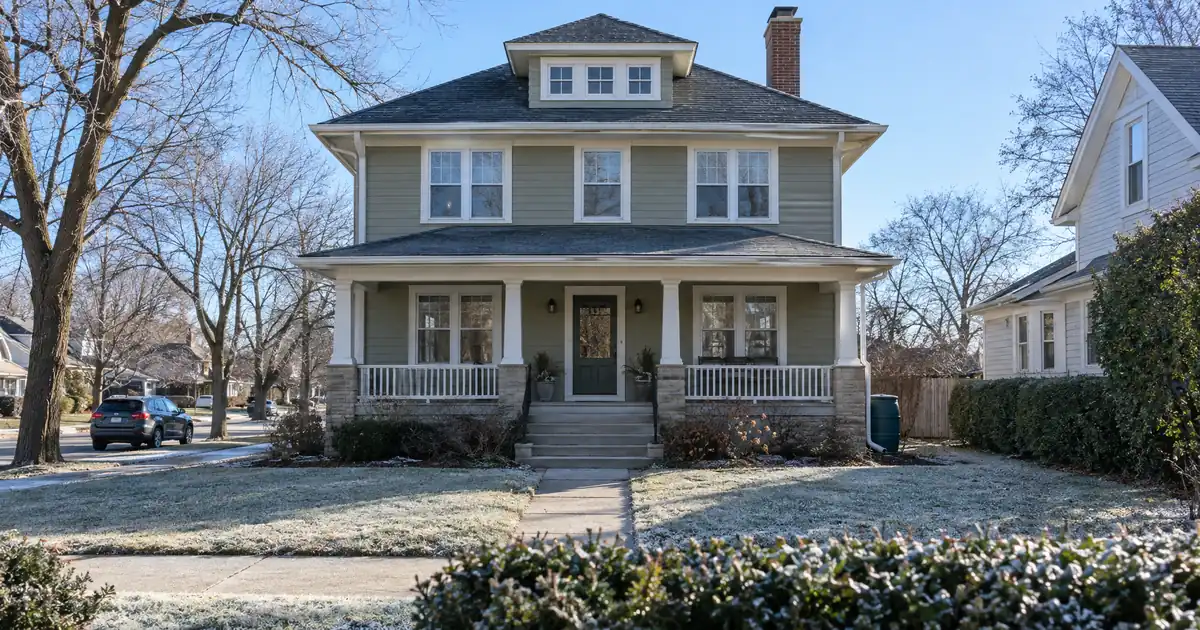
The Quick Read: A HELOC behind a VA loan is a private second lien that leaves your VA mortgage in place, while a VA cash-out refinance replaces that mortgage with one new loan that returns cash. The HELOC fits a veteran who wants to keep the first loan, and the cash-out fits one who wants everything consolidated.
- VA does not offer a home equity line. Any HELOC sitting behind your VA mortgage comes from a private lender that sets its own terms.
- A VA cash-out requires that you live in the home. A rental you own does not qualify for it.
- Across the wholesale partners Lendmire works with, a HELOC on a primary residence reaches 90% combined loan-to-value only at a 720-or-better credit profile. On an investment property the ceiling is 70%.
- A cash-out can pay off an existing HELOC at closing. A HELOC leaves the VA loan alone and adds a second payment.
- Neither product buys a rental directly. Both pull equity out of your own home.
Here is the honest answer on who each option is for. A HELOC suits a veteran who likes the VA loan already in place and needs a defined sum on top of it. A VA cash-out suits a veteran who wants one new first loan, needs a larger sum, or already carries a second lien they want gone. Neither is better in the abstract. The right one depends on what you are borrowing for and what you would give up.
How large a line the equity supports.
An equity line is sized by combined loan-to-value, occupancy, and credit — not by rental coverage. Switch the occupancy or the credit band and the ceiling moves with it.
Investment-property lines require a 700 minimum credit score; second-home lines start at a 640 minimum and primary-residence lines at 600, and the combined-LTV ceiling steps down as the credit band drops on primary-residence and second-home lines and holds on investment-property lines; the line cap steps down on primary-residence lines and holds at every tier on investment-property and second-home lines.
A debt-to-income ratio above 45% requires 680+ credit. Profiles under 640 are limited to single-family homes. At least 75% of the approved line is drawn at closing. Ceilings, floors, and caps update from Lendmire’s centralized guideline source.
Line estimate
Illustrative estimate only — not a quote, Loan Estimate, approval, or commitment to lend. The rate is an editable assumption; equity-line pricing is variable through both the draw and repayment periods and never converts to fixed. Occupancy and credit drive the ceiling together: an investment property tops out at 70% combined LTV (minimum credit 700, line cap $500,000); a second home tops out at 90% combined LTV (minimum credit 640, line cap $500,000), with the ceiling stepping down as the credit band drops (the cap holds at every tier); a primary residence tops out at 90% combined LTV (minimum credit 600), and its $750,000 maximum line is available only at 75% combined LTV or below with a 700-or-better credit profile (720 on the longer-runway program) and a full appraisal. Lines above $500,000 require a full appraisal. Credit, debt-to-income, property type, and full underwriting review all affect the final line.
Side-by-Side
The HELOC column reflects guidelines across Lendmire’s wholesale network. The VA cash-out column shows published industry norms and VA program materials.
| Factor | HELOC Behind a VA Loan | VA Cash-Out Refinance |
|---|---|---|
| Lien position | Second lien behind the VA loan | New first lien replaces the old loan |
| Review basis | Credit, DTI, combined LTV | VA and lender credit and income standards |
| Documentation | Income, credit, title, valuation | COE, pay stubs, VA appraisal |
| Property types | 1-4 units, PUD, townhome, condo | A home you will live in |
| Entity vesting | Individual or revocable trust only | Veteran who occupies the home |
| Timeline (qualitative) | One new loan; first loan stays put | Full refinance with more steps |
| Reserve expectations | Set by the lender and the file | Set by the lender and the file |
A few notes on that table. Lines at or below $500,000 ordinarily run on an automated valuation, so a traditional appraisal is not the default. VA cash-out loans require an appraisal. Every figure on the HELOC side is subject to lender guidelines and full file review, and the HELOC product is available only in the 16 states where Lendmire offers full-service mortgage lending. That footprint is narrower than its 41-market DSCR footprint.
How the VA Cash-Out Works (and What It Requires)
A VA cash-out is a new loan that replaces your current one under different terms. VA.gov says it comes through a private bank, mortgage company, or credit union, not directly from VA. It requires a Certificate of Eligibility, meaning VA’s proof that you qualify for the benefit. It also requires meeting VA and lender standards for credit and income, and living in the home being refinanced. The lender will typically ask for recent pay stubs along with the certificate.
The qualification is personal and borrower-based. The loan you pay off does not have to be a VA loan. VA also layers its own refinance tests on top of ordinary underwriting, which a plain second lien never faces. Ask the lender which apply to your file.
One more rule matters when you already have a second lien. VA’s streamline refinance page says only the existing VA loan can be paid from those proceeds, and a second-mortgage holder must agree to subordinate. Subordinate means agreeing to rank behind the new loan. A cash-out is the route that can retire a HELOC outright.
When a HELOC Behind a VA Loan Is the Better Fit
Choose the HELOC when the first mortgage is worth keeping and your need is moderate. It adds a second loan secured by the same property, and a HELOC does not require you to refinance your home loan, as the consumer-finance explainer Banks.com describes it. Your VA loan and its terms stay exactly as they are. Military service neither helps nor hurts the HELOC application, because the lender uses the same criteria it uses for anyone else.
Here is how the product works across our network, and it is stricter than the “credit card against your house” picture many people carry.
- Leverage on a primary residence. The ceiling reaches 90% combined loan-to-value, and only at a 720-or-better credit profile on lines up to $500,000. At a 700 profile the ceiling is 85% up to $500,000, or 75% up to $750,000. The minimum credit score is 600, and at that level the ceiling drops to 60%.
- Line size. Lines run from $25,000 to $750,000. A line above $500,000 is for primary residences only and requires a full appraisal.
- Draw structure. Lines carry either a 3-year interest-only draw with a 17-year repayment, or a 5-year draw with a 25-year repayment, depending on the program. At least 75% of the line is drawn at closing.
- Pricing. It floats through both the draw and the repayment period and never converts to fixed. Your payment can move, and it steps up when repayment begins.
- Debt-to-income. The maximum is 50%, or 45% for credit profiles from 600 to 679. A ratio above 45% requires a 680 score. The lender reviews your file on the interest-only payment calculated on the maximum draw, which is stricter than many borrowers expect.
- Property. Single-family, 2-4 units, PUDs, townhomes, and condos, including non-warrantable ones, are eligible. Manufactured homes, co-ops, condotels, log homes, and commercial or mixed-use property are not.
The HELOC also fits a veteran whose property type might trip up a refinance, or one who wants to leave a VA loan with strong terms untouched. It leaves one question open. If you need a flexible line you can draw down over time, note that most of this line is drawn at closing. That makes it closer to a second loan than a revolving account. It is a genuine toss-up for staged projects, and it leans toward a different product if staging matters most.
Two portfolio limits apply to investors. A borrower is limited to three lines in total. A borrower owning more than 15 financed properties is not eligible. Title must sit with the individual or an inter vivos revocable living trust. LLCs, corporations, partnerships, and irrevocable or land trusts cannot hold it.
When a VA Cash-Out Refinance Is the Better Fit
Choose the cash-out when you want one loan instead of two, or when your need outgrows a line. It replaces the first mortgage, so there is no second payment to manage. It is also the cleaner route when a second lien already sits behind the VA loan and you want it gone.
It works best for a veteran who:
- plans to stay in the home and wants a single consolidated payment;
- needs more cash than the HELOC ceilings above allow at their credit profile;
- is carrying an existing HELOC and wants to pay it off at closing instead of negotiating with the lienholder;
- prefers a structure underwritten under VA’s own program rules.
The tradeoffs are real. The cash-out gives up the existing VA loan and its terms. It starts a full refinance with a VA appraisal and VA disclosures. It also demands that you live in the property. Law for Veterans, a nonprofit legal aid resource, flags the same Certificate of Eligibility and occupancy requirements. A rental property you own and do not occupy is outside the program.
What If You Already Have a HELOC Behind the VA Loan?
You have two paths. You can pay the line off through a cash-out. Or you can keep it and ask the HELOC holder to subordinate to a new first loan. The holder is not obligated to agree, and the process can add steps and uncertainty to a refinance. That is why many veterans in this spot lean toward the cash-out.
Where the Cash Goes When the Goal Is a Rental
Most investors comparing these two products want equity for a rental purchase. Neither product finances that rental. The cash from your primary residence becomes a down payment or reserves for a separate loan, often a DSCR loan. DSCR is the debt service coverage ratio, a test of whether a property’s rent covers its full monthly obligation of principal, interest, taxes, insurance, and any association dues.
Here is how that second loan works across our network. DSCR loans are built for non-owner-occupied investment properties, and the loan is reviewed primarily on property-level rental income covering the payment, subject to lender guidelines. On a purchase, most files land at 75% to 80% LTV, which means 20% to 25% down. Select high-leverage programs reach 85% LTV on a purchase, which means 15% down, with roughly a 700-plus score. Most programs want about a 660 score, and a 620 floor exists in parts of the network.
On coverage, 1.00 is where many select programs start. A separate select-lender path takes coverage below 1.00, with leverage and terms adjusted. A larger down payment can lift the coverage ratio. It never erases leverage caps, credit floors, reserve rules, or property eligibility. And clearing 1.00 does not mean positive cash flow. Repairs, vacancy, management, and capex sit outside the calculation.
Two practical cautions follow. First, whether a DSCR lender accepts borrowed funds for the down payment is a guideline question that varies by lender and file. Confirm it before you draw on any line for that purpose. Second, borrowing against your primary residence to buy a rental puts your home behind the rental’s risk. DSCR loans themselves can be vested in an LLC, subject to lender program eligibility, but the HELOC cannot, so a property already deeded to an LLC needs a different structure. Lendmire’s complete DSCR loans guide covers how coverage, leverage, and credit fit together on the investment side.
What about HELOCs on the rental itself? On an investment property, the network ceiling is 70% CLTV, the minimum credit score is 700, and the line caps at $500,000. Those lines run only the 5-year draw and 25-year repayment structure. A veteran whose home is already a rental has no VA cash-out option, which leaves the investment-property HELOC or a DSCR cash-out as the paths to review.
Key Terms Defined
- CLTV (combined loan-to-value): Your first mortgage balance plus the new line, divided by the home’s value.
- Second lien: A loan that ranks behind your first mortgage if the home is sold or foreclosed.
- Subordination: The existing second-lien holder’s written agreement to rank behind a new first loan.
- Interest-only draw period: The early phase of a line when payments cover interest only, before full repayment begins.
- Certificate of Eligibility: VA’s document confirming you qualify for a VA-backed loan.
- Seasoning: The waiting period between owning a property or loan and refinancing it.
The Verdict
Take the HELOC if your VA loan is worth keeping, your need fits within the line sizes and CLTV tiers above, and you can live with a payment that floats and steps up after the draw period. Take the cash-out if you want one loan, need more than a line allows, or have an existing second lien you want removed. Take neither if the cash would fund a purchase that does not pass a cash-flow test first.
Both options put your primary residence at stake.
If you own the home free and clear, the comparison changes. Lendmire’s piece VA Cash-Out vs HELOC for a Veteran With a Paid-Off Home covers that case. If you are weighing a home equity line against a cash-out refinance and want to see how the numbers work, Lendmire can help you compare HELOC options based on the property, the equity available, your credit profile, combined leverage, and your goals. An illustrative calculator on the site can sketch the picture before you talk to anyone.
Frequently Asked Questions
Does the VA offer a HELOC?
No. VA.gov describes only a cash-out refinance that replaces your current loan, delivered through private lenders. Any HELOC behind a VA mortgage is a private second lien. The HELOC lender sets the terms, and VA does not guarantee the line.
Does a HELOC change my existing VA mortgage?
No. The first mortgage stays in place with its own terms, and the HELOC adds a separate second loan secured by the same home. What changes is your total monthly obligation and your combined loan-to-value. That is why HELOC lenders look at CLTV and debt-to-income together.
Can I use either option on a rental I own?
A VA cash-out generally cannot be used on a rental, because you must live in the home being refinanced. Across our network, a HELOC on an investment property caps at 70% CLTV, requires at least a 700 credit score, and tops out at $500,000, subject to lender guidelines.
Can I use HELOC or cash-out money as a down payment on a DSCR loan?
It depends on the DSCR lender’s guidelines, which vary on borrowed funds. Some programs accept them, and others restrict them. Confirm acceptable fund sources before you draw, and remember that a DSCR loan still has to clear its own coverage, credit, and reserve requirements. Final terms depend on lender guidelines, property type, leverage, and the borrower’s complete credit picture.
Is a cash-out always cheaper than a HELOC, or the other way around?
Neither wins automatically. The better fit depends on your existing loan’s terms, how much you need, and how long you will hold the debt. Compare the combined obligation of each path on your own file instead of assuming one structure wins.
About Lendmire
Lendmire (NMLS# 2371349) is a DSCR-focused mortgage broker that arranges investor loans through select wholesale lenders, covering 40 states plus Washington, D.C. (41 markets). It is not the lender, and every program is underwritten individually, subject to lender guidelines. Nothing here is a commitment to lend. Scotsman Guide named Lendmire a Top Mortgage Workplace in both 2025 and 2026.
For the mechanics of pulling equity out of a rental property, see Lendmire’s guide to cash-out refinance on an investment property.
Get Started
Ready to find the right loan for you?
In about two minutes you can review financing options available for your home or investment property. No commitment required.
Informational only. Not a Loan Estimate, approval, or commitment to lend. Program availability and eligibility are subject to lender guidelines, credit approval, property review, and underwriting.
References
1. VA.gov – Cash-out refinance loan
2. VA – Interest Rate Reduction Refinance Loan page
3. Banks.com – HELOC vs. cash-out refinance
4. Law for Veterans – Cash-out loans
This article is part of Lendmire’s HELOC & home equity loan program — full qualification details, guidelines, and scenarios live on the program page.
Related reading: HELOC for Homeowners Who Plan to Sell or Refinance Soon · HELOC With a Minimum Draw vs. a Home Equity Loan for a Small Project · Portfolio Cash-Out Refinance Documentation for Several Rentals
Brandon Miller
Founder & CEO, Mortgage Loan Originator, Lendmire LLC
- Mortgage Loan Originator · NMLS# 1129696 · Verify on NMLS Consumer Access
- North Carolina Real Estate Broker · License# 343312 · Verify on NCREC
- North Carolina Insurance Producer · License# 19053198 · Property, Casualty, Life, Health · Verify on NAIC SBS
- Lendmire LLC · Firm NMLS# 2371349 · Verify firm licensure
Disclosures. The information presented in this article is general market commentary, not financial, legal, or tax advice. Lendmire is a mortgage brokerage (NMLS# 2371349) — not a direct lender or depository institution — and loan placement is subject to lender underwriting. Nothing in this content represents a commitment to lend. Loan terms, pricing, and program availability vary based on borrower qualifications, property characteristics, and state of subject property, and are subject to change at any time. Lendmire complies with Equal Housing Opportunity requirements. Consumer access: nmlsconsumeraccess.org.