
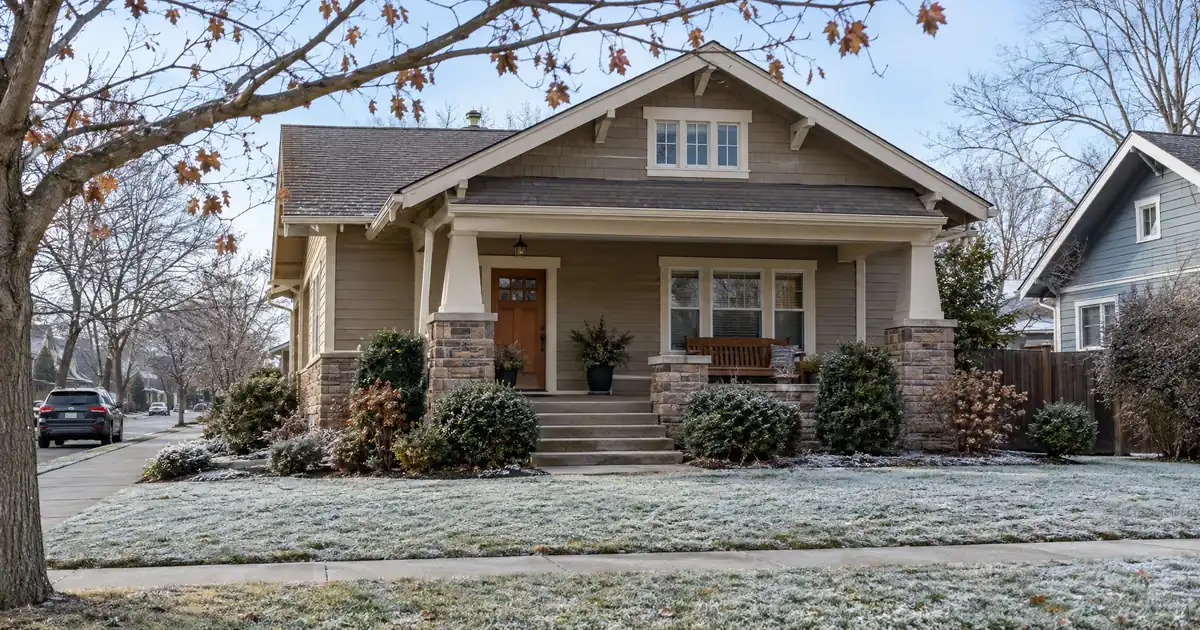
The Quick Read: You qualify when the rental’s documented rent covers a stress payment on the whole credit limit at 1.10x or better, your credit score meets the tier, and combined leverage stays under the ceiling, subject to underwriting. Servicing quality does not change those tests. It decides how your draws, statements and any line freeze get handled after closing, so you vet it before you apply.
- The line is a standalone second lien behind the first mortgage you keep, or a standalone first lien on a rental with no mortgage.
- Rent qualifies the file. No traditional personal-income documentation, W-2s, pay stubs or personal debt-to-income ratio are part of it, though the lease, credit report and valuation are all documented.
- Typical ceilings through select programs are 70% combined leverage on a second lien and up to 75% on a first lien, subject to credit tier and line size.
- Ask who will service the line, how draws are requested, and what the contract says about freezes before you sign.
What Is a DSCR HELOC, Really?
A DSCR HELOC is a revolving line of credit secured by a rental you keep, qualified on the property’s rent instead of your personal income. DSCR stands for debt service coverage ratio, which is monthly rent divided by the qualifying payment. Think of it as the rental proving it can carry the debt.
The label is loose in the market. Some products sold under it qualify the borrower on personal income, and others are closed-end second mortgages with no revolving feature. Across Lendmire’s wholesale network, the rent-qualified version is a line on a one-to-four-unit non-owner-occupied rental. It is never a line on your own home or a second home.
DSCR loans are designed for non-owner-occupied investment properties. Because they are business-purpose investor loans, they are reviewed differently from a standard owner-occupied mortgage.
The structure is the draw. You pull most of the line at closing, repay, and borrow again later. That flexibility is why investors want it, and why the servicer matters so much more here than on a one-time term loan.
How Underwriting Treats It, Step by Step
Underwriting runs six checks in order. Each one can end the file, so it helps to know them before you apply. All figures below are typical ranges through select programs and are subject to underwriting.
Step 1: Lien position. The line goes second behind the first mortgage you keep, or first on a paid-off rental. It is never a third lien and never closes with a purchase. Your borrowers on the line need not match the borrowers on the first mortgage.
Step 2: The coverage test. Minimum DSCR is 1.10x. The qualifying payment is a fully amortizing payment on the entire credit limit at the start rate plus 2 percentage points. That is a stress payment, so it runs higher than what you will actually owe on the drawn balance. Rent counts as the lesser of the appraiser’s market rent (Form 1007) or the lease. A lease above market counts only with three months of receipts. A lease in place is required, and a two-to-four-unit property may have at most 1 vacant unit. How the first-mortgage payment folds into a second-lien calculation is the lender’s call, so the lender’s own math governs. Exact terms depend on the lender’s guidelines, property type, leverage, and a full review of the borrower’s file.
Step 3: Credit. Expect a 720 minimum on a second lien and 700 on a first lien. The tier comes from the lender’s own credit report. There can be no 30-day mortgage late in the last 12 months, and 48 months must pass after a bankruptcy, foreclosure, short sale or deed-in-lieu.
Step 4: Leverage. On a second lien, combined loan-to-value (CLTV, the first mortgage balance plus the new line, divided by value) goes up to 70% at 720 or better on an investment property, with lines up to $500,000. On a first lien, loan-to-value (LTV) reaches 75% at 740 or better and 70% from 700 to 739, on lines up to $500,000. First-lien lines above $500,000, to $1,000,000, carry a 65% LTV ceiling at 720 or better. A declining-market flag can lower any ceiling by 5 points. Every figure here varies by lender and program — guidelines, property type, leverage, and credit profile all apply.
Step 5: Valuation. Lines up to $400,000 can use an automated valuation (confidence score 85 or better) with a property inspection report, or a full interior appraisal. Larger lines need a full interior appraisal. Appraisal waivers are not accepted.
Step 6: Seasoning. Seasoning is a required ownership waiting period. A rental bought or refinanced in the last 6 months is not eligible.
| Gate | What gets tested | Typical program parameter |
|---|---|---|
| Coverage | Rent vs. stress payment on full limit | 1.10x minimum DSCR |
| Credit | Lender’s own report | 720 second lien, 700 first lien |
| Leverage | CLTV or LTV on the property | 70% CLTV second; up to 75% LTV first |
| Line size | Total limit | $50,000 to $500,000 second; to $1,000,000 first |
| Reserves | Cash held after closing | None required |
Lines run $50,000 and up. At least 80% of the line, and never less than $50,000, is drawn at closing. Later draws are at least $5,000 each. A borrower can hold at most 5 loans or $2,500,000 with the program. LLC vesting is allowed on investment property, subject to program terms, with the members signing as guarantors.
What Does Coverage Look Like in Practice?
Run the numbers on a duplex where rent covers the stress payment on the full limit at roughly 1.25x. That clears the 1.10x minimum with room to spare. Now size the line larger, and the stress payment climbs while rent stays put. The ratio might slip toward 1.05x, which fails.
The fix is often a smaller limit. Because the test runs on the entire limit, not on the amount you plan to draw, a $500,000 line you only half need can sink a file that a smaller line would clear.
The lease also counts. Rent is the lesser of the lease and the appraiser’s market rent. If your tenant pays below market, the lease number governs, so a rent increase on renewal can improve the ratio before you apply.
If the rental sits below 1.10x, a line may not be the right tool. Select lenders in the network offer DSCR programs that review coverage below 1.00, but leverage and terms adjust. That is usually a DSCR cash-out refinance conversation rather than a line.
Why Servicing Quality Changes Your Qualification Path
A servicer is the company that collects your payments, processes draw requests, sends statements and handles disputes. Qualification gets you the line. Servicing determines whether the line works the way you planned. A line that freezes in the middle of a rehab can stall a deal that was otherwise fine.
A lender cannot freeze or shrink a line at will. The CFPB’s home equity rule limits suspensions and credit-limit cuts to specified circumstances, and an insignificant drop in property value is not one of them. The Philadelphia Fed’s Consumer Compliance Outlook explains that staff commentary treats a value decline as significant if it cuts the gap between the credit limit and your available equity by 50 percent. The same article lists other permitted triggers: default on a material obligation, a reasonable belief that you cannot repay, and certain government actions.
A freeze is also not the same as acceleration, which demands the full balance. Reinstatement is not automatic either. Under the CFPB’s official commentary, you request it and the lender must investigate promptly. Whether a given investor line carries these protections can depend on the loan’s purpose, so ask which protections and disclosures apply to your file.
The bigger gap is after closing. Alston & Bird notes that the federal mortgage servicing rules adopted after the financial crisis do not apply to home equity lines. Lines fall under billing-error resolution instead, while a closed-end second mortgage does get those servicing rules. Consumer advocates at the National Consumer Law Center argue in a comment letter that billing-error resolution is aimed at retail-purchase errors, not servicing errors in general. That is an advocacy view, but the practical point stands. You lean harder on the contract and the servicer’s track record.
Here is what we see across wholesale lenders. They differ more in how they run draws, statements and support than in their headline ceilings. Two lines with identical leverage can feel very different at the second draw. So treat servicing as a qualification input. If a lender cannot tell you who will service the line, you have learned something before you spent money on a valuation.
How to Check Your First Mortgage Before You Apply
A second lien sits behind a loan you already have, so start there.
1. Find your servicer. Your monthly statement names who collects the payment, which may differ from the original lender.
2. Get the balance. You need the current payoff figure to estimate CLTV before the lender does.
3. Read the security instrument. Look for any restriction on additional liens, and raise it with the lender early. The lender’s review governs.
4. Confirm title. Know who holds title. If an LLC holds it, the members sign as guarantors, and a title holder who is not a borrower signs an acknowledgment and the security instrument.
5. Check seasoning. Count 6 months from settlement to the new note date, and confirm no recent refinance resets the clock.
6. Confirm eligibility. Rural-designated property, row homes, condotels, leaseholds, land trusts, age-restricted communities, mixed-use property and a property listed for sale in the last 2 months are outside this lane.
Only after that should you order anything.
What Should You Ask a Lender About Servicing?
Use this scorecard before you commit. The answers matter more than the marketing.
| Question | Why it matters | Strong answer |
|---|---|---|
| Who services the line? | Sets who you call | Named company, stated up front |
| Can servicing transfer? | Changes support mid-draw | Clear policy and notice terms |
| How do I request a draw? | Affects project timing | Defined steps and minimum draw |
| What triggers a freeze? | Mid-deal risk | Contract lists specific grounds |
| How do I get reinstated? | Recovery path | Written process, named contact |
| Where do disputes go? | Error resolution | Stated escalation route |
Weak answers sound like deflection: it depends, someone will follow up, the terms are in the closing package. Ask for the line agreement in advance. The rate and the pricing terms come with the lender’s disclosures, and those belong in your comparison too.
Where the General Rule Breaks
LLC title. Many banks decline lines on LLC-owned rentals. In the wholesale network, vesting in the LLC is allowed on investment property, subject to program terms.
Short-term rentals. A lease in place is required, so a purely short-term-rental property may not fit. Short-term rental rules can vary by city, county, HOA, and property type, so investors should confirm local rules before relying on projected rental income.
Large lines. The 65% first-lien ceiling above $500,000 means less equity access than the smaller-line tiers.
Exposure caps. Five loans or $2,500,000 per borrower with the program caps portfolio investors.
Credit. A second lien below 720 has no cell. A first lien below 700 has none either.
Borrower type. U.S. citizens, permanent residents and non-permanent residents with a Social Security number qualify. Foreign nationals and ITIN borrowers do not.
Payment step-up. The 5-year interest-only draw period ends and a 25-year fully amortizing repayment period begins, with a 30-year maturity. The payment steps up at that switch, and the rate is variable. Build that into your portfolio cash flow now.
DSCR vs. conventional financing
There are two common ways to finance an investment property, and they qualify you differently — here’s how investors weigh them.
Why investors choose it
- Qualifies on the property’s rental income — no personal tax returns, W-2s, or pay stubs needed to document income.
- No personal debt-to-income ceiling to clear, so existing mortgages and obligations don’t cap your borrowing the same way.
- Can be closed in an LLC, keeping the property inside a business entity.
- Built for scaling — not held to the limit on number of financed properties that conventional financing applies.
- Underwriting centers on the deal: generally qualifies when the rent covers the payment, a 1.00x coverage ratio being a common baseline (confirmed in underwriting).
- Designed specifically for investment property, including long-term and, where the program allows, short-term rentals.
Where it’s strong
- Often the lowest ongoing financing cost for a buyer who fully qualifies on personal income — a fit for a first property or a cost-first purchase.
Trade-offs for investors
- Requires full personal income documentation and must fit within a debt-to-income limit — salary, existing debts, and other mortgages all count.
- Typically held in your personal name rather than a business entity.
- Caps how many financed properties you can carry, which can become a ceiling as a portfolio grows.
- Evaluates you as a borrower as much as the property, which usually means more paperwork.
How investors usually choose: a first or single property often optimizes for the lowest financing cost; portfolio builders often optimize for leverage, vesting in an LLC, and scaling past conventional caps. The right answer depends on your goals, the property, and current guidelines — both paths run through select lenders in Lendmire’s wholesale network, with eligibility and terms confirmed in underwriting.
If the Answer Is No
A decline is usually fixable or reroutable. If coverage falls short, shrink the limit or wait for a lease renewal. If seasoning blocks you, the calendar solves it. If credit is the issue, the first-lien and second-lien floors are firm.
If the line itself is the wrong fit, a DSCR cash-out refinance replaces the first mortgage and pulls equity in one loan. A bank’s investment HELOC qualified on personal income follows that bank’s own rules, not this program’s. If your income file is strong, it can be worth a look. Our complete DSCR loans guide covers the broader menu.
Tax treatment can depend on how the funds are used and how the property is held; borrowers should keep clear records and speak with a qualified tax professional before relying on any deduction.
Key Terms Defined
DSCR: the property’s monthly rent divided by the qualifying payment; a ratio of 1.10x means rent is 10% above the payment.
CLTV: combined loan-to-value, meaning all liens on the property divided by its value.
Second lien: a loan that sits behind the first mortgage and is paid second if the property is sold or foreclosed.
Draw period: the stretch when you can borrow from the line; on this program it is 5 years, interest-only on the drawn balance.
Servicer: the company that collects payments, runs draws and handles disputes after closing.
Freeze: a suspension of further draws or a cut to the limit, which is less severe than demanding repayment of the whole balance.
Seasoning: the required ownership waiting period; 6 months on this program.
Frequently Asked Questions
Can I use an LLC on a DSCR HELOC?
Yes, on investment property, subject to program terms. The LLC holds title, the members sign as guarantors, and a title holder who is not a borrower signs an acknowledgment. The borrowers need not match those on your first mortgage.
Does the first mortgage servicer have to approve a second lien?
Not as a general rule, but your first-mortgage documents may carry conditions on additional liens, so check them first. The new lender’s review looks at your first mortgage balance for CLTV. If anything is unclear, raise it before ordering a valuation.
What credit score do I need?
Typically 720 on a second lien and 700 on a first lien, taken from the lender’s own report. Mortgage history should show no 30-day late in the last 12 months, and 48 months must pass since a bankruptcy, foreclosure, short sale or deed-in-lieu. No reserves are required.
Can a lender freeze my line after closing?
Only on grounds the contract and federal home equity rules permit, such as a significant value decline or a reasonable belief you cannot repay. A freeze is not acceleration, and you can ask for reinstatement. Ask before signing how the lender handles that request.
Does a larger line help or hurt qualification?
It can hurt. The coverage test uses a stress payment on the entire credit limit, so a bigger limit lowers the ratio even if you draw less. Sizing the line to what you need often improves the file.
Next Step
If you are considering a home equity line on a rental property and want to see how the numbers work, Lendmire can help you compare DSCR HELOC options based on the property, the rent, the equity available, credit profile, combined leverage, and your goals. Lendmire is a mortgage broker, not the lender, and this program is offered in Alabama, California, Colorado, Florida, Georgia, Indiana, Michigan, Montana, New Mexico, North Carolina, Ohio, Pennsylvania, Texas, Virginia and Washington. Reach the team at 828-256-2183. Every file is underwritten individually, and the figures above are ceilings and floors, not offers or a commitment to lend.
About Lendmire
Lendmire — NMLS# 2371349 — is a mortgage broker that arranges home equity lines of credit in its full-service states through wholesale lenders, on primary residences, second homes and investment properties. Every line is subject to the lender’s guidelines and full underwriting. Scotsman Guide named Lendmire a Top Mortgage Workplace in both 2025 and 2026.
Investors who want the broader program framework can review how DSCR loans work.
Get Started
Ready to find the right loan for you?
See your offer in seconds. No credit pull, no obligation.
Informational only. Not a Loan Estimate, approval, or commitment to lend. Program availability and eligibility are subject to lender guidelines, credit approval, property review, and underwriting.
References
1. CFPB – Regulation Z § 1026.40, home equity plans
2. Consumer Compliance Outlook – HELOC plans when property values change
3. CFPB – Official commentary on § 1026.40
4. Alston & Bird – HELOCs on the rise, servicing readiness
This article is part of Lendmire’s DSCR HELOC program — full qualification details, guidelines, and scenarios live on the program page.
Related reading: No-Ratio DSCR Loan vs DSCR HELOC for a First Rental · DSCR HELOC vs Portfolio Loan on a Rental in an LLC · No-Ratio DSCR Loan vs DSCR HELOC on an Existing Rental
Brandon Miller
Founder & CEO, Mortgage Loan Originator, Lendmire LLC
- Mortgage Loan Originator · NMLS# 1129696 · Verify on NMLS Consumer Access
- North Carolina Real Estate Broker · License# 343312 · Verify on NCREC
- North Carolina Insurance Producer · License# 19053198 · Property, Casualty, Life, Health · Verify on NAIC SBS
- Lendmire LLC · Firm NMLS# 2371349 · Verify firm licensure
Compliance and disclosures. Lendmire (NMLS# 2371349) is a licensed mortgage broker and is not a direct lender, depository institution, financial advisor, or tax professional. Content in this article is general market analysis and educational information — not financial, legal, or tax advice for any specific situation. Lendmire does not guarantee loan approval; every transaction is subject to underwriting by the funding lender. Mortgage pricing and loan program guidelines are subject to change at any time without notice and vary by borrower characteristics, property type, and state regulations. Lendmire complies with Equal Housing Opportunity. Licensure verification: NMLS Consumer Access.