
The Quick Read: Often yes, but only when the bank’s reason for saying no was about your personal income file, your entity title, or the bank’s own product limits. A DSCR HELOC is a standalone second lien (or a standalone first lien on a paid-off rental) that qualifies primarily on the property’s rental income covering the payment, subject to lender guidelines. It will not fix a denial caused by too little equity, weak credit, or a rental that truly loses money.
- Rent, not your tax returns or pay stubs, drives the coverage test, which runs at a minimum of 1.10x through select programs.
- A second lien typically reaches 70% combined loan-to-value (CLTV) at a 720 credit score or better, on lines of $50,000 to $500,000.
- A first lien on a rental with no mortgage typically reaches 75% loan-to-value (LTV) at 740 or better.
- The line can be vested in your LLC, subject to lender program eligibility.
- This product is offered in 15 states through Lendmire’s consumer licensing, so availability depends on where the rental sits.
A bank denial is a decision about one bank’s product. It is not a verdict on you or the property. The useful question is why the bank said no, because the answer decides whether a rent-qualified line helps or whether you need a different move entirely.
What Does “DSCR HELOC” Actually Mean?
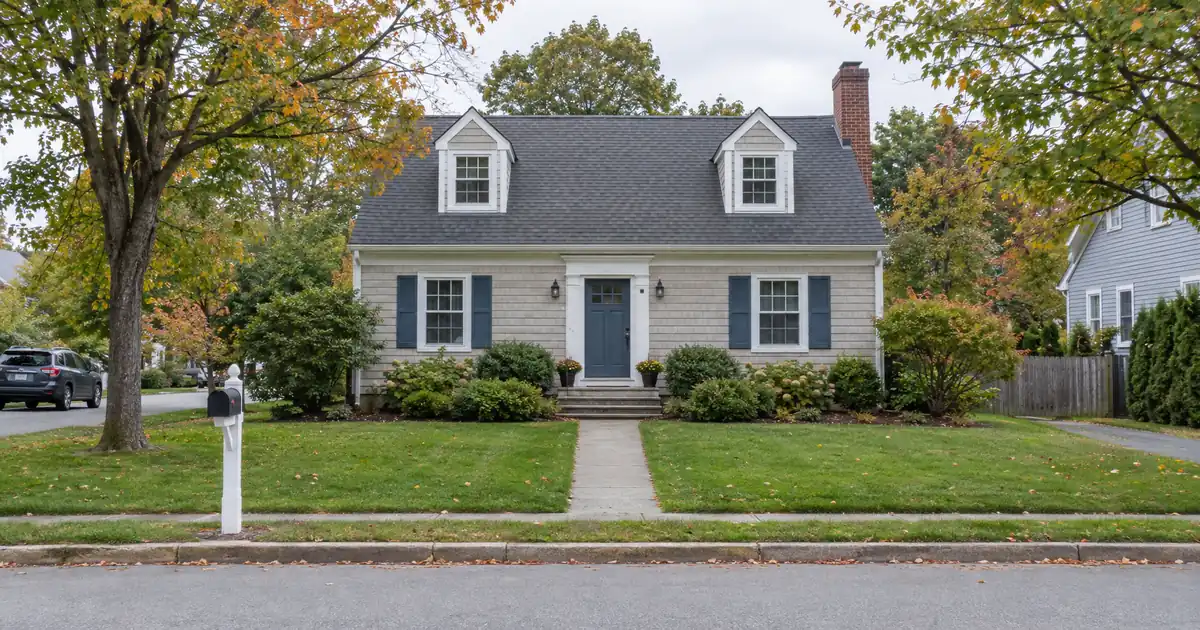
A DSCR HELOC is a revolving line of credit secured by a non-owner-occupied one-to-four-unit rental. It is written as a standalone second lien behind the first mortgage you keep, or as a standalone first lien on a rental with no mortgage. It is never a line on your own home.
The term gets used loosely. Across the wholesale network, some offers labeled “DSCR HELOC” are really closed-end second liens (a lump sum) or cash-out refinances that replace your first mortgage. True revolving lines qualified on rent are less common than DSCR purchase and cash-out loans. Know which product you are being offered before comparing anything.
| Product | What it does | Your first mortgage | Entity title |
|---|---|---|---|
| DSCR HELOC | Revolving line, rent-qualified | Stays in place (second lien) | LLC allowed, per program |
| Closed-end DSCR second | Lump sum, rent-qualified | Stays in place | Varies by program |
| DSCR cash-out refinance | New first lien, replaces old one | Paid off and replaced | Often allowed |
Lendmire’s complete DSCR loans guide covers how property-rent-based lender review works across all three.
Step One: Read the Denial
Get the reasons in writing before choosing a product. A lender that rejects an application must send an adverse action notice. Per the CFPB’s guidance on denied credit applications, the notice gives the specific reasons or tells you that you can ask for them. If a credit report drove the decision, the lender must also give you the score it used and the key factors behind it.
Vague boilerplate does not meet the standard. Nolo’s overview of adverse action notices confirms the notice must be written and must state the principal reasons. So if the letter says only “unable to verify income” and you suspect something else, ask for specifics.
A short sequence works well:
1. Request the written reasons if they were not included.
2. Sort the reason into one of five walls: personal income file, title or vesting, equity cap, product availability, or property type.
3. Decide whether the structure should change (second lien or cash-out refinance).
4. Gather the rent evidence: the lease, a market rent opinion, and insurance.
Does the Denial Follow You? A Reason-by-Reason Map
Whether a rent-qualified route helps depends entirely on which wall you hit. This is the part most borrowers skip, and it is where the decision gets made.
| Why the bank said no | Does a DSCR route help? | Likely next step |
|---|---|---|
| Personal income or DTI (self-employment, heavy write-offs) | Yes, rent is tested instead | DSCR HELOC or second lien |
| LLC on title | Often yes | Entity-friendly DSCR line, per program |
| Bank doesn’t write investment-property lines | Yes, different lender type | Wholesale DSCR product |
| Too little equity or too much leverage | No | Wait, pay down, or add value |
| Property loses money | No | Fix the rent or the property first |
| Low credit score | Partly, score floors still apply | Repair credit first |
Credit still matters. On this program the minimum is typically 720 on a second lien and 700 on a first lien, with no 30-day mortgage late in the last 12 months, subject to underwriting. A denial rooted in credit history carries over.
Title, Entity, and Lien Position
Standard bank lines usually want a person or revocable trust on title. A rental sitting in an LLC is a common reason for denial. Through select programs, the LLC can stay on title. The members sign as guarantors, and a title holder who is not a borrower signs a non-borrowing owner acknowledgment. Re-vesting into your personal name has legal and liability tradeoffs, so talk to an attorney before retitling just to satisfy a bank.
Lien position works two ways:
- Second lien. Your first mortgage stays untouched, which matters a great deal if that first loan carries pricing you could never get today. The line sits behind it. Combined leverage counts both balances.
- First lien. On a paid-off rental, the line is the only mortgage. First-lien LTV typically reaches 75% at 740 or better, 70% from 700 to 739, and 65% on lines above $500,000 (up to $1,000,000), subject to underwriting.
Three limits apply. The line is never a third lien. It is never closed together with a purchase. And the rental must have been bought or refinanced at least six months ago, measured note date to note date.
How the Coverage Test Works
Coverage is gross monthly rent divided by a qualifying payment. For this program, that payment is a fully amortizing payment on the entire credit limit at a stressed start rate, not just the amount you draw. The minimum is 1.10x. Rent counts as the lesser of the appraiser’s market rent (Form 1007) or the lease, and a lease in place is required. On a two-to-four-unit building, at most one unit may be vacant.
Two points surprise borrowers. First, testing the whole line means a large limit can fail even if you plan to draw little. Second, how the first mortgage payment enters the second-lien math is the lender’s own calculation, so treat any quick estimate as illustrative.
Run it conceptually: a duplex whose combined lease rent sits comfortably above the stressed payment on a $150,000 line clears 1.10x. The same duplex asking for a $500,000 line may not. Sizing the line to the rent, rather than to the maximum, is often what turns a no into a yes.
Sub-1.00 coverage is available through select lenders in the broader network, but leverage and terms adjust. This HELOC program sets its own minimum at 1.10x, so a thinner rental may fit a different DSCR product better.
The Draw Rules and the File
Know the mechanics before you apply:
- Lines start at $50,000, and at least 80% of the line is drawn at closing.
- Later draws are at least $5,000 each.
- The draw period is 5 years, interest-only on the drawn balance, followed by a 25-year repayment period. Maturity is 30 years. The rate is variable.
- Lines to $400,000 use an automated valuation with a property inspection report, or a full interior appraisal. Larger lines take a full interior appraisal. Appraisal waivers are not accepted.
- No reserves are required, and no traditional personal-income documentation, W-2s, or pay stubs are used. The rent, the lease, the credit report, and the valuation are all documented and reviewed.
- Exposure is capped at 5 loans or $2,500,000 per borrower with the program.
Eligible property includes single-family, PUD, townhome, two-to-four units, and condominiums, with warrantable and non-warrantable condos both subject to a 70% CLTV limit. Rural property, condotels, row homes, leaseholds, land trusts, and age-restricted communities fall outside it. Short-term rental rules can vary by city, county, HOA, and property type, so investors should confirm local rules before relying on projected rental income.
When This Route Won’t Work
A DSCR line is not a rescue for every denial. Be honest about these cases:
- Equity is the problem. If the bank declined because you borrowed too much against the value, a different product won’t change the CLTV ceiling. Pay down debt, wait for appreciation, or add value.
- The rental truly loses money. Rent that does not cover the stressed payment fails the test. And clearing 1.10x does not mean positive cash flow after repairs, vacancy, and management.
- You are a foreign national or ITIN borrower. This program requires a Social Security number.
- The property type is excluded. Rural, row homes, condotels, and leaseholds do not fit.
- The state is outside the footprint. The program runs in 15 states: Alabama, California, Colorado, Florida, Georgia, Indiana, Michigan, Montana, New Mexico, North Carolina, Ohio, Pennsylvania, Texas, Virginia, and Washington. It is not offered in Tennessee.
- The rental changed hands recently. A purchase or refinance inside six months blocks eligibility.
Recourse also matters. DSCR products are business-purpose loans, but the guarantor is still personally on the hook. They are not “no risk.”
Which Structure Fits?
Line, Second, or Cash-Out
The choice often comes down to what you are protecting. If your existing first mortgage is one you would hate to lose, a second lien leaves it alone. If you hold the rental free and clear, a first-lien line gives you revolving access without a full refinance. If you want a lump sum and a fresh first mortgage, a DSCR cash-out refinance replaces the old loan and typically carries different leverage limits.
Here is a thinking-out-loud version. An investor with a paid-off fourplex, steady leases, and a 740 score has a clean first-lien case at up to 75% LTV. The same investor with a large low-cost first mortgage and a 710 score has no second-lien cell at all, since second liens start at 720. For that investor, a cash-out refinance or waiting to lift the score may be the real path. Neither answer is universal.
Bank and agency figures for investment-property lines run on their own rules, such as personal-income qualification, and should not be assumed to match these. The comparison that matters is the property’s file against each program’s published cells.
DSCR vs. conventional financing
There are two common ways to finance an investment property, and they qualify you differently — here’s how investors weigh them.
Why investors choose it
- Qualifies on the property’s rental income — no personal tax returns, W-2s, or pay stubs needed to document income.
- No personal debt-to-income ceiling to clear, so existing mortgages and obligations don’t cap your borrowing the same way.
- Can be closed in an LLC, keeping the property inside a business entity.
- Built for scaling — not held to the limit on number of financed properties that conventional financing applies.
- Underwriting centers on the deal: generally qualifies when the rent covers the payment, a 1.00x coverage ratio being a common baseline (confirmed in underwriting).
- Designed specifically for investment property, including long-term and, where the program allows, short-term rentals.
Where it’s strong
- Often the lowest ongoing financing cost for a buyer who fully qualifies on personal income — a fit for a first property or a cost-first purchase.
Trade-offs for investors
- Requires full personal income documentation and must fit within a debt-to-income limit — salary, existing debts, and other mortgages all count.
- Typically held in your personal name rather than a business entity.
- Caps how many financed properties you can carry, which can become a ceiling as a portfolio grows.
- Evaluates you as a borrower as much as the property, which usually means more paperwork.
How investors usually choose: a first or single property often optimizes for the lowest financing cost; portfolio builders often optimize for leverage, vesting in an LLC, and scaling past conventional caps. The right answer depends on your goals, the property, and current guidelines — both paths run through select lenders in Lendmire’s wholesale network, with eligibility and terms confirmed in underwriting.
Practitioner View on Reapplying
Across the wholesale network, the files that turn a bank no into a rent-qualified yes usually share three traits. The denial reason matched a personal-income or title problem. The lease and market rent clear the stressed payment with some cushion. And the borrower sized the line to the rent rather than to the leverage cap. Files that arrive having skipped the denial letter tend to waste a round, because the broker then has to guess which wall is actually in the way. Bring the notice.
Does a prior denial hurt? A denial itself is not a mark on your record, though a hard credit pull may show. What carries over is whatever caused it: credit, equity, or property facts. Waiting helps if the cause is time-based, such as seasoning or a recent late payment. It does not help if the cause is structural, such as a rental that cannot cover its payment.
Because a home equity line on a business-purpose rental is reviewed differently from an owner-occupied mortgage, the lender’s HELOC disclosures spell out the terms, and the lender’s own calculation governs. Tax treatment can depend on how the funds are used and how the property is held; borrowers should keep clear records and speak with a qualified tax professional before relying on any deduction.
Key Terms Defined
Adverse action notice: the written notice a lender sends when it denies your application, giving the reasons.
CLTV: combined loan-to-value, meaning the first mortgage balance plus the new line, divided by the property’s value.
DSCR: debt service coverage ratio, meaning gross monthly rent divided by the qualifying payment.
Second lien: a loan that sits behind your existing first mortgage and leaves that mortgage in place.
Draw period: the stretch when you can borrow from the line, interest-only on the drawn balance.
Non-borrowing owner acknowledgment: a signed form from a title holder who is not a borrower, agreeing to the lien.
Frequently Asked Questions
Does a bank denial hurt a new application?
The denial itself is not a mark against you, though a credit inquiry may appear on your report. What follows you is the underlying cause. A personal-income denial usually does not carry over to a rent-qualified review, while a credit or equity denial does. Get the written reasons first, since they tell you which category you are in.
Can an LLC get a DSCR HELOC?
Yes, through select programs. The LLC can hold title on investment property, with the members signing as guarantors, subject to program terms. A title holder who is not a borrower signs a non-borrowing owner acknowledgment. Bank lines more often require a person or revocable trust, which is why entity title is a frequent denial reason.
Do I need tax returns or pay stubs?
No. The line qualifies primarily on property-level rental income covering the payment, subject to lender guidelines. That does not mean nothing is reviewed. The lease, rent opinion, credit report, valuation, and title are all documented and underwritten.
Can I get a DSCR HELOC if I already have a first mortgage?
Often yes, as a standalone second lien, typically up to 70% CLTV at a 720 score or better, on lines of $50,000 to $500,000. The first mortgage stays in place. Both balances count toward combined leverage, and the lender’s coverage calculation governs how the first payment is treated.
Is a revolving line always available, or should I expect a cash-out refinance?
Availability is thinner than for DSCR purchase and cash-out loans, and it varies by state and property type. If your rental falls outside the program or you fall below the credit tiers, a DSCR cash-out refinance or a closed-end second may be the practical alternative.
If you are considering a home equity line on a rental property and want to see how the numbers work, Lendmire can help you compare DSCR HELOC options based on the property, the rent, the equity available, credit profile, combined leverage, and your goals. Lendmire is a mortgage broker, not a lender, and every file is underwritten individually.
About Lendmire
As a mortgage broker (NMLS# 2371349), Lendmire helps homeowners and real estate investors in its 16 full-service states open home equity lines of credit arranged through wholesale lenders. Lendmire is never the lender; line amounts, ceilings and terms are set by the lender under its guidelines. Scotsman Guide named Lendmire a Top Mortgage Workplace in both 2025 and 2026.
Investors who want the broader program framework can review how DSCR loans work.
Get Started
Ready to find the right loan for you?
See your offer in seconds. No credit pull, no obligation.
Informational only. Not a Loan Estimate, approval, or commitment to lend. Program availability and eligibility are subject to lender guidelines, credit approval, property review, and underwriting.
References
1. CFPB’s guidance on denied credit applications
2. Nolo’s overview of adverse action notices
This article is part of Lendmire’s DSCR HELOC program — full qualification details, guidelines, and scenarios live on the program page.
Related reading: DSCR HELOC Requirements for 1099 Contractors Who Own Rentals · Cash-Out 24-Month Bank Statement Loan vs DSCR HELOC on a Rental · DSCR HELOC for 1099 Contractors and How Much You Can Borrow
Brandon Miller
Founder & CEO, Mortgage Loan Originator, Lendmire LLC
- Mortgage Loan Originator · NMLS# 1129696 · Verify on NMLS Consumer Access
- North Carolina Real Estate Broker · License# 343312 · Verify on NCREC
- North Carolina Insurance Producer · License# 19053198 · Property, Casualty, Life, Health · Verify on NAIC SBS
- Lendmire LLC · Firm NMLS# 2371349 · Verify firm licensure
Legal disclosures. Lendmire (NMLS# 2371349) is a state-licensed mortgage brokerage that arranges financing through wholesale lender relationships. Lendmire is not a direct lender, depository institution, or registered financial advisor. The discussion above is general informational content about real estate financing — it is not financial, legal, or tax advice, and readers should consult licensed professionals for guidance on their individual circumstances. Loan inquiries are subject to lender underwriting; this article does not represent a commitment to lend. Loan terms, rates, and qualification standards vary by borrower, property, and state, and are subject to change at any time. Equal Housing Opportunity. NMLS Consumer Access: nmlsconsumeraccess.org.