
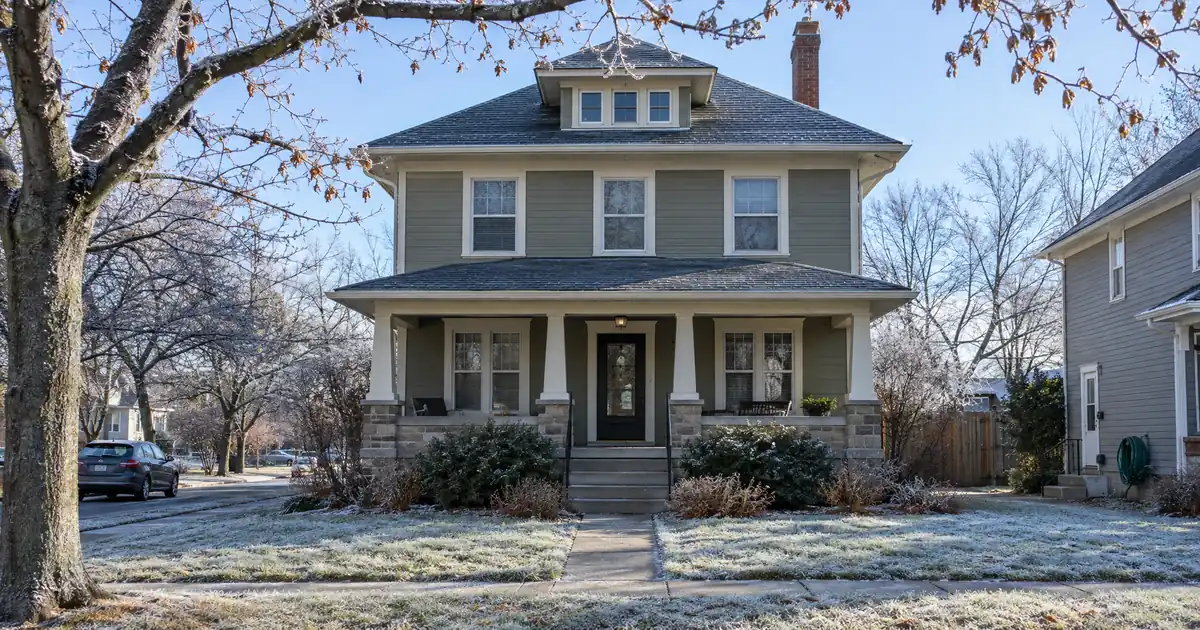
The Quick Read: Usually, yes: a quitclaim deed that put title in your name or your own LLC does not by itself rule out a DSCR HELOC, provided the property is an eligible one-to-four-unit rental, six months of ownership are behind it, and the lender’s title review accepts the recorded deed, all subject to underwriting. The vesting check that kills most investment HELOCs is not the same on this program. Here is what matters:
- The LLC can stay on title. A DSCR HELOC qualifies primarily on property-level rental income covering the payment, subject to lender guidelines, and the LLC members sign as guarantors.
- Other HELOCs are stricter. A line qualified on personal income at a bank or credit union often wants title in a person’s name, so an LLC deed can close that door.
- A quitclaim moves title only. It does not touch the mortgage note, and it carries no warranty.
- Three separate checks follow the deed: how the lender treats a recently recorded deed, what it does to title insurance, and what it does to the existing first mortgage.
- Rent does not fix a title problem. Coverage and title are two different tests.
Run the title question first. The rent math comes second.
Key Terms Defined
Quitclaim deed: a deed that hands over whatever interest the signer holds, with no promise that the title is clean.
Vesting: the way title is held on record, such as an individual, an LLC, or a trust.
Seasoning: the waiting period a lender wants after you buy or refinance a property before it will lend against it.
DSCR (debt service coverage ratio): the property’s monthly rent divided by the lender’s qualifying payment.
CLTV (combined loan-to-value): the first mortgage balance plus the new line, divided by the property’s value.
Lien position: whether a loan sits first or second in line for repayment if the property is sold.
Due-on-sale clause: a term in your existing mortgage that lets the lender demand payoff if title is transferred without its consent.
What Is a DSCR HELOC, Really?
A DSCR HELOC is a revolving line of credit on a non-owner-occupied rental, qualified on the rent instead of your personal income. It is written as a standalone second lien behind the first mortgage you keep, or as a standalone first lien on a rental with no mortgage. The name is a marketing label, not a defined product, so the mechanics matter more than the words.
That matters for your question. Lenders use “DSCR HELOC” to mean different things. Some mean a rent-qualified line. Others mean an ordinary investment HELOC with a catchy name. The two read title very differently.
| Factor | Bank or credit union personal-income HELOC | DSCR HELOC (this program) | DSCR cash-out refinance |
|---|---|---|---|
| Reviewed on | Your income and debts | Property rent | Property rent |
| First mortgage | Stays in place | Stays in place | Paid off, replaced |
| Title held by | Often a person or revocable trust | LLC allowed | LLC allowed per program terms |
The second column describes how those loans commonly work at banks and credit unions, not this program. Across the wholesale network Lendmire works through, the rent-qualified line is the one that tolerates an LLC on title, subject to lender program eligibility. For more on how these loans work in general, see the complete DSCR loans guide.
What Does a Quitclaim Deed Change, and What Doesn’t It?
A quitclaim changes who is on title. It changes nothing else. The mortgage stays with whoever signed it, and the deed comes with no warranty. A title company would call it the lightest deed there is.
| Item | Effect of the quitclaim |
|---|---|
| Title | Moves the grantor’s interest, whatever it is |
| Mortgage note | No change; the debt stays put |
| Warranty | None |
| Title insurance | May be affected; confirm first |
| Existing first lender | May raise a due-on-sale question |
One common mistake: people think the deed removes someone from the loan. It does not. Yates Anderson notes that a quitclaim does not release anyone from the mortgage obligation, and that title insurers often prefer warranty deeds, especially in arm’s-length transfers. That is why a spouse who deeded out can still be liable on the note.
Where Did the Deed Put Title?
Where the deed landed decides most of the answer. Find your row.
| Scenario | What the lender sees | Likely read |
|---|---|---|
| Deed into your LLC | LLC on title | DSCR HELOC can work; members guarantee |
| Deed out of LLC to you | Individual on title | Vesting passes; check deed and title |
| Spouse or relative added | Co-owner on title | Co-owner signs an acknowledgment and the lien |
| Divorce award | One owner, two on the note | The note still binds both |
| Deed into a land trust | Land trust on title | Not eligible; re-vest first |
Take the LLC row. Picture an investor who deeded a duplex into a single-member LLC for liability reasons, then wanted cash for the next purchase. A bank’s investment HELOC may turn that file away at the vesting check. A DSCR HELOC reads the rent, lets the LLC stay, and has the members sign as guarantors. A title holder who is not a borrower signs a non-borrowing owner acknowledgment and the security instrument. The borrowers on the line also need not be the borrowers on the first mortgage.
Now flip it. Say you deeded the property out of the LLC and into your own name. Vesting passes easily. The open items are the deed review and the first mortgage, covered below.
How Does a Lender Read the Deed?
The lender reads recorded title before it looks at anything else. A deed you signed but never recorded changes nothing on the title report. A deed that is recorded shows up in the chain of title, and the title company has to deal with it.
Expect these steps:
1. Pull the deed chain. The title company traces who held what, and when.
2. Review the policy. A lender’s policy protects only the lender, so the lender needs its own new one. A full title policy applies on a first lien and on second liens above $400,000. Smaller second liens use an owner-and-encumbrance report, subject to underwriting.
3. Clear the deed. A recent quitclaim recorded before a loan can show as an uninsured deed. The signer may be asked for an affidavit about it. Recording the deed at the loan closing can avoid that step.
4. Confirm the signers. Guarantors, borrowers, and any non-borrowing title holders all have to line up with the vesting.
Then there is your owner’s title policy, which is a separate issue. Courts have treated it differently depending on the facts. The California Lawyers Association summarizes a case where a quitclaim to an LLC ended coverage because the policy continues only while the insured keeps an interest in the land. A title company’s guidance says a wholly owned LLC may keep the policy in force, while an LLC that is not wholly owned needs an added-insured endorsement. Results vary by policy form and state. Ask your title company before recording anything.
Does the Deed Restart the Seasoning Clock?
It might, depending on the lender, and there is no universal rule. Seasoning is lender policy, not law. On the DSCR HELOC program Lendmire places files with, two clocks apply. A rental bought or refinanced inside the last six months is not eligible, counted from the last note date. Separately, the program requires six months on title, counted from settlement. Both are subject to underwriting.
A deed between you and your own LLC is a different animal from a purchase. Some lenders count the original acquisition date. Others treat a recent recorded deed as a fresh event and start counting again. Treat this as a get-it-in-writing item. Ask the lender how it handles a recorded intra-family or intra-entity deed before you record it.
Say you bought a fourplex long ago, then deeded it into an LLC last month. The ownership period is not the worry. The worry is whether the lender’s title review treats last month’s deed as a new starting line. Ask before you assume.
What About Your First Mortgage?
Check the first mortgage before you record anything. A DSCR HELOC on a rental that has a mortgage sits behind that loan as a second lien, so the first lender’s terms still apply.
Federal law lets lenders enforce due-on-sale clauses. The statute at Cornell Law School’s Legal Information Institute defines the clause as a provision that lets the lender call the loan if the property, or an interest in it, is transferred without written consent. The protected transfers apply to residential property with fewer than five units, and they cover things like a transfer to a relative after the borrower’s death. A transfer into an LLC is not on that list.
So here is the honest read. Enforcement against a borrower’s own LLC is uncommon when payments stay current. That is an observation from the field, not a legal safe harbor. A lender that notices can still act. If you carry a favorable first mortgage, that risk is the price of keeping it, so ask an attorney before you record.
This is also where a line beats a refinance. A DSCR cash-out refinance replaces the first loan. A DSCR HELOC leaves it alone.
Deed First, Loan First, or Vest at Closing?
Sequence matters more than most owners expect.
| Order | Upside | Risk |
|---|---|---|
| Deed first, then apply | Clean record when the lender looks | May trigger seasoning and title questions |
| Apply first, deed at closing | Lender sees and approves the exact title | Needs title company coordination |
| Deed after the line | None worth the risk | Can breach the lien terms and the first mortgage |
Investors sometimes deed to themselves, take a line, then deed back to the LLC. Treat that as a risk, not a tactic. Moving title after a lien is recorded can bring due-on-sale, title insurance, and lender-consent problems on the line and the first mortgage. Don’t do it without written consent from each lender.
Brokers see one pattern often: owners record a deed to clean things up, then discover it complicated the loan. Applying first and letting the lender and title company set the deed at closing usually costs nothing and avoids the surprise.
When Title Is Clean, What Does the File Look Like?
Once vesting and the deed are settled, the rent test takes over. Everything below is through select programs, subject to underwriting.
Coverage: minimum DSCR of 1.10x. That is rent divided by a stress payment calculated across the whole line, fully amortizing, at a higher start rate. Rent is the lesser of the appraiser’s Form 1007 market rent or the lease. A lease in place is required, and a two-to-four-unit property may have at most one vacant unit. The lender’s own calculation governs. These specifics are subject to lender guidelines and a full review of property, leverage, and credit.
Leverage on a second lien (rental with a first mortgage): CLTV up to 70% at a 720 credit score or better, on lines of $50,000 to $500,000. Terms depend on the lender’s guidelines, the property type, the leverage, and a full review of the credit profile.
Leverage on a first lien (rental with no mortgage): LTV up to 75% at 740 or better, and 70% from 700 to 739, on lines up to $500,000. Lines above $500,000 and up to $1,000,000 sit at a 65% LTV ceiling at 720 or better. The exact numbers vary by lender and program and follow a full review of property, leverage, and credit.
Credit: 720 minimum on a second lien, 700 on a first lien. No 30-day mortgage late in the last 12 months, and 48 months since a bankruptcy, foreclosure, short sale, or deed-in-lieu.
Draws: at least 80% of the line is drawn at closing, and later draws are at least $5,000. The draw period is five years interest-only, then a 25-year repayment period, with a 30-year maturity and a variable rate.
Valuation: lines to $400,000 use an automated valuation with a property inspection report, or a full interior appraisal. Larger lines take a full interior appraisal.
Other points: no reserves, and a limit of five loans or $2,500,000 per borrower with the program. Rural property, condotels, row homes, leaseholds, and land trusts are outside it. The program is offered in 15 of Lendmire’s 16 licensed states, every licensed state except Tennessee.
Strong rent does not make up for a messy deed. A property can clear 1.10x easily and still stall at title review. Coverage and title are separate gates.
If the Answer Is No
Sometimes the vesting or the title review just does not work. You have four ways out, each with a price.
- Re-vest. Deed the property out of the LLC to yourself. You give up that LLC’s liability separation on this property, and you pay recording costs. Ask an attorney and the title company first.
- DSCR cash-out refinance. The LLC stays on title, but the new loan replaces your existing first mortgage. Poor trade if that first loan is a good one.
- Borrow against a different property. If another rental is already in your name or in eligible form, use that equity instead.
- An entity-level commercial line. Some lenders will lend to the LLC directly. Expect different underwriting from a rent-based line.
The stronger play might be the cash-out refinance if the first mortgage is already due for a change, though an owner with a favorable first loan could argue the opposite. It’s a genuine toss-up that comes down to the first loan.
Your Checklist and Questions to Ask
Bring these to the first conversation:
- The recorded deed, or the draft if not yet recorded
- Your current title policy and the first-mortgage note
- The lease and proof of rent receipts
- The LLC documents, if title is in an entity
- Your mortgage payment history for the last 12 months
Ask the lender in writing:
1. Does a recorded quitclaim restart your seasoning clock?
2. Does this deed trigger an uninsured-deed affidavit?
3. Who signs the security instrument and the guarantee?
Ask the title company: does the deed affect my owner’s policy, and do I need an endorsement?
Next Step
If you are considering a home equity line on a rental property and want to see how the numbers work, Lendmire can help you compare DSCR HELOC options based on the property, the rent, the equity available, credit profile, combined leverage, and your goals. Reach the team at 828-256-2183 or request a quote.
This article is general information, not legal or tax advice. Tax treatment can depend on how the funds are used and how the property is held; borrowers should keep clear records and speak with a qualified tax professional before relying on any deduction. Deeds, title insurance, and due-on-sale questions are legal matters, so consult a qualified attorney about your own situation.
Frequently Asked Questions
Does a quitclaim deed remove someone from the mortgage?
No. The deed changes who owns the property, not who owes the debt. Anyone who signed the note stays liable until the loan is paid off, refinanced, or assumed with the lender’s approval. That is why a divorce deed often has to be paired with a refinance.
Does a deed I signed but never recorded count?
Not for a lender’s title review. Lenders read recorded title, so an unrecorded deed leaves the record unchanged. That can also create trouble later, because the paper title and the real owner no longer match. Record it, or hold it until the lender and title company set the sequence.
Can strong rent offset a title problem?
No. The rent test and the title test run separately. A property can clear the minimum 1.10x coverage and still stall at vesting or deed review. Fix the title issue first, or the coverage ratio never gets used.
Will a quitclaim void my title insurance?
It may, but not always. The result depends on the policy language, the state, and whether the new owner is a wholly owned entity. The lender also needs its own new policy regardless. Ask the title company about an endorsement before you record.
Can I put the LLC back on title after I take the line?
Only with consent. Moving title after a lien is recorded can raise due-on-sale and lender-consent problems on the new line and on any first mortgage. Get written approval from each lender, and talk to an attorney before the deed is signed.
About Lendmire
Lendmire, NMLS# 2371349, is a mortgage brokerage that arranges home equity lines of credit through wholesale lending partners in its 16 full-service states. Lines on primary residences, second homes and investment properties are each reviewed individually by the lender under the program’s occupancy, credit and combined-loan-to-value guidelines. Scotsman Guide named Lendmire a Top Mortgage Workplace in both 2025 and 2026.
Get Started
Ready to find the right loan for you?
See your offer in seconds. No credit pull, no obligation.
Informational only. Not a Loan Estimate, approval, or commitment to lend. Program availability and eligibility are subject to lender guidelines, credit approval, property review, and underwriting.
References
1. Yates Anderson, Quitclaim Deed Dangers
2. California Lawyers Association, Transfer to an LLC May Void Title Insurance
3. First Integrity Title Company, Transfers After Acquisition
4. Cornell Law School Legal Information Institute, 12 U.S.C. § 1701j-3
5. LexFed, 12 U.S.C. § 1701j-3
This article is part of Lendmire’s DSCR HELOC program — full qualification details, guidelines, and scenarios live on the program page.
Related reading: How to Qualify for a DSCR HELOC With All Other Units Leased · DSCR HELOC vs DSCR Cash-Out Refinance for a Joint Owner Named on the Deed · DSCR HELOC Requirements With 30% Equity in the Property
Brandon Miller
Founder & CEO, Mortgage Loan Originator, Lendmire LLC
- Mortgage Loan Originator · NMLS# 1129696 · Verify on NMLS Consumer Access
- North Carolina Real Estate Broker · License# 343312 · Verify on NCREC
- North Carolina Insurance Producer · License# 19053198 · Property, Casualty, Life, Health · Verify on NAIC SBS
- Lendmire LLC · Firm NMLS# 2371349 · Verify firm licensure
Disclosure information. Lendmire is a state-licensed mortgage brokerage under NMLS# 2371349. Lendmire is not a depository institution, direct lender, or financial advisor — all loans referenced are placed through wholesale lender partners and are subject to each lender's underwriting standards. This article is provided for general informational purposes and is not a commitment to lend, nor does it constitute financial, legal, or tax advice. Loan programs, terms, rates, and qualification standards change without notice and depend on borrower profile, property type, and the state in which the subject property is located. Equal Housing Opportunity provider. NMLS Consumer Access: nmlsconsumeraccess.org.