
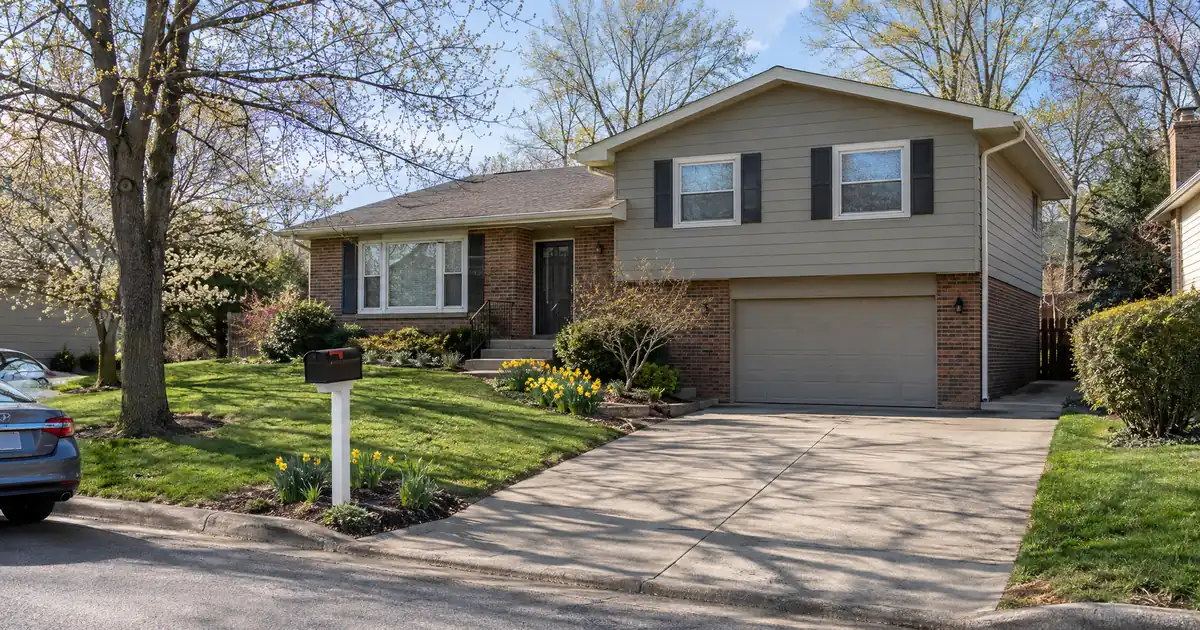
The Quick Read: A dentist qualifies by showing that a rental property’s lease-backed rent covers the line’s stress payment at 1.10x or better, subject to underwriting, while the practice’s collections never enter the calculation. The line is a standalone second lien behind the first mortgage, or a first lien on a paid-off rental.
- Rent against the property’s payment is the test, not practice revenue, add-backs, or K-1 income.
- Tax returns, W-2s, pay stubs, and a debt-to-income ratio are not part of the qualifying calculation, subject to lender guidelines.
- Credit (720 on a second lien, 700 on a first lien), equity, lease, valuation, and title are still reviewed.
- The practice entity should not hold the rental. A property-holding LLC can hold it, subject to program terms.
- The dentist’s own office building and own home are outside this product.
A practice owner’s tax return is the hardest document in a standard mortgage file. Depreciation, owner compensation, equipment deductions, and pass-through income make the bottom line look smaller than the cash the practice throws off. Underwriters then argue about add-backs. That fight is why many dentists never get a clean answer on a rental-equity line.
A DSCR home equity line on a rental sidesteps it. The property is the borrower in the underwriter’s eyes. This article walks through how that works for someone who owns a practice, where the rules stop, and what a clean file looks like. Lendmire’s complete DSCR loans guide covers the wider product family.
What Is a DSCR HELOC, and Which “DSCR” Are You Hearing?
A DSCR HELOC is a revolving line of credit secured by a non-owner-occupied one-to-four-unit rental. It is reviewed on the property’s rent. It is written as a standalone second lien behind a first mortgage the owner keeps, or as a standalone first lien on a rental with no mortgage.
Dentists run into three different things called “DSCR.” Mixing them up wastes conversations with the wrong lender.
| Term | What it measures | Who uses it |
|---|---|---|
| Rental DSCR | Rent ÷ the property’s payment | Investor rental loans and lines |
| Practice DSCR | Practice cash flow ÷ practice debt | Practice acquisition lenders |
| Doctor or physician loan | Personal income on a home purchase | Primary-residence lenders |
Dental financing education describes SBA 7(a) as the most commonly used practice financing vehicle, and those loans test the practice’s cash flow. That is a different question from the one a rental line asks. Nothing about a practice-side coverage test carries over to a rental file.
Why Practice Income Is a Poor Fit for Standard Underwriting
Standard income review asks what a self-employed borrower earns after deductions. For a practice owner, that number is often lower than real cash flow, and rebuilding it takes judgment calls. Payroll structure, S-corporation wages, partner buyouts, and equipment financing all pull on the same return.
A rent-qualified line removes those judgment calls. Across the wholesale network, programs built on property coverage look at the lease, the market rent, the credit report, and the valuation. They do not compute the owner’s income. A dentist with heavy practice debt and a thin-looking return gets evaluated on the asset.
Here’s the catch. That does not make the file thin. The credit report, mortgage history, lease, entity documents, and valuation are all documented. The line qualifies primarily on property-level rental income covering the payment, subject to lender guidelines. Credit profile and property eligibility still decide whether a file clears.
Lendmire’s piece on how a dentist can use a bank statement HELOC covers the alternative route for owners whose rental coverage is too weak and who want to qualify on documented practice deposits instead.
How Qualification Works, Step by Step
This is the sequence underwriting follows. Each figure is a ceiling or floor through select programs in Lendmire’s wholesale network and is subject to underwriting.
1. Confirm the property is eligible. It must be a non-owner-occupied single-family, PUD, townhome, two-to-four-unit, or condominium rental. Lots run to 10 acres.
2. Confirm the lease and the rent. A lease in place is required. Rent counts at the lesser of the appraiser’s Form 1007 market rent or the lease. A lease above market can count with three months of receipts. A two-to-four-unit property can have at most one vacant unit.
3. Run the coverage test. Gross monthly rent divided by the qualifying payment must reach at least 1.10x. The qualifying payment is a fully amortizing payment on the entire credit limit at a stressed start rate. It runs on the whole limit, not just the amount drawn. Whether a first-mortgage payment joins that calculation on a second lien is for the lender’s own calculation to settle. Do not assume either way.
4. Check leverage. On a second lien, combined loan-to-value (the first mortgage balance plus the new line, divided by value) goes up to 70% at a 720 score or better, on lines up to $500,000. On a first lien, loan-to-value reaches 75% at 740 or better and 70% from 700 to 739, on lines to $500,000. First-lien lines above $500,000, up to $1,000,000, carry a 65% LTV ceiling at 720 or better. Terms vary by lender guidelines, property type, leverage, credit profile, and full file review.
5. Check credit and history. The floor is 720 on a second lien and 700 on a first lien, using the lender’s own report. There can be no 30-day mortgage late in the last 12 months, and 48 months must have passed since a bankruptcy, foreclosure, short sale, or deed-in-lieu.
6. Order the valuation. Lines up to $400,000 can use an automated valuation (confidence score 85 or better) with a property inspection report, or a full interior appraisal. Lines above $400,000 require a full interior appraisal. Appraisal waivers are not accepted.
7. Clear title and insurance. A full title policy is required on a first lien and on second liens above $400,000. Hazard insurance must cover both liens, with flood coverage where required.
No reserves and no cash to close are required on this program. A dentist building a portfolio of rentals should still check the program’s exposure limits before planning a line on every property.
What Is and Isn’t Reviewed on a Practice Owner’s File
This split is the whole point of the product for this borrower.
| Reviewed | Not part of the qualifying calculation |
|---|---|
| Rent, lease, Form 1007 market rent | Tax returns |
| Credit score and mortgage history | W-2s and pay stubs |
| Equity and combined leverage | Debt-to-income ratio |
| Valuation and title | Practice revenue and add-backs |
| Entity documents and guarantor signatures | Practice acquisition debt as a ratio input |
Practice debt still matters for credit. A late payment on an equipment note shows up on a credit report like any other. But the size of that debt and its payments do not divide into a ratio the way they would on a personal-income file.
A Worked Dentist Scenario
Picture a dentist who owns a two-unit rental in an LLC. The first mortgage sits at about half of the property’s value. The dentist wants a line to fund a build-out on a second operatory without touching the first mortgage.
At 70% CLTV on a second lien, the room left for the line is roughly 20 points of value. That room has to clear the program’s $50,000 minimum line and still pass the coverage test, because the stress payment is calculated on the full limit. A larger line is not free headroom. It raises the stress payment, which lowers the ratio.
Say the rents cover the stress payment at about 1.2x. That clears the 1.10x test with some room. Lift the limit by a third and the same rents might fall near 1.0x, below the test. The cleaner fix is usually a smaller line, not a lower bar.
This arithmetic is illustrative. The lender’s own calculation governs.
Plan for the draw rule too. At least 80% of the line, and never less than $50,000, is drawn at closing, and later draws are at least $5,000 each. A dentist who wants a dormant line for a rainy day should know most of it is borrowed on day one and accruing on the variable rate.
Entity and Title Map
Three layers show up in practice owners’ files. Keep them separate.
- Practice entity. It runs the dental business. It should not hold rentals. It also carries practice liabilities you do not want attached to a rental title.
- Property-holding LLC. On investment property, vesting in the owner’s LLC is allowed, subject to program terms. The members sign as guarantors. A title holder who is not a borrower signs a non-borrowing owner acknowledgment and the security instrument.
- Personal title. Works too. The borrowers on the line need not be the borrowers on the first mortgage.
The mistake that stalls files is title drift. A dentist deeded a rental into the practice entity years ago for liability reasons, and now the vesting does not match the borrower. Fix the title question before the application, not during the review.
Where the General Rule Breaks
The dentist’s office building. A building the practice itself occupies is owner-occupied commercial real estate. It is outside this program. Commercial, agricultural, and mixed-use property are also ineligible. Dental finance education points owner-occupied practice real estate toward SBA 504 financing. Treat that as a separate lane.
The dentist’s own home. This line is never offered on an owner-occupied home or a second home. A primary-residence HELOC is a different product with different rules.
Fresh purchases. A rental bought or refinanced inside the last six months is not eligible, and six months on title are required. A dentist who just closed on a rental and wants the equity out next month will be turned away. Plan the purchase and the line as two separate events.
Property types outside the lane. Rural-designated property, row homes, condotels, leaseholds, land trusts, age-restricted communities, hobby farms, modular and log homes, land contracts, properties listed for sale in the prior two months, and properties with a solar lien all fall outside it. A declining-market flag lowers the ceiling five points, and Philadelphia lines carry a ceiling ten points lower.
Borrowers. U.S. citizens, permanent residents, and non-permanent residents with a Social Security number can apply. Foreign nationals and ITIN borrowers cannot.
Geography. The program is offered in 15 of Lendmire’s 16 licensed states, every licensed state except Tennessee: Alabama, California, Colorado, Florida, Georgia, Indiana, Michigan, Montana, New Mexico, North Carolina, Ohio, Pennsylvania, Texas, Virginia, and Washington.
Line, HELOC, or Cash-Out? A Decision Table by Goal
| Goal | Better fit |
|---|---|
| Keep the first mortgage, draw as needed | DSCR HELOC (second lien) |
| Rental is paid off, want a revolving line | DSCR HELOC (first lien) |
| Replace the first mortgage and take a lump sum | DSCR cash-out refinance |
| Rent is thin but practice deposits are strong | Bank statement HELOC |
| Buy or refinance the practice’s own building | SBA-type practice financing |
The CFPB explains that a HELOC is an open-end line you can borrow against repeatedly, with a draw period followed by repayment. This program follows that model: five years interest-only on the drawn balance, a 25-year fully amortizing repayment period, a 30-year maturity, and a variable rate. The rate and the pricing terms come with the lender’s disclosures.
The payment shock deserves respect. Interest-only draws feel cheap. When repayment starts, the balance amortizes. A dentist planning to repay from practice cash flow should model that handoff before drawing.
Equity itself needs a cushion. Lenders typically want you to keep 10% to 20% of value as equity on owner-occupied homes. On this investment-property program, the ceilings above are what apply.
Owners weighing a line against a lump-sum refinance can read Lendmire’s comparison of a DSCR HELOC versus a DSCR cash-out refinance for a dentist or practice owner.
Why a Dentist’s File Stalls, and the Fix
DSCR loans are designed for non-owner-occupied investment properties. Because they are business-purpose investor loans, they are reviewed differently from a standard owner-occupied mortgage.
On files like these, the stall points repeat across lenders.
- Lease gaps. The lease is expired, unsigned, or month-to-month with no receipts. Fix: a current signed lease and proof of rent received.
- Rent mismatch. The lease sits far above the Form 1007 market rent. Rent counts at the lesser figure. Fix: expect the lower number, and bring three months of receipts if the lease is above market.
- Line sized too big. The stress payment on the full limit sinks the ratio. Fix: shrink the limit.
- Entity paperwork. Operating agreements missing, a member not signing as guarantor, or a non-borrowing title holder leaving off the acknowledgment. Fix: assemble entity documents before the application.
- Valuation friction. A tenant blocks the inspection report or interior access. Fix: coordinate access with the tenant early.
- Seasoning miscounted. The dentist counts from settlement to application, not note date to note date. Fix: count both clocks.
- Wrong property. A mixed-use building or a leasehold. Fix: confirm the property type up front.
Practice owners usually arrive worried about income documentation and then trip on title, lease, or seasoning. The income file is the part they have already prepared for. The property file is where things slip.
What to Gather
- Signed lease, plus three months of rent receipts if the lease sits above market
- Property address, property type, and unit count
- Current first mortgage statement, if there is one
- LLC operating agreement and guarantor identification, if the property is vested in an entity
- Hazard insurance for the property, plus flood where required
- Evidence of the ownership timeline (settlement date and note date)
Tax treatment varies; consult a qualified professional.
Key Terms Defined
DSCR (rental): The property’s gross monthly rent divided by its qualifying payment.
CLTV: Combined loan-to-value, meaning the first mortgage balance plus the new line, divided by property value.
Stress payment: A fully amortizing payment on the entire credit limit at a higher start rate, used only to test coverage.
Draw period: The five years during which the drawn balance is interest-only, before the 25-year repayment period begins.
Standalone second lien: A line closed on its own behind a first mortgage the owner keeps.
Seasoning: The period after a purchase or refinance during which a rental is not yet eligible for the line.
Frequently Asked Questions
Does owning a dental practice count against me on a DSCR HELOC?
Practice ownership is not a ratio input. The coverage test divides the rental’s rent by its qualifying payment. Credit history still counts, so a late payment on practice debt can hurt the file through the credit report, subject to underwriting.
Can the line be written in my practice’s LLC?
It is not a good idea. The practice entity carries operating liabilities, so the rental should sit in a separate property-holding LLC or in your personal name. Vesting in an owner’s LLC is allowed on investment property, subject to program terms, with the members signing as guarantors.
Can I use the line to buy or refinance my office building?
No. The line is secured by a non-owner-occupied one-to-four-unit rental, and commercial and mixed-use property are ineligible. Owner-occupied practice real estate usually runs through SBA-style practice financing, which tests the practice’s cash flow instead.
What if my rent covers the payment below 1.10x?
Shrink the line, since the stress payment runs on the full limit. A smaller limit lowers the payment and lifts the ratio. Nothing here is a promise of approval, and the lender’s own calculation governs.
How many rentals can I put lines on?
A borrower can hold at most five loans or $2,500,000 with the program. Past that, the file needs a different structure.
How much of the line do I have to draw?
At least 80% of the line, and never less than $50,000, is drawn at closing. Later draws are at least $5,000 each. Plan for most of the line to start accruing interest on day one.
If you are considering a home equity line on a rental property and want to see how the numbers work, Lendmire can help you compare DSCR HELOC options based on the property, the rent, the equity available, credit profile, combined leverage, and your goals.
About Lendmire
Lendmire is a mortgage brokerage (NMLS# 2371349) arranging home equity lines of credit — primary-residence, second-home and investment-property lines — through a wholesale lending network in its 16 full-service states. Eligibility is determined by the lender on each file. Scotsman Guide named Lendmire a Top Mortgage Workplace in both 2025 and 2026.
Get Started
Ready to find the right loan for you?
See your offer in seconds. No credit pull, no obligation.
Informational only. Not a Loan Estimate, approval, or commitment to lend. Program availability and eligibility are subject to lender guidelines, credit approval, property review, and underwriting.
References
1. Dental Practice Insider: Dental practice loans and financing
3. CFPB: Using home equity guide
This article is part of Lendmire’s DSCR HELOC program — full qualification details, guidelines, and scenarios live on the program page.
Related reading: How to Qualify for a DSCR HELOC to Fund Business Equipment · How to Qualify for a DSCR HELOC Qualified on Property Income Alone · How to Qualify for a DSCR HELOC Funded Fast When Bridging to a New Home
Brandon Miller
Founder & CEO, Mortgage Loan Originator, Lendmire LLC
- Mortgage Loan Originator · NMLS# 1129696 · Verify on NMLS Consumer Access
- North Carolina Real Estate Broker · License# 343312 · Verify on NCREC
- North Carolina Insurance Producer · License# 19053198 · Property, Casualty, Life, Health · Verify on NAIC SBS
- Lendmire LLC · Firm NMLS# 2371349 · Verify firm licensure
Disclosures. The information presented in this article is general market commentary, not financial, legal, or tax advice. Lendmire is a mortgage brokerage (NMLS# 2371349) — not a direct lender or depository institution — and loan placement is subject to lender underwriting. Nothing in this content represents a commitment to lend. Loan terms, pricing, and program availability vary based on borrower qualifications, property characteristics, and state of subject property, and are subject to change at any time. Lendmire complies with Equal Housing Opportunity requirements. Consumer access: nmlsconsumeraccess.org.