
The Quick Read: An empty unit does not end the file, because the line is reviewed on the building’s rent and most programs allow one vacant unit in a two-to-four-unit property. What matters is how the lender counts that empty unit’s rent, whether the unit is rent-ready, and whether the building clears the coverage test with the unit counted that way.
- A DSCR HELOC here means a revolving line on a rental, written as a standalone second lien or a standalone first lien, and qualified on rent instead of your personal income.
- On this program, the rent must cover a stress payment on the whole credit limit at a minimum of 1.10x, subject to underwriting.
- A two-to-four-unit building may have at most one vacant unit, and the occupied units need leases.
- How the empty unit’s rent is counted is the swing factor, and it varies by lender.
- Fix the file by leasing up the unit first or by sizing the line smaller.
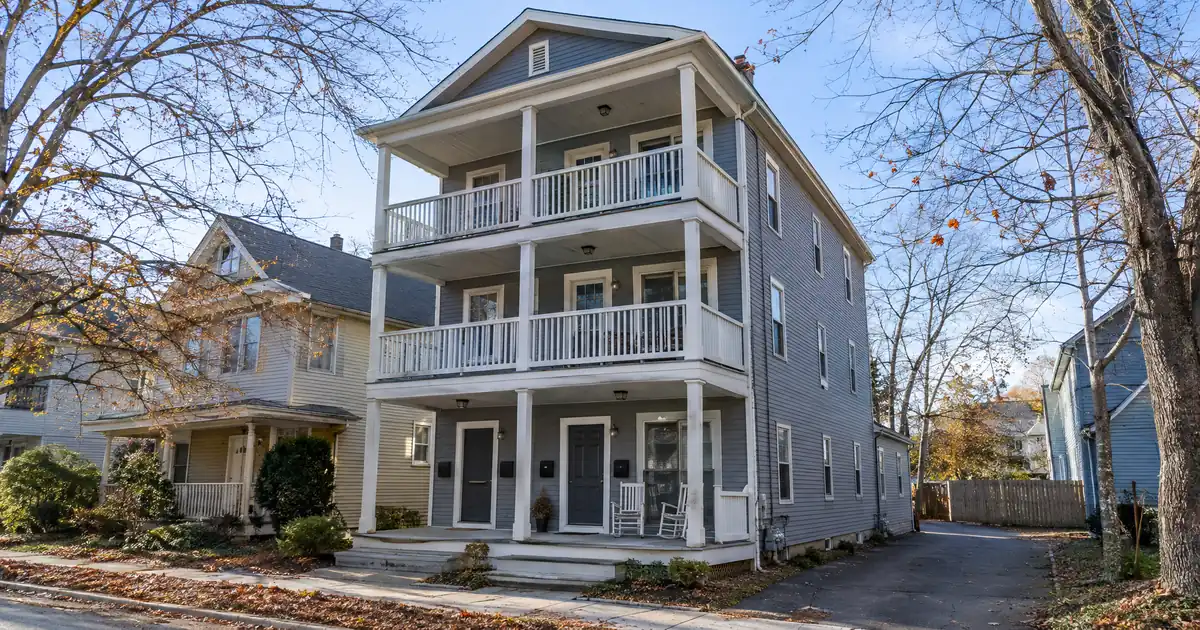
You have a duplex, triplex, or fourplex, and one door is empty. You want to pull equity without refinancing the first mortgage you like. This guide walks through how the file is underwritten, what the vacant unit changes, and where it breaks. For the wider picture, start with Lendmire’s complete DSCR loans guide.
What a DSCR HELOC Actually Is
The label is loose. Across the market, “DSCR HELOC” gets stuck on rent-qualified cash-out refinances, lump-sum second mortgages, and revolving lines. They behave differently. The product described here is a revolving line of credit. It is secured by a rental you keep, and it is written as a standalone second lien behind your existing first mortgage or as a standalone first lien on a rental with no mortgage.
It is never closed together with a purchase. It is never a third lien. It is never a line on your own home or a second home. The rent qualifies the line, so there are no traditional personal-income documentation, W-2s, pay stubs, or debt-to-income ratio. The property qualifies primarily on rental income covering the payment, subject to lender guidelines.
Your credit report, the lease, and the valuation are all still documented. Vesting in your LLC is allowed on an investment property, subject to program terms. The members sign as guarantors.
This line is offered in all 16 of Lendmire’s licensed states. Lendmire is the broker. It places the file with a wholesale lender in its network, and the lender underwrites it.
Key Terms Defined
DSCR (debt service coverage ratio): The property’s gross monthly rent divided by the monthly payment the lender tests it against.
Second lien: A loan that sits behind the first mortgage, so the first lender gets paid first if the property is sold.
CLTV (combined loan-to-value): Your first mortgage balance plus the new line, divided by the property’s value.
Draw period: The stretch when you can borrow from the line. Here it is five years, interest-only on the drawn balance.
Form 1007 and Form 1025: Appraisal forms that carry the rent opinion. Form 1007 is the rent schedule for a one-unit property. Form 1025 is the small income property report for two to four units, and it covers value and per-unit market rent together.
Seasoning: The waiting period after you buy or refinance before a lender will lend against the property again.
How to Qualify for a DSCR HELOC With One Unit Vacant, Step by Step
Underwriting runs in a predictable order. Each step below is where a vacant unit can help or hurt.
1. Confirm the structure and lien position. A second lien sits behind a first mortgage you keep. A first lien goes on a rental you own free and clear. Ask your first lender whether its documents allow a junior lien.
2. Check the property gates. The program covers single-family, townhome, PUD, condo, and two-to-four-unit rentals, among others. It excludes rural-designated property, row homes, condotels, leaseholds, mixed-use property, and a property listed for sale in the prior two months. That last one matters if you listed the building while the unit sat empty.
3. Check seasoning. A rental bought or refinanced in the last six months is not eligible. You need six months of ownership as well.
4. Order the valuation with a rent opinion. For a two-to-four-unit building, the rent schedule comes from the appraiser’s per-unit market rent. The Fannie Mae Selling Guide lists Form 1025 for two-to-four-unit properties and Form 1007 as the comparable rent schedule for one-unit investment properties. DSCR files borrow these forms. DSCR loans are not agency loans.
5. Build rent unit by unit. Each leased unit counts at the lesser of the appraiser’s market rent or the lease. A lease above market can count when you document three months of receipts. The empty unit is the open question, covered next.
6. Run the coverage test. Gross monthly rent is divided by a qualifying payment. That payment is a fully amortizing payment on the entire credit limit, not just the part you draw, and it is higher than your real payment by design. The minimum is 1.10x, subject to underwriting.
7. Pull credit and leverage. Credit tiers and lien position set the ceiling, which is covered below.
One more point on the test. The standard DSCR formula divides rent by principal, interest, taxes, insurance, and any HOA dues, and Scotsman Guide describes 1.0 as break-even. A line is tested on a stress payment against your full limit, so the number is tougher than a plain loan’s. Whether a first-mortgage payment joins the qualifying payment on a second lien is the lender’s own calculation, and it governs. Ask for that formula in writing before you apply.
How Lenders Treat the Empty Unit
Here is the part that decides your file. Vacancy is not an automatic disqualifier, but a vacant unit has no lease, so the lender has to decide what rent to credit it with. Across the wholesale network, the treatments fall into a few buckets.
| Treatment | What it means | Effect on you |
|---|---|---|
| Market rent | Appraiser’s rent opinion fills the empty unit | Strongest coverage |
| Leased units only | Empty unit counts as zero | Coverage drops sharply |
| Discounted market rent | Part of the opinion is credited | Middle result |
| Lease first | Unit must be leased before closing | Adds a step |
Most programs we see credit leased units at the lower of lease or market rent and the empty unit at the appraiser’s opinion. Some count leased units only. Which bucket your lender uses is a program convention, not a federal rule. The program described here allows at most one vacant unit in a two-to-four-unit property, and the lender’s coverage calculation governs how that unit’s rent is treated.
Ask three questions up front. How does the program credit a vacant unit’s rent? Does that credit depend on the appraiser supporting it? And does the empty unit need to be rent-ready? A wrong assumption here can cost you an application.
Worked Examples: One Empty Unit, Two Ways
These ratios are modeled assumptions, not market data, and the lender’s own calculation governs. They use equal-sized units to show the building-size effect. The qualifying payment is the same in both cases of each pair. Only the rent changes.
Run the numbers on a fourplex. Say the empty unit is credited at market rent and the whole building covers the test at about 1.20x. That clears a 1.10x minimum. Count the three leased units only, and the same building falls to about 0.90x, because three of four units equals 75% of the rent. That fails.
Now a duplex. With market rent on the empty unit, the building sits near 1.30x. Count the leased unit alone, and it drops to about 0.65x, because half the rent is gone. A vacancy hurts most in a duplex for exactly that reason, since one unit is half the income. The numbers swing hard, but the duplex has less room to absorb a vacant door.
The takeaway is simple. The bigger the building, the less one empty unit moves the number. A triplex lands between these two cases. Test your file at the lower of lease or market rent for each unit, not at the figure you hope for.
What the Appraiser’s Rent Opinion Needs From the Vacant Unit
The rent opinion is the single point of failure on a file like this. Everything depends on the appraiser being able to support a market rent for a unit with no tenant in it.
Make the unit look rentable. Finish the paint, flooring, fixtures, and any open repairs. Make sure utilities are on and the unit is insured. A vacant unit with unfinished rehab or an uninsurable condition can break the package, and it can also lower the appraised value that your leverage ceiling runs on. Rent-ready is the gate, not vacancy itself.
A unit between tenants is easier to underwrite than one that has sat empty through a long renovation. Light work near the finish line is usually fine. Heavy work is a different animal, and the usual advice is to complete the work and lease the unit first, then apply.
Valuation path matters too. Lines up to $400,000 use an automated valuation with a property inspection report, or a full interior appraisal. Lines above $400,000 require a full interior appraisal on Form 1004, 1073, or 1025. Appraisal waivers are not accepted, and the lender chooses which report supports the rent figure. For background on the form, the Fannie Mae Learning Center lists Form 1025 as the small residential income property appraisal report.
Leverage, Credit, and Line Size
Credit and lien position set your ceiling. These are typical ranges through select programs, subject to underwriting.
| Position | Credit score | Ceiling | Line size |
|---|---|---|---|
| Second lien | 720 or better | 70% CLTV | $50,000 to $500,000 |
| First lien | 740 or better | 75% LTV | Up to $500,000 |
| First lien | 700 to 739 | 70% LTV | Up to $500,000 |
| First lien, larger line | 720 or better | 65% LTV | Above $500,000 to $1,000,000 |
Nothing in that table adjusts for one empty unit. But a lower appraised value cuts the dollars a ceiling allows, and a declining-market flag lowers the ceiling by five points. Below 720 there is no second-lien option. Mortgage history needs no 30-day late in the last 12 months. A bankruptcy, foreclosure, short sale, or deed-in-lieu needs 48 months of distance.
Draw rules affect sizing. At least 80% of the line, and never less than $50,000, is drawn at closing. Later draws are at least $5,000 each. The draw period is five years interest-only on the drawn balance, followed by a 25-year repayment period, with a 30-year maturity. The line is variable-rate, and the rate and pricing terms come with the lender’s disclosures. No reserves or cash to close are required. Exposure per borrower is capped at five loans or $2,500,000 with the program.
Borrowers must be US citizens, permanent residents, or non-permanent residents with a Social Security number. Foreign nationals and ITIN borrowers are not eligible.
If the Ratio Comes Up Short
A thin number is fixable more often than people expect. The options trade time, size, and cost against each other.
| Fix | How it helps | Tradeoff |
|---|---|---|
| Lease up the unit | Replaces market rent with a lease | Time and tenant search |
| Shrink the line | Lowers the stress payment on the limit | Less cash available |
| Wait out seasoning | Clears the six-month gate | Delays the draw |
| Use a different structure | Rent-qualified cash-out may fit | Replaces the first mortgage |
Shrinking the line works because the test runs on the full limit. The minimum line is $50,000, so there is a floor to that move. A closed-end cash-out refinance tests the rent differently and may suit a building with a low-rate first mortgage you do not mind replacing. Keeping a low-rate first lien intact is the main reason investors choose a second-lien line instead.
Some investors use the line for a short-term need, then place a long-term DSCR loan once the rent is stable. That sequence fits a building with a unit still being leased.
Special Situations Where the Rule Breaks
You live in one unit. This program does not fit. DSCR products are designed for non-owner-occupied investment properties. Because they are business-purpose investor loans, they are reviewed differently from a standard owner-occupied mortgage. A vacant unit does not make an owner-occupied building a rental.
Five or more units. Buildings that size move to commercial-style review, so they fall outside this program.
More than one empty unit. The program allows at most one vacant unit in a two-to-four-unit building. Two empty units in a fourplex is a lease-up problem to solve before applying.
Rent control. Form 1025 asks the appraiser about rent control. Market-rent opinions may not fit rent-stabilized units, so expect extra scrutiny.
LLC title. An LLC can stay on title, subject to program terms. A title holder who is not a borrower signs a non-borrowing owner acknowledgment and the security instrument.
Short-term rental units. Short-term rental rules can vary by city, county, HOA, and property type, so investors should confirm local rules before relying on projected rental income.
What the Ratio Does Not Tell You
Clearing 1.10x is not positive cash flow. The lender tests gross rent against a stress payment. Repairs, vacancy, management, utilities, and capital costs sit outside the calculation. While one unit is empty, you still carry its utilities and upkeep, and you still make the payments on the first mortgage.
Keep a cushion. If you draw most of the line and the unit stays empty for a few months, your real cash flow can turn negative even though the file qualified. Interest-only payments during the draw period are lower than the repayment period that follows, so plan for the step up. Tax treatment can depend on how the funds are used and how the property is held; borrowers should keep clear records and speak with a qualified tax professional before relying on any deduction.
Frequently Asked Questions
Does an empty unit count as zero rent?
It depends on the program, and often it does not. Many programs credit the vacant unit at the appraiser’s market rent. Others count only the leased units, and a few discount the figure. This program’s coverage calculation governs, so ask how it treats the empty unit before you pay for a valuation.
How many vacant units can a two-to-four-unit building have?
At most one on this program. The occupied units need leases. A duplex with one empty unit sits at the edge of that rule, and it is the most sensitive case because half the income is in question.
Can I qualify if I live in one of the units?
No. This line is never offered on an owner-occupied home. If you plan to move out and rent the whole building, you can revisit the file once the occupancy changes and the building is fully investor-owned.
Does a lease above market rent lift my ratio?
It can, but only with documentation. Rent is the lesser of the appraiser’s market rent or the lease, and a lease above market counts when you show three months of receipts. Without that proof, the market figure caps the unit.
Can I keep the property in my LLC?
Yes, on an investment property, subject to program terms. The members sign as guarantors, and the borrowers on the line need not be the borrowers on the first mortgage.
Next Step
If you are considering a home equity line on a rental property and want to see how the numbers work, Lendmire can help you compare DSCR HELOC options based on the property, the rent, the equity available, credit profile, combined leverage, and your goals. You can reach the team at 828-256-2183 or request a quote.
About Lendmire
Lendmire is a mortgage brokerage (NMLS# 2371349) arranging home equity lines of credit — primary-residence, second-home and investment-property lines — through a wholesale lending network in its 16 full-service states. Eligibility is determined by the lender on each file. Scotsman Guide named Lendmire a Top Mortgage Workplace in both 2025 and 2026.
Get Started
Ready to find the right loan for you?
See your offer in seconds. No credit pull, no obligation.
Informational only. Not a Loan Estimate, approval, or commitment to lend. Program availability and eligibility are subject to lender guidelines, credit approval, property review, and underwriting.
References
2. Scotsman Guide, Invest in Your Future
3. Fannie Mae Learning Center, Appraisers
This article is part of Lendmire’s DSCR HELOC program — full qualification details, guidelines, and scenarios live on the program page.
Related reading: How to Qualify for a DSCR HELOC on a Home Held in an Irrevocable Trust · How to Qualify for a DSCR HELOC Without Tax Returns or W-2s · How to Qualify for a DSCR HELOC After Owning the Rental for 6 Months
Brandon Miller
Founder & CEO, Mortgage Loan Originator, Lendmire LLC
- Mortgage Loan Originator · NMLS# 1129696 · Verify on NMLS Consumer Access
- North Carolina Real Estate Broker · License# 343312 · Verify on NCREC
- North Carolina Insurance Producer · License# 19053198 · Property, Casualty, Life, Health · Verify on NAIC SBS
- Lendmire LLC · Firm NMLS# 2371349 · Verify firm licensure
Required disclosures. Lendmire (NMLS# 2371349) operates as a licensed mortgage broker, not a direct lender or depository. The discussion in this article is general in nature and should not be relied upon as financial, legal, or tax advice — every investment scenario is unique and should be reviewed by a qualified professional. Any loan inquiry is subject to lender underwriting, and this article is not a commitment to lend or a guarantee of approval. Mortgage rates, loan terms, and program guidelines vary by borrower, property, and state, and may change without notice. Equal Housing Opportunity. Verify licensure at NMLS Consumer Access.