
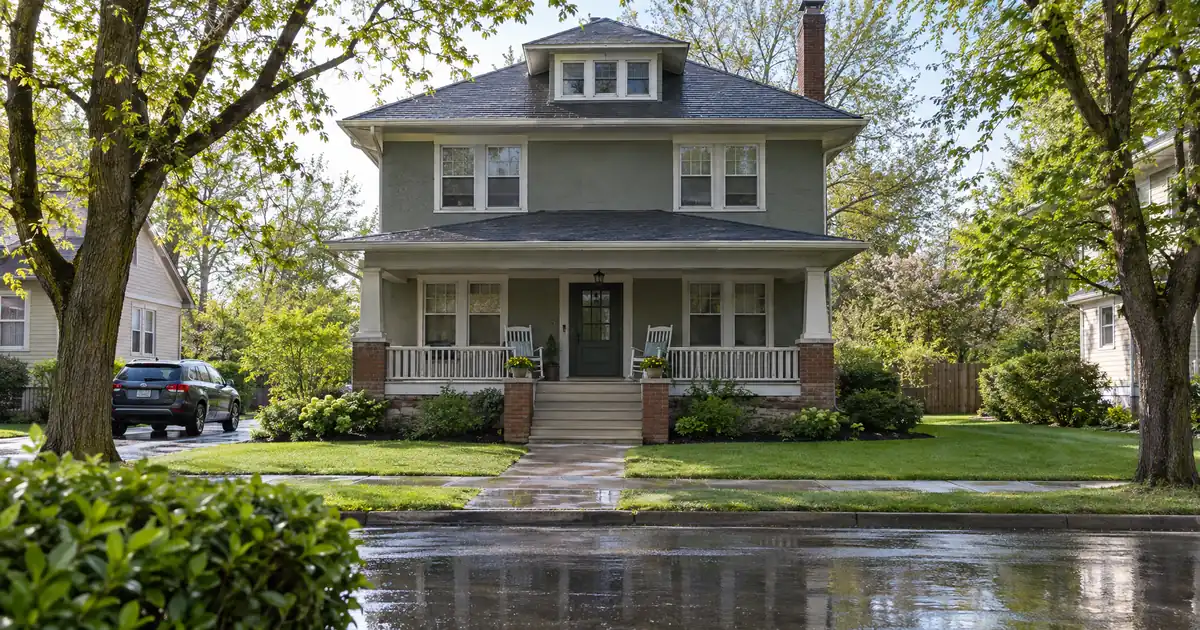
The Quick Read: A DSCR HELOC on an inherited home works after probate ends, once the deed to the heir is recorded, a lease is in place, and the rent covers a stress payment on the whole line at 1.10x or better, subject to underwriting and the lender’s own coverage calculation.
- Title comes first. Being named in a will does not let anyone pledge the house.
- The rent qualifies the line. The heir’s personal income is not calculated.
- Through select programs, a second lien reaches 70% combined loan-to-value at a 720 score or better, subject to underwriting.
- A vacant house, an owner-occupied house, or a house listed for sale in the last 2 months does not fit this lane.
Key Terms Defined
DSCR (debt service coverage ratio): gross monthly rent divided by the qualifying payment on the loan.
DSCR HELOC: a revolving line on a non-owner-occupied rental, qualified on the property’s rent instead of the owner’s personal income.
Personal representative: the executor or administrator the probate court appoints to act for the estate.
Letters: the certified court document that proves a personal representative has authority to sign.
Recorded vesting deed: the deed, filed in county records, that puts title in the heir’s name or the heir’s LLC.
CLTV (combined loan-to-value): the first mortgage balance plus the new line, divided by the home’s value.
Stress payment: a fully amortizing payment on the entire credit limit at the start rate plus 2 percentage points. It is a test number, not what the owner pays.
What a DSCR HELOC Actually Is
A DSCR HELOC is a standalone second lien behind a first mortgage the owner keeps, or a standalone first lien on a rental with no mortgage. It is never closed with a purchase. It is never a third lien. It is never a line on the owner’s own home.
The rent drives lender review. The owner’s tax returns, pay stubs and debt-to-income ratio are not part of the file. The lender still documents the rent, the lease, the credit report and the valuation. The home can sit in the owner’s LLC, subject to program terms. The LLC’s members sign as guarantors.
The label confuses people because it blends two worlds. A HELOC is consumer-style revolving credit. DSCR is investor-style underwriting. Very few lenders do both, and the wholesale network’s offering is a narrow lane with firm edges. The complete DSCR loans guide covers how coverage ratios work on rental loans in general.
Why Probate Comes First
Probate comes first because the lender needs a recorded, insurable owner who has the legal power to sign. A will names who should receive the house. Probate is the process that moves title. Until the deed is recorded or a court order transfers the property, the heir is not the owner of record.
Iowa State’s Center for Agricultural Law and Taxation explains that without probate, heirs may possess a property but lack clear title to prove ownership. It adds that clouded title usually blocks using the property as collateral for financing. That matches what happens in files. A strong rent number does nothing for a title gap.
Authority, title and insurability are three separate tests:
- Authority: the personal representative holds letters from the court.
- Title: a deed or court order puts the property in the borrower’s name.
- Insurability: the title company will issue a policy and the carrier will write hazard coverage in the borrower’s name.
| Stage | Who can sign | Line possible? |
|---|---|---|
| Probate open, no letters | Nobody | No |
| Letters issued, deed not recorded | Personal representative | Not on this line |
| Deed to heir recorded | The heir | Starts here |
| Trust or transfer-on-death route | Trustee or the new owner | After documents clear |
An estate-level or bridge loan is a different product from this line. It may exist while the estate still holds title. It does not replace a recorded deed.
How Underwriting Treats the Inherited Home, Step by Step
Underwriting treats an inherited home like any other rental, with extra attention on title and the seasoning question. The deal works in a set order.
1. Confirm the title position. The lender wants the recorded deed, the court letters or trust certificate, and a title commitment. Gaps here stop the file before rent is ever reviewed.
2. Get the legacy debt on paper. If the decedent left a mortgage or home equity line, the balance and payoff figure go in the file. That debt sits ahead of any new lien.
3. Document the lease. A lease in place is required. A lease still in the decedent’s name usually needs to be replaced with one signed by the owner of record. Rent receipts that show the deposits help, especially if the lease is above market rent.
4. Order the valuation. The value is today’s value. The date-of-death value from the estate paperwork is not the collateral number. The IRS treats date-of-death value as the generally applicable tax basis, which is a separate question from collateral value.
5. Run the coverage test. Rent is the lesser of the appraiser’s Form 1007 market rent or the lease. A lease above market counts only with three months of receipts.
6. Check credit, history and exposure. The lender’s own credit report sets the tier. Limits apply to the number of loans and total exposure per borrower with the program.
The Coverage Test With Numbers
The coverage test divides gross monthly rent by the stress payment on the entire credit limit, not the amount drawn. The program minimum is 1.10x. The lender’s own calculation governs, and the figures below are illustrative ratios only.
| Scenario | Coverage | Read |
|---|---|---|
| Rent well above the stress payment | About 1.25x | Clears the test |
| Rent just above | About 1.10x | Borderline, little room |
| Rent below the stress payment | About 0.95x | Does not clear |
Run the numbers on a borderline file before ordering anything. Lowering the line size lowers the stress payment, because the test runs on the full limit. A smaller limit can move a 1.05x file over 1.10x. The trade is less equity available.
When a file lands under the line’s minimum, the line itself is out. Select lenders in the network do review lower-coverage scenarios on DSCR cash-out refinances, but leverage and terms adjust, and approval stays subject to lender guidelines. That is a different loan with different mechanics, not a variation of this one.
(Rent is the weak spot on inherited houses more often than credit. Older homes in original condition often appraise to a market rent below what the family charged.)
Leverage Tiers and the Existing Mortgage
Leverage depends on whether the inherited home carries a mortgage. The figures below are program ceilings, subject to underwriting, not offers.
Second lien (behind a mortgage the heir keeps): up to 70% CLTV at a 720 credit score or better, on lines of $50,000 to $500,000. Below 720 there is no second-lien option. Every figure here varies by lender and program; guidelines, property type, leverage, and credit profile all apply.
- 740 or better: up to 75% LTV on lines to $500,000.
- 720 to 739, or 700 to 719: up to 70% LTV on lines to $500,000.
- Lines above $500,000, up to $1,000,000: 65% LTV at 720 or better. Final terms depend on lender guidelines, property type, leverage, and the borrower’s complete credit picture.
Consider a house where the mortgage the decedent left equals 40% of the appraised value. At a 70% CLTV ceiling, the new line has room for up to 30% of value, before any declining-market adjustment. If the same house had no mortgage, a first lien could reach 75% LTV at the top credit tier on a line of $500,000 or less. These specifics are subject to lender guidelines and a full review of property, leverage, and credit.
Other file items that matter:
- A declining-market flag lowers the ceiling 5 points. Philadelphia lines carry a ceiling 10 points lower.
- Hazard insurance must cover both liens. Flood coverage applies where required.
- Lines to $400,000 use an automated valuation with a property inspection report, or a full interior appraisal. Larger lines take a full interior appraisal. Appraisal waivers are not accepted.
- Title work is a full policy on a first lien and on seconds above $400,000, and an owner-and-encumbrance report on smaller seconds.
- Mortgage history needs no 30-day late in the last 12 months. A bankruptcy, foreclosure, short sale or deed-in-lieu needs 48 months behind it.
- No reserves are required.
Ask the existing mortgage servicer how the loan is being handled after the transfer. The first mortgage stays in place and sits ahead of the line.
Draw Rules and the Variable Rate
At least 80% of the line, and never less than $50,000, is drawn at closing. Later draws are at least $5,000 each. The draw period is 5 years of interest-only payments on the drawn balance. Then a 25-year fully amortizing repayment period runs to a 30-year maturity.
The rate is variable. The CFPB’s explanation of a HELOC calls it an open-end line that lets an owner borrow repeatedly against equity, meaning home value minus the mortgage balance. The CFPB’s HELOC brochure notes that these lines typically carry variable rates and that payments can change even when the borrowing does not.
For an investor, the practical point is the payment step when interest-only ends. A hold strategy should be tested against the repayment period, not just the draw period. The rate and pricing terms come with the lender’s disclosures.
Where the Rule Breaks: Named Edge Cases
Most failed files fall into one of these cases.
Open probate. Without letters, nobody can sign. Wait for the deed.
Multiple heirs. Every record owner has to participate. A title holder who is not a borrower signs a non-borrowing owner acknowledgment and the security instrument. The borrowers on the line need not match the borrowers on the first mortgage. One heir who refuses to sign ends the file, which is why buyouts usually come first.
Heirs’ property with a long gap. If the house passed through generations with no probate, unknown heirs can cloud title. Quiet-title work comes before any lender review.
Non-probate routes. A revocable trust, joint tenancy or a transfer-on-death deed can skip probate. The documents shift to a trust certification or a recorded transfer. The Iowa State overview of estate planning notes that trusts are administered without probate.
Vacant house. A lease in place is required. A two-to-four-unit property may have at most 1 vacant unit. A vacant single-family inheritance has to be leased first, or it belongs in a different product.
The heir moves in. This line is never offered on an owner-occupied home. A primary-residence HELOC is a different product with different underwriting.
A recent listing. A property listed for sale in the prior 2 months is not eligible. Heirs who test the market and then change course should expect that wait.
Property type. Rural-designated property, row homes, condotels, leaseholds, land trusts, mixed-use and age-restricted communities are outside this lane. Warrantable and non-warrantable condominiums are both eligible property types, and the same leverage tiers above govern them.
Seasoning. A rental bought or refinanced inside the last 6 months is not eligible, and 6 months of ownership are required, from settlement to note date. The wording is written for purchases and refinances. How an inheritance deed date is treated is a question for the lender’s review, so ask before ordering anything.
Borrower status. US citizens, permanent residents and non-permanent residents with a Social Security number are eligible. Foreign nationals and ITIN borrowers are not.
LLC vesting. The members sign as guarantors, subject to program terms. Settle the vesting question before the deed is recorded, so the title holder and the borrowers line up.
Is a Line the Right Product?
A line fits an heir who wants to keep the first mortgage, keep the house and draw equity in pieces. It is not the best fit for everyone.
| Path | Best fit | Main catch |
|---|---|---|
| DSCR HELOC | Keep the mortgage, draw equity | Needs a lease and 1.10x |
| DSCR cash-out refinance | Replace the mortgage, one lump sum | New first lien terms |
| Personal-income HELOC on a rental | Strong employment income, rent not counted | Banks often exclude rent |
| Sell | Heirs want out | Ends the hold |
Banks often do not count rent on non-owner-occupied property, and a newly inherited rental has no two-year rental history to show. Property-level underwriting avoids the personal-income problem. In return it adds the title and rent-coverage tests above.
Tax treatment can depend on how the funds are used and how the property is held; borrowers should keep clear records and speak with a qualified tax professional before relying on any deduction.
The program is offered in 15 of Lendmire’s 16 licensed states, every licensed state except Tennessee, under Lendmire’s consumer licensing: Alabama, California, Colorado, Florida, Georgia, Indiana, Michigan, Montana, New Mexico, North Carolina, Ohio, Pennsylvania, Texas, Virginia and Washington.
If you are considering a home equity line on a rental property and want to see how the numbers work, Lendmire, a mortgage broker, can help you compare DSCR HELOC options based on the property, the rent, the equity available, credit profile, combined leverage, and your goals. Reach the team at 828-256-2183.
Frequently Asked Questions
Can I get a DSCR HELOC before probate is finished?
Not on this line. Nobody can sign until the court issues letters, and the line needs a recorded deed in the borrower’s name. An estate-level bridge loan is a different product.
Who signs when several siblings inherit the house?
Every record owner takes part. Borrowers sign the note and security instrument, and a title holder who is not a borrower signs a non-borrowing owner acknowledgment and the security instrument. If one sibling will not sign, a buyout or sale usually has to come first.
Does a tenant in place count as qualifying income?
Only if a lease is documented and the rent clears the test. A lease above market counts with three months of receipts.
What if the decedent left a mortgage on the house?
The mortgage stays in place and sits ahead of the new line. The line is then a second lien, up to 70% CLTV at a 720 score or better, subject to underwriting.
What if the house is vacant or needs work?
This line needs a lease in place. A vacant single-family home has to be leased first. Heavy repairs may point to another financing path.
Does the stepped-up value set how much I can borrow?
No. The lender uses the current valuation from an automated valuation with an inspection report or a full interior appraisal, depending on line size.
About Lendmire
Lendmire — NMLS# 2371349 — is a mortgage broker that arranges home equity lines of credit in its 16 full-service states through wholesale lenders, on primary residences, second homes and investment properties. Every line is subject to the lender’s guidelines and full underwriting. Scotsman Guide named Lendmire a Top Mortgage Workplace in both 2025 and 2026.
Investors who want the broader program framework can review how DSCR loans work.
Get Started
Ready to find the right loan for you?
See your offer in seconds. No credit pull, no obligation.
Informational only. Not a Loan Estimate, approval, or commitment to lend. Program availability and eligibility are subject to lender guidelines, credit approval, property review, and underwriting.
References
1. Iowa State CALT – The Problem With Heirs’ Property
2. IRS – Gifts and inheritances FAQ
3. CFPB’s explanation of a HELOC
4. Iowa State CALT – Estate and Transition Planning FAQs
This article is part of Lendmire’s DSCR HELOC program — full qualification details, guidelines, and scenarios live on the program page.
Related reading: How to Qualify for a DSCR HELOC Funded Fast When Bridging to a New Home · How to Qualify for a DSCR HELOC on One Income Without a Spouse Signing · How to Qualify for a DSCR HELOC After Delisting and Keep a Low First Mortgage
Brandon Miller
Founder & CEO, Mortgage Loan Originator, Lendmire LLC
- Mortgage Loan Originator · NMLS# 1129696 · Verify on NMLS Consumer Access
- North Carolina Real Estate Broker · License# 343312 · Verify on NCREC
- North Carolina Insurance Producer · License# 19053198 · Property, Casualty, Life, Health · Verify on NAIC SBS
- Lendmire LLC · Firm NMLS# 2371349 · Verify firm licensure
Disclosure information. Lendmire is a state-licensed mortgage brokerage under NMLS# 2371349. Lendmire is not a depository institution, direct lender, or financial advisor — all loans referenced are placed through wholesale lender partners and are subject to each lender's underwriting standards. This article is provided for general informational purposes and is not a commitment to lend, nor does it constitute financial, legal, or tax advice. Loan programs, terms, rates, and qualification standards change without notice and depend on borrower profile, property type, and the state in which the subject property is located. Equal Housing Opportunity provider. NMLS Consumer Access: nmlsconsumeraccess.org.