
The Quick Read: Usually, yes on the borrowing side and not always on the signing side: a married investor can typically apply alone, because the rent qualifies the line and neither spouse’s personal income is calculated, but a spouse who holds title, or whose state gives them a homestead or marital interest in the property, may still have to sign the lien.
- The rental’s rent qualifies the line, so one spouse can be the only borrower, subject to underwriting.
- Signing the note (the promise to repay) and signing the lien (the claim on the property) are two different acts.
- Your name alone on the deed, in a state without marital-property rules, is the cleanest path.
- A spouse on title, a community-property state, or a homestead issue can bring that spouse to the signing table without making them a borrower.
- A line secured by your own home is a different product, and this one is never written on an owner-occupied home.
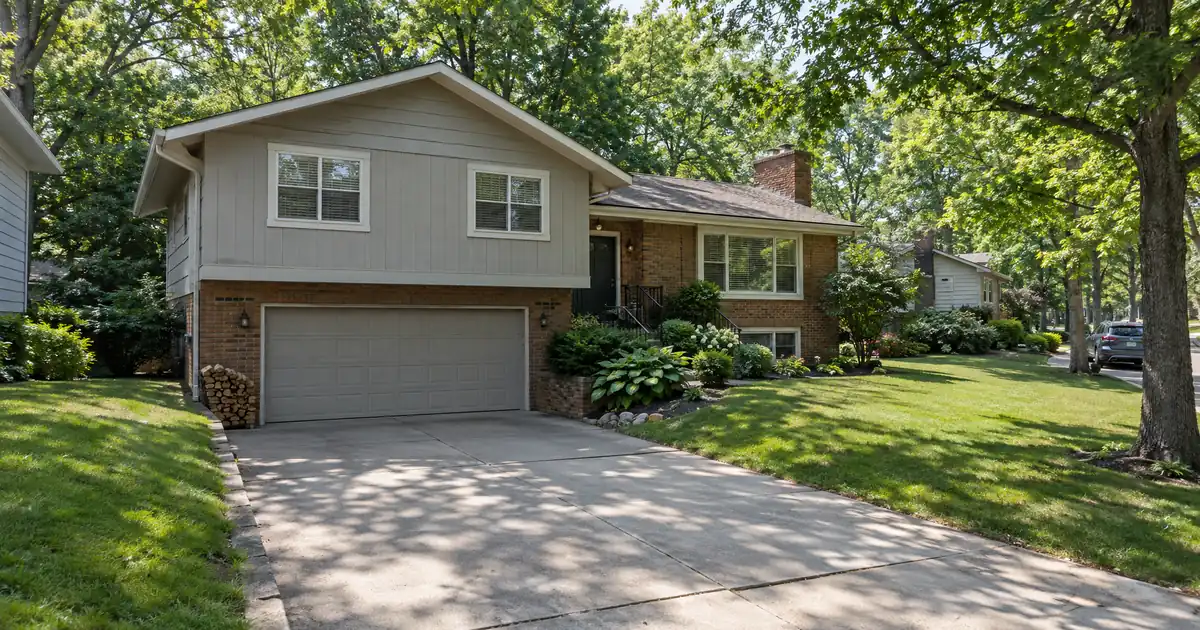
A DSCR HELOC is a home equity line of credit on a rental you own, qualified by the property’s rent instead of your paycheck. Most investors who ask about “one income” are really asking two things. Does my spouse’s income have to count? And does my spouse have to show up? The first answer is no. The second is where title and state law take over.
What Does “One Income” Mean on a DSCR HELOC?
It means your personal income is not part of the calculation at all. The line is reviewed on the rental’s debt service coverage ratio (DSCR), which is the property’s monthly rent divided by the payment the lender tests it against. Through select programs in the wholesale network Lendmire works with, the minimum is 1.10x, subject to underwriting.
The test payment is not the payment you would actually make. It is a fully amortizing payment on the entire credit limit at a stressed rate, so the coverage hurdle is tougher than it looks. The lender uses the lesser of the appraiser’s market rent (Form 1007) or the lease, and a lease in place is required. A two-to-four-unit building can have at most one vacant unit.
The program is a standalone second lien behind the first mortgage you keep, or a standalone first lien on a rental with no mortgage. It is never closed together with a purchase, and it is never a third lien. On a second lien, the lender’s own coverage calculation governs how the first-mortgage payment is treated.
So where does a spouse come in? Only through the file’s non-income pieces: who is on title, who is a borrower, and who guarantees an LLC. The documented parts of the file are the rent, the lease, your credit report, and the property valuation. The spouse’s pay stubs are not part of it, and neither are the spouse’s debts.
Signing the Note Is Not Signing the Lien
This distinction answers most of the confusion. A line of credit involves two documents, and they do different jobs.
| Document | What it does | Who signs |
|---|---|---|
| Promissory note | Creates the personal duty to repay | Borrowers only |
| Mortgage or deed of trust | Gives the lender a lien on the property | Title holders, and sometimes a spouse by state law |
A spouse who signs only the lien does not become a borrower. The lender’s recourse for repayment runs through the borrowers on the note. The lien simply makes sure no one with an ownership or marital interest can later undo the lender’s claim on the property.
Federal rules back the first half of that. The CFPB’s Regulation B, the equal credit rule, bars a lender from requiring a spouse’s signature on a credit instrument when the applicant qualifies alone on the amount and terms requested. The official interpretation of that rule adds the practical limit: a signature to make the secured property available generally belongs on the security agreement, and any spouse signature on a combined document must make clear it grants a security interest without imposing personal liability.
That rule stops a lender from demanding a co-borrower. It does not stop state law from requiring a spouse’s signature to make a lien valid. That is why no honest broker can promise that nobody else will sign.
When a Spouse’s Signature Still Shows Up
The title decides this, and the state shapes how title is treated. Here is how the common situations usually play out. Treat the table as a map, not a ruling, because your title company reports vesting and any recorded homestead declaration.
| Your situation | Spouse is a borrower? | Spouse likely signs the lien? |
|---|---|---|
| Rental in your sole name, non-community-property state | No | Usually not |
| Rental in your sole name, community-property state | No | Possibly, per title review |
| Spouse also on the deed | No | Yes, as a title holder |
| Rental held in your LLC | No (members guarantee) | Depends on title and membership |
| Line secured by your home | Not offered on this program | Not applicable |
The most common real-world friction is a spouse on the deed. One BiggerPockets thread describes an Ohio investor whose wife wanted nothing to do with his rental. Her name was on the deed, so the lender required her at closing. The thread is dated, but the logic has not changed: if both names are on title, both people generally sign the security instrument.
Community property and homestead
Community-property states treat much of what a married couple acquires as owned jointly. In those states a lender or title company may ask the non-borrowing spouse to sign the deed of trust, even though that spouse is not on the line. Several of the states where the program is offered, including California, New Mexico, Texas and Washington, follow community-property rules.
Homestead law is a separate driver. A Texas realtors association explainer says homestead law, not community property alone, drives the spouse-signature requirement there. If a property is or could be the family homestead, both spouses must generally consent to mortgage it.
A pure rental that the couple never lived in is a different picture. Instead of a homestead consent, a title company often asks for a marital-status or non-homestead affidavit. The spouse signs that affidavit and nothing about repayment.
Across the wholesale network, the pattern is steady. Files with a sole-name rental and a clean title report rarely produce spousal surprises. Files with a spouse quietly on the deed, or a rental the couple once lived in, are the ones that produce a late request for a signature.
What About an LLC?
An LLC can stay on title on this program, which is one reason investors like it. The LLC’s members sign as guarantors. A title holder who is not a borrower signs a non-borrowing owner acknowledgment along with the security instrument. The borrowers on the line also do not have to be the borrowers on the first mortgage.
For a spouse, the question becomes: are they a member of the LLC, and do they hold title individually? A spouse who is not a member is not a guarantor. A spouse who holds the property individually, or is a member, may be pulled in by those roles, not by marriage. Entity eligibility is subject to program terms and the lender’s review.
A Worked Picture
Run the logic on a hypothetical. Say you own a duplex free and clear, titled in your name alone, with both units leased and your credit score at 740 or better. You want a first-lien line at up to 75% LTV (loan-to-value, the line divided by the property’s value), which is the top first-lien tier on lines up to $500,000, subject to underwriting. Terms depend on the lender’s guidelines, the property type, the leverage, and a full review of the credit profile.
The rent covers the stressed payment on the whole limit at 1.10x or better. Your spouse earns a salary, but nobody asks for it. Your spouse does not apply, does not sign the note, and does not appear in the coverage math.
Then the title report arrives. If you are in a state without marital-property overlays, the file may close with only your signatures. If you are in a community-property or homestead state, your spouse may be asked for an affidavit or a signature on the deed of trust. Your qualification did not change. The signing list did.
Now flip one fact. Suppose the rental is a second lien behind an existing first mortgage. The ceiling is 70% CLTV, meaning the first mortgage balance plus the new line, divided by value, at a 720 score or better. Below 720 there is no second-lien option on this program. Marriage did not change either of those cells.
Does the Spouse’s Credit or Debt Matter?
On this program, the lender pulls the borrower’s credit, and the tier comes from that report. A non-borrowing spouse’s credit is generally not considered for qualification. A spouse with a weak score does not drag down a file the spouse is not on.
Where could a spouse’s finances still surface? If your own credit is the issue, a spouse cannot cure it from the sidelines, because they are not a borrower. If you cannot qualify alone, a lender may ask for another party, and the federal rule allows that only after the lender determines you do not qualify alone. A spouse who becomes a co-borrower puts their credit and their liability on the file. That is a choice, not a default.
What If a Required Signature Is Missing or Refused?
A line the lender cannot secure properly is a line the lender generally will not fund. A spouse who will not sign what title law requires stops the file. A spouse who refuses to sign something title law does not require should not stop a file that qualifies alone, and the title company can usually tell you which situation you are in.
Divorce, a pending divorce, and a spouse who disputes ownership are attorney matters, not broker matters. Removing a spouse from title by deed changes who owns the property. It does not erase any debt that already exists. And the program’s six-month seasoning rule on a purchased or refinanced rental still applies, with the lender reviewing any recent title change.
Key Terms Defined
Promissory note: The signed promise to repay a debt, which makes the signer personally liable.
Security instrument: The mortgage or deed of trust that gives the lender a lien on the property.
Non-borrowing owner acknowledgment: A document a title holder who is not a borrower signs to confirm they understand the lien.
Guarantor: A person, such as an LLC member, who backs the line personally even though the entity owns the property.
CLTV: Combined loan-to-value, the first mortgage balance plus the new line, divided by the property’s value.
Homestead: A legal protection for a family’s home that, in some states, requires both spouses’ consent to borrow against it.
Community property: A marital-property system, used in some states, under which much of what a couple acquires is owned jointly.
DSCR vs. conventional financing
There are two common ways to finance an investment property, and they qualify you differently — here’s how investors weigh them.
Why investors choose it
- Qualifies on the property’s rental income — no personal tax returns, W-2s, or pay stubs needed to document income.
- No personal debt-to-income ceiling to clear, so existing mortgages and obligations don’t cap your borrowing the same way.
- Can be closed in an LLC, keeping the property inside a business entity.
- Built for scaling — not held to the limit on number of financed properties that conventional financing applies.
- Underwriting centers on the deal: generally qualifies when the rent covers the payment, a 1.10x coverage ratio being a common baseline (confirmed in underwriting).
- Designed specifically for investment property, including long-term and, where the program allows, short-term rentals.
Where it’s strong
- Often the lowest ongoing financing cost for a buyer who fully qualifies on personal income — a fit for a first property or a cost-first purchase.
Trade-offs for investors
- Requires full personal income documentation and must fit within a debt-to-income limit — salary, existing debts, and other mortgages all count.
- Typically held in your personal name rather than a business entity.
- Caps how many financed properties you can carry, which can become a ceiling as a portfolio grows.
- Evaluates you as a borrower as much as the property, which usually means more paperwork.
How investors usually choose: a first or single property often optimizes for the lowest financing cost; portfolio builders often optimize for leverage, vesting in an LLC, and scaling past conventional caps. The right answer depends on your goals, the property, and current guidelines — both paths run through select lenders in Lendmire’s wholesale network, with eligibility and terms confirmed in underwriting.
What If Signing Is a Dealbreaker?
Some investors will not accept any spousal involvement. Others cannot qualify for a line because of a property type outside the program, such as a condotel, row home or rural-designated property. A few simply want a lump sum.
In those cases, a DSCR cash-out refinance may fit better, and Lendmire’s complete DSCR loans guide walks through the structures. A cash-out loan replaces your first mortgage, so it is a bigger commitment than a line behind it. It also still runs through title, so the same signature rules apply. The difference is the document set and the structure, not the spouse question.
DSCR loans are designed for non-owner-occupied investment properties. Because they are business-purpose investor loans, they are reviewed differently from a standard owner-occupied mortgage. That is why a line secured by your own home is outside this lane entirely, and why an investor who wants to avoid a signature should not plan on using the family home as collateral.
Before You Apply: A Short Checklist
1. Pull the recorded deed and confirm exactly whose names are on title.
2. Confirm the property was never your homestead, and whether any homestead declaration is recorded.
3. Decide whether the borrower is you alone or your LLC, with members as guarantors, per program terms.
4. Check the property against the exclusions: no rural designation, condotel, row home, leasehold, or property listed for sale in the prior two months.
5. Confirm six months have passed since you bought or refinanced the rental.
6. Ask the title company early whether your state calls for a spousal affidavit or a deed-of-trust signature.
7. If there is a dispute or a divorce in play, talk to an attorney before applying.
The program is offered in 16 states under Lendmire’s consumer licensing, and every file is underwritten individually.
Frequently Asked Questions
Does my spouse have to be a co-borrower on a DSCR HELOC?
No. If the rent covers the line at the program’s coverage minimum, subject to underwriting, you can typically apply alone. Your spouse’s income is not calculated, and a spouse who is not on the note carries no repayment liability.
Can my spouse refuse to sign and still let me get the line?
It depends on what the signature is for. If your spouse is on title or state law requires a lien signature, a refusal will stop the file. If neither applies, the lender generally cannot require it, and the title company can confirm which case you are in.
Does a spouse with bad credit hurt my DSCR HELOC?
Usually not, because a spouse who is not a borrower is not part of the credit tier. The score that counts is yours, with a 720 minimum on a second lien and 700 on a first lien, subject to underwriting. Your own credit history and the property’s coverage drive the file.
What if the rental is in my LLC?
The LLC can stay on title, subject to program terms. Members sign as guarantors, and a title holder who is not a borrower signs a non-borrowing owner acknowledgment and the security instrument. Whether your spouse signs depends on their membership and whether they hold any interest personally.
Can I borrow against the family home instead?
Not on this program, which is never offered on an owner-occupied home. A line secured by your primary residence is a different product, and it almost always involves the spouse’s signature because of homestead rules.
If you are considering a home equity line on a rental property and want to see how the numbers work, Lendmire can help you compare DSCR HELOC options based on the property, the rent, the equity available, credit profile, combined leverage, and your goals. Reach the team at 828-256-2183 or request a quote.
Marriage rarely stops a rental-backed line, but the deed and the state can still put a second signature on the paperwork.
About Lendmire
Lendmire (NMLS# 2371349) is a mortgage brokerage serving homeowners and real estate investors in its 16 full-service states. Home equity lines of credit are arranged through wholesale lending channels; Lendmire brokers the line and the lender underwrites each application under its occupancy-based guidelines. Scotsman Guide named Lendmire a Top Mortgage Workplace in both 2025 and 2026.
Get Started
Ready to find the right loan for you?
See your offer in seconds. No credit pull, no obligation.
Informational only. Not a Loan Estimate, approval, or commitment to lend. Program availability and eligibility are subject to lender guidelines, credit approval, property review, and underwriting.
References
1. CFPB, Regulation B § 1002.7
2. Cornell LII, Regulation B Supplement I (official interpretation)
3. BiggerPockets, spouse on deed required at closing for a HELOC
4. Paragon Realtors, joinder of spouse in Texas
This article is part of Lendmire’s DSCR HELOC program — full qualification details, guidelines, and scenarios live on the program page.
Related reading: DSCR HELOC for Charleston Landlords Borrowing Against Rent Income · Condo DSCR HELOC Requirements for a Rental Condo · Is There a DSCR HELOC That Qualifies on Rental Income?
Brandon Miller
Founder & CEO, Mortgage Loan Originator, Lendmire LLC
- Mortgage Loan Originator · NMLS# 1129696 · Verify on NMLS Consumer Access
- North Carolina Real Estate Broker · License# 343312 · Verify on NCREC
- North Carolina Insurance Producer · License# 19053198 · Property, Casualty, Life, Health · Verify on NAIC SBS
- Lendmire LLC · Firm NMLS# 2371349 · Verify firm licensure
Legal disclosures. Lendmire (NMLS# 2371349) is a state-licensed mortgage brokerage that arranges financing through wholesale lender relationships. Lendmire is not a direct lender, depository institution, or registered financial advisor. The discussion above is general informational content about real estate financing — it is not financial, legal, or tax advice, and readers should consult licensed professionals for guidance on their individual circumstances. Loan inquiries are subject to lender underwriting; this article does not represent a commitment to lend. Loan terms, rates, and qualification standards vary by borrower, property, and state, and are subject to change at any time. Equal Housing Opportunity. NMLS Consumer Access: nmlsconsumeraccess.org.