
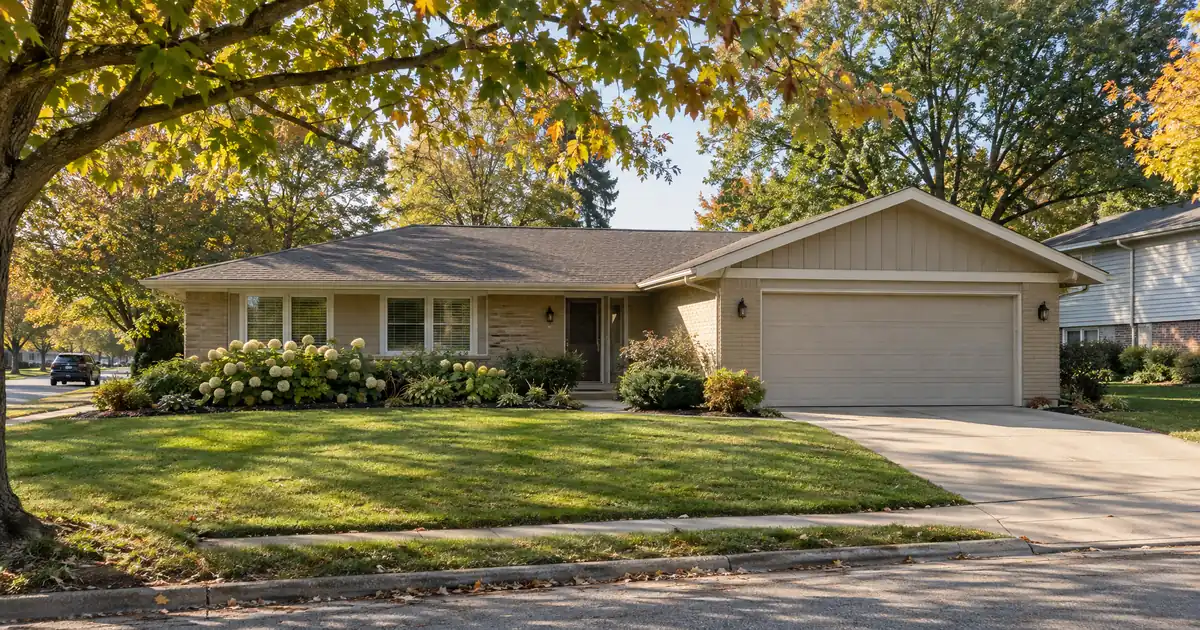
The Quick Read: Usually yes on the debt, because the rental’s rent qualifies the line and your spouse’s income and credit are not part of the file, but your spouse may still have to sign the lien if they hold title or state law gives them an interest in the property, and signing the lien does not make them a borrower.
- The line qualifies primarily on property-level rental income covering the payment, subject to lender guidelines, so a spouse’s paycheck is not needed.
- The note is the promise to repay, and it is yours alone. The lien is the security instrument recorded against the property, and it can need a second signature.
- Title and state law decide who signs the lien. Check both before you apply, not at the signing table.
- If your rental sits in an LLC, the members sign as guarantors. A spouse who is a member signs a personal guarantee.
- A spouse who refuses to sign the lien can stall the file. Fix that before you apply.
What Does “DSCR HELOC” Actually Mean?
A DSCR HELOC is a revolving line of credit secured by a rental property, qualified on the property’s rent instead of the owner’s personal income. DSCR stands for debt-service coverage ratio. It is gross monthly rent divided by the qualifying payment. The label is a market nickname, not one standardized product, so it helps to say exactly what structure you mean.
Across the wholesale network Lendmire works with, the structure is a standalone second lien behind a first mortgage you keep. It can also be a standalone first lien on a rental with no mortgage. It is never closed together with a purchase, never a third lien, and never a line on your own home or a second home.
Select programs set the minimum coverage at 1.10x. The test runs on a stress payment, a fully amortizing payment on the entire credit limit. That is not the payment you will make on day one. On a second lien, the lender’s own coverage calculation governs how the first mortgage factors in. Subject to underwriting, no traditional personal-income documentation, W-2s, pay stubs, or debt-to-income ratio enter the file. The rent, the lease, the credit report, and the valuation are all documented.
That design is why the spouse question comes up. The loan looks at the property and the borrower’s credit, not at a household income picture. So the question is less “does my spouse have to qualify?” and more “does my spouse have to sign something?”
The Note and the Lien: Who Signs What
Two documents sit at the center of every secured credit line. The note is the promise to repay, and the borrower signs it. The mortgage or deed of trust is the lien, which gives the lender the right to take the property if the debt goes unpaid. Anyone who owns an interest in the property may have to sign the lien so that it attaches to their share.
| Document | What it does | Who signs |
|---|---|---|
| Note | Creates the debt | Borrower only |
| Mortgage or deed of trust | Pledges the property | Borrower plus any required title holder |
| Non-borrowing owner acknowledgment | Confirms the signer is not a borrower | Title holder who is not on the loan |
| Guaranty | Makes a person liable for the debt | LLC members, where the property is in an LLC |
Signing the lien exposes the property, not the signer’s other assets. The spouse who signs only the security instrument is not agreeing to repay. The debt stays with the borrower. If the borrower defaults, though, the lender can enforce the lien against the property, so the spouse has a real stake in the outcome. That is the conversation to have early.
Does Your Spouse’s Income or Credit Matter?
On a rent-qualified line, no. The lender pulls credit on the borrowers on the line. It does not pull a spouse who is not applying. Select programs in the network require a minimum 720 score on a second lien and 700 on a first lien. The score is the lender’s own report. Exact terms depend on lender and investor guidelines, credit profile, reserves, and property review.
Your spouse’s income does not help you qualify, and it does not hurt you either. If the property does not cover the payment on its own, the answer is not to add the spouse. Programs adjust through lower leverage, a different structure, or a different property.
The practical risk is a surprise at closing. The borrowers on the line need not be the borrowers on the first mortgage. But the title holders must be accounted for. A spouse who learns about the signing requirement a day before closing is a spouse who may say no.
Scenario Matrix: Where Your Setup Lands
Read this table as a starting map. The title company makes the final call on who signs.
| Your setup | Borrow alone? | Who signs the lien? |
|---|---|---|
| Rental in your sole name, spouse has no interest | Yes | You, typically |
| Spouse is a co-owner on title | Yes, as borrower | Spouse, as a non-borrowing owner |
| Rental in your name, community property state | Yes | Spouse may be required |
| Rental in your name, common-law state | Yes | Usually you alone |
| Rental titled to spouse alone | Spouse borrows, or title changes | Title holder |
| Rental in your LLC | Yes, per program terms | LLC, with members as guarantors |
Each row ends in “typically” or “may” for a reason. State law and the title commitment decide, not the loan officer.
What the Law Says About Your Spouse’s Signature
Federal credit rules draw the same line as the table above. Under Regulation B, the federal rule on credit discrimination, a lender generally cannot require a spouse to sign the credit instrument when the applicant qualifies alone. The same rule lets a lender require the spouse’s signature on the documents needed to create a valid security interest. The note is yours alone, and the lien can be shared.
The official commentary adds detail. A creditor generally cannot require another person’s signature on individual credit unless it first determined that the applicant alone does not qualify, as laid out in the Regulation B supplement. If the lender combines the note and the security agreement into one document, a spouse can be asked to sign only where a legend makes clear the signature grants a security interest and imposes no personal liability.
Two practical points follow. A lender may ask for a cosigner when an applicant falls short, but it cannot insist that the cosigner be your spouse. And the spouse of a guarantor is protected the same way the spouse of an applicant is.
State law is the other half. Some states give a spouse rights in property through community property rules, homestead protections, or marital interests that title companies treat as requiring joinder. Homestead rules are aimed at a primary residence, so a true rental may be treated differently. Do not assume either way. Ask the title company early.
When Your Spouse Still Has to Sign
Four situations account for most of the surprise signature requests.
Spouse on title. If your spouse is a co-owner, the lender cannot place a lien on their share without their signature. This holds no matter what the credit rules say about the note. They sign the security instrument and a non-borrowing owner acknowledgment. They are not on the line.
State marital property rules. In community property states, a spouse can hold an interest in property even when only one name is on the deed. Title companies in those states often ask for the spouse to join the lien. Common-law states are usually simpler, but not uniformly.
Homestead overlays. Homestead law can require a spouse’s signature even when the spouse is not on title or the loan. It is driven by the property’s character, which is why a rental and a residence can come out differently. A title company can tell you which applies to the property in your file.
Property titled to the spouse. The usual fix is a deed to the borrower, or to an LLC, before closing, with an attorney’s input. That can trigger seasoning problems. Select programs treat a rental bought or refinanced inside the last 6 months as ineligible, counted from note date to note date. A deed done at the last minute does not make the problem disappear.
One more point on cancellation notices. On a primary-residence credit line, borrowers and spouses sign a three-day right to cancel. A true rental that is not the borrower’s principal dwelling normally does not carry it. This line is never offered on an owner-occupied home, so you should not expect the cancel notice on this product.
LLC-Held Rentals and the Spouse Who Is a Member
Vesting in your LLC is allowed on this line for an investment property, subject to program terms. The LLC is the borrower of record. The members sign as guarantors, which makes them personally liable for the debt. A title holder who is not a borrower still signs a non-borrowing owner acknowledgment and the security instrument.
That creates a decision for married investors. If your spouse is a member of the LLC, they will be signing as a guarantor. That is a personal obligation, not just a lien. If your spouse is not a member, they typically have no guarantee to sign, but state rules on marital property can still pull them into the lien signing.
Plan the membership with your attorney and your title company before you apply. Do it deliberately, not as an afterthought.
If Your Spouse Refuses to Sign the Lien
You cannot skip the lien. The lender is advancing against the property, and the lien is what secures that advance. If a required signature is missing, the file stalls.
The honest options look like this:
1. Have the conversation, framed correctly. The signature gives the lender a claim on the property. It does not create a debt for your spouse. That distinction is where many deals stall.
2. Borrow against a different rental that you own alone and that does not require joinder.
3. Change the title with counsel, keeping the 6-month seasoning rule in mind.
4. Choose a different structure. A DSCR cash-out refinance is a first-position alternative qualified on rent. Select programs in the network write it.
5. Pause. If the marriage is in a dispute or a divorce is pending, title and signing rights can change. Get an attorney involved before you spend money on an appraisal.
A quitclaim moving a spouse off title does not remove anyone from an existing note. It changes who owns the property, not who owes the debt.
Three Short Scenarios
Run the numbers on these as illustrations. Every file is underwritten individually, and the lender’s own calculation governs.
Scenario one: a rental on joint title. You and your spouse own a duplex together. You apply alone for a second lien behind the mortgage you keep. Combined loan-to-value, the first mortgage plus the new line divided by value, is capped at 70% on a second lien. Your 740 score meets the credit floor, and rent covers the stress payment at about 1.15x. Your spouse signs the security instrument and the non-borrowing owner acknowledgment. They are not on the loan. Subject to underwriting, that is a normal closing.
Scenario two: a rental in an LLC where your spouse is a member. The LLC owns a three-unit building with no mortgage. You apply for a first lien at 70% LTV, because your score sits between 700 and 739. Rent clears roughly 1.2x on the stress payment. Both members sign as guarantors. Your spouse, as a member, is personally liable. If that is not what you want, restructure the membership before applying. Final terms depend on lender guidelines, property type, leverage, and the borrower’s complete credit picture.
Scenario three: title in your spouse’s name only. You earn the rent, but the deed names only your spouse. The program wants a borrower with an ownership interest. Retitling is an option, but 6 months of ownership are required and a recent transfer can complicate it. Often the cleaner path is for your spouse to be the borrower. Another path is a different property.
Pre-Application Checklist
Do these steps before anyone orders a valuation.
1. Pull the recorded deed and confirm exactly who holds title and how. 2. Ask a title company whether your state requires your spouse to join the lien on this property. 3. Confirm the property qualifies. It must be a one-to-four-unit property. A condotel, row home, or leasehold is not eligible. The property also must not have been listed for sale in the prior 2 months. 4. Confirm 6 months have passed since you bought or refinanced the rental. 5. Gather the lease. A lease in place is required, and a two-to-four-unit property can have at most 1 vacant unit. 6. Decide whether the borrower will be you or your LLC, and who the guarantors would be. 7. Tell your spouse what they will sign and what they will not, and confirm they can get to a notary with ID. 8. If you own several rentals, map each one separately. Each can have a different signer list, and one unsigned deed can slow the whole group.
Leverage, Draws, and Valuation: What the Line Looks Like
Leverage ceilings are the part most borrowers ask about after the signature question. Subject to underwriting and through select programs, a second lien on an investment property goes up to 70% CLTV at a 720 score or better, on lines up to $500,000. A first lien on an investment property reaches 75% LTV at 740 or better and 70% from 700 to 739, on lines up to $500,000. Larger first-lien lines, up to $1,000,000, are capped at 65% LTV.
Lines start at $50,000. At least 80% of the line is drawn at closing, and later draws are at least $5,000. The draw period is 5 years interest-only, followed by a 25-year repayment period, with a 30-year maturity. The rate is variable, and the pricing terms come with the lender’s disclosures.
Lines up to $400,000 use an automated valuation with a property inspection report, or a full interior appraisal. Larger lines take a full interior appraisal. Appraisal waivers are not accepted. No reserves are required, and a borrower can have at most 5 loans or $2,500,000 with the program. Foreign nationals and ITIN borrowers are not eligible.
This program is offered in 15 of Lendmire’s 16 licensed states, every licensed state except Tennessee, under Lendmire’s consumer licensing: Alabama, California, Colorado, Florida, Georgia, Indiana, Michigan, Montana, New Mexico, North Carolina, Ohio, Pennsylvania, Texas, Virginia, and Washington. Lendmire is a broker that arranges the loan through a wholesale lender. It is not the lender.
For the full picture of how DSCR financing works, read the complete DSCR loans guide.
Key Terms Defined
Note: the signed promise to repay the debt. Only borrowers sign it.
Lien (mortgage or deed of trust): the recorded document that lets the lender enforce the debt against the property.
Non-borrowing owner acknowledgment: a signed statement from a title holder who is not on the loan, confirming they are pledging their interest but are not taking on the debt.
Guarantor: a person who promises to repay if the borrower does not. LLC members typically sign as guarantors on this line.
CLTV (combined loan-to-value): the first mortgage balance plus the new line, divided by the property’s value.
Joinder: a spouse’s signature on the lien because state law or title requires it.
Frequently Asked Questions
Can my spouse stay off the loan but still sign at closing?
Yes, and that is the most common arrangement. Your spouse signs the security instrument and a non-borrowing owner acknowledgment if they hold title or if state law requires it. They do not sign the note, so they are not agreeing to repay.
Does signing the lien make my spouse liable for the debt?
No. The note carries the repayment obligation, and you alone sign it. The lien puts the property at risk if you default, which is why your spouse has a stake even though they owe nothing personally. An LLC member who signs a guaranty is different, because a guaranty is a personal promise to repay.
Will my spouse’s credit be pulled?
Not on a rent-qualified line where they are not a borrower. The lender looks at the credit of the borrowers on the line. A spouse who signs only the lien is not underwritten. The exception is an LLC member who signs as a guarantor, since that person is part of the credit review.
What if my spouse is not on title but we live in a community property state?
Your spouse may still be asked to join the lien. Title companies in those states often require it, because the spouse can hold an interest in property even when the deed names one person. The title company decides, so ask before you apply.
Can I put the rental in an LLC and keep my spouse out entirely?
Often, subject to program terms. The LLC is the borrower, and members sign as guarantors. If your spouse is not a member, they typically do not sign a guaranty. State marital property rules can still pull them into the lien signing, so confirm with title and an attorney.
Next Step
If you are considering a home equity line on a rental property and want to see how the numbers work, Lendmire can help you compare DSCR HELOC options based on the property, the rent, the equity available, credit profile, combined leverage, and your goals. Qualification is subject to lender guidelines and underwriting. This is not a commitment to lend. Reach the team at 828-256-2183.
About Lendmire
Lendmire (NMLS# 2371349) is a mortgage broker. Home equity lines of credit — on a primary residence, a second home or an investment property — are arranged through wholesale lenders in Lendmire’s 16 full-service states, and every line is underwritten by the lender under its program guidelines. Scotsman Guide named Lendmire a Top Mortgage Workplace in both 2025 and 2026.
Investors who want the broader program framework can review how DSCR loans work.
Get Started
Ready to find the right loan for you?
See your offer in seconds. No credit pull, no obligation.
Informational only. Not a Loan Estimate, approval, or commitment to lend. Program availability and eligibility are subject to lender guidelines, credit approval, property review, and underwriting.
References
1. CFPB Regulation B, Section 1002.7
2. Cornell Legal Information Institute, Regulation B Supplement I
This article is part of Lendmire’s DSCR HELOC program — full qualification details, guidelines, and scenarios live on the program page.
Related reading: How to Qualify for a DSCR HELOC Qualified on Property Income Alone · DSCR HELOC vs DSCR Cash-Out Refinance for Owners Deciding on a Bridge Loan · DSCR HELOC Requirements With 30% Equity in the Property
Brandon Miller
Founder & CEO, Mortgage Loan Originator, Lendmire LLC
- Mortgage Loan Originator · NMLS# 1129696 · Verify on NMLS Consumer Access
- North Carolina Real Estate Broker · License# 343312 · Verify on NCREC
- North Carolina Insurance Producer · License# 19053198 · Property, Casualty, Life, Health · Verify on NAIC SBS
- Lendmire LLC · Firm NMLS# 2371349 · Verify firm licensure
Disclosure information. Lendmire is a state-licensed mortgage brokerage under NMLS# 2371349. Lendmire is not a depository institution, direct lender, or financial advisor — all loans referenced are placed through wholesale lender partners and are subject to each lender's underwriting standards. This article is provided for general informational purposes and is not a commitment to lend, nor does it constitute financial, legal, or tax advice. Loan programs, terms, rates, and qualification standards change without notice and depend on borrower profile, property type, and the state in which the subject property is located. Equal Housing Opportunity provider. NMLS Consumer Access: nmlsconsumeraccess.org.