
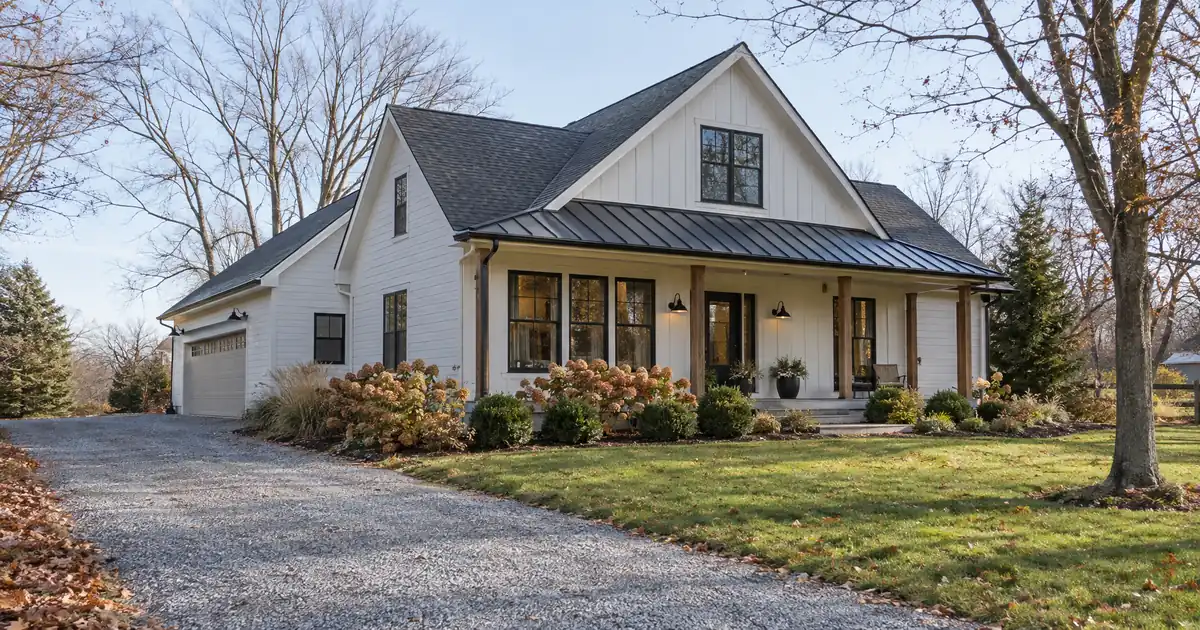
The Quick Read: Yes, through select programs, but only after the build is a finished rental with a tenant and a lease in place, six months have passed since you bought or refinanced it, and the rent covers a stress payment on the whole credit line at 1.10x or better, subject to underwriting. A brand-new house does not skip any of those tests. It just reaches them in a different order than an older rental does.
- The line is a standalone second lien behind the first mortgage you keep, or a standalone first lien on a paid-off rental. It is never closed together with a purchase or a construction payoff.
- A lease in place is required, so a vacant new build is not ready yet.
- Six months of ownership are required, and a takeout refinance of the construction loan restarts that clock.
- The valuation on a fresh build can be thin, so a full interior appraisal is often the cleaner path.
- Combined leverage tops out at 70% CLTV on a second lien, and 75% LTV on a first lien at the top credit tier, through select programs.
What Has to Be True Before a New Build Qualifies?
A new build qualifies when it behaves like any other finished rental: legally occupied, leased, owned long enough, and valued with real support. Most failures come from skipping one of those four steps. The label “new construction” does not change the program rules. It only makes the paperwork and the valuation harder.
Start with the physical and legal side. The property needs a certificate of occupancy (the local sign-off that a new structure matches its approved plans and can be lived in). Appraisers commonly make a new-construction value subject to completion and that certificate, as practitioners on the Appraisers Forum discuss. Treat the certificate as a document you have in hand before anyone asks for it. A temporary certificate may not satisfy every lender.
Then comes the rental side. Across the wholesale network Lendmire works with, this line requires a lease in place. On a two-to-four-unit building, at most one unit can sit vacant. A brand-new fourplex with two empty units is not ready.
Next is the ownership clock. A rental bought or refinanced inside the last six months is not eligible, and six months of ownership are required. Both tests apply on this program, subject to underwriting.
Last is the property itself. Single-family homes, townhomes, planned unit developments, two-to-four-unit buildings, and condominiums are eligible. Row homes, condotels, leaseholds, rural-designated property, and age-restricted communities are not. A property listed for sale in the prior two months is also out, which matters if a builder or a prior owner marketed the unit before you took it.
Key Terms Defined
DSCR (debt service coverage ratio): The property’s gross monthly rent divided by the qualifying monthly payment. A result above 1.00 means the rent covers the payment.
HELOC (home equity line of credit): A revolving credit line secured by property. You borrow against it during a draw period and repay afterward.
Second lien: A loan that sits behind your first mortgage. If the property were sold or foreclosed, the first lender is paid first.
CLTV (combined loan-to-value): Your first mortgage balance plus the new line, divided by the property’s value.
Certificate of occupancy: The local approval that a finished building is legally fit to be lived in.
Seasoning: The waiting period between buying or refinancing a property and taking new financing against it.
Takeout: The permanent loan that pays off the construction loan once the building is done.
The New-Build Sequence, Step by Step
The order matters more than any single rule. A line comes last, after the build, the takeout, and the lease-up. No stage can be folded into another.
| Stage | Loan type | What the lender reviews |
|---|---|---|
| Build | Cash or construction loan | Not part of this line |
| Completion | None | Certificate of occupancy |
| Takeout | First mortgage, or none | Starts the six-month clock |
| Lease-up | None | Signed lease, market rent |
| Equity line | Second or first lien | Rent coverage, CLTV, value |
The path you took to ownership changes the details. Four common paths show up in files.
Bought from a builder. The settlement date starts your ownership clock. If you financed the purchase with a first mortgage, the line becomes a second lien behind it after six months. If you paid cash, the line is a first lien.
Self-built with a construction loan. The construction loan has to be paid off or converted before any second lien can sit behind it. That payoff is usually a refinance, and a refinance inside the last six months makes the property ineligible. Plan on the clock restarting at the takeout.
Built with cash. This is the cleanest case on paper. There is no first mortgage to coordinate with, so the line can be a standalone first lien. How a lender counts ownership time on a self-built property you built on land you already held is a file-level question, so raise it early.
Spec-built and held. If you built to sell and then decided to rent, check the listing history. A property marketed for sale in the prior two months is outside this lane.
Why a Brand-New Value Gets Extra Scrutiny
Lenders are cautious about a value set right after completion because there is little history behind it. A new house has no prior sales, no assessed track record, and sometimes no public record at all yet. The number rests almost entirely on comparable sales nearby.
This matters because the line is sized off value. On this program, lines up to $400,000 can use an automated valuation (a computer estimate with a confidence score of 85 or better) paired with a property inspection report. The alternative at any size is a full interior appraisal. Lines above $400,000 require the full appraisal. Appraisal waivers are not accepted.
Here is the practical read on a brand-new home. An automated model draws on public records and recent sales, and a house that finished construction recently may not be well represented in that data. That is a broker’s inference from how the models work, not a published rule. If the score falls short, the deal works to the appraisal path. Many investors on new builds just order the full appraisal from the start, because it also produces the rent schedule the file needs.
There is a second reason for caution. Some lenders size refinances on cost (price plus documented spend) until the ownership clock runs out, and on appraised value afterward. Whether a given lender applies cost-based sizing to a line of credit varies, so ask. On this program, the six-month wait is the main guard, and the valuation governs after that, subject to underwriting.
How Rent Counts When the Building Is Brand New
The rent used for lender review is the lesser of two numbers: the appraiser’s market rent (Form 1007, the rent schedule an appraiser completes) or the signed lease. If your lease is above market, it counts with three months of receipts. A new build with a strong lease and a weak appraiser’s rent is limited by the appraiser’s number.
The coverage test works like this. Gross monthly rent is divided by a stress payment. That payment assumes a fully amortizing loan on the entire credit limit, not just the drawn amount, at the starting rate plus 2 percentage points. The minimum result is 1.10x. Whether the first mortgage payment also joins the calculation on a second lien is governed by the lender’s own coverage calculation, so do not assume either way.
This design has a side effect that catches new-build owners. A large line on a modest rent can fail the test even if you plan to draw only part of it. Sizing the line smaller is often the fix. The minimum line is $50,000, and at least 80% of it, never less than $50,000, is drawn at closing.
What about a short-term rental? The lease requirement points toward a long-term tenancy. A never-hosted Airbnb with no lease does not fit the structure described here. Short-term rental rules can vary by city, county, HOA, and property type, so investors should confirm local rules before relying on projected rental income.
Second-Lien Mechanics Behind a Fresh Takeout
A second lien needs the first mortgage to stay in place. The line is written behind the first mortgage you keep, so the first mortgage’s own documents matter. Read them or ask the servicer whether a junior lien is allowed. Some first-lien documents restrict it.
Leverage is measured as a combined figure. Through select programs, a second lien reaches up to 70% CLTV at a 720 credit score or better, on lines up to $500,000. Below 720 there is no second-lien option on this program. Both the 740-plus and 720-to-739 tiers sit at that same 70% ceiling. A declining-market flag on the property can lower the ceiling by 5 points. Each figure is subject to lender guidelines and a complete review of property type, leverage, and credit.
For a paid-off new build, the structure is a standalone first lien. Through select programs, LTV reaches up to 75% at 740 or better on lines up to $500,000. The 720-to-739 and 700-to-719 tiers sit at 70% LTV. On lines above $500,000, up to $1,000,000, the ceiling is 65% LTV at 720 or better. All of this is subject to underwriting. Leverage, reserves, and pricing vary by lender and program; the final terms follow the full file review.
Title and entity deserve one decision before the takeout closes. Vesting the property in your LLC is allowed on this line, subject to program terms, and the LLC’s members sign as guarantors. If a title holder is not a borrower, that person signs a non-borrowing owner acknowledgment. The borrowers on the line do not need to match the borrowers on the first mortgage. Some bank products require personal or revocable-trust title instead, so if you plan to compare, settle the vesting question first.
Hazard insurance has to cover both liens, and flood coverage applies where required. Foreign nationals and ITIN borrowers are not eligible on this program. U.S. citizens, permanent residents, and non-permanent residents with a Social Security number can apply, with a 720 minimum score on a second lien and 700 on a first lien. The lender also looks for no 30-day mortgage late in the last 12 months. No reserves or cash to close are required.
DSCR HELOC, DSCR Cash-Out, or a Bank Line?
These are three different tools. The right one depends on how much you want to keep your first mortgage, how the property is titled, and whether the rent or your personal income is the stronger story.
| Factor | DSCR HELOC | DSCR cash-out refi | Bank HELOC on a rental |
|---|---|---|---|
| Reviewed on | Property rent | Property rent | Often personal income |
| First mortgage | Stays in place | Replaced | Stays in place |
| Entity title | LLC allowed | Often allowed | Often individual only |
| Payout | Revolving line | One lump sum | Revolving line |
| Availability | Select programs | Widely offered | Varies; many decline |
A DSCR cash-out refinance replaces your first mortgage with a new, larger one. That makes sense when the existing first mortgage is a construction takeout you would happily replace. It also fits a portfolio titled in an LLC. Lendmire’s pages on cash-out refinance for investment property cover that route, but it is a separate product from the line discussed here.
A bank line on a rental follows the bank’s own rules, and many large retail lenders have pulled back from lending on investment property at all. Investors on BiggerPockets describe banks that dropped the product and others whose terms vary widely. If your income is strong and your rent is thin, a personal-income line may suit you better. If your income file is complicated or the rent is the stronger story, the rent-qualified route is the better fit. That is a real toss-up, and the numbers decide it.
A Worked Example in Ratios
Run the numbers on a duplex you bought from a builder and rented to two tenants. Treat every input here as an illustration, not a quote. The lender’s own calculation governs.
You settled on the purchase more than six months ago, and both units carry signed leases. The appraisal lands the property at 100% of its value, which is the base for the ratios below. Your first mortgage balance sits at 55% of that value. You hold a 740 credit score. Terms vary by lender guidelines, property type, leverage, credit profile, and full file review.
At 70% CLTV, the line can reach up to about 15% of value in room, subject to underwriting. That is a ceiling, not an offer. If your target line is far smaller than that room, the ratio is not your constraint.
Now the coverage test. Suppose the lesser of the lease and the appraiser’s market rent covers the stress payment on the entire line at roughly 1.2x. That clears the 1.10x minimum with a little cushion. If the appraiser’s market rent comes in light, the ratio can fall below 1.10x even though the leases look strong. Then you have two options: shrink the line, or wait for the rent to catch up.
Change one fact. You built the duplex with cash and own it free and clear. At a 740 score, the same property can support a standalone first lien at up to 75% LTV, on a line up to $500,000, through select programs. Drop the score to 710 and the ceiling falls to 70% LTV. Exact terms depend on the lender’s guidelines, property type, leverage, and a full review of the borrower’s file.
What the Line Looks Like After Closing
This product is a revolving line with a 5-year interest-only draw period on the drawn balance. After that comes a 25-year fully amortizing repayment period, within a 30-year maturity. The rate is variable. Later draws are at least $5,000 each. The lender’s HELOC disclosures spell out the rate and pricing terms.
The shift between those two phases is the risk. The Consumer Financial Protection Bureau describes a HELOC as an open-end line you can borrow against repeatedly during a draw period, and warns that payments are often much higher once repayment begins. Experian explains the draw period concept in plain terms as well. On a new build, plan for the repayment phase before you draw, because a thin rent cushion at the start gets thinner when principal payments begin.
Per-borrower exposure on this program is capped at 5 loans or $2,500,000, subject to underwriting. An investor with several new builds can hit that ceiling sooner than expected.
The Document Checklist
Gather these before you ask for a line, and the deal works with fewer stops:
- Certificate of occupancy and the final inspection sign-off
- Builder closing documents, or the construction loan payoff statement
- Signed lease for every occupied unit
- A rent schedule from the appraiser (ordered with the valuation)
- Hazard insurance covering both liens, and flood coverage where required
- Credit report and ownership documents, including LLC papers if the property is titled in an entity
- The first mortgage statement, if a second lien is the plan
The first-time investor mistake is waiting until a lender asks. Have the certificate scanned and the lease signed before you apply.
Where New-Build Files Break
Most problems fall into a handful of patterns, and each has a fix.
A missing or temporary certificate of occupancy. Without it, the value stays conditional. Finish the local sign-off first.
Light appraiser rent. The coverage test uses the lesser of lease and market rent. If the appraiser comes in below the lease, shrink the line or wait.
A recent takeout refinance. Refinancing the construction loan restarts the six-month clock. Time the takeout with the line in mind, or consider a DSCR cash-out refinance instead.
A thin automated valuation. If the confidence score falls short, move to a full interior appraisal.
A vacant unit. A two-to-four-unit property can carry at most one empty unit. Lease up before you apply.
Wrong property type or location. Row homes, condotels, rural-designated parcels, and leaseholds are outside the program.
State availability. This program is offered in the following states under Lendmire’s consumer licensing: Alabama, California, Colorado, Florida, Georgia, Indiana, Michigan, Montana, New Mexico, North Carolina, Ohio, Pennsylvania, Texas, Virginia, and Washington. It is not offered in Tennessee.
For the wider picture of how rent-qualified investor financing works, see the complete DSCR loans guide.
Frequently Asked Questions
Can I get the line before the certificate of occupancy is issued?
No, not on this program. The building has to be a finished, legally occupiable rental with a lease in place and six months of ownership behind it. Before the certificate, the property is still a construction project, and the construction loan or your cash is the financing that applies.
Do I need a tenant, or does the appraiser’s rent carry a vacant new build?
You need a lease in place. The rent used for lender review is the lesser of the signed lease and the appraiser’s Form 1007 market rent, so the appraiser’s number can cap a strong lease, but it cannot replace one. A two-to-four-unit property can have one vacant unit at most.
Can the new build sit in an LLC?
Yes, an LLC can hold title on this line, subject to program terms. The members sign as guarantors, and a title holder who is not a borrower signs a non-borrowing owner acknowledgment. Many bank lines work differently, so settle the vesting question before you apply anywhere.
Does the six-month wait restart if I refinance the construction loan?
Yes. A rental bought or refinanced inside the last six months is not eligible, so a takeout refinance starts a new clock. If you want equity soon after completion, compare the line against a DSCR cash-out refinance, which can serve as the takeout itself.
Will a line payment on the whole limit hurt my coverage?
It can. The qualifying payment is calculated on the entire credit limit, not just what you draw, and the minimum coverage is 1.10x. Sizing the line smaller than the maximum often solves a borderline file, subject to underwriting.
Next Steps
If you are considering a home equity line on a rental property and want to see how the numbers work, Lendmire can help you compare DSCR HELOC options based on the property, the rent, the equity available, credit profile, combined leverage, and your goals. Reach the team at 828-256-2183 or request a quote. Lendmire is a mortgage broker, so the line is arranged through a wholesale lender in its network, and every file is underwritten individually.
A new build gives you equity on day one but no history. The investors who get the line smoothly are the ones who treat the first six months as lease-up time, not waiting time.
For current guidelines and terms, see Lendmire’s DSCR HELOC programs page.
About Lendmire
Lendmire (NMLS# 2371349) is a mortgage broker. Home equity lines of credit — on a primary residence, a second home or an investment property — are arranged through wholesale lenders in Lendmire’s 16 full-service states, and every line is underwritten by the lender under its program guidelines. Scotsman Guide named Lendmire a Top Mortgage Workplace in both 2025 and 2026.
Get Started
Ready to find the right loan for you?
See your offer in seconds. No credit pull, no obligation.
Informational only. Not a Loan Estimate, approval, or commitment to lend. Program availability and eligibility are subject to lender guidelines, credit approval, property review, and underwriting.
References
1. Appraisers Forum – Certificate of occupancy for new construction and final inspections
2. BiggerPockets – HELOC on investment property
3. Consumer Financial Protection Bureau
4. Experian
This article is part of Lendmire’s DSCR HELOC program — full qualification details, guidelines, and scenarios live on the program page.
Related reading: No-Ratio DSCR Loan vs DSCR HELOC in an LLC · DSCR HELOC for Business Owners and How Much You Can Borrow · Can You Get a HELOC Behind a DSCR First Mortgage?
Brandon Miller
Founder & CEO, Mortgage Loan Originator, Lendmire LLC
- Mortgage Loan Originator · NMLS# 1129696 · Verify on NMLS Consumer Access
- North Carolina Real Estate Broker · License# 343312 · Verify on NCREC
- North Carolina Insurance Producer · License# 19053198 · Property, Casualty, Life, Health · Verify on NAIC SBS
- Lendmire LLC · Firm NMLS# 2371349 · Verify firm licensure
Legal disclosures. Lendmire (NMLS# 2371349) is a state-licensed mortgage brokerage that arranges financing through wholesale lender relationships. Lendmire is not a direct lender, depository institution, or registered financial advisor. The discussion above is general informational content about real estate financing — it is not financial, legal, or tax advice, and readers should consult licensed professionals for guidance on their individual circumstances. Loan inquiries are subject to lender underwriting; this article does not represent a commitment to lend. Loan terms, rates, and qualification standards vary by borrower, property, and state, and are subject to change at any time. Equal Housing Opportunity. NMLS Consumer Access: nmlsconsumeraccess.org.