
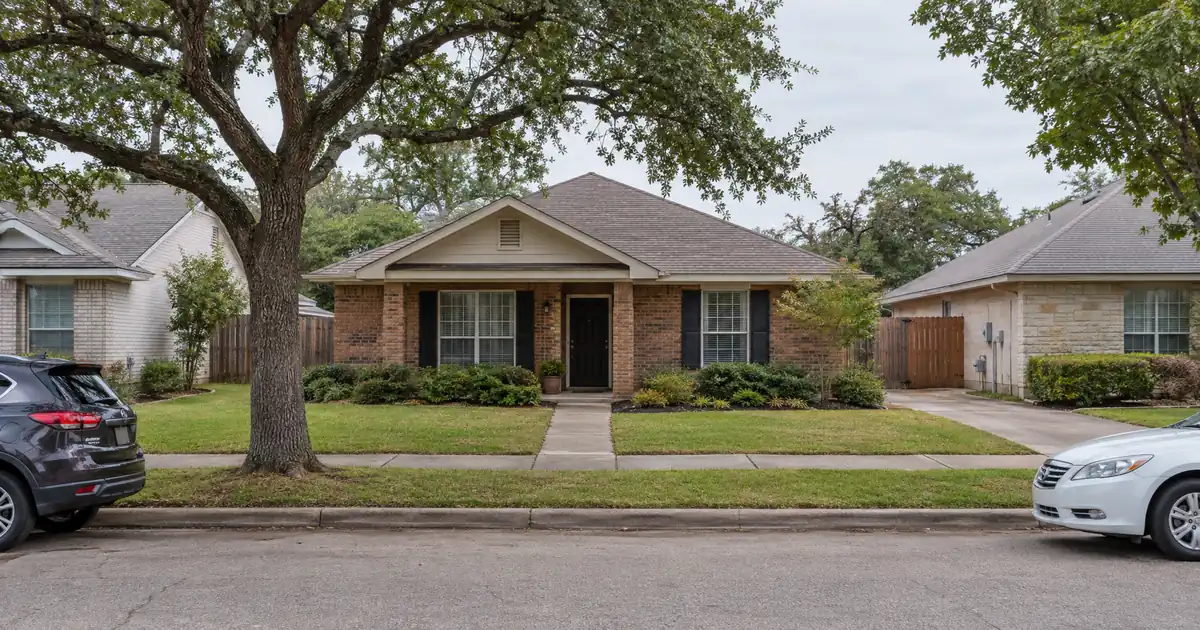
The Quick Read: Yes, in most cases: Texas restricts home equity loans on your homestead, meaning your primary residence, but a true rental is not a homestead, so those limits do not govern it, and a landlord can borrow against rental equity through a rent-qualified line, subject to underwriting and a few edge cases. The rent qualifies the line. Your personal income is never calculated. The catch is that the property must truly be a non-homestead rental.
- A DSCR HELOC is a standalone second lien behind the first mortgage you keep, or a standalone first lien on a paid-off rental.
- Through select programs, a second lien reaches up to 70% combined loan-to-value (CLTV) at a 720 score or better, on lines of $50,000 to $500,000.
- The minimum coverage is 1.10x, tested on a stress payment over the whole line.
- Your LLC can stay on title, depending on program guidelines.
- A rental that was recently your own home may still count as a homestead.
The rest of this piece explains where the “illegal” claim comes from, how to check your property, and how the loan works. Texas landlords hear this myth constantly, and it costs some of them a good deal.
Where Does the “Illegal” Claim Come From?
The claim comes from a real Texas rule applied to the wrong property. Texas tightly controls home equity loans and lines on a borrower’s homestead. Many web pages and loan officers summarize that as “no HELOCs on rentals,” and the nuance gets lost.
Texas A&M’s Real Estate Research Center explains that these loans may not be taken out on a secondary residence or on a rental or investment property. Read that carefully. It says the homestead equity product cannot be used on a rental. It does not say nobody may lend against a rental by other means.
Here is how the myth gets built, piece by piece.
| What you heard | What it usually means | What is true |
|---|---|---|
| “HELOCs are illegal on Texas rentals” | The homestead equity product can’t be used there | Non-homestead lending is a separate lane |
| “The 80% cap applies to you” | That cap governs homestead loans | Rental leverage comes from the lender’s program |
| “We don’t do Texas” | That lender’s policy | A company choice, not a statute |
| “Banks won’t touch rentals” | Many depository lenders skip non-owner-occupied collateral | Wholesale investor programs exist |
The third row matters most. Some lenders carve Texas out of their line-of-credit products. That is a business decision about operations, and it gets repeated as if it were law. When a loan officer says no, ask which of those four reasons they mean.
What Do Texas Homestead Rules Actually Restrict?
They restrict equity loans secured by your own primary residence, and they do so tightly. On a homestead, the loan plus all other debt against the home may not exceed 80% of its fair market value, per the same Texas A&M research center. Only one such lien may sit on the homestead at a time. A waiting period also applies before closing.
Those rules protect Texas families from losing their houses. They are why a Texas line on your own home feels so different from one in other states.
For contrast, take the agency lane. Fannie Mae’s Selling Guide says a Texas homestead equity loan must be secured by a single-unit principal residence, and that investment properties and second homes are not eligible. That confirms the scope: the rules are about owner-occupied homes. DSCR programs are not agency products, and that is all the contrast this topic needs.
DSCR loans are designed for non-owner-occupied investment properties. Because they are business-purpose investor loans, they are reviewed differently from a standard owner-occupied mortgage.
Is Your Rental Really a Non-Homestead?
A property that you do not live in, never claimed as your residence, and lease to a tenant is almost certainly not a homestead. A Texas attorney’s explainer says a rental house, a second home the owner does not occupy, or raw land bought for investment gets no homestead exemption, however it is titled. The lease, the absence of a homestead exemption on the property tax roll, and a business-purpose statement all support that classification.
The edge cases are where landlords get surprised.
A former home you moved out of. Texas lets an owner rent a homestead temporarily without losing its status, as long as no new homestead has been acquired. Lone Star Land Law describes this rule. So the house you moved out of last spring and rented may still be treated as a homestead. Abandonment of the old homestead generally comes once you establish a new homestead elsewhere. Married owners usually need to act together.
A duplex where you live in one unit. The property can be homestead if you occupy it. That is a different product lane entirely, and this program is never offered on an owner-occupied home.
Mixed use. Properties with commercial space fall outside this program anyway.
Before you apply, have a title company or a Texas real estate attorney confirm the collateral is non-homestead. It costs little and settles the question.
What Is a DSCR HELOC, Really?
The name covers more than one structure, and sorting them out is half the battle. DSCR stands for debt service coverage ratio: the rent divided by the monthly debt payment. A HELOC is a home equity line of credit, a revolving line you draw from. A DSCR HELOC combines them: a line secured by a rental and qualified on its rent.
Across the wholesale network, the lines we place work like this:
- It is a standalone second lien behind the first mortgage you keep, or a standalone first lien on a rental with no mortgage.
- It is never closed together with a purchase, never a third lien, and never a line on your own home.
- The rent qualifies it. No traditional personal-income documentation, W-2s, pay stubs or debt-to-income ratio. It qualifies primarily on property-level rental income covering the payment, subject to lender guidelines.
- The borrower is a person, and the LLC can hold title, subject to program terms. Members sign as guarantors, and a title holder who is not a borrower signs an acknowledgment and the security instrument.
Other products wear the same label. A DSCR cash-out refinance replaces your first mortgage with a larger one. A closed-end second is a lump sum behind the first. An investment HELOC tested on your personal income is the borrower-underwritten version. Here is how they compare.
| Option | Underwritten on | First mortgage stays? |
|---|---|---|
| DSCR HELOC (this program) | Rent from the rental | Yes, on a second lien |
| DSCR cash-out refinance | Rent from the rental | No, it is replaced |
| Investment HELOC on income | Your income and debts | Yes |
| Line on your own home | Your income, homestead rules | Yes |
If you want to compare the cash-out route in depth, Lendmire’s complete DSCR loans guide walks through how DSCR financing works across property types.
How Much Can You Borrow, and What Is the Coverage Test?
Leverage depends on the lien position and your credit score, through select programs and subject to underwriting. On a non-owner-occupied rental:
- Second lien: up to 70% CLTV, at a 720 score or better, on lines of $50,000 to $500,000. CLTV means the first mortgage balance plus the new line, divided by the property’s value.
- First lien (no mortgage): up to 75% loan-to-value (LTV) at 740 or better and 70% from 700 to 739, on lines to $500,000. Above $500,000, up to $1,000,000, the ceiling is 65% LTV. Terms vary by lender guidelines, property type, leverage, credit profile, and full file review.
Walk through a modeled case. Say your first mortgage sits at 50% of the property’s value. A second lien up to 70% CLTV leaves roughly 20 points of value to borrow against, before any adjustment. Lines start at $50,000, so a thin sliver of equity may not clear the minimum. Those are ceilings, not offers.
The coverage test is a minimum 1.10x. The lender divides gross monthly rent by a qualifying payment. That payment is fully amortizing and applies to the entire credit limit at a stressed rate above the starting rate, whether or not you draw it all. Rent is the lesser of the appraiser’s market rent (Form 1007) or your lease, and a lease must be in place. A two-to-four-unit property may have at most one vacant unit. How the first-mortgage payment enters the second-lien calculation is the lender’s call, so the lender’s coverage math governs. A strong rent-to-payment cushion matters most on a second lien, because the stress payment sits on the whole line.
DSCR also ignores vacancy, repairs and management. A ratio above the minimum is not spendable cash.
What Does the File Look Like?
The credit and property rules are specific, so here they are plainly.
Credit. The minimum is 720 on a second lien and 700 on a first lien. The lender’s own report sets your tier. The program looks for no 30-day mortgage late in the last 12 months, and 48 months since a bankruptcy, foreclosure, short sale or deed-in-lieu.
Valuation. Lines up to $400,000 use an automated valuation with a property inspection report, or a full interior appraisal. Larger lines take a full interior appraisal. Appraisal waivers are not accepted.
Seasoning. The rental must be owned for at least 6 months, and a property bought or refinanced inside the last 6 months is not eligible.
Draws. At least 80% of the line, and never less than $50,000, is drawn at closing. Later draws are at least $5,000 each. The draw period is 5 years interest-only on the drawn balance, followed by a 25-year repayment period, with a 30-year maturity. The rate is variable. The rate and the pricing terms come with the lender’s disclosures.
Reserves and exposure. No reserves are required. A borrower can hold at most 5 loans or $2,500,000 with the program.
Borrowers. U.S. citizens, permanent residents and non-permanent residents with a Social Security number qualify. Foreign nationals and ITIN borrowers do not.
Property. Single-family, PUD, townhome, two-to-four-unit and warrantable condominium rentals are eligible. Rural-designated property, row homes, condotels, leaseholds and listings for sale in the prior 2 months are not. That rural exclusion matters in a state as large as Texas.
On files like these, the delays almost never come from the DSCR number itself. They come from collateral classification, a lease that does not match the appraiser’s rent, or a property sitting just inside the seasoning window. Settle those three before you apply and the file reads far cleaner.
Does the LLC Have to Come Off Title?
Not on this program. Vesting in your LLC is allowed on investment property, depending on program guidelines. That is a real advantage over many bank lines, which want a person on title and often decline entities. Members sign as guarantors, and the borrowers on the line need not be the borrowers on the first mortgage.
One caution: your first mortgage documents may restrict additional liens. Read them before you open a second lien, since the first lender may need to consent. If the first lien carries that restriction, a cash-out refinance may suit you better than a second.
What Should You Ask the Person Who Said No?
Turn the “illegal” answer into a diagnosis. Ask these:
1. Which loan type did you evaluate: a line, a closed-end second, or a cash-out refinance?
2. Did you treat the property as a homestead or as a rental?
3. Is this a legal restriction or your company’s policy?
4. Does your product lend to an LLC?
5. Do you require first-lien position?
6. Is there a program that is reviewed on rent instead of my income?
Large retail lenders often decline non-owner-occupied collateral for operational reasons. That is appetite, not law. A broker with access to several wholesale programs can route around it.
When Is This the Wrong Move?
A DSCR HELOC is not right for every landlord. Skip it, or pause, in these cases:
- The property was your home recently. Resolve the homestead question first.
- You need a lump sum below $50,000. The line minimum rules it out.
- You want a cheaper first mortgage kept intact but the rent barely clears. The stress payment on the full line can push coverage below 1.10x, even if the property cash-flows fine today.
- You need a rental inside a condotel, rural area or leasehold. Those are outside the program.
Remember the risk too. A line against your rental puts the rental at risk if you default, though your own homestead stays protected. The variable rate can move after closing, and the repayment period starts after the draw period ends. Tax treatment can depend on how the funds are used and how the property is held; borrowers should keep clear records and speak with a qualified tax professional before relying on any deduction.
Landlords commonly use these funds as the down payment on the next rental. If you live out of state, Lendmire’s piece HELOC on a Texas Rental for Landlords Who Live Out of State covers that angle. For the broader myth, see Lendmire’s article Investment Property HELOC in Texas for Landlords Told It Is Illegal.
Frequently Asked Questions
Is a HELOC on a rental property illegal in Texas?
No. The Texas restrictions apply to homestead equity loans on your primary residence. A true rental is not a homestead, so lending against it is a different lane. Availability varies by program, lender appetite and your title, so the answer on a given property depends on its classification and the file.
Can I use my LLC for a DSCR HELOC in Texas?
Often, yes, depending on program guidelines. On this program, vesting in your LLC is allowed on investment property. The members sign as guarantors, and a title holder who is not a borrower signs an acknowledgment. Many bank lines decline entities, so confirm before you assume.
Does the 80% cap apply to my Texas rental?
No. That cap governs homestead equity loans. Rental leverage comes from the program you choose. Through select programs, a second lien on a non-owner-occupied rental reaches up to 70% CLTV at a 720 score or better, subject to underwriting.
What if I moved out of my house and started renting it?
It may still be a homestead. Texas allows temporary renting without losing homestead status when no new homestead has been acquired. Have a title company or Texas attorney confirm the status before you apply.
Does a DSCR HELOC replace my first mortgage?
No, not as a second lien. It sits behind the first mortgage you keep. A DSCR cash-out refinance is the structure that replaces it. Compare both if your first mortgage is one you would rather keep.
If you are considering a home equity line on a rental property and want to see how the numbers work, Lendmire can help you compare DSCR HELOC options based on the property, the rent, the equity available, credit profile, combined leverage, and your goals. The program is offered in Texas and 15 other states, and every file is underwritten individually. Texas landlords who check the homestead question first usually find the real constraint is the file, not the law.
About Lendmire
Lendmire (NMLS# 2371349) is a mortgage broker. Home equity lines of credit — on a primary residence, a second home or an investment property — are arranged through wholesale lenders in Lendmire’s 16 full-service states, and every line is underwritten by the lender under its program guidelines. Scotsman Guide named Lendmire a Top Mortgage Workplace in both 2025 and 2026.
Get Started
Ready to find the right loan for you?
See your offer in seconds. No credit pull, no obligation.
Informational only. Not a Loan Estimate, approval, or commitment to lend. Program availability and eligibility are subject to lender guidelines, credit approval, property review, and underwriting.
References
1. Texas A&M Real Estate Research Center — What to Know About Home Equity Loans in Texas
2. Fannie Mae Selling Guide B5-4.1-02 — Texas Section 50(a)(6) Loan Eligibility
3. Lone Star LLC Attorney — Texas Homestead Protection
4. Lone Star Land Law — Homestead Protections in Texas
This article is part of Lendmire’s DSCR HELOC program — full qualification details, guidelines, and scenarios live on the program page.
Related reading: How to Qualify for a DSCR HELOC Without Income Verification · Condo DSCR HELOC Requirements for a Rental Condo · DSCR HELOC Requirements for 1099 Contractors Who Own Rentals
Guides: DSCR HELOC in Texas
Brandon Miller
Founder & CEO, Mortgage Loan Originator, Lendmire LLC
- Mortgage Loan Originator · NMLS# 1129696 · Verify on NMLS Consumer Access
- North Carolina Real Estate Broker · License# 343312 · Verify on NCREC
- North Carolina Insurance Producer · License# 19053198 · Property, Casualty, Life, Health · Verify on NAIC SBS
- Lendmire LLC · Firm NMLS# 2371349 · Verify firm licensure
Disclosure information. Lendmire is a state-licensed mortgage brokerage under NMLS# 2371349. Lendmire is not a depository institution, direct lender, or financial advisor — all loans referenced are placed through wholesale lender partners and are subject to each lender's underwriting standards. This article is provided for general informational purposes and is not a commitment to lend, nor does it constitute financial, legal, or tax advice. Loan programs, terms, rates, and qualification standards change without notice and depend on borrower profile, property type, and the state in which the subject property is located. Equal Housing Opportunity provider. NMLS Consumer Access: nmlsconsumeraccess.org.